Results by title
173 books match the query 'Commerce' and 19 start with c
COURTS AND COMMERCE
GENDER, LAW, AND THE MARKET ECONOMY IN COLONIAL NEW YORKDeborah A. Rosen
The Ohio State University Press, 1997
Illuminates the legal engine behind colonial America’s market economy, revealing how law and commerce intertwined to sideline women's participation and lay the groundwork for industrial capitalism.
In Courts and Commerce, Deborah A. Rosen offers a fresh, incisive look at the economic and legal foundations of colonial New York. Drawing on a wide array of 18th-century sources—probate inventories, court records, petitions, and more—Rosen uncovers how law and commerce intertwined to shape a market economy long before the rise of industrial capitalism.
Rosen challenges the romanticized view of colonial America as a bastion of communal values. Instead, she reveals a society already driven by arm’s-length transactions and legal mechanisms that empowered men to expand their economic reach while systematically limiting women’s participation. Her analysis spans both urban and rural settings, highlighting regional contrasts and the gendered impact of legal structures.
This book pushes back against the idea that the nineteenth century marked a sudden economic transformation. Rosen shows that many of the legal and economic patterns associated with industrialization were already in motion a century earlier. Engaging and deeply researched, Courts and Commerce is essential reading for scholars of colonial history, legal and economic development, and gender studies. It reframes our understanding of early American life—and the roots of inequality in the modern economy.

Cargoes in Motion
Materiality and Connectivity across the Indian OceanBurkhard Schnepel
Ohio University Press, 2022
An innovative collection of essays that foregrounds specific cargoes as a means to understand connectivity and mobility across the Indian Ocean world.
Scholars have long appreciated the centrality of trade and commerce in understanding the connectivity and mobility that underpin human experience in the Indian Ocean region. But studies of merchant and commercial activities have paid little attention to the role that cargoes have played in connecting the disparate parts of this vast oceanic world. Drawing from the work of anthropologists, geographers, and historians, Cargoes in Motion tells the story of how material objects have informed and continue to shape processes of exchange across the Indian Ocean.
By following selected cargoes through both space and time, this book makes an important and innovative contribution to Indian Ocean studies. The multidisciplinary approach deepens our understanding of the nature and dynamics of the Indian Ocean world by showing how transoceanic connectivity has been driven not only by economic, social, cultural, and political factors but also by the materiality of the objects themselves.
Essays by:
- Edward A. Alpers
- Fahad Ahmad Bishara
- Eva-Maria Knoll
- Karl-Heinz Kohl
- Lisa Jenny Krieg
- Pedro Machado
- Rupert Neuhöfer
- Mareike Pampus
- Hannah Pilgrim
- Burkhard Schnepel
- Hanne Schönig
- Tansen Sen
- Steven Serels
- Julia Verne
- Kunbing Xiao
Catching Up with the Competition
Trade Opportunities and Challenges for Arab CountriesBernard Hoekman and Jamel Zarrouk, Editors
University of Michigan Press, 2000
Ceramic Commodities and Common Containers
The Production and Distribution of White Mountain Red Ware in the Grasshopper Region, ArizonaDaniela Triadan
University of Arizona Press, 1997
Relying primarily on stylistic analyses and the relative abundance of this ceramic ware in site assemblages, most scholars have assumed that it was manufactured within a restricted area on the southeastern edge of the Colorado Plateau and distributed via trade and exchange networks that may have involved controlled access to these ceramics.
This monograph critically evaluates these traditional interpretations, utilizing large-scale compositional and petrographic analyses that established multiple production zones for White Mountain Red Ware—including one in the Grasshopper region—during Pueblo IV times. The compositional data combined with settlement data and an analysis of archaeological contexts demonstrates that White Mountain Red Ware vessels were readily accessible and widely used household goods, and that migration and subsequent local production in the destinaton areas were important factors in their wide distribution during the 14th century.
Ceramic Commodities and Common Containers provides new insights into the organization of ceramic production and distribution in the northern Southwest and into the processes of social reorganization that characterized the late 13th and 14th century Western Pueblo world. As one of the few studies that integrate materials analysis into archaeological research, Triadan's monograph marks a crucial contribution to the reconstruction of these prehistoric societies.
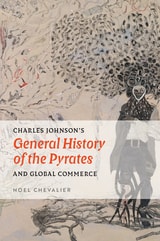
Charles Johnson's "General History of the Pyrates" and Global Commerce
Noel Chevalier
Bucknell University Press, 2025
This study explores how General History of the Pyrates was at the heart of early eighteenth-century British debates about commerce, colonialism, and law. Examining how pirates are depicted as both monsters and Great Men, Noel Chevalier untangles the contradictions within a Britain emerging as a colonial superpower, where ruthlessness and ambition were both feared and praised. Traveling the high seas to plunder treasure from foreign lands, pirates were not so different from the British capitalists who built fortunes from resource extraction, the plantation economy, and the transatlantic slave trade. Connecting the work to later books like Gulliver’s Travels and The Beggar’s Opera that satirized the era and its power-hungry prime minister Robert Walpole, Chevalier shows how the pirate became an iconic figure in 1720s Britain, a time of cold-hearted capitalism and rapacious colonial expansion.
Chicago Before the Fire
An Economic HistoryLouis P. Cain
University of Illinois Press, 2025
An advantageous location and entrepreneurial passion helped fuel Chicago’s transformation from a fur trading post to a thriving city. Louis P. Cain’s economic history places pre-1871 Chicago within the narrative of national expansion and examines infrastructure, finance, and other areas of city life. Business histories tell the story of fortunes made with essential products like meat and grain. Sketches of titans like William Ogden and Cyrus McCormick reveal how real estate, farm equipment, and other industries became engines of local growth. Cain also details public health improvements that made Lake Michigan safe as a water supply while census data informs a portrait of Chicago’s population and the lives of the free Blacks and Irish immigrants at the bottom of the socioeconomic ladder.
Panoramic and up to date, Chicago before the Fire looks at how an intersection of geography, vision, and investment built a great American city.

China's Growing Role in World Trade
Edited by Robert C. Feenstra and Shang-Jin Wei
University of Chicago Press, 2010
Bringing together an expert group of contributors, China's Growing Role in World Trade undertakes an empirical investigation of the effects of China's new status. The essays collected here provide detailed analyses of the microstructure of trade, the macroeconomic implications, sector-level issues, and foreign direct investment. This volume's careful examination of micro data in light of established economic theories clarifies a number of misconceptions, disproves some conventional wisdom, and documents data patterns that enhance our understanding of China's trade and what it may mean to the rest of the world.
Chinese Circulations
Capital, Commodities, and Networks in Southeast AsiaEric Tagliacozzo and Wen-Chin Chang, eds.
Duke University Press, 2011
Contributors. Leonard Blussé, Wen-Chin Chang, Lucille Chia, Bien Chiang, Nola Cooke, Jean DeBernardi, C. Patterson Giersch, Takeshi Hamashita, Kwee Hui Kian, Li Tana, Lin Man-houng, Masuda Erika, Adam McKeown, Anthony Reid , Sun Laichen, Heather Sutherland, Eric Tagliacozzo, Carl A. Trocki, Wang Gungwu, Kevin Woods, Wu Xiao

Colonial Search For A Southern Eden
Louis B. Wright
University of Alabama Press, 2008
European imperialists began to dream of other kinds of wealth besides gold in the New World
The Colonial Search for a Southern Eden compiles three insightful lectures delivered by renowned historian Louis B. Wright at the Dancy Foundation in 1951. Wright explores the 17th‑century English colonial vision for the American South—not as a gold rush, but as a fertile terrain primed for economic prosperity through well‑planned plantations and commercial crops.
Across its concise 75 pages, Wright charts the transformation of settlers’ aspirations—from hopes of quick wealth to cultivated visions of tobacco, silk, sugar, and cotton plantations meant to create a utopian "Southern Eden". These were carefully cultivated not just for their profitability but to establish structured, enduring societies complementary to English economic goals.
Wright—a Guggenheim Fellow, Benjamin Franklin Medalist, and former director of the Folger Shakespeare Library—brings scholarly precision and elegant prose to this study, making it accessible to both historians and general readers. Publishers and reviewers have praised it as “extremely interesting and well written,” highlighting its focused yet comprehensive interpretation of colonial Southern motivations and their long-term implications. This work stands as a pivotal contribution to early American economic and colonial history—offering a nuanced understanding of how idealistic and ideological goals shaped plantation culture and southern development in the Atlantic colonies.
With its concise structure and authoritative voice, The Colonial Search for a Southern Eden is ideal for historians, students, and enthusiasts seeking to understand the ideological underpinnings of colonial Southern society.

Commerce and Society in Sung China
Shiba Yoshinobu; Translated by Mark Elvin
University of Michigan Press, 1969

Commerce in Color
Race, Consumer Culture, and American Literature, 1893-1933James C. Davis
University of Michigan Press, 2010
Commerce in Color exploresthe juncture of consumer culture and race by examining advertising, literary texts, mass culture, and public events in the United States from 1893 to 1933. James C. Davis takes up a remarkable range of subjects—including the crucial role publishers Boni and Liveright played in the marketing of Harlem Renaissance literature, Henry James’s critique of materialism in The American Scene, and the commodification of racialized popular culture in James Weldon Johnson’s The Autobiography of anEx-Colored Man—as he argues that racial thinking was central to the emergence of U.S. consumerism and, conversely, that an emerging consumer culture was a key element in the development of racial thinking and the consolidation of racial identity in America. By urging a reassessment of the familiar rubrics of the “culture of consumption” and the “culture of segregation,” Dawson poses new and provocative questions about American culture and social history.
Both an influential literary study and an absorbing historical read, Commerce in Color proves that—in America—advertising, publicity, and the development of the modern economy cannot be understood apart from the question of race.
“A welcome addition to existing scholarship, Davis’s study of the intersection of racial thinking and the emergence of consumer culture makes connections very few scholars have considered.”
—James Smethurst, University of Massachusetts
James C. Davis is Assistant Professor of English at Brooklyn College.
Commerce with the Classics
Ancient Books and Renaissance ReadersAnthony Grafton
University of Michigan Press, 1997
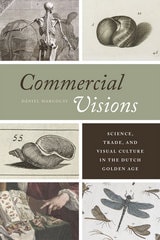
Commercial Visions
Science, Trade, and Visual Culture in the Dutch Golden AgeDániel Margócsy
University of Chicago Press, 2014
Margócsy introduces a number of natural historians, physicians, and curiosi in Amsterdam, London, St. Petersburg, and Paris who, in their efforts to boost their trade, developed modern taxonomy, invented color printing and anatomical preparation techniques, and contributed to philosophical debates on topics ranging from human anatomy to Newtonian optics. These scientific practitioners, including Frederik Ruysch and Albertus Seba, were out to do business: they produced and sold exotic curiosities, anatomical prints, preserved specimens, and atlases of natural history to customers all around the world. Margócsy reveals how their entrepreneurial rivalries transformed the scholarly world of the Republic of Letters into a competitive marketplace.
Margócsy’s highly readable and engaging book will be warmly welcomed by anyone interested in early modern science, global trade, art, and culture.

Computational Analysis of Global Trading Arrangements
Alan V. Deardorff and Robert M. Stern
University of Michigan Press, 1990
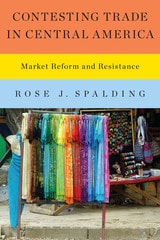
Contesting Trade in Central America
Market Reform and ResistanceBy Rose J. Spalding
University of Texas Press, 2014
In 2004, the United States, five Central American countries, and the Dominican Republic signed the Central American Free Trade Agreement (CAFTA), signaling the region’s commitment to a neoliberal economic model. For many, however, neoliberalism had lost its luster as the new century dawned, and resistance movements began to gather force. Contesting Trade in Central America is the first book-length study of the debate over CAFTA, tracing the agreement’s drafting, its passage, and its aftermath across Central America.
Rose J. Spalding draws on nearly two hundred interviews with representatives from government, business, civil society, and social movements to analyze the relationship between the advance of free market reform in Central America and the parallel rise of resistance movements. She views this dynamic through the lens of Karl Polanyi’s “double movement” theory, which posits that significant shifts toward market economics will trigger oppositional, self-protective social countermovements. Examining the negotiations, political dynamics, and agents involved in the passage of CAFTA in Costa Rica, El Salvador, and Nicaragua, Spalding argues that CAFTA served as a high-profile symbol against which Central American oppositions could rally. Ultimately, she writes, post-neoliberal reform “involves not just the design of appropriate policy mixes and sequences, but also the hard work of building sustainable and inclusive political coalitions, ones that prioritize the quality of social bonds over raw economic freedom.”
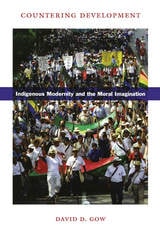
Countering Development
Indigenous Modernity and the Moral ImaginationDavid D. Gow
Duke University Press, 2008
Through ethnographic fieldwork conducted annually in Cauca from 1995 through 2002, Gow compares the development plans of the three communities, looking at both the planning processes and the plans themselves. In so doing, he demonstrates that there is no single indigenous approach to development and modernity. He describes differences in how each community defined and employed the concept of culture, how they connected a concern with culture to economic and political reconstruction, and how they sought to assert their own priorities while engaging with the existing development resources at their disposal. Ultimately, Gow argues that the moral vision advanced by the indigenous movement, combined with the growing importance attached to human rights, offers a fruitful way to think about development: less as a process of integration into a rigidly defined modernity than as a critical modernity based on a radical politics of inclusive citizenship.

Craft and the Kingly Ideal
Art, Trade, and PowerBy Mary W. Helms
University of Texas Press, 1993
In ancient Mediterranean cultures, diamonds were thought to endow their owners with invincibility. In contemporary United States culture, a foreign-made luxury car is believed to give its owner status and prestige. Where do these beliefs come from?
In this study of craft production and long-distance trade in traditional, nonindustrial societies, Mary W. Helms explores the power attributed to objects that either are produced by skilled artisans and/or come from "afar." She argues that fine artisanship and long-distance trade, both of which are more available to powerful elites than to ordinary people, are means of creating or acquiring tangible objects that embody intangible powers and energies from the cosmological realms of gods, ancestors, or heroes. Through the objects, these qualities become available to human society and confer honor and power on their possessors.
Helms’ novel approach equates trade with artistry and emphasizes acquisition rather than distribution. She rejects the classic Western separation between economics and aesthetics and offers a new paradigm for understanding traditional societies that will be of interest to all anthropologists and archaeologists.

Creativity, Culture and Commerce
Producing Australian Children’s Television with Public ValueAnna Potter
Intellect Books, 2015
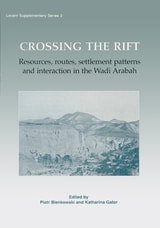
Crossing the Rift
Resources, Settlements Patterns and Interaction in the Wadi ArabahP. Bienkwoski
Council for British Research in the Levant, 2006