80 books match the query 'Community development' and 12 start with c
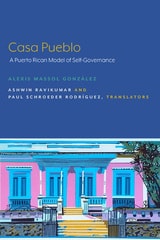
cover of Casa Pueblo: A Puerto Rican Model of Self-Governance

Casa Pueblo

A Puerto Rican Model of Self-Governance

Alexis Massol González, Translated by Ashwin Ravikumar and Paul Schroeder Rodríguez

Lever Press, 2022

As a community-based organization in the mountains of south-central Puerto Rico, Casa Pueblo implements alternatives to extractive capitalism that do not rely on governments or distant non-profits. In this book, Alexis Massol-González, Casa Pueblo’s founder, reflects on its extraordinary forty-year history of experiments with community self-governance. Massol-González received the prestigious Goldman Prize (popularly known as the Green Nobel) for the organization’s initiatives to protect the environment, affirm cultural and human values, and create sustainable economic alternatives. This collective translation was undertaken in the spirit of the organization and offers a chronological account of Casa Pueblo’s evolution from a small group of concerned citizens to an internationally recognized model for activism.
[more]
cover of Challenging Uneven Development: An Urban Agenda for the 1990s

Challenging Uneven Development

An Urban Agenda for the 1990s

Nyden, Philip

Rutgers University Press, 1991

The editors and contributors to this volume are not willing to accept what is known as uneven development, where some cities win and some lose. They look at two practical consequences of urban growth:  the change in residence patterns as neighborhoods gentrify, and the change in employment patterns, as factory workers lose jobs and white-collar workers gain jobs. The editors' goal is to highlight the alternatives to uneven development and to the growth ideology. They outline and advocate specific policies, including affordable housing, changes in taxation, and direct community participation in planning and zoning decisions. 

Challenging Uneven Development begins with a rousing discussion of the pervasiveness of the community redevelopment ideology. The growth machine defines the language of the debate. The next group of chapters examine residence patterns--how communities have organized to fight gentrification, why residential integration is essential for good planning as well as morality, and what strategies can be used to achieve racial diversity.  Another chapter emphasizes the role of lenders in regulating the flow of credit within communities.  Disinvestment by credit providers causes decline, and opens the way for gentrification, which displaces local residents. The impact of taxes in stimulating the growth machine is also explained. 

Later chapters move beyond gentrification issues to examine other problems of economic restructuring. They look at how blacks, Latinos, and women have been affected by the growth of service sector jobs. The final chapter serves as a strategic guide to those who wish to establish a progressive agenda for community-based economic development.  The authors call for social change, not unimaginative reform.

The contributors to this volume are leaders or researchers from community organizations, civic groups, government agencies, and universities. In addition to the editors, they are Mel King, Teresa Cordova, Daniel Lauber, Jena Pogge, David Flax-Hatch, Arthur Lyons, Wendy Wintermute, Charles Hicklin, Jeffrey D. Reckinger, David Mosena, Charlotte Chun, Raymndo Flores, Luther Snow, Deborah Bennett, John Betancur, and Patricia Wright. They have presented  "state-of-the-art"  progressive policy solutions for urban problems.

[more]
cover of Children and the Communities

Children and the Communities

Paul Henderson

Pluto Press, 1995
[more]
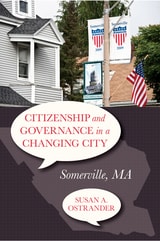
cover of Citizenship and Governance in a Changing City: Somerville, MA

Citizenship and Governance in a Changing City

Somerville, MA

Susan Ostrander

Temple University Press, 2013

Overcoming a past of deteriorating homes, empty storefronts, and corrupt city administrations, Somerville, Massachusetts, just outside of Boston, today proudly defines itself as a longtime immigrant city, a historically blue collar town, and a hip new urban center with a progressive city government.

In Citizenship and Governance in a Changing City, Susan Ostrander shows how beneath current high levels of engagement by Somerville residents lies a struggle about who should be the city's elected leaders and how they should conduct the city's affairs. It is a struggle waged between diverse residents--relatively new immigrants and a new middle class-trying to gain a foothold in democratic participation, and the city's political "old guard." 

Citizenship and Governance in a Changing City informs current debates about the place of immigrants in civic and political life, and the role of voluntary associations in local politics and government. In the process, Ostrander provides useful lessons for many midsize urban communities.
 
[more]
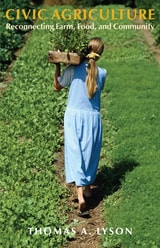
cover of Civic Agriculture: Reconnecting Farm, Food, and Community

Civic Agriculture

Reconnecting Farm, Food, and Community

Thomas A. Lyson

University Press of New England, 2004
While the American agricultural and food systems follow a decades-old path of industrialization and globalization, a counter trend has appeared toward localizing some agricultural and food production. Thomas A. Lyson, a scholar-practitioner in the field of community-based food systems, calls this rebirth of locally based agriculture and food production civic agriculture because these activities are tightly linked to a community’s social and economic development. Civic agriculture embraces innovative ways to produce, process, and distribute food, and it represents a sustainable alternative to the socially, economically, and environmentally destructive practices associated with conventional large-scale agriculture. Farmers’ markets, community gardens, and community-supported agriculture are all forms of civic agriculture. Lyson describes how, in the course of a hundred years, a small-scale, diversified system of farming became an industrialized system of production and also how this industrialized system has gone global. He argues that farming in the United States was modernized by employing the same techniques and strategies that transformed the manufacturing sector from a system of craft production to one of mass production. Viewing agriculture as just another industrial sector led to transformations in both the production and the processing of food. As small farmers and food processors were forced to expand, merge with larger operations, or go out of business, they became increasingly disconnected from the surrounding communities. Lyson enumerates the shortcomings of the current agriculture and food systems as they relate to social, economic, and environmental sustainability. He then introduces the concept of community problem solving and offers empirical evidence and concrete examples to show that a re-localization of the food production system is underway.
[more]
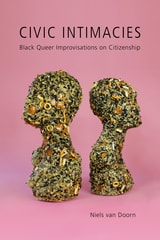
cover of Civic Intimacies: Black Queer Improvisations on Citizenship

Civic Intimacies

Black Queer Improvisations on Citizenship

Niels van Doorn

Temple University Press, 2019

Black queer lives often exist outside conventional civic institutions and therefore have to explore alternative intimacies to experience a sense of belonging. Civic Intimacies examines how—and to what extent—these different forms of intimacy catalyze the values, aspirations, and collective flourishing of Black queer denizens of Baltimore. Niels van Doorn draws on 18 months of immersive ethnographic fieldwork for his innovative cross-disciplinary analysis of contemporary debates in political and cultural theory. 

Van Doorn describes the way that these systematically marginalized communities improvise on citizenship not just to survive but also to thrive despite the proliferation of violence and insecurity in their lives. By reimagining citizenship as the everyday reparative work of building support structures, Civic Intimacies highlights the extent to which sex, kinship, memory, religious faith, and sexual health are rooted in collective practices that are deeply political. These systems sustain the lives of Black queer Baltimoreans who find themselves stuck in a city they cannot give up on—even though it has in many ways given up on them.
[more]
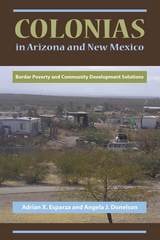
cover of Colonias in Arizona and New Mexico: Border Poverty and Community Development Solutions

Colonias in Arizona and New Mexico

Border Poverty and Community Development Solutions

Adrian X. Esparza and Angela J. Donelson

University of Arizona Press, 2008

There are approximately half a million people living in 227 officially designated colonias in southern Arizona and New Mexico. These border communities are characterized by poor-quality housing, a lack of infrastructure (paved roads, water and sewer systems, and electricity), high levels of poverty and unemployment, and a disproportionate concentration of Hispanics. These colonias comprise one of the country’s largest pockets of poverty. Even so, little is known about these towns or the people who live in them. This book provides the first comprehensive treatment of Arizona and New Mexico colonias, with the aim of increasing their visibility and promoting community development.

Beginning with an examination of the origins of border region settlement and the emergence of colonias in southern Arizona and New Mexico in the late 1800s, the book then turns to an assessment of current social, economic, and housing conditions. The authors also examine how Mexico’s recent economic crises and U.S. immigration and border security policies have shaped the quality of life in colonias, and they evaluate recent community development initiatives. By examining the challenges and successes of these recent efforts, the authors are able to provide a generalized plan for community development. Balancing analyses of these communities with a review of the positive steps taken to improve the quality of life of their inhabitants, Colonias in Arizona and New Mexico is an indispensable tool for anyone interested in public policy or immigration issues.
[more]
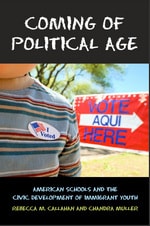
cover of Coming of Political Age: American Schools and the Civic Development of Immigrant Youth

Coming of Political Age

American Schools and the Civic Development of Immigrant Youth

Rebecca M. Callahan

Russell Sage Foundation, 2013
As one of the fastest-growing segments of the American population, the children of immigrants are poised to reshape the country’s political future. The massive rallies for immigration rights in 2006 and the recent push for the DREAM Act, both heavily supported by immigrant youth, signal the growing political potential of this crucial group. While many studies have explored the political participation of immigrant adults, we know comparatively little about what influences civic participation among the children of immigrants. Coming of Political Age persuasively argues that schools play a central role in integrating immigrant youth into the political system. The volume shows that the choices we make now in our educational system will have major consequences for the country’s civic health as the children of immigrants grow and mature as citizens. Coming of Political Age draws from an impressive range of data, including two large surveys of adolescents in high schools and interviews with teachers and students, to provide an insightful analysis of trends in youth participation in politics. Although the children of both immigrant and native-born parents register and vote at similar rates, the factors associated with this likelihood are very different. While parental educational levels largely explain voting behavior among children of native-born parents, this volume demonstrates that immigrant children’s own education, in particular their exposure to social studies, strongly predicts their future political participation. Learning more about civic society and putting effort into these classes may encourage an interest in politics, suggesting that the high school civics curriculum remains highly relevant in an increasingly disconnected society. Interestingly, although their schooling predicts whether children of immigrants will vote, how they identify politically depends more on family and community influences. As budget cuts force school administrators to realign academic priorities, this volume argues that any cutback to social science programs may effectively curtail the political and civic engagement of the next generation of voters. While much of the literature on immigrant assimilation focuses on family and community, Coming of Political Age argues that schools—and social science courses in particular—may be central to preparing the leaders of tomorrow. The insights and conclusions presented in this volume are essential to understand how we can encourage more participation in civic action and improve the functioning of our political system.
[more]
cover of Community Builders

Community Builders

Gordana Rabrenovic

Temple University Press, 1996
In the 1980s the failure of corporate strategies and trickle-down economics led to gross inequalities among many U.S. neighborhoods and cities. By examining and comparing a gentrifying and a low-income neighborhood in two medium-sized cities, Gordana Rabrenovic shows how the problems they faced are typical of a number of neighborhoods nationwide. In particular, Rabrenovic focuses on the relationship between neighborhood associations and urban restructuring, arguing persuasively that the success of neighborhood associations depends more on the city in which the neighborhood is located than on the neighborhood itself. Her tale discusses two very different cities with distinct political economies: Albany, a healthy service sector city, and Schenectady, a declining manufacturing city. Acknowledging both the value and limits of collective action, Rabrenovic addresses issues of particular relevance in urban areas, such as land use and crime, as well as the need for neighborhood organizations to forge links with local elites and other neighborhoods, and to engage and bring together poor and minority residents. Her analysis of neighborhood-based mobilization, preservation, and revitalization illuminates the ways in which grassroots issues intersect with prevailing political agendas and the national economy, as well as how issues such as race and class affect daily community politics.
[more]
cover of Community Organizing and Community Building for Health and Social Equity, 4th edition

Community Organizing and Community Building for Health and Social Equity, 4th edition

Meredith Minkler and Patricia Wakimoto

Rutgers University Press, 2022

The fourth edition of Community Organizing and Community Building for Health and Social Equity provides both classic and recent contributions to the field, with a special accent on how these approaches can contribute to health and social equity. The 23 chapters offer conceptual frameworks, skill- building and case studies in areas like coalition building, organizing by and with women of color, community assessment, and the power of the arts, the Internet, social media, and policy and media advocacy in such work. The use of participatory evaluation and strategies and tips on fundraising for community organizing also are presented, as are the ethical challenges that can arise in this work, and helpful tools for anticipating and addressing them. Also included are study questions for use in the classroom. 
 
Many of the book’s contributors are leaders in their academic fields, from public health and social work, to community psychology and urban and regional planning, and to social and political science. One author was the 44th president of the United States, himself a former community organizer in Chicago, who reflects on his earlier vocation and its importance. Other contributors are inspiring community leaders whose work on-the-ground and in partnership with us “outsiders” highlights both the power of collaboration, and the cultural humility and other skills required to do it well. 

Throughout this book, and particularly in the case studies and examples shared, the role of context is critical, and never far from view. Included here most recently are the horrific and continuing toll of the COVID-19 pandemic, and a long overdue, yet still greatly circumscribed, “national reckoning with systemic racism,” in the aftermath of the brutal police killing of yet another unarmed Black person, and then another and another, seemingly without  end. In many chapters, the authors highlight different facets of the Black Lives Matter movement that  took on new life across the country and the world in response to these atrocities.  In other chapters, the existential threat of climate change and grave threats to democracy also are underscored.

View the Table of Contents and introductory text for the supplementary instructor resources. (https://d3tto5i5w9ogdd.cloudfront.net/wp-content/uploads/2022/02/04143046/9781978832176_optimized_sampler.pdf)

Supplementary instructor resources are available on request: https://www.rutgersuniversitypress.org/communityorganizing
[more]
cover of Community Organizing and Community Building for Health and Welfare

Community Organizing and Community Building for Health and Welfare

Edited by Meredith Minkler

Rutgers University Press, 2012

The third edition of Community Organizing and Community Building for Health and Welfare provides new and more established ways to approach community building and organizing, from collaborating with communities on assessment and issue selection to using the power of coalition building, media advocacy, and social media to enhance the effectiveness of such work.

With a strong emphasis on cultural relevance and humility, this collection offers a wealth of case studies in areas ranging from childhood obesity to immigrant worker rights to health care reform. A "tool kit" of appendixes includes guidelines for assessing coalition effectiveness, exercises for critical reflection on our own power and privilege, and training tools such as "policy bingo." From former organizer and now President Barack Obama to academics and professionals in the fields of public health, social work, urban planning, and community psychology, the book offers a comprehensive vision and on-the-ground examples of the many ways community building and organizing can help us address some of the most intractable health and social problems of our times.
Dr. Minkler's course syllabus: Although Dr. Minkler has changed the order of some chapters in the syllabus to accommodate guest speakers and help students prep for the midterm assignment she uses, she arranged the actual book layout in a way that should flow quite naturally if instructors wish to use it in the order in which chapters appear.
[more]
cover of Contesting Community: The Limits and Potential of Local Organizing

Contesting Community

The Limits and Potential of Local Organizing

DeFilippis, James

Rutgers University Press, 2010

What do community organizations and organizers do, and what should they do? For the past thirty years politicians, academics, advocates, and activists have heralded community as a site and strategy for social change. In contrast, Contesting Community paints a more critical picture of community work which, according to the authors--in both theory and practice--has amounted to less than the sum of its parts. Their comparative study of efforts in the United States, the United Kingdom, and Canada describes and analyzes the limits and potential of this work.

Covering dozens of groups, including ACORN, Brooklyn's Fifth Avenue Committee, and the Immigrant Workers Centre in Montreal, and discussing alternative models, this book is at once historical and contemporary, global and local. Contesting Community addresses one of the vital issues of our day--the role and meaning of community in people's lives and in the larger political economy.
[more]