Results by title
83 books match the query 'Country & Bluegrass' and 10 start with c
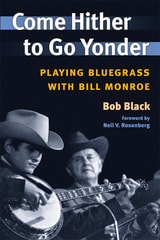
Come Hither to Go Yonder
Playing Bluegrass with Bill MonroeBob Black
University of Illinois Press, 2005
Bob Black was a member of Bill Monroe's Blue Grass Boys in the 1970s. Black's memoir of his time with the man he called the Chief offers the unique vantage point of a man who traveled and performed extensively with the Father of Bluegrass at a time when the music had opened up to new audiences--and Monroe had become a living legend.
Both role model and taskmaster, Monroe exerted a profound influence on Black and the musicians who have carried on the bluegrass tradition. In addition to Black's one-of-a-kind story, Come Hither to Go Yonder includes complete listing of Black's appearances with Monroe, recollections of the memorable experiences they shared while working together, descriptions of other important musicians and bands, and suggestions for further reading and listening.
Offering a rare perspective on the creative forces that drove one of America's greatest composers and musical innovators, Come Hither to Go Yonder rewards fans of Bill Monroe and bluegrass while offering an insider's view of a crucial time in the music's history.
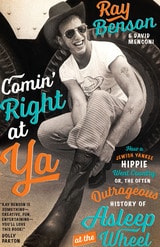
Comin' Right at Ya
How a Jewish Yankee Hippie Went Country, or, the Often Outrageous History of Asleep at the WheelBy Ray Benson, and David Menconi
University of Texas Press, 2015
A who’s who of American popular music fills this lively memoir, in which Ray Benson recalls how a Philadelphia Jewish hippie and his bandmates in Asleep at the Wheel turned on generations of rock and country fans to Bob Wills–style Western swing.
A six-foot-seven-inch Jewish hippie from Philadelphia starts a Western swing band in 1970, when country fans hate hippies and Western swing. It sounds like a joke but—more than forty years, twenty-five albums, and ten Grammy Awards later—Asleep at the Wheel is still drawing crowds around the world. The roster of musicians who’ve shared a stage with the Wheel is a who’s who of American popular music—Van Morrison, Willie Nelson, Dolly Parton, Emmylou Harris, George Strait, Vince Gill, Lyle Lovett, and so many more. And the bandleader who’s brought them all together is the hippie that claimed Bob Wills’s boots: Ray Benson.
In this hugely entertaining memoir, Benson looks back over his life and wild ride with Asleep at the Wheel from the band’s beginning in Paw Paw, West Virginia, through its many years as a Texas institution. He vividly recalls spending decades in a touring band, with all the inevitable ups and downs and changes in personnel, and describes the making of classic albums such as Willie and the Wheel and Tribute to the Music of Bob Wills and the Texas Playboys. The ultimate music industry insider, Benson explains better than anyone else how the Wheel got rock hipsters and die-hard country fans to love groovy new-old Western swing. Decades later, they still do.
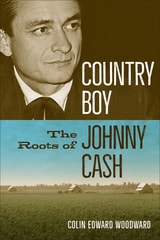
Country Boy
The Roots of Johnny CashColin Edward Woodward
University of Arkansas Press, 2022
Winner, 2023 J. G. Ragsdale Book Award from the Arkansas Historical Association
Because Johnny Cash cut his classic singles at Sun Records in Memphis and reigned for years as country royalty from his Nashville-area mansion, people tend to associate the Man in Black with Tennessee. But some of Cash’s best songs—including classics like “Pickin’ Time,” “Big River,” and “Five Feet High and Rising”—sprang from his youth in the sweltering cotton fields of northeastern Arkansas.
In Country Boy, Colin Woodward combines biography, history, and music criticism to illustrate how Cash’s experiences in Arkansas shaped his life and work. The grip of the Great Depression on Arkansas’s small farmers, the comforts and tragedies of family, and a bedrock of faith all lent his music the power and authenticity that so appealed to millions. Though Cash left Arkansas as an eighteen-year-old, he often returned to his home state, where he played some of his most memorable and personal concerts. Drawing upon the country legend’s songs and writings, as well as the accounts of family, fellow musicians, and chroniclers, Woodward reveals how the profound sincerity and empathy so central to Cash’s music depended on his maintaining a deep connection to his native Arkansas—a place that never left his soul.
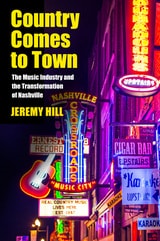
Country Comes to Town
The Music Industry and the Transformation of NashvilleJeremy Hill
University of Massachusetts Press, 2016
Country music evokes a simple, agrarian past, with images of open land and pickup trucks. While some might think of the genre as a repository of nostalgia, popular because it preserves and reveres traditional values, Jeremy Hill argues that country music has found such expansive success because its songs and its people have forcefully addressed social and cultural issues as well as geographic change. Hill demonstrates how the genre and its fans developed a flexible idea of “country,” beyond their rural roots, and how this flexibility allowed fans and music to “come to town,” to move into and within urban spaces, while retaining a country “character.”
To understand how the genre has become the far-reaching commercial phenomenon that it is today, Hill explores how various players within the country music fold have grappled with the notion of place. He shows both how the industry has transformed the city of Nashville and how country music—through song lyrics, imagery associated with the music, and branding—has reshaped ideas about the American landscape and character. As the genre underwent significant change in the last decades of the twentieth century, those who sought to explain its new styles and new locations relied on a traditional theme: “You can take the boy out of the country, but you can't take the country out of the boy.” Hill demonstrates how this idea—that you can still be “country” while no longer living in a rural place—has been used to expand country's commercial appeal and establish a permanent home in the urban space of Nashville.

Country Music Humorists and Comedians
Loyal Jones
University of Illinois Press, 2008
Q: Is he afraid of work?
A: No, he can lie down beside it and go to sleep.
This volume is an encyclopedia of the many country music performers who made comedy a central part of their careers. Loyal Jones offers an informative biographical sketch of each performer and many entries include a sample of the artist's humor, a recording history, and amusing anecdotal tidbits. Starting with vaudeville and radio barn dance figures like the Skillet Lickers and the Weaver Brothers and Elviry, Jones moves on to the regulars on Hee Haw and the Grand Old Opry and present-day comedians from the Austin Lounge Lizards to Jeff Foxworthy.
Jones's introductory essay discusses such topics as stock comic figures, venues for comedic performance, and benchmark performers. Throughout the volume, he places each performer squarely in the context of the country music community, its performing traditions, and each artist's place in the larger cultural milieu.
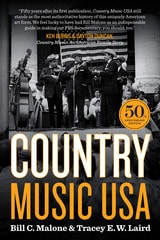
Country Music USA
50th Anniversary EditionBy Bill C. Malone and Tracey E. W. Laird
University of Texas Press, 2018
“Fifty years after its first publication, Country Music USA still stands as the most authoritative history of this uniquely American art form. Here are the stories of the people who made country music into such an integral part of our nation’s culture. We feel lucky to have had Bill Malone as an indispensable guide in making our PBS documentary; you should, too.”
—Ken Burns and Dayton Duncan, Country Music: An American Family Story
From reviews of previous editions:
“Considered the definitive history of American country music.”
—Los Angeles Times
“If anyone knows more about the subject than [Malone] does, God help them.”
—Larry McMurtry, from In a Narrow Grave
“With Country Music USA, Bill Malone wrote the Bible for country music history and scholarship. This groundbreaking work, now updated, is the definitive chronicle of the sweeping drama of the country music experience.”
—Chet Flippo, former editorial director, CMT: Country Music Television and CMT.com
“Country Music USA is the definitive history of country music and of the artists who shaped its fascinating worlds.”
—William Ferris, University of North Carolina at Chapel Hill, former chairman of the National Endowment for the Humanities and coeditor of the Encyclopedia of Southern Culture
Since its first publication in 1968, Bill C. Malone’s Country Music USA has won universal acclaim as the definitive history of American country music. Starting with the music’s folk roots in the rural South, it traces country music from the early days of radio into the twenty-first century. In this fiftieth-anniversary edition, Malone, the featured historian in Ken Burns’s 2019 documentary on country music, has revised every chapter to offer new information and fresh insights. Coauthor Tracey Laird tracks developments in country music in the new millennium, exploring the relationship between the current music scene and the traditions from which it emerged.
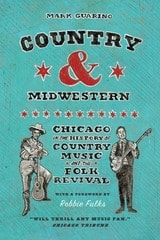
Country and Midwestern
Chicago in the History of Country Music and the Folk RevivalMark Guarino
University of Chicago Press, 2023
Chicago is revered as a musical breeding ground, having launched major figures like blues legend Muddy Waters, gospel soul icon Mavis Staples, hip-hop firebrand Kanye West, and the jazz-rock band that shares its name with the city. Far less known, however, is the vital role Chicago played in the rise of prewar country music, the folk revival of the 1950s and 1960s, and the contemporary offspring of those scenes.
In Country and Midwestern, veteran journalist Mark Guarino tells the epic century-long story of Chicago’s influence on sounds typically associated with regions further south. Drawing on hundreds of interviews and deep archival research, Guarino tells a forgotten story of music, migration, and the ways that rural culture infiltrated urban communities through the radio, the automobile, and the railroad. The Midwest’s biggest city was the place where rural transplants could reinvent themselves and shape their music for the new commercial possibilities the city offered. Years before Nashville emerged as the commercial and spiritual center of country music, major record labels made Chicago their home and recorded legendary figures like Bill Monroe, The Carter Family, and Gene Autry. The National Barn Dance—broadcast from the city’s South Loop starting in 1924—flourished for two decades as the premier country radio show before the Grand Ole Opry. Guarino chronicles the makeshift niche scenes like “Hillbilly Heaven” in Uptown, where thousands of relocated Southerners created their own hardscrabble honky-tonk subculture, as well as the 1960s rise of the Old Town School of Folk Music, which eventually brought national attention to local luminaries like John Prine and Steve Goodman. The story continues through the end of the twentieth century and into the present day, where artists like Jon Langford, The Handsome Family, and Wilco meld contemporary experimentation with country traditions.
Featuring a foreword from Grammy-nominated singer-songwriter Robbie Fulks and casting a cross-genre net that stretches from Bob Dylan to punk rock, Country and Midwestern rediscovers a history as sprawling as the Windy City—celebrating the creative spirit that modernized American folk idioms, the colorful characters who took them into new terrain, and the music itself, which is still kicking down doors even today.
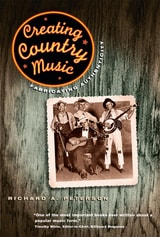
Creating Country Music
Fabricating AuthenticityRichard A. Peterson
University of Chicago Press, 1997
"[Peterson] restores to the music a sense of fun and diversity and possibility that more naive fans (and performers) miss. Like Buck Owens, Peterson knows there is no greater adventure or challenge than to 'act naturally.'"—Ken Emerson, Los Angeles Times Book Review
"A triumphal history and theory of the country music industry between 1920 and 1953."—Robert Crowley, International Journal of Comparative Sociology
"One of the most important books ever written about a popular music form."—Timothy White, Billboard Magazine
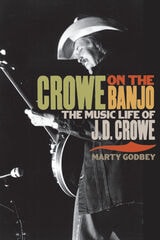
Crowe on the Banjo
The Music Life of J.D. CroweMarty Godbey
University of Illinois Press, 2011
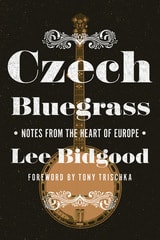
Czech Bluegrass
Notes from the Heart of EuropeLee Bidgood
University of Illinois Press, 2017
Lee Bidgood offers a fascinating study of the Czech bluegrass phenomenon that merges intimate immersion in the music with on-the-ground fieldwork informed by his life as a working musician. Drawing on his own close personal and professional interactions, Bidgood charts how Czech bluegrass put down roots and looks at its performance as a uniquely Czech musical practice. He also reflects on “Americanist” musical projects and the ways Czech musicians use them to construct personal and social identities. Bidgood sees these acts of construction as a response to the Czech Republic’s postsocialist environment but also to US cultural prominence within our global mediascape.