Results by title
56 books match the query 'Crafts & Hobbies' and 3 start with c
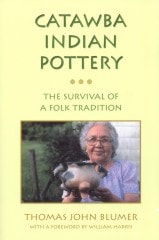
Catawba Indian Pottery
The Survival of a Folk TraditionThomas John Blumer, with a foreword by William L. Harris
University of Alabama Press, 2004
Traces the craft of pottery making among the Catawba Indians of North Carolina from the late 18th century to the present
When Europeans encountered them, the Catawba Indians were living along the river and throughout the valley that carries their name near the present North Carolina-South Carolina border. Archaeologists later collected and identified categories of pottery types belonging to the historic Catawba and extrapolated an association with their protohistoric and prehistoric predecessors.
In this volume, Thomas Blumer traces the construction techniques of those documented ceramics to the lineage of their probable present-day master potters or, in other words, he traces the Catawba pottery traditions. By mining data from archives and the oral traditions of contemporary potters, Blumer reconstructs sales circuits regularly traveled by Catawba peddlers and thereby illuminates unresolved questions regarding trade routes in the protohistoric period. In addition, the author details particular techniques of the representative potters—factors such as clay selection, tool use, decoration, and firing techniques—which influence their styles.
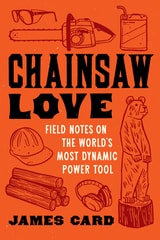
Chainsaw Love
Field Notes on the World's Most Dynamic Power ToolJames Card
Wisconsin Historical Society Press, 2025
Behold the mighty chainsaw and discover its history, its influence, and its people
Considered the most powerful of all hand tools, the chainsaw has been vital to contemporary life in ways large, small, and sometimes surprising since it first came on the market in the 1940s. In Chainsaw Love, author James Card celebrates this formidable implement in unflinching style, sharing stories and reflections about the world of chainsaws and the people who use and appreciate them.
Card describes the personal freedom that comes from harvesting your own trees for firewood and introduces readers to lumberjack competitors, hot-saw builders, and the sculpture carvers who take sawing to new heights. Chainsaw Love asserts the key role chainsaws play in clearing the right-of-way for powerlines to keep the electrical grid humming; in forestry and conservation efforts to maintain desirable ecosystems; and in the sciences, where ecologists and astronomers use chainsaws to age trees for scientific research. Card also considers the chainsaw’s place in pop culture, from movies to rock songs to presidential photo ops.
Readers of Chainsaw Love will discover the lore and terminology of forests and wood cutting— widow makers and windthrows, witness trees and barber chairs, pumpkin pine, devil’s forks, cat faces, and schoolmarms. Additionally, the book offers insights into chainsaw variations and parts, guidelines for saw care and maintenance, safety recommendations, and other hard-won tips and tricks. Dozens of photos from the field, as well as helpful diagrams, add to readers’ understanding of the saw’s evolution and modern use.
Part homage, part social history, and part field guide, Chainsaw Love is the perfect book for chainsaw users of all stripes—from loggers to conservationists, woodworkers to weekend cabin-dwellers—and anyone curious about this magnificent and underappreciated machine.
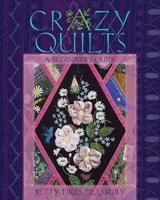
Crazy Quilts
A Beginner’s GuideBetty Fikes Pillsbury
Ohio University Press, 2016
Textile artist and instructor Betty Fikes Pillsbury has won hundreds of awards for her homages to the elegance of Victorian crazy quilting. Grounded in traditional methods but crafted with elements of whimsy, each piece stands on its own as a work of art. In this definitive guide, Pillsbury shares her methods for piecing, embroidering, and embellishing. Her instructions equip readers at any level of quilting skill to use those techniques to express their own visions.
Encouraging her readers to see functional and artistic possibilities beyond quilts (wall hangings, purses, and pillowcases are just some of the options), Pillsbury shows them how to make each work by hand, the slow cloth way. An inspiring primer for beginning and experienced quilters alike, this meticulously illustrated how-to book is far more expansive than previous guides. Pillsbury—a master of the form—shows us why crazy quilting belongs firmly in the twenty-first century.