95 books match the query 'Crimes against' and 7 start with c

cover of Chilling Effect: A Lucinda Hayes Mystery

Chilling Effect

A Lucinda Hayes Mystery

Marianne Wesson

University Press of Colorado, 2004

Equal parts courtroom drama, intellectual journey, and character study, Chilling Effect is Marianne Wesson's most provocative Lucinda Hayes mystery to date.

When attorney Lucinda Hayes reluctantly agrees to represent the mother of a brutally slain child, she must convince the court that the makers of a pornographic film are liable for the murder. As the case unfolds, Lucinda calls upon all her personal strength and legal talent, facing down her own ghosts as well as the powerful entertainment industry's star lawyers.

In Chilling Effect, Wesson affirms the power of free speech to inspire the best and the worst human behavior and explores the tension between freedom and accountability
[more]
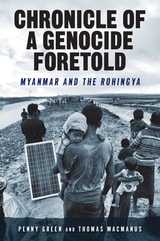
cover of Chronicle of a Genocide Foretold: Myanmar and the Rohingya

Chronicle of a Genocide Foretold

Myanmar and the Rohingya

Penny Green

Rutgers University Press, 2027

Chronicle of a Genocide Foretold is a powerful account of one of the most devastating human crises of the 21st century. Drawing on firsthand research conducted in Burma (Myanmar) and neighboring countries, the book uncovers how the Rohingya Muslims have been systematically isolated, impoverished, and targeted in a state-led genocidal campaign. Through more than 150 interviews with survivors, local officials, religious leaders, and international actors, the authors reveal how discrimination, mass displacement, and organized brutality have created conditions that meet the legal, criminological, and moral definition of genocide. The book also challenges the silence and complicity of the international community. Accessible and grounded in rigorous research, this book speaks to scholars, activists, policymakers, and anyone concerned with justice, human rights, and the global failure to prevent genocide.
[more]
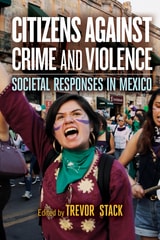
cover of Citizens against Crime and Violence: Societal Responses in Mexico

Citizens against Crime and Violence

Societal Responses in Mexico

Trevor Stack

Rutgers University Press, 2022
Mexico has become notorious for crime-related violence, and the efforts of governments and national and international NGOs to counter this violence have proven largely futile. Citizens against Crime and Violence studies societal responses to crime and violence within one of Mexico’s most affected regions, the state of Michoacán. Based on comparative ethnography conducted over twelve months by a team of anthropologists and sociologists across six localities of Michoacán, ranging from the most rural to the most urban, the contributors consider five varieties of societal responses: local citizen security councils that define security and attempt to influence its policing, including by self-defense groups; cultural activists looking to create safe 'cultural' fields from which to transform their social environment; organizations in the state capital that combine legal and political strategies against less visible violence (forced disappearance, gender violence, anti-LGBT); church-linked initiatives bringing to bear the church’s institutionality, including to denounce 'state capture'; and women’s organizations creating 'safe' networks allowing to influence violence prevention.
[more]
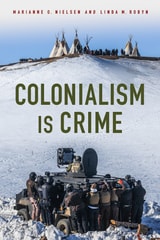
cover of Colonialism Is Crime

Colonialism Is Crime

Marianne Nielsen

Rutgers University Press, 2019
There is powerful evidence that the colonization of Indigenous people was and is a crime, and that that crime is on-going. Achieving historical colonial goals often meant committing acts that were criminal even at the time. The consequences of this oppression and criminal victimization is perhaps the critical factor explaining why Indigenous people today are overrepresented as victims and offenders in the settler colonist criminal justice systems. This book presents an analysis of the relationship between these colonial crimes and their continuing criminal and social consequences that exist today. The authors focus primarily on countries colonized by Britain, especially the United States. Social harm theory, human rights covenants, and law are used to explain the criminal aspects of the historical laws and their continued effects. The final chapter looks at the responsibilities of settler-colonists in ameliorating these harms and the actions currently being taken by Indigenous people themselves.
[more]
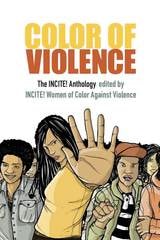
cover of Color of Violence: The INCITE! Anthology

Color of Violence

The INCITE! Anthology

INCITE! Women of Color Against Violence, editor

Duke University Press, 2016
The editors and contributors to Color of Violence ask: What would it take to end violence against women of color? Presenting the fierce and vital writing of organizers, lawyers, scholars, poets, and policy makers, Color of Violence radically repositions the antiviolence movement by putting women of color at its center. The contributors shift the focus from domestic violence and sexual assault and map innovative strategies of movement building and resistance used by women of color around the world. The volume's thirty pieces—which include poems, short essays, position papers, letters, and personal reflections—cover violence against women of color in its myriad forms, manifestations, and settings, while identifying the links between gender, militarism, reproductive and economic violence, prisons and policing, colonialism, and war. At a time of heightened state surveillance and repression of people of color, Color of Violence is an essential intervention.
 
Contributors. Dena Al-Adeeb, Patricia Allard, Lina Baroudi, Communities Against Rape and Abuse (CARA), Critical Resistance, Sarah Deer, Eman Desouky, Ana Clarissa Rojas Durazo, Dana Erekat, Nirmala Erevelles, Sylvanna Falcón, Rosa Linda Fregoso, Emi Koyama, Elizabeth "Betita" Martínez, maina minahal, Nadine Naber, Stormy Ogden, Julia Chinyere Oparah, Beth Richie, Andrea J. Ritchie, Dorothy Roberts, Loretta J. Ross, s.r., Puneet Kaur Chawla Sahota, Renee Saucedo, Sista II Sista, Aishah Simmons, Andrea Smith, Neferti Tadiar, TransJustice, Haunani-Kay Trask, Traci C. West, Janelle White
[more]
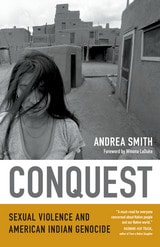
cover of Conquest: Sexual Violence and American Indian Genocide

Conquest

Sexual Violence and American Indian Genocide

Andrea Smith

Duke University Press, 2005

In this revolutionary text, prominent Native American studies scholar and activist Andrea Smith reveals the connections between different forms of violence—perpetrated by the state and by society at large—and documents their impact on Native women. Beginning with the impact of the abuses inflicted on Native American children at state-sanctioned boarding schools from the 1880s to the 1980s, Smith adroitly expands our conception of violence to include the widespread appropriation of Indian cultural practices by whites and other non-Natives; environmental racism; and population control. Smith deftly connects these and other examples of historical and contemporary colonialism to the high rates of violence against Native American women—the most likely to suffer from poverty-related illness and to survive rape and partner abuse. Smith also outlines radical and innovative strategies for eliminating gendered violence.
 
[more]
cover of Crimes against the State, Crimes against Persons: Detective Fiction in Cuba and Mexico

Crimes against the State, Crimes against Persons

Detective Fiction in Cuba and Mexico

Persephone Braham

University of Minnesota Press, 2004

An interpretation of the ideologies and kinships of detective fiction in Cuba and Mexico

The transplanted, inherently modern detective genre serves as an especially effective lens for exposing the fissures and divergences of modernity in post-1968 Mexico and revolutionary Cuba.

Combining in-depth critical analyses with the theoretical insights of current literary and cultural theory and Latin American postmodern studies, Crimes against the State, Crimes against Persons shows how the Cuban novela negra examines the Revolution through an incisive chronicle of life under a decaying regime, and how the Mexican neopoliciaco reveals the oppressive politics of modernization and globalization in Latin America.International in scope, comparative in approach, Braham’s study presents a unique inquiry into the ethical and aesthetic complexities that Latin American authors face in adapting genre detective fiction—a modern, metropolitan model—to radically diverse creative and ideological programs. Considering the work of writers such as Leonardo Padura Fuentes and Paco Ignacio Taibo II, as well as such English-language influences as G. K. Chesterton and Chester Himes, Braham also addresses Marxist critiques of the culture industry and emergent Latin American concepts of postmodernity.
[more]