Results by title
100 books match the query 'Criminal justice, Administration of' and 21 start with c
COVID Diagnosed the System
Lessons from the Pandemic in Massachusetts PrisonsBridget Conley
Rutgers University Press, 0
The American criminal justice system was in flux in 2020, a clash of possibilities for reform, retrenchment, and radical change—nowhere more so than in Massachusetts, which had just passed major criminal justice reform. The COVID-19 pandemic interrupted the moment with life-threatening force, ravaging people held in prisons and jails across the country. However, it did not so much create new deprivations and suffering as it exposed prisons as sites of physical, institutional, and psychological violence that do not make communities safer. At the same time, advocates for people in prisons—including many incarcerated and formerly incarcerated people—seized on the pandemic’s disruptions to demand change. Detailing the first year of the pandemic inside the Massachusetts state prison system, this book argues that the history of the pandemic inside prisons exposed both the cruelties of incarceration and the power of change when it is led by directly affected people.

CRIMINAL CONVERSATIONS
Victorian Crimes, Social Panic, and Moral OutrageEdited by Judith Rowbotham and Kim Stevenson
The Ohio State University Press, 2005
Chinese Netizens' Opinions on Death Sentences
An Empirical ExaminationBin Liang and Jianhong Liu
University of Michigan Press, 2021
Few social issues have received more public attention and scholarly debate than the death penalty. While the abolitionist movement has made a successful stride in recent decades, a small number of countries remain committed to the death penalty and impose it with a relatively high frequency. In this regard, the People’s Republic of China no doubt leads the world in both numbers of death sentences and executions. Despite being the largest user of the death penalty, China has never conducted a national poll on citizens’ opinions toward capital punishment, while claiming “overwhelming public support” as a major justification for its retention and use.
Chinese Netizens’ Opinions on Death Sentences: An Empirical Examination uses a forum of public comments to explore and examine Chinese netizens’ opinions on the death penalty. Based on a content analysis of 38,512 comments collected from 63 cases in 2015, this study examines the diversity and rationales of netizens’ opinions, netizens’ interactions, and their evaluation of China’s criminal justice system. In addition, the book discusses China’s social, systemic, and structural problems and critically examines the rationality of netizens’ opinions based on Habermas’s communicative rationality framework. Readers will be able to contextualize Chinese netizens’ discussions and draw conclusions about commonalities and uniqueness of China’s death penalty practice.
Clean Hands and Rough Justice
An Investigating Magistrate in Renaissance ItalyDavid S. Chambers and Trevor Dean
University of Michigan Press, 1997
Collision Course
Economic Change, Criminal Justice Reform, and Work in AmericaKathleen Auerhahn
Rutgers University Press, 2022
Recently, a widespread consensus has emerged that the era of “mass incarceration” is at an end, reflected in a declining prison population. Criminal justice reforms such as diversion and problem-solving courts, a renewed focus on reentry, and drug policy reform have as their goal keeping more individuals with justice system involvement out of prisons, in the community and subsequently in the labor force, which lacks the capacity to accommodate these additional would-be workers. This poses significant problems for criminal justice practice, which relies heavily on employment as a signal of offenders’ intentions to live a law-abiding lifestyle. The diminished capacity of the economy to utilize the labor of all who have historically been expected to work presents significant challenges for American society. Work, in the American ethos is the marker of success, masculinity and how one “contributes to society.” What are the consequences of ignoring these converging structural trends? This book examines these potential consequences, the meaning of work in American society, and suggests alternative redistributive and policy solutions to avert the collision course of these economic and criminal justice policy trends.

Correctional
Ravi Shankar
University of Wisconsin Press, 2021
Shankar’s bold and complex self-portrait—and portrait of America—challenges us to rethink our complicity in the criminal justice system and mental health policies that perpetuate inequity and harm. Correctional dives into the inner workings of his mind and heart, framing his unexpected encounters with law and order through the lenses of race, class, privilege, and his bicultural upbringing as the first and only son of South Indian immigrants. Vignettes from his early life set the scene for his spectacular fall and subsequent struggle to come to terms with his own demons. Many of them, it turns out, are also our own.
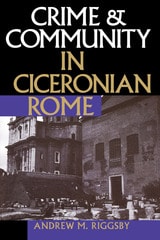
Crime and Community in Ciceronian Rome
By Andrew M. Riggsby
University of Texas Press, 1999
In the late Roman Republic, acts of wrongdoing against individuals were prosecuted in private courts, while the iudicia publica (literally "public courts") tried cases that involved harm to the community as a whole. In this book, Andrew M. Riggsby thoroughly investigates the types of cases heard by the public courts to offer a provocative new understanding of what has been described as "crime" in the Roman Republic and to illuminate the inherently political nature of the Roman public courts.
Through the lens of Cicero's forensic oratory, Riggsby examines the four major public offenses: ambitus (bribery of the electorate), de sicariis et veneficiis (murder), vis (riot), and repetundae (extortion by provincial administrators). He persuasively argues that each of these offenses involves a violation of the proper relations between the state and the people, as interpreted by orators and juries. He concludes that in the late Roman Republic the only crimes were political crimes.
Crime and Justice, Volume 33
Crime and Punishment in Western Countries, 1980-1999Edited by Michael Tonry and David P. Farrington
University of Chicago Press Journals, 2006

Crime and Justice, Volume 35
Crime and Justice in the NetherlandsEdited by Michael Tonry and Catrien Bijleveld
University of Chicago Press Journals, 2008
Crime and Justice, Volume 36
Crime, Punishment, and Politics in Comparative PerspectiveEdited by Michael Tonry
University of Chicago Press Journals, 2008
Crime and Justice, Volume 40
Crime and Justice in ScandinaviaEdited by Michael Tonry and Tapio Lappi-Seppälä
University of Chicago Press Journals, 2012
Since 1979 the Crime and Justice series has presented a review of the latest international research, providing expertise to enhance the work of sociologists, psychologists, criminal lawyers, justice scholars, and political scientists. The series explores a full range of issues concerning crime, its causes, and its cure.
Volume 40, Crime and Justice in Scandinavia, offers the most comprehensive and authoritative look ever available at criminal justice policies, practices, and research in the Nordic countries. Topics range from the history of violence through juvenile delinquency, juvenile justice, and sentencing to controversial contemporary policies on prostitution, victims, and organized crime. Contributors to this volume include Jon-Gunnar Bernburg, Ville Hinkkanen, Cecilie Høigård, Hanns von Hofer, Charlotta Holmström, Janne Kivivuori, Lars Korsell, Tapio Lappi-Seppälä, Paul Larsson, Martti Lehti, Torkild Hovde Lyngstad, Sven-Axel Månsson, Anita Rönneling, Lise-Lotte Rytterbro, Torbjørn Skardhamar, May-Len Skilbrei, and Henrik Tham.
Crime and Justice, Volume 42
Crime and Justice in America: 1975-2025Edited by Michael Tonry
University of Chicago Press Journals, 2012
For the American criminal justice system, 1975 was a watershed year. Offender rehabilitation and individualized sentencing fell from favor. The partisan politics of “law and order” took over. Among the results four decades later are the world’s harshest punishments and highest imprisonment rate. Policymakers’ interest in what science could tell them plummeted just when scientific work on crime, recidivism, and the justice system began to blossom. Some policy areas—sentencing, gun violence, drugs, youth violence—became evidence-free zones. In others—developmental crime prevention, policing, recidivism studies, evidence mattered. Crime and Justice in America: 1975-2025 tells how policy and knowledge did and did not interact over time and charts prospects for the future. What accounts for the timing of particular issues and research advances? What did science learn or reveal about crime and justice, and how did that knowledge influence policy? Where are we now, and, perhaps even more important, where are we going?
The contributors to this volume, the leading scholars in their fields, bring unsurpassed breadth and depth of knowledge to bear in answering these questions. They include Philip J. Cook, Francis T. Cullen, Jeffrey Fagan, David Farrington, Daniel S. Nagin, Peter Reuter, Lawrence W. Sherman, and Franklin E. Zimring.
For thirty-five years, the Crime and Justice series has provided a platform for the work of sociologists, psychologists, criminal lawyers, justice scholars, and political scientists as it explores the full range of issues concerning crime, its causes, and it remedies.
Crime and Justice, Volume 46
Reinventing American Criminal JusticeEdited by Michael Tonry
University of Chicago Press Journals, 2017

Crime and Justice, Volume 9
Prediction and Classification in Criminal Justice Decision MakingEdited by Don M. Gottfredson and Michael Tonry
University of Chicago Press Journals, 1988
Crime and Social Justice in Indian Country
Edited by Marianne O. Nielsen and Karen Jarratt-Snider
University of Arizona Press, 2018
Crime and Social Justice in Indian Country calls to attention the need for culturally appropriate research protocols and critical discussions of social and criminal justice in Indian Country. The contributors come from the growing wave of Native American as well as non-Indigenous scholars who employ these methods. They reflect on issues in three key areas: crime, social justice, and community responses to crime and justice issues. Topics include stalking, involuntary sterilization of Indigenous women, border-town violence, Indian gaming, child welfare, and juvenile justice. These issues are all rooted in colonization; however, the contributors demonstrate how Indigenous communities are finding their own solutions for social justice, sovereignty, and self-determination.
Thanks to its focus on community responses that exemplify Indigenous resilience, persistence, and innovation, this volume will be valuable to those on the ground working with Indigenous communities in public and legal arenas, as well as scholars and students. Crime and Social Justice in Indian Country shows the way forward for meaningful inclusions of Indigenous peoples in their own justice initiatives.
Contributors
Alisse Ali-Joseph
William G. Archambeault
Cheryl Redhorse Bennett
Danielle V. Hiraldo
Lomayumptewa K. Ishii
Karen Jarratt-Snider
Eileen Luna-Firebaugh
Anne Luna-Gordinier
Marianne O. Nielsen
Linda M. Robyn
Crime in the Public Mind
Kathlyn Taylor Gaubatz
University of Michigan Press, 1995
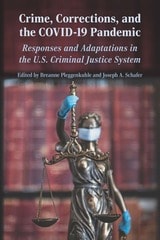
Crime, Corrections, and the COVID-19 Pandemic
Responses and Adaptations in the U.S. Criminal Justice SystemEdited by Breanne Pleggenkuhle and Joseph A. Schafer
Southern Illinois University Press, 2025
Analyses of crime and justice in an unprecedented time
While COVID-19 lockdowns affected nearly everyone worldwide, feelings of anxiety and fear were exacerbated for those already entangled in the criminal justice system. Scholars recognized the unique opportunity to study crime and the justice system’s response during this period, though they soon realized that determining the pandemic’s effects would be a complicated, nuanced process.
Crime, Corrections, and the COVID-19 Pandemic features analyses and findings from more than thirty contributors in eleven essays. The collection examines the multifaceted social, economic, cultural, legislative, and policy responses to COVID-19 and their impacts on crime and justice. It also explores how professionals across the criminal justice system—police officers, campus police officers, attorneys, judges, correctional staff, and community supervision agents—adapted to unprecedented challenges.
The book provides real-world evidence of how unconventional solutions and groundbreaking practices were implemented in response to a global crisis. Contributors analyze how incarcerated individuals, their families, and their supervisors dealt with the fear of transmission, medical care, and death. Their findings, which are necessarily dependent on timing, place, measurement, and operationalization, include both change and stasis, both negative and positive outcomes. For instance, while minor and property-related offenses initially declined, violent crimes like homicide and intimate partner violence increased. Drug usage patterns changed, leading to a rise in opioid overdoses, and despite the rise in digital interactions, there was no significant difference in self-reported cybervictimization. Furthermore, rates of gang-related crimes did not decrease. Policy and public health responses reshaped criminal activities, influencing the methods and motivations behind theft, child and elder abuse, and other offenses. This volume includes in-depth examinations of certain often-overlooked crimes, such as labor trafficking, and provides direct insights into the job challenges faced by criminal justice professionals, from probation personnel to labor rights advocates.
Emerging innovations in health risk management within correctional facilities led to increased awareness and focus on specific types of crime. Responses to the pandemic revealed significant challenges, such as burnout among justice system personnel, difficulties in adapting and innovating, and challenges in providing services to vulnerable populations.
Through diverse perspectives and empirical approaches ranging from advanced statistical analysis to qualitative interviews, Crime, Corrections, and the COVID-19 Pandemic offers a comprehensive exploration of the complexities that affect research results. It showcases the resilience and innovation within the criminal justice field and details the challenges professionals in this area tackled during a universally trying time, presenting valuable lessons for future crises.
Criminal Justice in Native America
Edited by Marianne O. Nielsen and Robert A. Silverman
University of Arizona Press, 2009
Each of the fourteen chapters of Criminal Justice in Native America was commissioned specifically for this volume. Contributors—many of whom are Native Americans—rank among the top scholars in their fields. Some of the chapters treat broad subjects, including crime, police, courts, victimization, corrections, and jurisdiction. Others delve into more specific topics, including hate crimes against Native Americans, state-corporate crimes against Native Americans, tribal peacemaking, and cultural stresses of police officers. Separate chapters are devoted to women and juveniles.
The well-known scholar Marianne Nielsen provides a context-setting introduction, in which she addresses the history of the legal treatment of Native Americans in the United States as well as a provocative conclusion that details important issues for current and future research in Native American criminal justice studies. Intended to introduce students to the substantive concerns of a range of disciplines that contribute to Native American Studies—among them, criminal justice and criminology, law, sociology, and anthropology—Criminal Justice in Native America will interest all readers who are concerned about relationships between Native peoples and prevailing criminal justice systems.
Criminology and Public Policy
Putting Theory to WorkHugh Barlow
Temple University Press, 2009
In applying theories to real world issues—such as reducing crime and violence, prisoner reentry policies, gang behavior, and treatment courts—the contributors take both a macro and micro level approach. They find, too, that it is often difficult to turn theory into practice. Still, the very attempt pushes the criminal justice system toward workable solutions rather than ideological approaches, an orientation the editors believe will lead to greater progress in combating one of our society’s greatest difficulties.
Contributors include: Robert Agnew, Ronald L. Akers, Gordon Bazemore, Ronald V. Clarke, J. Heith Copes, Frank Cullen, Marcus Felson, Marie Griffin, Scott Jacques, David Kauzlarich, Jean McGloin, Steven Messner, Alex Piquero, Nicole Leeper Piquero, Nancy Rodriguez, Richard B. Rosenfeld, Dawn Rothe, Andrea Schoepfer, Neal Shover, Cassia Spohn, Katherine Tellis, Charles Tittle, Richard Wright, and the editors.
Criminology and Public Policy
Putting Theory to WorkScott H. Decker and Kevin A. Wright
Temple University Press, 2018
In the field of criminal justice, public policy is designed to address the problems brought on by criminal behavior and the response to that behavior. However, too often, the theories carefully developed in the academy fail to make their way into programs and policy. The editors and contributors to this second edition of Criminology and Public Policy highlight the recent development of “translational criminology” to address the growing movement in criminology to use the results of criminological research and theory to better inform policy and practice.
The essays in Criminology and Public Policy propose an in-depth look at both theory and practice and how they are integrated across a number of key criminal justice problems—from racial and environmental concerns to gun control and recidivism rates as well as police use of force and mass incarceration. The end result is an essential volume that blends both theory and practice in an effort to address the critical problems in explaining, preventing, responding to, and correcting criminal behavior.
Contributors include: Robert K. Ax, Michelle N. Block, Anthony A. Braga, Rod K. Brunson, Jennifer Carlson, Ronald V. Clarke, Shea Cronin, Megan Denver, Kevin M. Drakulich, Grant Duwe, Amy Farrell, Cheryl Jonson, Charis E. Kubrin, Justin Kurland, Megan Kurlychek, Shannon Magnuson, Daniel P. Mears, Robert D. Morgan, Kathleen Powell, Danielle Rudes, Cassia Spohn, Cody Telep, Natalie Todak, Glenn Trager, Jillian J. Turanovic, Sara Wakefield, Patricia Warren, David Weisburd, Michael D. White, Rob White, Lauren Wilson and the editors
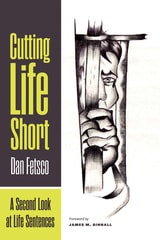
Cutting Life Short
A Second Look at Life SentencesDan Fetsco
University of Wyoming Press, 2026
Cutting Life Short challenges the idea that people who commit murder or other serious crimes are incapable of rehabilitation. The book tracks the growing population of people serving life in Wyoming and the US and explores research that indicates that much of the public, including victims of violent crime, support second chances for people who are serving excessive sentences.
Just over 200,000 Americans are now serving life sentences—more than the entire US prison population in 1970—in a cruel and fiscally irresponsible system, even though many inmates have demonstrated sustained rehabilitation over decades. Through individual case studies of Wyoming inmates, ranging from those who deserve release to rare cases like Matthew Shepard’s killer, who should remain imprisoned, the book explores themes of punishment, redemption, and justice reform while examining issues like prosecutorial misconduct, three-strike penalties, and restorative justice programs. Cases include the stories of Darla Rouse (one of Wyoming’s few commutation recipients), Russell Harrison (who claims he had an early release deal), and James Koester (whose investigating detective became his advocate). Drawing from a decade of experience on the Wyoming parole board, where he witnessed hundreds of rehabilitated inmates denied release despite widespread support from corrections officials and sometimes even victims, author Daniel Fetsco advocates creating systematic review processes for lengthy sentences that remove elected officials from clemency decisions, alongside broader reforms like restoring voting rights for former felons and promoting responsible crime reporting over fear-mongering sensationalism.
This forward-looking book argues that most of the people sentenced to life in prison can be, and should have been, safely released into the community and offers recommendations to help alleviate the problems associated with life sentences in Wyoming and across the US criminal justice system. It is of significance to students, scholars, professionals, and the general public invested in law, criminal justice and social justice.