Results by title
434 books match the query 'Criticism & Theory' and 21 start with c
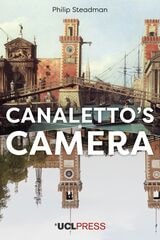
Canaletto's Camera
Philip Steadman
University College London, 2025
Canaletto’s Camera provides a revelatory look at how the Venetian master Antonio Canaletto (1697–1768) used the camera obscura, a precursor to the modern camera, to create his meticulous cityscapes. Drawing on new research, Steadman examines Canaletto’s connections to contemporary scientists and his reliance on measured architectural drawings, discovering previously unrecognized techniques that shaped his iconic views of Venice and London.
By analyzing Canaletto’s sketches and reconstructing an 18th-century camera obscura, Steadman and his colleagues have recreated the artist’s process, demonstrating how he traced real scenes, altered them in his finished works, and even engaged in a form of early photomontage. Through digital overlays and side-by-side comparisons with contemporary photographs, the book challenges assumptions about Canaletto’s realism and artistic manipulation.
Lavishly illustrated and deeply engaging, Canaletto’s Camera is a compelling read for art historians, scholars of optical devices, and those fascinated by the intersection of art and science.
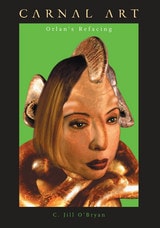
Carnal Art
Orlan’s RefacingC. Jill O'Bryan
University of Minnesota Press, 2005
Chicana Art
The Politics of Spiritual and Aesthetic AltaritiesLaura E. Pérez
Duke University Press, 2007
Creating an invaluable archive, Laura E. Pérez examines the work of more than forty Chicana artists across a variety of media including painting, printmaking, sculpture, performance, photography, film and video, comics, sound recording, interactive CD-ROM, altars and other installation forms, and fiction, poetry, and plays. While key works from the 1960s and 1970s are discussed, most of the pieces considered were produced between 1985 and 2001. Providing a rich interpretive framework, Pérez describes how Chicana artists invoke a culturally hybrid spirituality to challenge racism, bigotry, patriarchy, and homophobia. They make use of, and often radically rework, pre-Columbian Mesoamerican and other non-Western notions of art and art-making, and they struggle to create liberating versions of familiar iconography such as the Virgin of Guadalupe and the Sacred Heart. Filled with representations of spirituality and allusions to non-Western visual and cultural traditions, the work of these Chicana artists is a vital contribution to a more inclusive canon of American arts.

Chitrakar
Benode Behari Mukherjee
Seagull Books, 2026
What happens when a passage from the world of light to the world of darkness opens onto a new chapter of life? A retrospective account of a pioneering Indian artist who continued to paint after losing his eyesight.
Benode Behari Mukherjee (1904–1980) was one of the most influential and highly regarded artists in the history of modern Indian art. Chitrakar brings together four broadly autobiographical pieces written by Benode Behari after he lost his eyesight in the summer of 1957. The Artist is a selective reminiscence recapturing various pictures from the years of his childhood, apprenticeship, and maturity, up to the time he became blind. Master of the Household is a candid and complex fictionalized account of his struggle to come to terms with his blindness and continue making art. The Creator is a simple, but telling, parable about the vanity of inordinate ambition. Finally, Art Quest outlines his philosophy of art and the basic elements of his work.
In the sensitive and empathetic hands of K. G. Subramanyan, once his student and later himself a major figure in the Indian art scene, this translation, appearing for the first time in English, is a precious and timeless document.
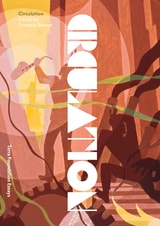
Circulation
Edited by François Brunet
Terra Foundation for American Art, 2017
The third volume in the Terra Foundation Essays series, Circulation brings together an international and interdisciplinary team of scholars, including Thierry Gervais, Tom Gunning, J. M. Mancini, Frank Mehring, and Hélène Valance, who map the multiple planes where artistic meaning has been produced by the circulation of art from the eighteenth century to the present. The book looks at both broad historical trends and the successes and failures of particular works of art from a wide variety of artists and styles. Together, the contributions significantly expand the conceptual and methodological terrain of scholarship on American art.
City/Art
The Urban Scene in Latin AmericaRebecca E. Biron , ed.
Duke University Press, 2009
Contributors delve into the aspirations embodied in the modernist urbanism of Brasília and the work of Lotty Rosenfeld, a Santiago performance artist who addresses the intersections of art, urban landscapes, and daily life. One author assesses the political possibilities of public art through an analysis of subway-station mosaics and Julio Cortázar’s short story “Graffiti,” while others look at the representation of Buenos Aires as a “Jewish elsewhere” in twentieth-century fiction and at two different responses to urban crisis in Rio de Janeiro. The collection closes with an essay by a member of the São Paulo urban intervention group Arte/Cidade, which invades office buildings, de-industrialized sites, and other vacant areas to install collectively produced works of art. Like that group, City/Art provides original, alternative perspectives on specific urban sites so that they can be seen anew.
Contributors. Hugo Achugar, Rebecca E. Biron, Nelson Brissac Peixoto, Néstor García Canclini, Adrián Gorelik, James Holston, Amy Kaminsky, Samuel Neal Lockhart, José Quiroga, Nelly Richard, Marcy Schwartz, George Yúdice
Clement Greenberg Between the Lines
Including a Debate with Clement GreenbergThierry de Duve
University of Chicago Press, 2010
Clement Greenberg (1909–1994), champion of abstract expressionism and modernism—of Pollock, Miró, and Matisse—has been esteemed by many as the greatest art critic of the second half of the twentieth century, and possibly the greatest art critic of all time. This volume, a lively reassessment of Greenberg’s writings, features three approaches to the man and his work: Greenberg as critic, doctrinaire, and theorist. The book also features a transcription of a public debate with Greenberg that de Duve organized at the University of Ottawa in 1988. Clement Greenberg Between the Lines will be an indispensable resource for students, scholars, and enthusiasts of modern art.
“In this compelling study, Thierry de Duve reads Greenberg against the grain of the famous critic’s critics—and sometimes against the grain of the critic himself. By reinterpreting Greenberg’s interpretations of Pollock, Duchamp, and other canonical figures, de Duve establishes new theoretical coordinates by which to understand the uneasy complexities and importance of Greenberg’s practice.” John O’Brian, editor of Clement Greenberg: The Collected Essays and Criticisms
“De Duve is an expert on theoretical aesthetics and thus well suited to reassess the formalist tenets of the late American art critic's theory on art and culture. . . . De Duve's close readings of Greenberg . . . contain much of interest, and the author clearly enjoys matching wits with ‘the world's best known art critic.’” Library Journal
Clement Greenberg, Late Writings
Clement Greenberg
University of Minnesota Press, 2007
Clement Greenberg (1909-1994) was a colossus of twentieth-century American art, achieving a degree of authority almost unimaginable for a critic today. For more than thirty years he was both lionized as a proponent of formalism and criticized for his perceived dogmatism. In the postwar period Greenberg used his position of influence to advocate the importance of abstract expressionism and color-field painting and to establish the careers of such artists as Jackson Pollock, Hans Hofmann, Barnett Newman, and Willem de Kooning. With the coming of pop art, performance and conceptual art, and postmodernism, however, Greenberg found his position increasingly challenged.
Edited with an introduction by critic Robert C. Morgan, Clement Greenberg, Late Writings is the first collection from the period 1970 to 1990, and the only comprehensive resource for Greenberg’s thought during the last third of his life. While earlier works have covered Greenberg’s early and middle career, this volume spans his mature period, during which he reevaluates and refines many of his earlier tenets in some of his most carefully crafted and engaging work. Exploring a surprising breadth of issues and mediums and demonstrating a depth of aesthetic and philosophical insights, in these relatively unknown works Greenberg incites a new direction for modernism beyond the twentieth century.
This essential volume includes five interviews from the end of his life in which Greenberg revisits some of the concerns of his formative years, illuminating the progression of his thought. Late Writings is an integral resource as issues of quality and significance in the dynamic world of art continue to be redefined.
Clement Greenberg was the most influential art critic of the postwar period. He was the author of numerous books, and his essays appeared in art magazines as well as such publications as Partisan Review, Commentary, and The Nation.
Robert C. Morgan is the author of The End of the Art World and of a monograph on the optical painter Vasarely. In addition to his work as a critic, artist, art historian, and curator, he is visiting professor of art at Hunter College in New York City.
Cloning Terror
The War of Images, 9/11 to the PresentW. J. T. Mitchell
University of Chicago Press, 2010
The phrase “War on Terror” has quietly been retired from official usage, but it persists in the American psyche, and our understanding of it is hardly complete. Nor will it be, W. J. T Mitchell argues, without a grasp of the images that it spawned, and that spawned it.
Exploring the role of verbal and visual images in the War on Terror, Mitchell finds a conflict whose shaky metaphoric and imaginary conception has created its own reality. At the same time, Mitchell locates in the concept of clones and cloning an anxiety about new forms of image-making that has amplified the political effects of the War on Terror. Cloning and terror, he argues, share an uncanny structural resemblance, shuttling back and forth between imaginary and real, metaphoric and literal manifestations. In Mitchell’s startling analysis, cloning terror emerges as the inevitable metaphor for the way in which the War on Terror has not only helped recruit more fighters to the jihadist cause but undermined the American constitution with “faith-based” foreign and domestic policies.
Bringing together the hooded prisoners of Abu Ghraib with the cloned stormtroopers of the Star Wars saga, Mitchell draws attention to the figures of faceless anonymity that stalk the ever-shifting and unlocatable “fronts” of the War on Terror. A striking new investigation of the role of images from our foremost scholar of iconology, Cloning Terror will expand our understanding of the visual legacy of a new kind of war and reframe our understanding of contemporary biopower and biopolitics.
Close Writing
Kathy Acker, Cookie Mueller, and Love-in-PiecesAlice Butler
Duke University Press, 2026

Color Harmonies
Augusto Garau
University of Chicago Press, 1993
Garau, a painter who teaches the psychology of form, pays particular attention to the way colors behave when organized in patterns. His theory of color combination addresses two principal compositional elements: the relations between figure and ground and the phenomenon of transparency.
Garau meticulously analyzes the use of color in paintings by masters such as Cézanne, Picasso, and Matisse to show how his theory applies to actual works of art. Containing many full-color examples, his introduction to the workings of color relations is of great practical use to art historians and critics, artists, interior decorators, fashion and set designers, and anyone who works with color to display information or convey emotions.
"In an area of the psychology of art where reliable guidance is still so hard to come by, [Garau's] well-supported contributions to the theory of color composition ought to be welcomed by practitioners and scholars alike."—from the Foreword by Rudolf Arnheim
Communities of Sense
Rethinking Aesthetics and PoliticsBeth Hinderliter, William Kaizen, Vered Maimon, Jaleh Mansoor, and Seth McCormick, eds.
Duke University Press, 2009
The first of the collection’s three sections explicitly examines the links between aesthetics and social and political experience. Here a new essay by Rancière posits art as a key site where disagreement can be staged in order to produce new communities of sense. In the second section, contributors investigate how sense was constructed in the past by the European avant-garde and how it is mobilized in today’s global visual and political culture. Exploring the viability of various models of artistic and political critique in the context of globalization, the authors of the essays in the volume’s final section suggest a shift from identity politics and preconstituted collectivities toward processes of identification and disidentification. Topics discussed in the volume vary from digital architecture to a makeshift museum in a Paris suburb, and from romantic art theory in the wake of Hegel to the history of the group-subject in political art and performance since 1968. An interview with Étienne Balibar rounds out the collection.
Contributors. Emily Apter, Étienne Balibar, Carlos Basualdo, T. J. Demos, Rachel Haidu, Beth Hinderliter, David Joselit, William Kaizen, Ranjanna Khanna, Reinaldo Laddaga, Vered Maimon, Jaleh Mansoor, Reinhold Martin, Seth McCormick, Yates McKee, Alexander Potts, Jacques Rancière, Toni Ross
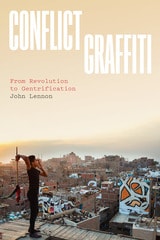
Conflict Graffiti
From Revolution to GentrificationJohn Lennon
University of Chicago Press, 2021
Graffiti makes for messy politics. In film and television, it is often used to create a sense of danger or lawlessness. In bathroom stalls, it is the disembodied expression of gossip, lewdness, or confession. But it is also a resistive tool of protest, making visible the disparate voices and interests that come together to make a movement.
In Conflict Graffiti, John Lennon dives into the many permutations of graffiti in conflict zones—ranging from the protest graffiti of the Black Lives Matter movement in Ferguson and the Tahrir Square demonstrations in Egypt, to the tourist-attraction murals on the Israeli Separation Wall and the street art that has rebranded Detroit and post-Katrina New Orleans. Graffiti has played a crucial role in the revolutionary movements of these locales, but as the conflict subsides a new graffiti and street art scene emerges—often one that ushers in postconflict consumerism, gentrification, militarization, and anesthetized forgetting.
Graffiti has an unstable afterlife, fated to be added to, transformed, overlaid, photographed, reinterpreted, or painted over. But as Lennon concludes, when protest movements change and adapt, graffiti is also uniquely suited to shapeshift with them.

Constructed Situations
A New History of the Situationist InternationalFrances Stracey
Pluto Press, 2014
The Situationist International were a group of anti-authoritarian, highly cultured, revolutionary artists whose energy and enragement fundamentally shaped the revolutions of the late 1960’s, most famously in Paris in May ‘68. They took on their shoulders the history of the workers’ struggle, saw that it had been corrupted by authoritarianism and transformed it, with influences incorporating the avant-garde via Dada and Surrealism. They were not Marxologists, defenders of the faith. Marxism came back to life in their raging analyses, the use of the ‘spectacle’ and at the heart of the project was the idea of the constructed situation.
This book by Frances Stracey offers itself up as the ‘first historiography of constructed situations’. Within it are new insights into the movement, and with them, a sense of relevance to political situations and practice today. As an archivist, Stracey uncovered new documents which, amongst other things, revealed how the SI related to representations of sexuality; and is able to discuss whether they could be considered as feminists or not. She also looked at their famous motto ‘Never Work’ and again shows how alienated labour is even more relevant to us today.
Constructed Situations is not a history of celebrated personalities, or cultural influences, or political circumstances. It is instead an open door to one of the most influential art movements in modern history, and an invitation for us to reclaim inspiration from this ubiquitous movement.
Contemporary Asian Art at Biennials
John Clark
National University of Singapore Press, 2025
How did contemporary Asian art move from the margins to the global stage, and what role did biennials play in shaping its trajectory? In this incisive study, renowned art historian John Clark unpacks the rise of biennials in Asia since the 1990s and depicts how these sprawling exhibitions have challenged and reinforced the forces of globalization. By examining key biennials in Australia, China, Japan, and Singapore, Clark exposes the tensions between national agendas, independent curatorial ambitions, and the neoliberal art economy that transformed once-radical movements into global spectacles. He explores how biennials create networks of artists and curators who simultaneously resist and reproduce the very systems they critique, shaping not just regional art scenes but the broader narrative of contemporary art itself.
As the euphoria surrounding global contemporary art fades, Clark’s deeply researched history offers a crucial reexamination of the structures that have defined Asian art on the world stage. Richly illustrated and rigorously argued, Contemporary Asian Art at Biennials is a valuable resource for scholars, curators, and those interested in the shifting dynamics of the art world.
Contract With The Skin
Masochism, Performance Art, and the 1970sKathy O'Dell
University of Minnesota Press, 1998
Places masochistic performance within a social and historical context.
Having yourself shot. Putting out fires with your bare hands and feet. Biting your own body and photographing the marks. Sewing your own mouth shut. These seemingly aberrant acts were committed by performance artists during the 1970s. Why would anyone do these things? What do these kinds of masochistic performances tell us about the social and historical context in which they occurred? Fascinating and accessibly written, Contract with the Skin addresses such questions through a reconsideration of these acts in relation to psychoanalytic and legal concepts of masochism.
O’Dell argues that the growth of masochistic performance during the 1970s must be seen in the context of society’s response to the Vietnam War and contemporaneous changes in theories of contract. She contends that the dynamic that exists between audience and performer during these masochistic acts relates to tensions resulting from ruptures in the social contract. Indeed, as the war in Vietnam waned, so did masochistic performance, only to reemerge in the 1980s in relation to the “war on AIDS” and the censorious “culture wars.”Focusing on 1970s performance artists Vito Acconci, Chris Burden, Gina Pane, and collaborators Marina Abramovi´c/Ulay as well as those with similar sensibilities from the late 1980s onward (Bob Flanagan, David Wojnarowicz, Simon Leung, Catherine Opie, Ron Athey, Lutz Bacher, and Robby Garfinkel), O’Dell provides photographic documentation of performances and quotations from interviews with many of the artists. Throughout, O’Dell asks what we can do about the institutionalized forms of masochism for which these performances are metaphors. Contract with the Skin is a provocative guide to this little-studied area, and offers new ways of thinking about performance art and artistic production.
Conversations on Violence
An AnthologyBrad Evans
Pluto Press, 2021
Whether physical or metaphorical, institutional or interpersonal, violence is everywhere. A seemingly immutable fact of life, it is nonetheless rarely engaged with at the conceptual level. What does violence actually mean? And is it an inevitable part of the human condition?
Conversations on Violence brings together many of the world's leading critical scholars, artists, writers and cultural producers to provide a kaleidoscopic exploration of the concept of violence. Through in-depth interviews with thirty figures including Marina Abramovic, Kehinde Andrews and Simon Critchley, Brad Evans and Adrian Parr interrogate violence in all its manifestations, including its role in politics, art, gender discrimination and decolonisation.
Provocative, eye-opening and bracingly original, Conversations on Violence sheds light on a defining political and ethical concern of our age.
Creative Life
Music, Politics, People, and MachinesBob Ostertag
University of Illinois Press, 2008
Drawing on his intimate engagement with political conflict in Latin America and the Balkans, Ostertag identifies an art of "insurgent politics" that struggles to expand the parameters of the physical and social world. He also discusses his innovative collaborations with major modern performers, filmmakers, and artists around the world. Part memoir, part journalism, and part aesthetic manifesto, Creative Life is a dazzling set of writings from a musical artist who has worked on the cutting edge of new music for thirty years.

Critical Digital Art History
Interface and Data Politics in the Post-Digital EraEdited by Amanda Wasielewski and Anna Näslund
Intellect Books, 2024
Digital art history has often aligned itself with the practical concerns of digital technology and the responsibilities of art institutions and associated institutional roles such as collection managers, information specialists, curators, and conservators. This emphasis on practicalities and implementation, while undeniably important, has often left little room for critical examination of the broader implications of digital technology and computational methodologies in art history.
A long-standing concern of the field—and a major focal point of this book—is museum and collecting practices in the digital era. While there is a certain degree of continuity in the field, there are also important shifts and changes to address—namely, the widespread uptake of artificial intelligence tools and increased attention to both the broader historical and societal aspects of the use of digital repositories and tools. This anthology seeks to address the dearth of critical reflection by critically assessing specific case study examples and considering the political dimensions associated with large-scale digitization and the application of digital tools within museums and collection management.
Criticism Without Authority
Gene Swenson's and Jill Johnston’s Queer PracticesJennifer Sichel
University of Chicago Press, 2025
In the early 1960s, Gene Swenson and Jill Johnston began to imagine art criticism as something unruly and expansive, rejecting modernist appeals to purity and coherence that had overtaken the field. These critics were deeply enmeshed in New York’s avant-garde art scene, and both were explicitly and unapologetically queer. First working independently of one another, then later in dialogue, Swenson and Johnston demanded criticism become life-sustaining, subverting protocols and distorting its form beyond recognition. They utilized criticism as a means of navigating queer existence and reclaimed terms like lesbian, homosexual, mad, and psychotic as their own.
Jennifer Sichel follows the intertwined paths of Swenson and Johnston, providing a history of queer practices that were central to the development of avant-garde art but have been largely overlooked. Criticism Without Authority makes their work visible not just as criticism, but as its own form of art. As Sichel shows, Swenson's and Johnston’s practices, bucking categories and disciplinary formations, resist historical streamlining and stand as a key for unlocking the queerness of postwar art history.
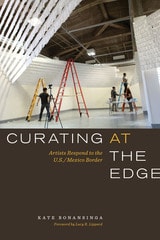
Curating at the Edge
Artists Respond to the U.S./Mexico BorderBy Kate Bonansinga
University of Texas Press, 2014
Located less than a mile from Juárez, the Stanlee and Gerald Rubin Center for Visual Arts at the University of Texas at El Paso is a non-collecting institution that serves the Paso del Norte region. In Curating at the Edge, Kate Bonansinga brings to life her experiences as the Rubin’s founding director, giving voice to a curatorial approach that reaches far beyond the limited scope of “border art” or Chicano art. Instead, Bonansinga captures the creative climate of 2004–2011, when contemporary art addressed broad notions of destruction and transformation, irony and subversion, gender and identity, and the impact of location on politics.
The Rubin’s location in the Chihuahuan desert on the U.S./Mexican border is meaningful and intriguing to many artists, and, consequently, Curating at the Edge describes the multiple artistic perspectives conveyed in the place-based exhibitions Bonansinga oversaw. Exciting mid-career artists featured in this collection of case studies include Margarita Cabrera, Liz Cohen, Marcos Ramírez ERRE, and many others. Recalling her experiences in vivid, first-person scenes, Bonansinga reveals the processes a contemporary art curator undertakes and the challenges she faces by describing a few of the more than sixty exhibitions that she organized during her tenure at the Rubin. She also explores the artists’ working methods and the relationship between their work and their personal and professional histories (some are Mexican citizens, some are U.S. citizens of Mexican descent, and some have ancestral ties to Europe). Timely and illuminating, Curating at the Edge sheds light on the work of the interlocutors who connect artists and their audiences.