Results by title
76 books match the query 'Cultural History' and 6 start with c

Chinese Silk
A Cultural HistoryShelagh Vainker
Rutgers University Press, 2004
Silk is one of China’s major contributions to world civilization, the secrets of its cultivation closely guarded for generations. The famous network of trade routes between West and East is still known as the Silk Road. The organization and techniques of Chinese silk production, the uses of the silk produced––both bolts and made-up pieces––and the types and styles of its ornament are celebrated in this richly illustrated and accessible book, the first general survey to be published in English.
Shelagh Vainker traces the cultural history of silk in China from its Neolithic origins to the twentieth century and considers its relationship to the other decorative arts. She traces the role of silk in Chinese history, trade, religion, and literature. Drawing on the most recent archaeological evidence from other, less perishable media such as jades and bronzes as well as paintings, poems, and other texts, Chinese Silk brings together material available until now only in Chinese, supplemented with recent acquisitions by public and private collections in the United States and Europe. The result is a book that illuminates the luxury of silk throughout the ages.
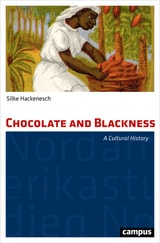
Chocolate and Blackness
A Cultural HistorySilke Hackenesch
Campus Verlag, 2017
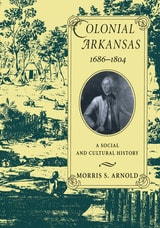
Colonial Arkansas, 1686-1804
A Social and Cultural HistoryMorris S. Arnold
University of Arkansas Press, 1993
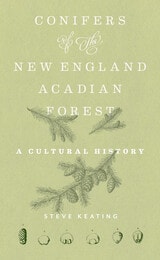
Conifers of the New England–Acadian Forest
A Cultural HistorySteve Keating
University of Massachusetts Press, 2024
Why did white pine help spark the American Revolution? How did balsam aid the development of germ theory? What does hemlock have to do with making leather? In Conifers of the New England–Acadian Forest, microbiologist Steve Keating explores how conifers influenced the course of human history, writing in a style that is both scientific and accessible.
Keating’s study focuses on one of the most forested and wild ecoregions in North America, which extends into New York, New England, and Canada and includes Acadia National Park. Here, spruces, firs, and cedars of the northern boreal forest mix with hemlocks and pines of more temperate climates. This combination helps create the appearance, aroma, and ecology of the region, and the trees’ unique botanical traits have been ingeniously utilized by numerous peoples including the Iroquois, French explorers, beer brewers, and shipbuilders. Keating concludes with identification guides for the conifers and where they can be found in Acadia National Park.
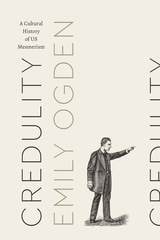
Credulity
A Cultural History of US MesmerismEmily Ogden
University of Chicago Press, 2018
Credulity tells the fascinating story of mesmerism’s spread from the plantations of the French Antilles to the textile factory cities of 1830s New England. As it proliferated along the Eastern seaboard, this occult movement attracted attention from Ralph Waldo Emerson’s circle and ignited the nineteenth-century equivalent of flame wars in the major newspapers. But mesmerism was not simply the last gasp of magic in modern times. Far from being magicians themselves, mesmerists claimed to provide the first rational means of manipulating the credulous human tendencies that had underwritten past superstitions. Now, rather than propping up the powers of oracles and false gods, these tendencies served modern ends such as labor supervision, education, and mediated communication. Neither an atavistic throwback nor a radical alternative, mesmerism was part and parcel of the modern. Credulity offers us a new way of understanding the place of enchantment in secularizing America.
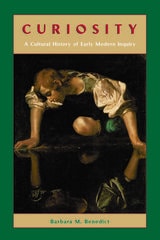
Curiosity
A Cultural History of Early Modern InquiryBarbara M. Benedict
University of Chicago Press, 2001
In this striking social history, Barbara M. Benedict draws on the texts of the early modern period to discover the era's attitudes toward curiosity, a trait we learn was often depicted as an unsavory form of transgression or cultural ambition.