75 books match the query 'Death & Dying' and 4 start with c
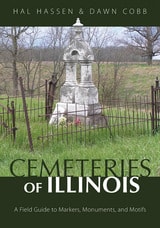
cover of Cemeteries of Illinois: A Field Guide to Markers, Monuments, and Motifs

Cemeteries of Illinois

A Field Guide to Markers, Monuments, and Motifs

Hal Hassen

University of Illinois Press, 2017

Illinois is home to cemeteries and burial grounds dating back to the Native American era. Whether sprawling over thousands of acres or dotting remote woodlands, these treasure troves of local and state history reflect two centuries of social, economic, and technological change. This easy-to-use guidebook invites amateur genealogists, historians, and cemetery buffs to decipher the symbols and uncover the fascinating past awaiting them in Illinois 's resting places. Hal Hassen and Dawn Cobb have combined almost three hundred photographs with expert detail to showcase how cemeteries and burial grounds can teach us about archaeology, folklore, art, geology, and social behavior. Features include
  • the ways different materials used as gravestones and markers reflect historical trends;
  • how to understanding the changes in the use of iconographic images;
  • the story behind architectural features like fencing, roads, and gates;
  • what enthusiasts can do to preserve local cemeteries for future generations.

Captivating and informed, Cemeteries of Illinois is the only guide you need to unlock the mysteries of our state 's final resting places.
[more]
cover of Companions for the Passage: Stories of the Intimate Privilege of Accompanying the Dying

Companions for the Passage

Stories of the Intimate Privilege of Accompanying the Dying

Marjorie Ryerson

University of Michigan Press, 2005

Companions for the Passage, from the author of the acclaimed Water Music, is an unforgettable book on a rarely visited subject: the personal stories of those who have witnessed the death of a loved one. Similar to works of Studs Terkel, author Marjorie Ryerson's interviews capture the human condition through their wide variety of experiences and voices.

Some of the interviewees are religious, some not; some encouraged their loved ones to accept death, others to fight it to the end. There are stories of heroic nurses and of indifferent hospital bureaucracies, of deaths that came too soon, and those that came at the end of a long, rich life. Possessing an affirmative quality that is anything but sentimental, ultimately these stories celebrate the experience of being present at the death of a loved one.
[more]
cover of Consoling Ghosts: Stories of Medicine and Mourning from Southeast Asians in Exile

Consoling Ghosts

Stories of Medicine and Mourning from Southeast Asians in Exile

Jean M. Langford

University of Minnesota Press, 2013

In conversation with emigrants from Laos and Cambodia, Jean M. Langford repeatedly met with spirits: the wandering souls of the seriously ill, dangerous ghosts of those who died by violence, restless ancestors displaced from their homes. For these emigrants, the dead not only appear in memories, safely ensconced in the past, but also erupt with a physical force into the daily life and dreams of the present.

Inspired by these conversations, Consoling Ghosts is a sustained contemplation of relationships with the dying and the dead. At their heart, as Langford’s work reveals, emigrants’ stories are parables not of cultural difference but rather of life and death. Langford inquires how and why spirits become implicated in remembering and responding to violence, whether the bloody violence of war or the more structural violence of social marginalization and poverty. What is at stake, she asks, when spirits break out of their usual confinement as symbolic figures for history, heritage, or trauma to haunt the corridors of hospitals and funeral homes? Emigrants’ theories and stories of ghosts, Langford suggests, inherently question the metaphorical status of spirits, in the process challenging both contemporary bioethics of dying and dominant styles of mourning. Consoling Ghosts explores the possibilities opened up by a more literal existence of ghosts, from the confrontation of shades of past violence through bodily ritual to rites of mourning that unfold in acts of material care for the dead instead of memorialization.

Ultimately the book invites us to consider alternate ways of facing death, conducting relationships with the dead and dying, and addressing the effects of violence that continue to reverberate in bodies and social worlds.
[more]
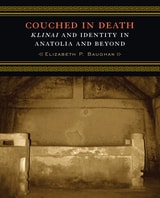
cover of Couched in Death: Klinai and Identity in Anatolia and Beyond

Couched in Death

Klinai and Identity in Anatolia and Beyond

Elizabeth P. Baughan

University of Wisconsin Press, 2013

In Couched in Death, Elizabeth P. Baughan offers the first comprehensive look at the earliest funeral couches in the ancient Mediterranean world. These sixth- and fifth-century BCE klinai from Asia Minor were inspired by specialty luxury furnishings developed in Archaic Greece for reclining at elite symposia. It was in Anatolia, however—in the dynastic cultures of Lydia and Phrygia and their neighbors—that klinai first gained prominence not as banquet furniture but as burial receptacles. For tombs, wooden couches were replaced by more permanent media cut from bedrock, carved from marble or limestone, or even cast in bronze. The rich archaeological findings of funerary klinai throughout Asia Minor raise intriguing questions about the social and symbolic meanings of this burial furniture. Why did Anatolian elites want to bury their dead on replicas of Greek furniture? Do the klinai found in Anatolian tombs represent Persian influence after the conquest of Anatolia, as previous scholarship has suggested?
            Bringing a diverse body of understudied and unpublished material together for the first time, Baughan investigates the origins and cultural significance of kline-burial and charts the stylistic development and distribution of funerary klinai throughout Anatolia. She contends that funeral couch burials and banqueter representations in funerary art helped construct hybridized Anatolian-Persian identities in Achaemenid Anatolia, and she reassesses the origins of the custom of the reclining banquet itself, a defining feature of ancient Mediterranean civilizations. Baughan explores the relationships of Anatolian funeral couches with similar traditions in Etruria and Macedonia as well as their "afterlife" in the modern era, and her study also includes a comprehensive survey of evidence for ancient klinai in general, based on analysis of more than three hundred klinai representations on Greek vases as well as archaeological and textual sources.
[more]