Results by title
54 books match the query 'Diaspora' and 4 start with c
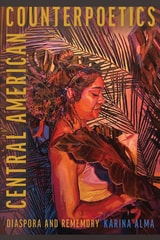
Central American Counterpoetics
Diaspora and RememoryKarina Alma
University of Arizona Press, 2024
Author Karina Alma offers a systemic method and artistic mode for unpacking social and political memory formation that resists dominant histories. Central American Counterpoetics responds to political repression through acts of creativity that prioritize the well-being of anticolonial communities. Building on Toni Morrison’s theory of rememory, the volume examines the concept as an embodied experience of a sensory place and time lived in the here and now. By employing primary sources of image and word, interviews of creatives, and a critical self-reflection as a Salvadoran immigrant woman in academia, Alma’s research breaks ground in subject matter and methods by considering cultural and historical ties across countries, regions, and traditions. The diverse creatives included explore critical perspectives on topics such as immigration, forced assimilation, maternal love, gender violence, community arts, and decolonization.
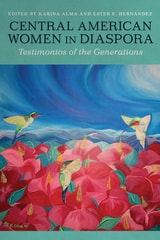
Central American Women in Diaspora
Testimonios of the GenerationsEdited by Karina Alma and Ester E. Hernández
University of Arizona Press, 2026
This collection centers Central American women’s voices within the growing narrative of the Central American diaspora. It provides a tapestry of testimonios—from grandmothers, mothers, daughters, and sisters—who explore what it means to be Central American women in the United States.
Through the practice of testimonio, contributors create intergenerational dialogues between mothers and daughters, engage with Indigenous oral traditions, and reflect on the violent histories of war in Guatemala, El Salvador, Honduras, and Nicaragua. The volume is organized around five themes: political histories, migration, gender and sexuality, navigating institutions, and healing. Within each theme contributors tackle a range of issues, including Central American political histories, healing, grief, Indigenous knowledge, memory, trauma, post-traumatic growth, organizing, creativity, and agency.
This anthology spans genres such as poetry, essay, and visual art to present diverse perspectives, including Indigenous, Afro-Indigenous, queer, and working-class voices. An intervention that centers gendered experiences and challenges oppressive structures, this volume celebrates the solidarity, cultural memory, and healing found within transnational ties.
Contributors
Leisy J. Abrego
Margoth Abrego
Bella
Juanita Cabrera López
Jennifer A. Cárcamo
Sandra Castro
Karla Cativo
Kency Cornejo
Gabriela Corona Valencia
Carolina Rivera Escamilla
Rafael Escamilla
Mildred Fuentes-Chung
Diana Gamez
Joanna Beltrán Girón
Ruth Girón
Victoria Gonzalez-Rivera
Claudia D. Hernández
Jessica Hernandez
Leticia Hernández-Linares
Leigh-Anna Hidalgo
Andrea Nikté Juarez Mendoza
Amanda Macal
Carla Macal
Patricia Veliz Macal
Kiara Aileen Machado
Beatriz Maldonado
Jacqueline Munguía
Joanna B. Pérez
Rossana Pérez
Katy Pinto
Claudia A. Portillo
Suyapa Portillo Villeda
Nalya Rodriguez
Jessica Saravia
Andrea Zelaya
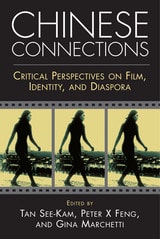
Chinese Connections
Critical Perspectives on Film, Identity, and DiasporaGina Marchetti
Temple University Press, 2009
Chinese Connections is a valuable new anthology that provides a prismatic look at the cross-fertilization between Chinese film and global popular culture. Leading film scholars consider the influence of world cinema on China-related and Chinese-related cinema over the last five decades. Highlighting the neglected connections between Chinese films and American and European cinema, the editors and contributors examine popular works such as Ang Lee’s The Hulk and Olivier Assayas’ Irma Vep to show the nexus of international film production and how national, political, social and sexual identities are represented in the Chinese diaspora.
With talent flowing back and forth between East and West, Chinese Connections explores how issues of immigration, class, race and economic displacement are viewed on a global level, ultimately providing a greater understanding of the impact of Chinese filmmaking at home and abroad.
Contributors include: Grace An, Aaron Anderson, Chris Berry, Evans Chan, Li-Mei Chang, Frances Gateward, Andrew Grossman, Peter Hitchcock, Chuck Kleinhans, Jenny Kwok Wah Lau, Helen Leung, Aaron Magnan-Park, Gayle Wald, Esther C.M. Yau, Emilie Yueh-yu Yeh, Xuelin Zhou and the editors.
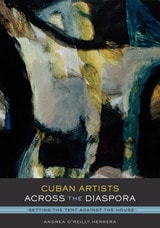
Cuban Artists Across the Diaspora
Setting the Tent Against the HouseBy Andrea O'Reilly Herrera
University of Texas Press, 2011
As an island—a geographical space with mutable and porous borders—Cuba has never been a fixed cultural, political, or geographical entity. Migration and exile have always informed the Cuban experience, and loss and displacement have figured as central preoccupations among Cuban artists and intellectuals. A major expression of this experience is the unconventional, multi-generational, itinerant, and ongoing art exhibit CAFÉ: The Journeys of Cuban Artists. In Cuban Artists Across the Diaspora, Andrea O'Reilly Herrera focuses on the CAFÉ project to explore Cuba's long and turbulent history of movement and rupture from the perspective of its visual arts and to meditate upon the manner in which one reconstitutes and reinvents the self in the context of diaspora.
Approaching the Cafeteros' art from a cultural studies perspective, O'Reilly Herrera examines how the history of Cuba informs their work and establishes their connections to past generations of Cuban artists. In interviews with more than thirty artists, including José Bedia, María Brito, Leandro Soto, Glexis Novoa, Baruj Salinas, and Ana Albertina Delgado, O'Reilly Herrera also raises critical questions regarding the many and sometimes paradoxical ways diasporic subjects self-affiliate or situate themselves in the narratives of scattering and displacement. She demonstrates how the Cafeteros' artmaking involves a process of re-rooting, absorption, translation, and synthesis that simultaneously conserves a series of identifiable Cuban cultural elements while re-inscribing and transforming them in new contexts.
An important contribution to both diasporic and transnational studies and discussions of contemporary Cuban art, Cuban Artists Across the Diaspora ultimately testifies to the fact that a long tradition of Cuban art is indeed flourishing outside the island.