Results by title
62 books match the query 'Discrimination' and 6 start with c
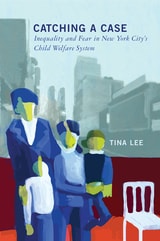
Catching a Case
Inequality and Fear in New York City's Child Welfare SystemLee, Tina
Rutgers University Press, 2016
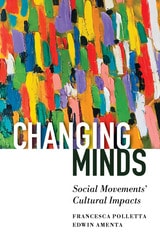
Changing Minds
Social Movements’ Cultural ImpactsFrancesca Polletta
Russell Sage Foundation, 2025
Polletta and Amenta examine the trajectories of U.S. social movements, including the old-age pension movements of the 1930s and 1940s, the Black rights movement of the 1950s and 1960s, the women’s movement of the 1970s, right-wing movements in the 1980s and 1990s, and the environmental movement up to the present, to determine when, why, and how social movements change culture. They find that influential movements are featured in the news, but not only in the news. Movement perspectives may appear also in opinion and commentary outlets, on television talk shows and dramas, in movies, stand-up comedy, and viral memes. Popular culture producers remake movement messages as they transmit them, sometimes in ways that make those messages compelling. For example, while the news largely ignored feminists’ challenge to inequality in the home, popular cultural outlets turned “liberation” into a resonant demand for women’s right to self-fulfillment outside the home and within it. Widespread attention to the movement may lead people to change their minds individually. But more substantial change is likely when companies, schools, and other organizations outside government strive to get out in front of a newly legitimate issue, whether environmental sustainability or racial equity, by adopting movement-supportive norms and practices. Eventually, ideas associated with a movement may become a new common sense—though not always the ideas that the movement intended.
Throughout Changing Minds, Polletta and Amenta provide activists with strategies for getting their message heard and acted on. They suggest how movement actors can get into the news as political players or experts rather than lawbreakers or zealots. They show when it makes sense for activists to work with popular cultural producers and when they should create their own cultural outlets. They explain why the routes to cultural influence have changed and why urging people to take one easy step to save the planet can do more harm than good.
Changing Minds is a fascinating exploration of why and how some social movements have caused profound shifts in society.
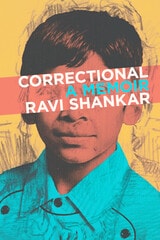
Correctional
Ravi Shankar
University of Wisconsin Press, 2021
Shankar’s bold and complex self-portrait—and portrait of America—challenges us to rethink our complicity in the criminal justice system and mental health policies that perpetuate inequity and harm. Correctional dives into the inner workings of his mind and heart, framing his unexpected encounters with law and order through the lenses of race, class, privilege, and his bicultural upbringing as the first and only son of South Indian immigrants. Vignettes from his early life set the scene for his spectacular fall and subsequent struggle to come to terms with his own demons. Many of them, it turns out, are also our own.
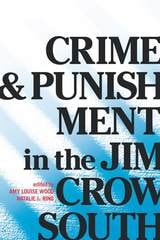
Crime and Punishment in the Jim Crow South
Edited by Amy Louise Wood and Natalie J. Ring
University of Illinois Press, 2019
In this collection, Amy Louise Wood and Natalie J. Ring present nine groundbreaking essays about the carceral system and its development over time. Topics range from activism against police brutality to the peculiar path of southern prison reform to the fraught introduction of the electric chair. The essays tell nuanced stories of rapidly changing state institutions, political leaders who sought to manage them, and African Americans who appealed to the regulatory state to protect their rights.
Contributors: Pippa Holloway, Tammy Ingram, Brandon T. Jett, Seth Kotch, Talitha L. LeFlouria, Vivien Miller, Silvan Niedermeier, K. Stephen Prince, and Amy Louise Wood
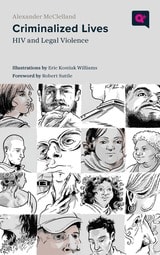
Criminalized Lives
HIV and Legal ViolenceAlexander McClelland
Rutgers University Press, 2024
Canada has been known as a hot spot for HIV criminalization where the act of not disclosing one’s HIV-positive status to sex partners has historically been regarded as a serious criminal offence. Criminalized Lives describes how this approach has disproportionately harmed the poor, Black and Indigenous people, gay men, and women in Canada. In this book, people who have been criminally accused of not disclosing their HIV-positive status, detail the many complexities of disclosure, and the violence that results from being criminalized.
Accompanied by portraits from artist Eric Kostiuk Williams, the profiles examine whether the criminal legal system is really prepared to handle the nuances and ethical dilemmas faced everyday by people living with HIV. By offering personal stories of people who have faced criminalization first-hand, Alexander McClelland questions common assumptions about HIV, the role of punishment, and the violence that results from the criminal legal system’s legacy of categorizing people as either victims or perpetrators.
Note: A regrettable error appears on page 22. The number 240 should be 206 when referring to the number of people prosecuted in relation to allegations of HIV nondisclosure. This will be fixed in future reprints.
Critical Race Theory
The Cutting EdgeRichard Delgado
Temple University Press, 2013
The contributions, from a stellar roster of established and emerging scholars, address new topics, such as intersectionality and black men on the "down low." Essays also confront much-discussed issues of discrimination, workplace dynamics, affirmative action, and sexual politics. Also new to this volume are updated section introductions, author notes, questions for discussion, and reading lists for each unit. The volume also covers the spread of the movement to other disciplines such as education.
Offering a comprehensive and stimulating snapshot of current race jurisprudence and thought, this new edition of Critical Race Theory is essential for those interested in law, the multiculturalism movement, political science, education, and critical thought.