Results by title
808 books match the query 'Drama' and 37 start with c

Canonical States, Canonical Stages
Oedipus, Othering, and Seventeenth-Century DramaMitchell Greenberg
University of Minnesota Press, 1994
Canonical States, Canonical Stages was first published in 1994. Minnesota Archive Editions uses digital technology to make long-unavailable books once again accessible, and are published unaltered from the original University of Minnesota Press editions.
In the crucible of seventeenth-century Europe, a new kind of subjectivity formed, private and interior. Perversely, the new private subject made its most spectacular appearance on the public stage-an appearance that, as Mitchell Greenberg amply demonstrates, also marked the emergence of absolutism in Europe. What these two phenomena had to do with one another, and how they were elaborated in the theater of the seventeenth century, is the subject of Greenberg's book, a masterful critical work that relates the dramatic construction of modern subjectivity and absolutist culture to the formation of the Western literary canon.
In particular, Canonical States, Canonical Stages shows how the Oedipus myth, reinterpreted on various stages at the end of the Renaissance, served the purposes of the emerging culture by replaying the founding moment of absolute rule. Working with models of genealogical criticism, psychoanalysis, and a certain Continental feminism, Greenberg reads plays by Shakespeare, Lope de Vega, Calderón, Corneille, and Racine to show how, as symptomatic texts staged within the confines of familial scenarios, they combine a dynamics of politics with a conflicting "private" desire shown to be inimical to the dominant ideology. This analysis reveals how scenarios of sacrifice and transcendence are brought into play to normalize and naturalize inchoate and threatening forces of social change by appealing to preexisting cultural models such as the myth of Oedipus. A fascinating integration of texts from political theory, psychoanalysis, history, and literature, Canonical States, Canonical Stages offers a powerful interpretation of the interrelated representation of subjectivity and absolutism on the seventeenth-century stage.Winner of the 1995 MLA Aldo and Jeanne Scaglione Prize for Comparative Literary Studies
Mitchell Greenberg is chair of the Department of French and Italian at Miami University in Ohio. He is the author of, among other books, Subjectivity and Subjugation in Seventeenth-Century Drama and Prose: The Family Romance of French Classicism (1992).
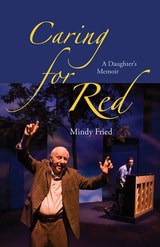
Caring for Red
A Daughter's MemoirMindy Fried
Vanderbilt University Press, 2016
Caring for Red is Mindy Fried's moving and colorful account of caring for her ninety-seven-year-old father, Manny--an actor, writer, and labor organizer--in the final year of his life. This memoir chronicles the actions of two sisters as they discover concentric circles of support for their father and attempt to provide him with an experience of "engaged aging" in an assisted living facility.
The story is also that of a daughter of a powerful and outspoken man who took risks throughout his life and whose political beliefs had an enduring impact on his family. (After Manny was called before the House Un-American Activities Committee, he was blacklisted and his family was shunned.)
As an actor, Manny was affiliated with Elia Kazan's Group Theatre and the Federal Theatre Project. He did Shakespeare, Chekhov, and Ibsen, and played everything from the tormented father in Arthur Miller's All My Sons to an infant in a baby carriage in Thornton Wilder's Infancy, from the Rabbi in Fiddler on the Roof to--poignantly for this book--the role of Morrie in Tuesdays with Morrie.
As she devotes herself to caring for her dying father, Mindy grapples anew with the complexity of their relationship. She questions whether she can be there for him and how to assert her own voice as her father's caregiver in his last days.
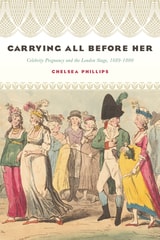
Carrying All before Her
Celebrity Pregnancy and the London Stage, 1689-1800Chelsea Phillips
University of Delaware Press, 2022
The rise of celebrity stage actresses in the long eighteenth century created a class of women who worked in the public sphere while facing considerable scrutiny about their offstage lives. Such powerful celebrity women used the cultural and affective significance of their reproductive bodies to leverage audience support and interest to advance their careers, and eighteenth-century London patent theatres even capitalized on their pregnancies. Carrying All Before Her uses the reproductive histories of six celebrity women (Susanna Mountfort Verbruggen, Anne Oldfield, Susannah Cibber, George Anne Bellamy, Sarah Siddons, and Dorothy Jordan) to demonstrate that pregnancy affected celebrity identity, impacted audience reception and interpretation of performance, changed company repertory and altered company hierarchy, influenced the development and performance of new plays, and had substantial economic consequences for both women and the companies for which they worked. Deepening the fields of celebrity, theatre, and women's studies, as well as social and medical histories, Phillips reveals an untapped history whose relevance and impact persists today.
Celestina's Brood
Continuities of the Baroque in Spanish and Latin American LiteratureRoberto González-Echevarría
Duke University Press, 1993
Roberto González Echevarría, one of the most eminent and influential critics of Hispanic literature writing today, uses Rojas' text as his starting point to offer an exploration of modernity in the Hispanic literary tradition, and of the Baroque as an expression of the modern. His analysis of Celestina reveals the relentless probing of the limits of language and morality that mark the work as the beginning of literary modernity in Spanish, and the start of a tradition distinguished by a penchant for the excesses of the Baroque. González Echevarría pursues this tradition and its meaning through the works of major figures such as Cervantes, Lope de Vega, Calderón de la Barca, Alejo Carpentier, Carlos Fuentes, Gabriel García Márquez, Nicolás Guillén, and Severo Sarduy, as well as through the works of lesser-known authors.
By revealing continuities of the Baroque, Celestina's Brood cuts across conventional distinctions between Spanish and Latin American literary traditions to show their profound and previously unimagined affinity.
Celinda, A Tragedy
A Bilingual EditionValeria Miani
Iter Press, 2010
—Virginia Cox
Professor of Italian, New York University
Centrestage
Essays on Theatre, Indian and InterculturalAnanda Lal
Seagull Books, 2026
In Centrestage, theater scholar Ananda Lal presents a compelling collection of essays encompassing over thirty years of research, reflection, and firsthand engagement with performance. From the emergence of Indian drama in English in the mid-nineteenth century to the diverse and sometimes contentious plays of the twenty-first century, Lal explores a two-hundred-year trajectory of Indian and intercultural theater with clarity and insight. The first part of the volume examines Indian theater history, proceeding from the colonial era to the contemporary scene in Kolkata and current theater pedagogy in India. The second part delves into the provocative world of intercultural theater, interrogating global academic representations of Indian performance and the work of such celebrated directors as Peter Brook and Tim Supple.
Challenges to Traditional Authority
Plays by French Women Authors, 1650-1700Françoise Pascal, Mary-Catherine Desjardins, Antoinette Deshoulières, and Catherine Durand
Iter Press, 2015
Changing the Subject
Marvin Carlson and Theatre Studies 1959-2009Edited and with an Introduction by Joseph Roach
University of Michigan Press, 2009
Character, Scene, and Story
New Tools from the Dramatic Writer's CompanionWill Dunne
University of Chicago Press, 2017
Featuring forty-two new workshop-tested exercises, this sequel to The Dramatic Writer’s Companion allows writers to dig deeper into their scripts by fleshing out images, exploring characters from an emotional perspective, tapping the power of color and sense memory to trigger ideas, and trying other visceral techniques. The guide also includes a troubleshooting section to help tackle problem scenes. Writers with scripts already in progress will find they can think deeper about their characters and stories. And those who are just beginning to write will find the guidance they need to discover their best starting point. The guide is filled with hundreds of examples, many of which have been developed as both plays and films.
Character, Scene, and Story is fully aligned with the new edition of The Dramatic Writer’s Companion, with cross-references between related exercises so that writers have the option to explore a given topic in more depth. While both guides can stand alone, together they give writers more than one hundred tools to develop more vivid characters and craft stronger scripts.
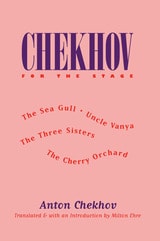
Chekhov for the Stage
The Sea Gull, Uncle Vanya, The Three Sisters, The Cherry OrchardAnton Chekhov
Northwestern University Press, 1992
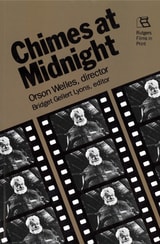
Chimes at Midnight
Orson Welles, DirectorLyons, Bridget G
Rutgers University Press, 1988
This volume offers a complete continuity script of Chimes at Midnight, including its famous battle sequence. Each shot is described in detail and is keyed to the original Shakesperian sources, thus making the volume an invaluable guide to Welles as an adaptor and creator of texts. The first complete transcription of the continuity script of Chimes is accompanied by the editor's critical introduction on Welles's transformation of Shakespeare; a special interview with Keith Baxter, one of the film's principal actors, which discusses its production history; reviews and articles; and a biographical sketch of Welles, a filmography, and a bibliography.
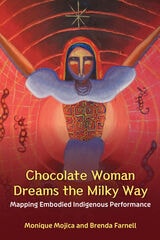
Chocolate Woman Dreams the Milky Way
Mapping Embodied Indigenous PerformanceMonique Mojica and Brenda Farnell
University of Michigan Press, 2023
Co-authored with anthropologist Brenda Farnell, the book challenges the divide between artist and scholar, and addresses the many levels of cultural, disciplinary, and linguistic translations required to achieve this. Placing the complex intellect inherent to Indigenous Knowledges at its center, the book engages Indigenous performance theory, and concepts that link body, land, and story, such as terra nullius/corpus nullius, mapping, pattern literacy, land literacy, and movement literacy. Enhanced by contributions from other artists and scholars, the book challenges Eurocentric ideologies about what counts as “performance” and what is required from an “audience,” as well as long-standing body-mind dualisms.

Choreographies
Tracing the Materials of an Ephemeral Art FormJacky Lansley
Intellect Books, 2017
Choreographies is both autobiography and archive—documenting production through rehearsal and performance photographs, illustrations, scores, process notes, reviews, audience feedback, and interviews with both dancers and choreographers. Covering the author’s practice from 1975 to 2017, the book delves into an important period of change in contemporary British dance—exploring British New Dance, postmodern dance, and experimental dance outside of a canonical US context. A critically engaged reflection that focuses on artistic process over finished product, Choreographies is a much-needed resource in the fields of dance and choreographic art making.
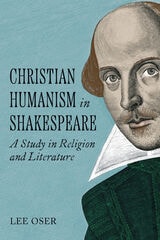
Christian Humanism in Shakespeare
A Study in Religion and LiteratureLee Oser
Catholic University of America Press, 2022
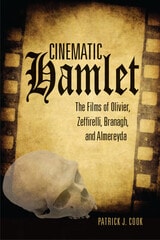
Cinematic Hamlet
The Films of Olivier, Zeffirelli, Branagh, and AlmereydaPatrick J. Cook
Ohio University Press, 2011
Hamlet has inspired four outstanding film adaptations that continue to delight a wide and varied audience and to offer provocative new interpretations of Shakespeare’s most popular play. Cinematic Hamlet contains the first scene-by-scene analysis of the methods used by Laurence Olivier, Franco Zeffirelli, Kenneth Branagh, and Michael Almereyda to translate Hamlet into highly distinctive and remarkably effective films.
Applying recent developments in neuroscience and psychology, Patrick J. Cook argues that film is a medium deploying an abundance of devices whose task it is to direct attention away from the film’s viewing processes and toward the object represented. Through careful analysis of each film’s devices, he explores the ways in which four brilliant directors rework the play into a radically different medium, engaging the viewer through powerful instinctive drives and creating audiovisual vehicles that support and complement Shakespeare’s words and story.
Cinematic Hamlet will prove to be indispensable for anyone wishing to understand how these films rework Shakespeare into the powerful medium of film.
Circle Jerk and This American Wife
the internet theater of Fake FriendsMichael Breslin, Patrick Foley, Rory Pelsue, Cat Rodríguez, and Ariel Sibert, edited by Michael Breslin and Ariel Sibert
Northwestern University Press, 2026
Two plays along with process essays on the cacophonous world of pop culture, politics, and personal testimony that we call the internet
In March 2020, the New York theater company Fake Friends was pushed off the stage and into the land of the internet. This book marks the first publication of two of their deliciously absurd and toxically serious internet plays, Circle Jerk (the first-ever work in digital theater to be shortlisted for the Pulitzer Prize in Drama) and This American Wife. Circle Jerk tells the social media–infused tale of gay white supremacists creating an AI-influencer to dominate the global discourse, and This American Wife spins a surrealist web of queer devotion to the stars and performance strategies of reality television; both plays are unapologetically theatrical and digitally native, born out of the exigencies of the pandemic. This collection features an electrifying visual archive as well as individual essays from each company member reflecting on the practical and interpersonal processes of bringing these award-winning plays to life in our ever-more online, political, and personal world.

Clairvoyance (For Those In The Desert)
Performance Pieces, 1979–2004Joanna Frueh
Duke University Press, 2008
Frueh’s performances are unabashedly autobiographical, as likely to reflect her scholarship as a feminist art historian as her love affairs or childhood memories. For Frueh, eros and self-love are part of a revolutionary feminist strategy; her work exemplifies the physicality and embrace of pleasure that she finds wanting in contemporary feminist theory. Scholarly and rigorous yet playful in tone, her performances are joyful, filled with eroticism, flowers, sexy costumes, and beautiful colors, textures, and scents. Recurring themes include Frueh’s passionate attachment to the desert landscape and the idea of transformation: a continual reaching for clarity of thought and feeling.
In an afterword as lyrical and breathless as her performance pieces, Frueh explores her identification with the desert and its influence on her art. Clairvoyance (For Those In The Desert) includes a detailed chronology of Frueh’s performances.
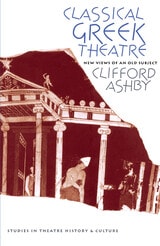
Classical Greek Theatre
New Views of an Old SubjectClifford Ashby
University of Iowa Press, 1998
Many dogmas regarding Greek theatre were established by researchers who lacked experience in the mounting of theatrical productions. In his wide-ranging and provocative study, Clifford Ashby, a theatre historian trained in the practical processes of play production as well as the methods of historical research, takes advantage of his understanding of technical elements to approach his ancient subject from a new perspective. In doing so he challenges many long-held views.
Archaeological and written sources relating to Greek classical theatre are diverse, scattered, and disconnected. Ashby's own (and memorable) fieldwork led him to more than one hundred theatre sites in Greece, southern Italy, Sicily, and Albania and as far into modern Turkey as Hellenic civilization had penetrated. From this extensive research, he draws a number of novel revisionist conclusions on the nature of classical theatre architecture and production.
The original orchestra shape, for example, was a rectangle or trapezoid rather than a circle. The altar sat along the edge of the orchestra, not at its middle. The scene house was originally designed for a performance event that did not use an up center door. The crane and ekkyklema were simple devices, while the periaktoi probably did not exist before the Renaissance. Greek theatres were not built with attention to Vitruvius' injunction against a southern orientation and were probably sun-sited on the basis of seasonal touring. The Greeks arrived at the theatre around mid-morning, not in the cold light of dawn. Only the three-actor rule emerges from this eclectic examination somewhat intact, but with the division of roles reconsidered upon the basis of the actors' performance needs. Ashby also proposes methods that can be employed in future studies of Greek theatre. Final chapters examine the three-actor production of Ion, how one should not approach theatre history, and a shining example of how one should.
Ashby's lengthy hands-on training and his knowledge of theatre history provide a broad understanding of the ways that theatre has operated through the ages as well as an ability to extrapolate from production techniques of other times and places.
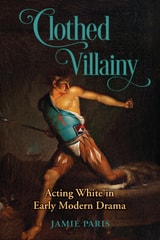
Clothed Villainy
Acting White in Early Modern DramaJamie Paris
University of Alabama Press, 2026
Examines how centuries-old stagecraft shaped modern racial politics—and why the performance of whiteness still commands the spotlight.
From Shakespearean blackface to the alt-right’s khaki-clad protests, Clothed Villainy: Acting White in in Early Modern Drama by Jamie Paris confronts the uncomfortable truths of racial performance across centuries. Paris argues that whiteness is not a fixed identity but a precarious and performative construct—shaped and sustained through actions, appearances, and cultural scripts.
Drawing on critical race theory, performance studies, and Indigenous scholarship, Clothed Villainy traces how racial scripts—whether “playing Black,” “playing Indian,” or especially “playing white”—have been used to uphold white supremacy and erase marginalized identities. By examining the costuming and characterization of white actors portraying Black villains on the early modern stage, Paris reveals how these theatrical traditions continue to echo in contemporary racial politics.
Written with bold clarity and personal insight, this book opens space for reimagining race, history, and identity through a more critical and inclusive lens. Clothed Villainy is essential reading for scholars, students, and anyone seeking to understand the deep-rooted performance of race in society and how we might reimagine it for a more equitable future.
Collected Writings on Education and Drama
Dorothy Heathcote
Northwestern University Press, 1984
In this lively collection of essays and talks from 1967-80, Heathcote shares the findings of her groundbreaking work in the application of theater techniques and play to classroom teaching. She provides a time-tested philosophy on the value of dramatic activity in breaking down barriers and overcoming inertia. Her insistence that teachers must step down from their pedestals and immerse themselves in the possibility of the moment makes for magical and challenging reading.
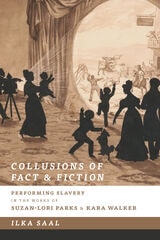
Collusions of Fact and Fiction
Performing Slavery in the Works of Suzan-Lori Parks and Kara WalkerSaal, Ilka
University of Iowa Press, 2021
Saal argues that the attempt to reconstruct or recuperate the experience of African Americans under slavery is no longer at stake in the works of artists growing up in the post–Civil Rights era. Instead, they lay bare the discursive dimension of our contemporary understanding of the past and address the continued impact of its various verbal and visual signs upon contemporary identities. In this manner, Parks and Walker stake out new possibilities for engaging the past and inhabiting the present and future.
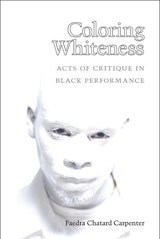
Coloring Whiteness
Acts of Critique in Black PerformanceFaedra Chatard Carpenter
University of Michigan Press, 2014
Columbo
A Rhetoric of Inquiry with Resistant RespondersChristyne Berzsenyi
Intellect Books, 2019
An analysis of the hit television series Columbo and the investigative methods of its eponymous main character.
In the iconic detective show, which aired from 1968 to 2003, Lieutenant Columbo was known for his Socratic method of rhetorical inquiry. Feigning ignorance and employing a barrage of questions about minute details, the detective enacts a persona of “antipotency,” or counter authoritativeness, to affect the villains' underestimation of his attention to inconsistencies, abductive reasoning, and rhetorical efficacy. In his predominantly dialogue-based investigations, Columbo exhausts his suspects by asking a battery of questions concerning all minor details of the case—an aggravating, tedious provocation for the killer trying to maintain innocence.
In this engaging interdisciplinary study, Christyne Berzsenyi explores the character and his influences, dissects his methods of investigation, and assesses the show’s enduring legacy in academia and popular culture. While critical and theoretical, the text is also accessible to interdisciplinary readers, practical in application, and amusing for Columbo buffs.
Comedies
Robert Walser
Seagull Books, 2018
Few writers have ever experienced such a steady rise in their reputation and public profile as Swiss writer Robert Walser (1878–1956) has seen in recent years. As more of his previously little-known work has been translated into English, readers have discovered a unique writer whose off-kilter sensibility and innovations in form are perfectly suited to our fragmented, distracted, bewildering era.
The short plays presented here, inspired by the German theater Walser enjoyed in his youth, while never meant to be performed, present scenes, characters, and situations that comment on the brutality of fairy tales, the impossibilities of love, the dark fate of the Christ child (and Walser himself), and more. At the same time, like all of Walser’s work they are shot through with a humor that is wholly genuine despite its shades of darkness. Gathering all of Walser’s plays, as well as his later, fragmentary dramatic writings, Comedies will be celebrated by the many devoted fans of this lately rediscovered master.
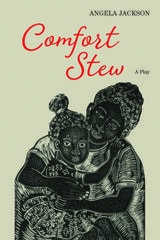
Comfort Stew
A PlayAngela Jackson
Northwestern University Press, 2019
What could be more painful than a missing child? And how might the community better support families—especially young, single mothers and their children? In Comfort Stew, acclaimed Chicago poet and playwright Angela Jackson addresses these questions in what she has called “a meditation on motherhood and what it means to love. It is a call to community to renew its vows to the ancestors and to children so that no child is ever truly lost.”
Hillary Robinson Clay, a self-reliant schoolteacher, is the first to notice when four-year-old Enjoli is absent from her preschool class. Guided by the memory of her mother and with support from Jake, a tough man who is capable of tenderness, Hillary parents her teenage daughter, Sojourner, who is the same age as Enjoli’s mother, Patrice. Jake is a storyteller and a “good cop” who follows Hillary’s intuition and goes looking for Enjoli.
As their stories weave together, Jackson explores parenting, generational conflict, and tradition in the context of contemporary African American family life. Maternal wisdom is embodied by succeeding generations of black women in the recipe for an African stew, a dish Hillary learns to honor while adding a spice that makes it her own.
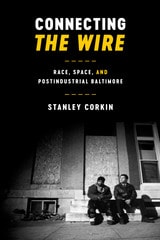
Connecting The Wire
Race, Space, and Postindustrial BaltimoreBy Stanley Corkin
University of Texas Press, 2017
Critically acclaimed as one of the best television shows ever produced, the HBO series The Wire (2002–2008) is a landmark event in television history, offering a raw and dramatically compelling vision of the teeming drug trade and the vitality of life in the abandoned spaces of the postindustrial United States. With a sprawling narrative that dramatizes the intersections of race, urban history, and the neoliberal moment, The Wire offers an intricate critique of a society riven by racism and inequality.
In Connecting The Wire, Stanley Corkin presents the first comprehensive, season-by-season analysis of the entire series. Focusing on the show’s depictions of the built environment of the city of Baltimore and the geographic dimensions of race and class, he analyzes how The Wire’s creator and showrunner, David Simon, uses the show to develop a social vision of its historical moment, as well as a device for critiquing many social “givens.” In The Wire’s gritty portrayals of drug dealers, cops, longshoremen, school officials and students, and members of the judicial system, Corkin maps a web of relationships and forces that define urban social life, and the lives of the urban underclass in particular, in the early twenty-first century. He makes a compelling case that, with its embedded history of race and race relations in the United States, The Wire is perhaps the most sustained and articulate exploration of urban life in contemporary popular culture.
Contemporary Francophone African Plays
An AnthologyJudith G. Miller
Bucknell University Press, 2024
Contemporary Irish Drama and Cultural Identity
Margaret Llewellyn-Jones
Intellect Books, 2013
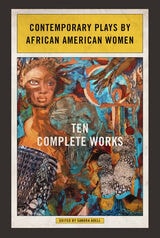
Contemporary Plays by African American Women
Ten Complete WorksEdited by Sandra Adell
University of Illinois Press, 2015
Selections: Blue Door, by Tanya Barfield; Levee James, by S. M. Shephard-Massat; Hoodoo Love, by Katori Hall; Carnaval, by Nikkole Salter; Single Black Female, by Lisa B. Thompson; Fabulation, or The Re-Education of Undine, by Lynn Nottage; BlackTop Sky, by Christina Anderson; Voyeurs de Venus, by Lydia Diamond; Fedra, by J. Nicole Brooks; and Uppa Creek: A Modern Anachronistic Parody in the Minstrel Tradition, by Keli Garrett.
Contradictory Characters
An Interpretation of the Modern TheatreAlbert Bermel
Northwestern University Press, 1996
Playwright and critic Albert Bermel examines thirteen modern plays to assess the underpinnings of dramatic conflict. Contradictory Characters inspects the three well-known types of dramatic conflict-between characters, between character and environment, and within the protagonist himself-and argues that the "character-against-himself" is not only a type of conflict, but is indeed the prototypical conflict underlying the others.
Coriolanus
William Shakespeare
Arizona Center for Medieval and Renaissance Studies, 2023
Bay Area director, actor, and producer Sean San José takes on the themes of power and politics in his version of Coriolanus, Shakespeare’s exploration of militaristic might and political folly. San José’s take on this little-known classic reimagines the text to be spoken by and for a community of “others.” The translation, which brings Shakespeare’s language into our era, rendering its thematic and dramatic power broadly accessible, is powered by a reexamination of populism in our current political moment.
This translation of Coriolanus was written as part of the Oregon Shakespeare Festival’s Play On! project, which commissioned new translations of thirty-nine Shakespeare plays. These translations present the work of “The Bard” in language accessible to modern audiences while never losing the beauty of Shakespeare’s verse. Enlisting the talents of a diverse group of contemporary playwrights, screenwriters, and dramaturges from diverse backgrounds, this project reenvisions Shakespeare for the twenty-first century. These volumes make these works available for the first time in print—a new First Folio for a new era.
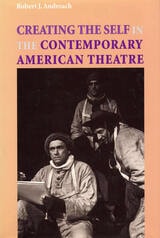
Creating the Self in the Contemporary American Theatre
Robert J. Andreach
Southern Illinois University Press, 1998
Combining his skills as both a professional reviewer of theatre and a literary critic, Robert J. Andreach finds himself in a unique position to provide coherence to what most observers perceive as an unrelated welter of contemporary theatrical experiences. Exploring the theatre from the 1960s to the present, he shows the various ways in which the contemporary American theatre creates a personal, theatrical, and national self.
Andreach argues that the contemporary American theatre creates multiple selves that reflect and give voice to the many communities within our multicultural society. These selves are fragmented and enclaved, however, which makes necessary a counter movement that seeks, through interaction among the various parts, to heal the divisions within, between, and among them.
In his examination of the contemporary theatre, Andreach demonstrates that the plays and the performance art of the feminist, African-American, Hispanic-American, Asian-American, and Native American theatres are equal to the works created within the dominant Eurocentric culture.
He then turns to comparable works created within the culture of what performance artist Karen Finley calls the "one male god," works that reflect the breakup of an old order. He discusses the experimental theatre, which turns to the imagination to reveal the nature of the self, and concludes with an examination of recent American works, pointing out in each either the presence or absence of resolution within the divisions of self.
Crime Uncovered
Private InvestigatorEdited by Alistair Rolls and Rachel Franks
Intellect Books, 2016
Assembling a cast of notable crime fiction experts, including Stephen Knight and Carolyn Beasley, the book covers characters from the whole world of international noir—Giorgio Scerbanenco’s Duca Lambert, Léo Malet’s Nestor Burma, and many more. Including essays on the genealogy and emergence of the protagonist in nineteenth-century fiction; interviews with crime writers Leigh Redhead, Nick Quantrill, and Fernando Lalana; and analyses of the transatlantic exchanges that helped to develop public perception of a literary icon, Crime Uncovered: Private Investigator will redefine what we think we know about the figure of the P. I.
Rolls and Franks have engaged here the tension between the popular and scholarly that is inherent in any critical examination of a literary type, along the way unraveling the mystery of the alluring, enigmatic private investigator. Crime Uncovered: Private Investigator will be a handy companion for any crime fiction fan.
Critical Perspectives on Contemporary Plays by Women
The Early Twenty-First CenturyPenny Farfan and Lesley Ferris, Editors
University of Michigan Press, 2021
This book foregrounds some of the ways in which women playwrights from across a range of contexts and working in a variety of forms and styles are illuminating the contemporary world while also contributing to its reshaping as they reflect, rethink, and reimagine it through their work for the stage. The book is framed by a substantial introduction that sets forth the critical vision and structure of the book as a whole, and an afterword that points toward emerging currents in and expansions of the contemporary field of playwriting by women on the cusp of the third decade of the twenty-first century. Within this frame, the twenty-eight chapters that form the main body of the book, each focusing on a single play of critical significance, together constitute a multi-faceted, inevitably partial, yet nonetheless integral picture of the work of women playwrights since 2000 as they engage with some of the most pressing issues of our time. Some of these issues include the continuing oppression of and violence against women, people of color, LGBTQ+ people, and ethnic minorities; the ongoing processes of decolonization; the consequences of neoliberal capitalism; the devastation and enduring trauma of war; global migration and the refugee crisis; the turn to right-wing populism; and the impact of climate change, including environmental disaster and species extinction.
The book is structured into seven sections: Replaying the Canon; Representing Histories; Staging Lives; Re-imagining Family; Navigating Communities; Articulating Intersections; and New World Order(s). These sections group clusters of plays according to the broad critical actions they perform or, in the case of the final section, the new world orders that they capture through their stagings of the seeming impasse of the politically and environmentally catastrophic global present moment. There are many other points of resonance among and across the plays, but this seven-part structure foregrounds the broader actions that drive the plays, both in the Aristotelian dramaturgical sense and in the larger sense of the critical interventions that the plays creatively enact. In this way, the seven-part structure establishes correspondences across the great diversity of dramatic material represented in the book while at the same time identifying key methods of critical approach and areas of focus that align the book’s contributors across this diversity. The structure of the book thus parallels what the playwrights themselves are doing, but also how the contributors are approaching their work. Plays featured in the book are from Canada, Australia, South Africa, the US, the UK, France, Argentina, New Zealand, Syria, Brazil, Italy, and Austria; the playwrights include Margaret Atwood, Leah Purcell, Yaël Farber, Paula Vogel, Adrienne Kennedy, Suzan-Lori Parks, debbie tucker green, Lisa Loomer, Hélène Cixous. Anna Deavere Smith, Lola Arias, Lisa Kron and Jeanine Tesori, Marie Clements, Quiara Alegría Hudes, Alia Bano, Holly Hughes, Whiti Hereaka, Julia Cho, Liwaa Yazji, Grace Passô, Dominique Morisseau, Emma Dante, Frances Ya-Chu Cowhig, Lynn Nottage, Elfriede Jelinek, Caryl Churchill, Colleen Murphy, and Lucy Kirkwood.
Encompassing several generations of playwrights and scholars, ranging from the most senior to mid-career to emerging voices, the book will be essential reading for established researchers, a valuable learning resource for students at all levels, and a useful and accessible guide for theatre practitioners and interested theatre-goers.
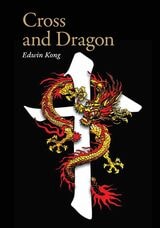
Cross and Dragon – Matteo Ricci and China
A Screenplay by Edwin KongEdwin Kong
Hong Kong University Press, 2025
Edwin Kong brings to life the extraordinary journey of Matteo Ricci, the Italian Jesuit whose daring mission to China reshaped the course of East-West relations. Sent by the Pope in the late sixteenth century to convert the Chinese Emperor, Ricci faced an impenetrable barrier—Ming Dynasty China was closed to foreigners. But armed with knowledge and an unmatched mastery of memory techniques, he found another way in.
Disguised as a Buddhist monk, Ricci captivated scholars, officials, and eventually the imperial court, introducing Western science while immersing himself in Chinese culture. His thirty-year odyssey from rural villages to the heart of the Forbidden City proved that engagement, rather than conquest, could bridge civilizations.
Told in the form of a screenplay, Cross and Dragon is a gripping historical drama with urgent contemporary resonance, exploring the power of faith and cultural exchange in the face of division.
Cymbeline
William Shakespeare
Arizona Center for Medieval and Renaissance Studies, 2023
In her modern translation of Cymbeline, Andrea Thome takes up one of Shakespeare’s most complex plays. Thome’s update brings the play’s language into the present, highlighting new resonances and providing a more accessible version of Shakespeare’s play for today’s audiences. One of Shakespeare’s final plays, Cymbeline tells the story of the British king Cymbeline and his daughter, Imogen. It is a tale of deceit and jealousy, with accusations of infidelity that often draw comparisons to Othello and The Winter’s Tale.
This translation of Cymbeline was written as part of the Oregon Shakespeare Festival’s Play On! project, which commissioned new translations of thirty-nine Shakespeare plays. These translations present the work of “The Bard” in language accessible to modern audiences while never losing the beauty of Shakespeare’s verse. Enlisting the talents of a diverse group of contemporary playwrights, screenwriters, and dramaturges from diverse backgrounds, this project reenvisions Shakespeare for the twenty-first century. These volumes make these works available for the first time in print—a new First Folio for a new era.
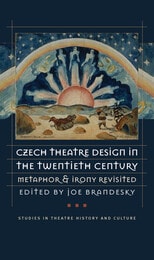
Czech Theatre Design in the Twentieth Century
Metaphor and Irony RevisitedJoe Brandesky
University of Iowa Press, 2007
Essays by Vera Ptacková, Dennis Christilles, Delbert Unruh, and, Marie Zdenková their full texts restored and reedited for this volume since their initial publication in exhibit catalogs, provide historical and linguistic insights into contemporary Czech scenography as well as comparisons to the major art movements affecting the designers. Brandesky’s informative introductory essay contextualizes the shifting tenets of Czech theatre design. Also included are biographies of the designers, a bibliography, and thirty black-and-white photographs.
The accompanying CD provides access to the vibrant and sophisticated images of the Czech theatrical world: 138 richly colorful paintings and drawings of costumes, models, and set designs and in situ photos of exhibited designs plus 27 color and black-and-white photos of the designers. The CD also includes the full text of the book with links to all the art and to the designers’ biographies. Book and CD together showcase the Czech Republic as a center of international stage design.