Results by title
347 books match the query 'Early works to 1800' and 23 start with c
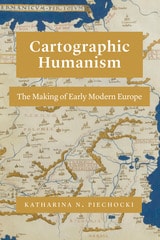
Cartographic Humanism
The Making of Early Modern EuropeKatharina N. Piechocki
University of Chicago Press, 2019
What is “Europe,” and when did it come to be? In the Renaissance, the term “Europe” circulated widely. But as Katharina N. Piechocki argues in this compelling book, the continent itself was only in the making in the fifteenth and sixteenth centuries.
Cartographic Humanism sheds new light on how humanists negotiated and defined Europe’s boundaries at a momentous shift in the continent’s formation: when a new imagining of Europe was driven by the rise of cartography. As Piechocki shows, this tool of geography, philosophy, and philology was used not only to represent but, more importantly, also to shape and promote an image of Europe quite unparalleled in previous centuries. Engaging with poets, historians, and mapmakers, Piechocki resists an easy categorization of the continent, scrutinizing Europe as an unexamined category that demands a much more careful and nuanced investigation than scholars of early modernity have hitherto undertaken. Unprecedented in its geographic scope, Cartographic Humanism is the first book to chart new itineraries across Europe as it brings France, Germany, Italy, Poland, and Portugal into a lively, interdisciplinary dialogue.
Chapters on Marriage and Divorce
Responses of Ibn Hanbal and Ibn RahwayhTranslated with introduction and notes by Susan A. Spectorsky
University of Texas Press, 1993
While western-derived legal codes have superseded Islamic law in many parts of the Muslim world, Islamic, Koran-based law still retains its force in the area of marriage and family relations, the area that is key to the status of women. This work makes available for the first time in English three compilations of responses to questions about family law given by two prominent Muslim jurists of the ninth century (third century of Islam)—Ahmad b. Hanbal, the eponymous founder of the Hanbali rite of Sunni Islam (the one dominant in Saudi Arabia), and Ishaq b. Rahwayh. These compilations are basic sources for the study of the development of legal thinking in Islam.
The introduction to the translation locates the compilations in a historical context and elucidates how the various issues of family law are treated. An appendix contains a collation of the significant variants among the manuscripts and printed versions of the Arabic texts. The volume concludes with a topical index and an index of names.
Christian Instruction; Admonition and Grace; The Christian Combat; Faith, Hope and Charity
Saint Augustine
Catholic University of America Press, 1950
Christian and Pagan in the Roman Empire
Robert Sider
Catholic University of America Press, 2001
Cicero on Oratory and Orators
Translated by J.S. Watson. Introduction by Ralph A. Micken. Foreword by David Potter. Preface by Richard Leo Enos
Southern Illinois University Press, 1986
Contains Cicero’s De Oratore and Brutus, influential sources over the centuries for ideas on rhetoric and training for public leadership.
The De Oratore, written in 55 B.C., argues that rhetoric is socially significant because states are established and maintained through the leadership of eloquent men.
The three books of dialogues in this volume feature discussions between well-known figures in Roman history, including Lucius Crassus, Marcus Antonius, Quintus Lutatius Catulus, Quintus Marcius Scaevola, Caius Aurelius Cotta, Julius Caesar Strabo Vopicus, and Publius Sulpicus Rufus.
The Brutus continues the theme of the dialogues, giving a history of eminent orators whose performances exemplify the Ciceronian theory that rhetoric finally adds up to leadership.
Cicero on the Emotions
Tusculan Disputations 3 and 4Marcus Tullius Cicero
University of Chicago Press, 2002
Margaret Graver's elegant and idiomatic translation makes Cicero's work accessible not just to classicists but to anyone interested in ancient philosophy and psychotherapy or in the philosophy of emotion. The accompanying commentary explains the philosophical concepts discussed in the text and supplies many helpful parallels from Greek sources.
Commentaries on Aristotle's "On Sense and What Is Sensed" and "On Memory and Recollection" (Thomas Aquinas in Translation)
Saint Thomas Aquinas
Catholic University of America Press, 2005
Commentary on Matthew
D.H. St. Hilary of Poiters
Catholic University of America Press, 2012
Commentary on Matthew
Saint Jerome
Catholic University of America Press, 2008
Commentary on Zechariah
Robert C. Didymus the Blind
Catholic University of America Press, 2006
Commentary on the Apocalypse
John N. Oecumenius
Catholic University of America Press, 2006
Commentary on the Book of Causes (Thomas Aquinas in Translation)
Saint Thomas Aquinas
Catholic University of America Press, 1996
Commentary on the Epistle to the Romans
Peter Abelard
Catholic University of America Press, 2011
Commentary on the Epistle to the Romans, Books 1-5
Catholic University of America Press, 2001
Commentary on the Epistle to the Romans, Books 6-10
Catholic University of America Press, 2002
Commentary on the Gospel According to John, Books 13-32
Catholic University of America Press, 1989
Commentary on the Gospel of John, Books 1-10
Catholic University of America Press, 1989
Commentary on the Psalms, Psalms 1-72
Robert C. Theodoret of Cyrus
Catholic University of America Press, 2000
Conquered Conquistadors
The <i>Lienzo de Quauhquechollan,</i> A Nahua Vision of the Conquest of GuatemalaFlorine Asselbergs
University Press of Colorado, 2004
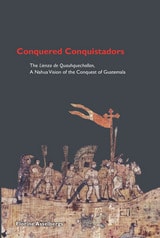
The people of the Nahua community of Quauhquechollan (present-day San Martín Huaquechula), in central Mexico, allied with Cortés during the Spanish-Aztec War and were assigned to the Spanish conquistador Jorge de Alvarado. De Alvarado and his allies, including the Quauhquecholteca and thousands of other indigenous warriors, set off for Guatemala in 1527 to start a campaign against the Maya. The few Quauhquecholteca who lived to tell the story recorded their travels and eventual victory on the huge cloth map, the Lienzo de Quauhquechollan.
Conquered Conquistadors, published in a European edition in 2004, overturned conventional views of the European conquest of indigenous cultures. American historians and anthropologists will relish this new edition and Asselbergs's astute analysis, which includes context, interpretation, and comparison with other pictographic accounts of the "Spanish" conquest. This heavily illustrated edition includes an insert reproduction of the Lienzo de Quauhquechollan.
Consolation to Stagirius
Robert G.T. St. John Chrysostom
Catholic University of America Press, 2025
Correspondence on Christology and Grace
Rob Roy McGregor
Catholic University of America Press, 2013
Crafting Medicine
Artisans, Knowledge, and the Common Man in Hieronymus Brunschwig's Books on Surgery and DistillationTillmann Taape
University of Chicago Press, 2025
Between 1497 and 1512, Hieronymus Brunschwig (ca. 1450–ca. 1530), an obscure craftsman from Strasbourg, wrote books on surgery and pharmacy that transformed medical expertise, how it was codified in print, and how it was communicated to new audiences. Brunschwig was an unlikely author. He apprenticed as a surgeon in the local guild and dispensed medicines from his own shop. But he was remarkably well-read in surgery, alchemy, and medical theory, even if he lacked a university education. His unique authorial voice spoke to the healing practices of craftsmen and common people in a down-to-earth German dialect.
Crafting Medicine, by Tillmann Taape, is the first in-depth study of Brunschwig and his works. In it, Taape argues that Brunschwig’s writings shaped a nascent tradition of vernacular medicine. Brunschwig’s books represent a key moment in the history of medical print, for they conveyed medical expertise to a new readership of nonacademic practitioners, who became a key audience for a flood of vernacular medical publications during the sixteenth century. Using Brunschwig’s books as a unique window into the past, Crafting Medicine beautifully reconstructs the world of science inhabited by Brunschwig, his fellow craftsmen, his translators, and his readers.
Cusanus Today
Thinking with Nicholas of Cusa Between Philosophy and TheologyDavid C. Albertson
Catholic University of America Press, 2024