Results by title
447 books match the query 'Eastern' and 28 start with c
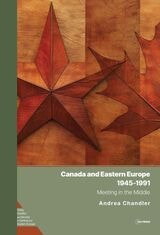
Canada and Eastern Europe, 1945–1991
Meeting in the MiddleAndrea Chandler
Central European University Press, 2024
How democratic regimes should engage with authoritarian regimes, or self-proclaimed authorities in states under occupation, has long been a subject of debate. The work examines Canada's relations with member-states of the Warsaw Pact during the Cold War. Central and East European communist states were nominally independent but established under occupation. Canadian leaders explored whether engaging in foreign relations with these countries would encourage liberalization or embolden dictatorships. Over time, Canada's position evolved as a policy of encouraging bilateral and multilateral diplomacy, while calling for the respect of human rights. However, Canada's economic relationship with East European states was at times at cross-purposes with its democratic principles. Andrea Chandler concludes that while Canada did play a role in encouraging democratization, the country's leaders did not sufficiently consider the impact of these policies on the citizens of Warsaw Pact countries.
This book treats Canada’s engagement with Hungary, Poland, the German Democratic Republic, Romania, Bulgaria and Czechoslovakiaduring the Cold War, in which the Western countries of the North Atlantic Treaty Organization (including Canada) had an adversarial relation with the Soviet bloc nations.
Capitalism from Outside?
Economic Cultures in Eastern Europe after 1989János Mátyás Kovács
Central European University Press, 2012
Carrying a Secret in My Heart
Children of the Victims of the Reprisals after the Hungarian Revolution in 1956 - An Oral HistoryZsuzsanna Korösi
Central European University Press, 2003
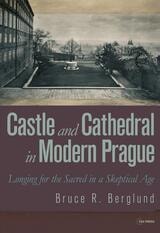
Castle and Cathedral
Longing for the Sacred in a Skeptical AgeBruce R. Berglund
Central European University Press, 2017
Censorship in Romania
Lidia Vianu
Central European University Press, 1998
Charlottengrad
Russian Culture in Weimar BerlinRoman Utkin
University of Wisconsin Press, 2023
By closely examining the intellectual output of Charlottengrad, Roman Utkin explores how community members balanced their sense of Russianness with their position in a modern Western city charged with artistic, philosophical, and sexual freedom. He highlights how Russian authors abroad engaged with Weimar-era cultural energies while sustaining a distinctly Russian perspective on modernist expression, and follows queer Russian artists and writers who, with their German counterparts, charted a continuous evolution in political and cultural attitudes toward both the Weimar and Soviet states.
Utkin provides insight into the exile community in Berlin, which, following the collapse of the tsarist government, was one of the earliest to face and collectively process the peculiarly modern problem of statelessness. Charlottengrad analyzes the cultural praxis of “Russia Abroad” in a dynamic Berlin, investigating how these Russian émigrés and exiles navigated what it meant to be Russian—culturally, politically, and institutionally—when the Russia they knew no longer existed.
Charon's Ferry
Fifty PoemsGyula Illyes
Northwestern University Press, 2000
Children of Atlantis
Zdenko Lešic
Central European University Press, 1995
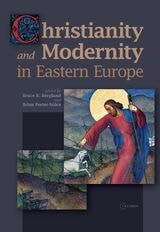
Christianity and Modernity in Eastern Europe
Bruce R. Berglund
Central European University Press, 2010
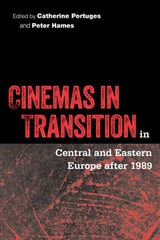
Cinemas in Transition in Central and Eastern Europe after 1989
Catherine Portuges
Temple University Press, 2013
The contributors and editors of this exciting volume examine the interrelations between thematic, aesthetic, and infrastructural changes; the globalization of the international cinema marketplace; and the problems and promises arising from the privatization of national cinemas.
Cinemas in Transition in Central and Eastern Europe after 1989 also addresses the strategies employed for preserving national cinemas and cultures through an analysis of films from the Czech and Slovak republics, the former German Democratic Republic, Hungary, Poland, Romania, Ukraine, and the former Yugoslavia. The study provides a picture of Eastern European cinema at a critical juncture as well as its connections to the emergent world of transnational media.
Contributors include Barton Byg, Alexandra Foamente, Andrew Horton, Dina Iordanova, Ewa Mazierska, Bohdan Y. Nebesio, and Bogdan Stefanescu,
City of Ash
Eugenijus Alisanka
Northwestern University Press, 2000
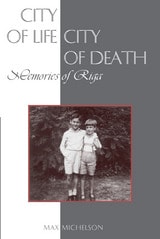
City of Life, City of Death
Memories of RigaMax Michelson
University Press of Colorado, 2001
Michelson had a serene boyhood in an upper middle-class Jewish family in Riga, Latvia--at least until 1940, when the fifteen-year old Michelson witnessed the annexation of Latvia by the Soviet Union. Private properties were nationalized, and Stalin's terror spread to Soviet Latvia. Soon after, Michelson's family was torn apart by the 1941 Nazi invasion of the Soviet Union. He quickly lost his entire family, while witnessing the unspeakable brutalities of war and genocide.
Michelson's memoir is an ode to his lost family; it is the speech of their muted voices and a thank you for their love. Although badly scarred by his experiences, like many other survivors he was able to rebuild his life and gain a new sense of what it means to be alive.
His experiences will be of interest to scholars of both the Holocaust and Eastern European history, as well as the general reader.
Civic and Uncivic Values
Serbia in the Post-Miloševic EraOla Listhaug
Central European University Press, 2011
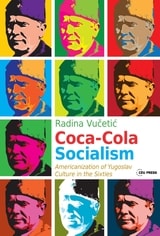
Coca-Cola Socialism
Americanization of Yugoslav Culture in the SixtiesRadina Vucetic
Central European University Press, 2018
This book is about the Americanization of Yugoslav culture and everyday life during the nineteen-sixties. After falling out with the Eastern bloc, Tito turned to the United States for support and inspiration. In the political sphere the distance between the two countries was carefully maintained, yet in the realms of culture and consumption the Yugoslav regime was definitely much more receptive to the American model. For Titoist Yugoslavia this tactic turned out to be beneficial, stabilising the regime internally and providing an image of openness in foreign policy.
Coca-Cola Socialism addresses the link between cultural diplomacy, culture, consumer society and politics. Its main argument is that both culture and everyday life modelled on the American way were a major source of legitimacy for the Yugoslav Communist Party, and a powerful weapon for both USA and Yugoslavia in the Cold War battle for hearts and minds.
Radina Vučetić explores how the Party used American culture in order to promote its own values and what life in this socialist and capitalist hybrid system looked like for ordinary people who lived in a country with communist ideology in a capitalist wrapping. Her book offers a careful reevaluation of the limits of appropriating the American dream and questions both an uncritical celebration of Yugoslavia’s openness and an exaggerated depiction of its authoritarianism.
Cold War Broadcasting
Impact on the Soviet Union and Eastern EuropeR. Eugene Parta
Central European University Press, 2010
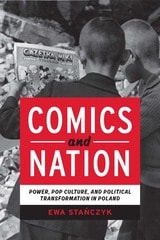
Comics and Nation
Power, Pop Culture, and Political Transformation in PolandEwa Stanczyk
The Ohio State University Press, 2022
Winner, BASEES George Blazyca Award in East European Studies
Comics and Nation offers a fresh perspective on the role of popular culture in the one-hundred-year history of the Polish state, from its foundation in 1918 to the present. Drawing on dozens of press articles, interviews, and readers’ letters, Ewa Stanczyk discusses how journalists, artists, and audiences used comics to probe the boundaries of national culture and scrutinize the established notions of Polishness. Critical moments of Poland’s political transformation ––the establishment of the interwar Polish Republic, the Cold War, the liberalization of the 1970s, the 1989 democratic transition, the turn to memory politics in the 2000s––have all been reflected in the history of Polish comics. Stanczyk offers new insights into how the production of homegrown comics and the influx of foreign works enabled commentators to express their fears, hopes, and disillusionment with political, economic, and cultural changes in Poland and beyond. At its core, Comics and Nation rethinks the impact of popular culture and transnational exchange on Polish nation building, citizenship formation, and the legitimation of power.
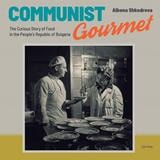
Communist Gourmet
The Curious Story of Food in the People’s Republic of BulgariaAlbena Shkodrova
Central European University Press, 2021
Communist Gourmet presents a lively, detailed account of how the communist regime in Bulgaria determined people’s everyday food experience between 1944 and 1989. It examines the daily routines of acquiring food, cooking it, and eating out at restaurants through the memories of Bulgarians and foreigners, during communism.
In looking back on a wide array of issues and events, Albena Shkodrova attempts to explain the paradoxes of daily existence. She reports human stories that are touching, sometimes dark, but often full of humor and anecdotes from nearly one hundred people: some of them are Bulgarians who were involved in the communist food industry, whether as consumers or employees, while others are visitors from the United States and Western Europe who report culinary highlights and disappointments. The author made use of the national press, officially published cookbooks, Communist Party documents, and other previously unstudied sources.
An appendix containing recipes of dishes typical of the period and an extensive set of archival photographs are special features of the volume.
Compulsory Happiness
Norman Manea
Northwestern University Press, 1994
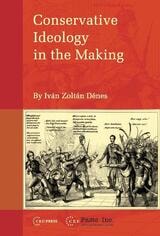
Conservative Ideology in the Making
Ivan Zoltan Denes
Central European University Press, 2009
Constitution for a Disunited Nation
On Hungary's 2011 Fundamental LawGábor Attila Tóth
Central European University Press, 2013
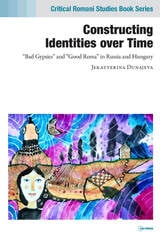
Constructing Identities over Time
“Bad Gypsies” and “Good Roma” in Russia and HungaryJekatyerina Dunajeva
Central European University Press, 2022
Jekatyerina Dunajeva explores how two dominant stereotypes—“bad Gypsies” and “good Roma”—took hold in formal and informal educational institutions in Russia and Hungary. She shows that over centuries “Gypsies” came to be associated with criminality, lack of education, and backwardness. The second notion, of proud, empowered, and educated “Roma,” is a more recent development.
By identifying five historical phases—pre-modern, early-modern, early and “ripe” communism, and neomodern nation-building—the book captures crucial legacies that deepen social divisions and normalize the constructed group images. The analysis of the state-managed Roma identity project in the brief korenizatsija program for the integration of non-Russian nationalities into the Soviet civil service in the 1920s is particularly revealing, while the critique of contemporary endeavors is a valuable resource for policy makers and civic activists alike.
The top-down view is complemented with the bottom-up attention to everyday Roma voices. Personal stories reveal how identities operate in daily life, as Dunajeva brings out hidden narratives and subaltern discourse. Her handling of fieldwork and self-reflexivity is a model of sensitive research with vulnerable groups.
Contesting Copyright
A History of Intellectual Property in East Central Europe and the BalkansAugusta Dimou
Central European University Press, 2026
Cosmas of Prague
The Chronicle of the CzechsPetra Mutlová
Central European University Press, 2020
The Latin-English bilingual volume presents the text of The Chronicle of the Czechs by Cosmas of Prague. Cosmas was born around 1045, educated in Liège, upon his return to Bohemia, he got married as well as became a priest. In 1086 he was appointed prebendary, a senior member of clergy in Prague. He completed the first book of the Chronicle in 1119, starting with the creation of the world and the earliest deeds of the Czechs up to Saint Adalbert. In the second and third books Cosmas presents the preceding century in the history of Bohemia, and succeeds in reporting about events up to 1125, the year when he died.
The English translation was done by Petra Mutlova and Martyn Rady with the cooperation of Libor Švanda. The introduction and the explanatory notes were written by Jan Hasil with the cooperation of Irene van Rensvoude.T

Creative Dissent
Alternative Cultures during SocialismKatalin Cseh-Varga
Central European University Press, 2027
Creative Dissent argues that the region was teeming with alternative cultures: emerging practices and expressions that actively challenged the dominant social code and reshaped the reality of the people’s democracies.
The book explores how ordinary people, intellectuals, and cultural players across socialist Europe responded to state repression and comprehensive control with ingenuity and defiance. By examining how these dissenting voices circumvented or even penetrated official spaces, this collection illuminates the complex heterogeneity of life behind the Iron Curtain.
Structured around four key areas—communities, markets, media, and spaces—this work offers a necessary, nuanced understanding of cultural resistance and the limits of authoritarian control.
Czecho/Slovakia
Ethnic Conflict, Constitutional Fissure, Negotiated BreakupEric Stein
University of Michigan Press, 2000
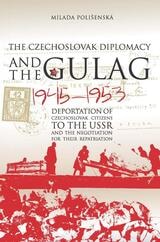
Czechoslovak Diplomacy and the Gulag
Deportation of Czechoslovak Citizens to the USSR and the Negotiation for their Repatriation, 1945-1953Milada Polisenská
Central European University Press, 2016
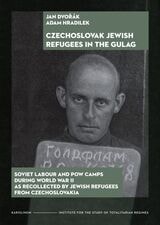
Czechoslovak Jewish Refugees in the Gulag
Soviet Labour and POW Camps during World War II as Recollected by Jewish Refugees from CzechoslovakiaJan Dvorák and Adam Hradilek
Karolinum Press, 2025
While millions of Soviet slaves awaited liberation from the Nazi troops, millions of German concentration camp victims put their last bit of hope in the Red Army.
An in-depth look into the Soviet persecution of Jewish refugees, this book offers twenty-one different interviews with Czechoslovak Jewish refugees who found themselves in Soviet labor and prison camps between 1939 and 1941. They represent around two thousand Czechoslovak Jews who escaped persecution from German and Hungarian occupational forces and Slovak fascists by fleeing to the East. The Soviets sentenced most of them to long stints of forced labor in the Gulags for illegal immigration, espionage, and other arbitrary accusations. A specific group was formed by the Jews from the Hungarian labor service who either defected to or were captured by the Soviets.
Dvořák and Hradilek chronicle four waves of escape—those from the Protectorate of Bohemia and Moravia, the Nisko concentration camp, Carpathian Ruthenia, and the aforementioned labor service. Thorough and clear, every interview coincides with supplementary documents and photographs found in the NKVD archives, sourced from Ukraine.