Results by title
295 books match the query 'Ecosystems & Habitats' and 20 start with c

Canadian Wetlands
Places and PeopleRod Giblett
Intellect Books, 2014
Canoe Country Flora
Plants and Trees of the North Woods and Boundary WatersMark Stensaas
University of Minnesota Press, 2004
The vast North Woods, a land magnificently arrayed in the deep greens of pine, spruce, and fir and the brilliant blues of crystal clear lakes, spans the area from Minnesota to Maine and from Michigan to Hudson Bay. With a little help fromCanoe Country Flora, keen explorers will discover a world full of life and wonder in the plants that thrive in this beautiful lake country.
Canoe Country Flora, a friendly field guide, introduces you to ninety-six of the most common trees, shrubs, wildflowers, fungi, ferns, lichens, and other plants you’re likely to encounter during your travels north. Detailed line drawings and brief plant profiles help you recognize what you’re seeing, while “Sparky” Stensaas’s intriguing tales draw you into a deeper study of the plants’s natural and cultural histories.
Each plant is made identifiable and memorable by fascinating facts, handy checklists, diagrams and charts, and interesting activities that help adults and children learn by discovery.
Use this book as a companion to Canoe Country Wildlife or alone as your guide to a unique North Woods adventure.
Canoe Country Wildlife
A Field Guide to the North Woods and Boundary WatersMark Stensaas
University of Minnesota Press, 2004
Warblers, wolves, and whirligig beetles—the creatures of the canoe countrywilderness come alive in Canoe Country Wildlife. In this read-aloud treasure, “Sparky” Stensaas, naturalist and storyteller, intrigues you with his tales of encounters with the forest inhabitants—from tiny toads to majestic moose.
Canoe Country Wildlife, a friendly field guide, introduces you to the wildlife you are most likely to see as you travel in the North Woods. It describes these creatures and their habits accurately so you’ll know where and when to look for them. Detailed line drawings illustrate each animal clearly so you’ll recognize what you’re seeing.
The book is filled with fascinating little-known facts: Did you know that wood frogs can freeze solid, only to live again? That loons can fly a hundred miles an hour? That chipmunks can carry seventy sunflower seeds in their cheeks?
Canoe Country Wildlife includes handy checklists to help you keep track of the critters you encounter, a calendar for you to record the natural events you witness, and activities—one for each animal—that will help both adults and children learn by discovery.
Carry Canoe Country Wildlife in your pack. Your trip will be more enjoyable and your memories will last forever. It’s a great gift for anyone who loves the outdoors.
Canyon, Mountain, Cloud
Absence and Longing in American ParksTyra A. Olstad
Oregon State University Press, 2021
Part memoir and part scholarly analysis of the psychological and societal dimensions of place-creation, Canyon, Mountain, Cloud details the author’s experiences working and living in Black Canyon of the Gunnison National Park, Denali National Park and Preserve, Adirondack State Park, and arctic Alaska. Along the way, Olstad explores canyons, climbs mountains, watches clouds, rafts rivers, searches for fossils, and protects rare and fragile vegetation. She learns and shares local natural and cultural histories, questions perceptions of “wilderness,” deepens her appreciation for wildness, and reshapes her understanding of self and self-in-place.
Anyone who has ever felt appreciation for wild places and who wants to think more deeply about individual and societal relationships with American parks and protected areas will find humor, fear, provocation, wonder, awe, and, above all, inspiration in these pages.
Cape Cod
An Environmental History of a Fragile EcosystemJohn T. Cumbler
University of Massachusetts Press, 2014
John T. Cumbler's book offers an environmental, social, and economic history of Cape Cod told through the experiences of residents as well as visitors. He notes that over the past four hundred years the Cape has experienced three regimes of resource utilization. The first regime of Native Americans who lived relatively lightly on the land was supplanted by European settlers who focused on production and extraction. This second regime began in the age of sail but declined through the age of steam as the soil and seas failed to yield the resources necessary to sustain continuing growth. Environmental and then economic crises during the second half of the nineteenth century eventually gave way to the third regime of tourism and recreation. But this regime has its own environmental costs, as residents have learned over the last half century.
Although the Cape remains a special place, its history of resource scarcity and its attempts to deal with that scarcity offer useful lessons for anyone addressing similar issues around the globe.
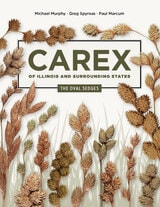
Carex of Illinois and Surrounding States
The Oval SedgesMichael Murphy, Greg Spyreas, and Paul Marcum
University of Illinois Press, 2025
Drawing on the study of thousands of specimens, Carex of Illinois and Surrounding States: The Oval Sedges is an invaluable resource for botanists, ecologists, environmental engineers, and professional and amateur environmentalists interested in a deeper understanding of these essential plants.
Chasing Science at Sea
Racing Hurricanes, Stalking Sharks, and Living Undersea with Ocean ExpertsEllen Prager
University of Chicago Press, 2008
With passion and wit, well-known marine scientist Ellen Prager shares her stories as well as those of her colleagues, revealing that in the field ingenuity and a good sense of humor are as essential as water, sunblock, and GPS. Serendipity is invaluable, and while collecting data is the goal, sometimes just getting back to shore means success. But despite the physical hardship and emotional duress that come with the work, optimism and adventure prompt a particularly hardy species of scientist to return again and again to the sea.
Filled with firsthand accounts of the challenges and triumphs of dealing with the extreme forces of nature and the unpredictable world of the ocean, Chasing Science at Sea is a unique glimpse below the water line at what it is like and why it is important to study, explore, and spend time in one of our planet’s most fascinating and foreign environments.
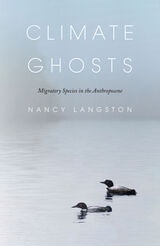
Climate Ghosts
Migratory Species in the AnthropoceneNancy Langston
Brandeis University Press, 2021
Environmental historian Nancy Langston explores three “ghost species” in the Great Lakes watershed—woodland caribou, common loons, and lake sturgeon. Ghost species are those that have not gone completely extinct, although they may be extirpated from a particular area. Their traces are still present, whether in DNA, in small fragmented populations, in lone individuals roaming a desolate landscape in search of a mate. We can still restore them if we make the hard choices necessary for them to survive. In this meticulously researched book, Langston delves into how climate change and human impact affected these now ghost species. Climate Ghosts covers one of the key issues of our time.
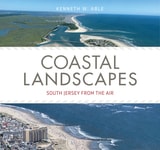
Coastal Landscapes
South Jersey from the AirKenneth W. Able
Rutgers University Press, 2023
Based on numerous aerial images from helicopter and drone flights between 2015 and 2021, this book provides extensive photographs and maps of the New Jersey coast, from the Pine Barrens to the ocean beaches. The text associated with each exceptional image describes it in detail, including its location, ecological setting, and relative position within the larger landscape. Author Kenneth Able, director of the Rutgers University Marine Field Station for over thirty years, has thoroughly ground-truthed each image by observations made through kayaks, boats, and wading through marshes. Calling upon his decades of expertise, Able paints a compelling portrait of coastal New Jersey’s stunning natural features, resources, history, and possible futures in an era of rising sea levels.

Coastal Marshes
Ecology and Wildlife ManagementRobert H. Chabreck
University of Minnesota Press, 1988
Coastal Marshes was first published in 1988. Minnesota Archive Editions uses digital technology to make long-unavailable books once again accessible, and are published unaltered from the original University of Minnesota Press editions.
The coastal regions of the United States form a highly diversified environment. In addition to sandy beaches and rocky shorelines, there are lagoons, rivers, estuaries, and marshes. The last are a dominant features of many coastal areas and serve as a transition between sea and uplands. Coastal marshes have been a zone for human development, attractive to industrial and residential building because they provide water frontage. But the public is becoming aware of the great value of these wetlands to fisheries and wildlife and to the local economy that depends on them.
This book describes coastal marshes in terms of form, function, ecology, wildlife value, and management. Robert H. Chabreck's emphasis is on the marshes of the northern coast of the Gulf of Mexico (there are 5,500 square miles of marshland in Louisiana alone), but he also deals with marshes on the Atlantic and Pacific coasts. Plant and animal communities are each given a chapter, and the book concludes with considerations of future uses and needs. The author provides references, a glossary, and a list of scientific names, along with numerous illustrations, including a section of color photographs.
For thirty years, Robert H. Chabreck has been engaged in research and management of coastal marshes and has often served as a consultant in wetland ecology. He is a professor of wildlife at Louisiana State University.
Colorado Flora
Eastern Slope, Fourth Edition <br>A Field Guide to the Vascular PlantsWilliam A. Weber
University Press of Colorado, 2011
The revised and updated editions reflect current taxonomic knowledge. The authors describe botanical features of this unparalleled biohistorical region and its mountain ranges, basins, and plains and discuss plant geography, giving detailed notes on habitat, ecology, and range. The keys recount interesting anecdotes and introductions for each plant family. The book is rounded out with historical background of botanical work in the state, suggested readings, glossary, index to scientific and common names, references, and hundreds of illustrations. The books also contain a new contribution from Donald R. Farrar and Steve J. Popovich on moonworts. The fourth editions of both Colorado Flora: Eastern Slope and Colorado Flora: Western Slope are ideal for both student and scientist and essential for readers interested in Colorado's plant life.
Colorado Flora
Western Slope, Fourth Edition <br>A Field Guide to the Vascular PlantsWilliam A. Weber
University Press of Colorado, 2011
These thoroughly revised and updated editions reflect current taxonomic knowledge. The authors describe botanical features of this unparalleled biohistorical region and its mountain ranges, basins, and plains and discuss plant geography, giving detailed notes on habitat, ecology, and range. The keys contain interesting anecdotes and introductions for each plant family. The book is rounded out with historical background of botanical work in the state, suggested readings, glossary, index to scientific and common names, references, and hundreds of illustrations. The books also contain a new contribution from Donald R. Farrar and Steve J. Popovich on moonworts. The fourth editions of Colorado Flora: Eastern Slope and Colorado Flora: Western Slope are ideal for both student and scientist and essential for readers interested in Colorado's plant life.
Colorado Trail in Crisis
A Naturalist’s Field Report on Climate Change in Mountain EcosystemsKarl Ford
University Press of Colorado, 2024
Using his hike along the popular five-hundred-mile Colorado Trail to present his personal observations about more than a hundred miles of dead and dying forest, Karl Ford presents a brief environmental history of these areas of the state, weaving in scientific studies about forest mortality caused by insect infestations, wildfire, drought, and loss of snowpack, and describes the poor current prospects for reforestation as the climate continues to warm. His own Lakota ancestry, as well as historical references to local Tabeguache Ute Chief Ouray and displaced Ute populations, meaningfully frames important conversations about caretaking and connection to place. Ford also proposes potential solutions to drought and forest mortality problems, as well as varying approaches and limitations to mitigation efforts.
The Colorado Trail in Crisis appeals to hikers and nature lovers seeking to learn about the natural history, beauty, and serenity of the Colorado Trail, as well as students, conservationists, and scientists researching climate change effects on Colorado mountain ecosystems.
Contested Waters
An Environmental History of the Colorado RiverApril R. Summitt
University Press of Colorado, 2013
-From the conclusion
The Colorado River is a vital resource to urban and agricultural communities across the Southwest, providing water to 30 million people. Contested Waters tells the river's story-a story of conquest, control, division, and depletion.
Beginning in prehistory and continuing into the present day, Contested Waters focuses on three important and often overlooked aspects of the river's use: the role of western water law in its over-allocation, the complexity of power relationships surrounding the river, and the concept of sustainable use and how it has been either ignored or applied in recent times. It is organized in two parts, the first addresses the chronological history of the river and long-term issues, while the second examines in more detail four specific topics: metropolitan perceptions, American Indian water rights, US-Mexico relations over the river, and water marketing issues. Creating a complete picture of the evolution of this crucial yet over-utilized resource, this comprehensive summary will fascinate anyone interested in the Colorado River or the environmental history of the Southwest.
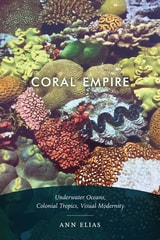
Coral Empire
Underwater Oceans, Colonial Tropics, Visual ModernityAnn Elias
Duke University Press, 2019
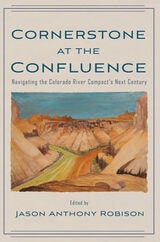
Cornerstone at the Confluence
Navigating the Colorado River Compact's Next CenturyEdited by Jason Anthony Robison
University of Arizona Press, 2022
No fewer than forty million people have come to rely on the Colorado River system in modern times—a river system immersed in an unprecedented, unrelenting megadrought for more than two decades. Attempting to navigate this “new normal,” policymakers are in the midst of negotiating new management rules for the river system, a process coinciding with the compact’s centennial that must be completed by 2026.
Animated by this remarkable confluence of events, Cornerstone at the Confluence leverages the centennial year to reflect on the compact and broader “Law of the River” to envision the future. It is a volume inviting dialogue about how the Colorado River system’s flows should be apportioned given climate change, what should be done about environmental issues such as ecosystem restoration and biodiversity protection, and how long-standing issues of water justice facing Native American communities should be addressed.
In one form or another, all these topics touch on the concept of “equity” embedded within the compact—a concept that tees up what is perhaps the foundational question confronted by Cornerstone at the Confluence: Who should have a seat at the table of Colorado River governance?
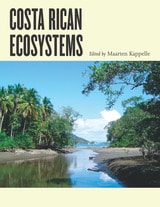
Costa Rican Ecosystems
Edited by Maarten Kappelle
University of Chicago Press, 2016
In Costa Rican Ecosystems, Maarten Kappelle brings together a collection of the world’s foremost experts on Costa Rican ecology—outstanding scientists such as Daniel H. Janzen, Jorge Cortés, Jorge A. Jiménez, Sally P. Horn, Robert O. Lawton, Quírico Jiménez M., Carlos Manuel Rodríguez, Catherine M. Pringle, and Eduardo Carrillo J., among others—to offer the first comprehensive account of the diversity, structure, function, uses, and conservation of Costa Rica’s ecosystems. Featuring a foreword and introductory remarks by two renowned leaders in biodiversity science and ecological conservation, Thomas E. Lovejoy and Rodrigo Gámez Lobo, in addition to chapters highlighting the geology, soils, and climate of Costa Rica, as well as the ecosystems of its terrestrial, freshwater, and marine habitats, and including previously unpublished information on Isla del Coco, this beautiful color-illustrated book will be an essential reference for academic scientists, students, natural history guides, conservationists, educators, park guards, and visitors alike.
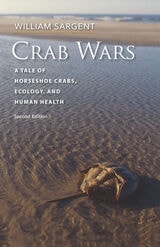
Crab Wars
A Tale of Horseshoe Crabs, Ecology, and Human HealthWilliam Sargent
Brandeis University Press, 2021
Because every drug certified by the FDA must be tested using the horseshoe crab derivative known as Limulus lysate, a multimillion-dollar industry has emerged involving the license to bleed horseshoe crabs and the rights to their breeding grounds. William Sargent presents a thoroughly accessible insider’s guide to the discovery of the lysate test, the exploitation of the horseshoe crab at the hands of multinational pharmaceutical conglomerates, local fishing interests, and the legal and governmental wrangling over the creatures’ ultimate fate. In the end, the story of the horseshoe crab is a sobering reflection on the unintended consequences of scientific progress and the danger of self-regulated industries controlling a limited natural resource. This new edition brings the story up to date as companies race to manufacture alternatives to the horseshoe crab blood, which is now essential for testing vaccines such as those developed to counter COVID-19. However, horseshoe crab populations are still dwindling, with profound implications not only for the future of the crabs themselves but also for the ecosystems that depend on them.
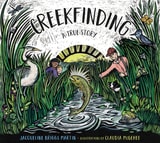
Creekfinding
A True StoryJacqueline Briggs Martin
University of Minnesota Press, 2017
Once upon a time a creek burbled up and tumbled across a prairie valley. It was filled with insects and brook trout that ate them, frogs that chirruped and birds watching for bugs and fish. This is a true story about a man named Mike who went looking for that creek long after it was buried under fields of corn. It is the story of how a creek can be brought back to life, and with it a whole world of nature.
In the words of award-winning author Jacqueline Briggs Martin and the enchanting illustrations by Claudia McGehee, this heartening tale of an ecosystem restored in the Driftless Area of northeast Iowa unfolds in a way that will charm and inform young readers who are drawn to a good mystery, the wonders of nature—and, of course, big earth-moving machines.
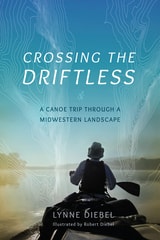
Crossing the Driftless
A Canoe Trip through a Midwestern LandscapeLynne Diebel
University of Wisconsin Press, 2015
Crossing the Driftless is both a traveler’s tale and an exploration of this dramatic environment, following the streams of geologic and human history. Lynne Diebel and her husband, Bob, crossed the Driftless Area by canoe, journeying 359 river miles (and six Mississippi River locks and five portages) from Faribault, Minnesota, where her family has a summer home on Cedar Lake, to their Wisconsin home in Stoughton, one block from the Yahara River. Traveling by river and portage, they paddled downstream on the Cannon and Mississippi rivers and upstream on the Wisconsin River, in the tradition of voyageurs. Lynne tells the story of their trip, but also the stories of the rivers they canoed and the many tributaries whose confluences they passed.
Finalist, Travel, Foreword Reviews IndieFab Book of the Year Awards
Honorable mention, Nonfiction book, Council for Wisconsin Writers
Winner, Recreation/Sports/Travel, Midwest Book Awards
Best books for public & secondary school libraries from university presses, American Library Association