Results by title
153 books match the query 'Egypt' and 8 start with c
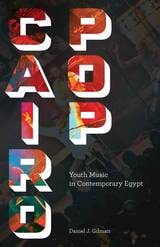
Cairo Pop
Youth Music in Contemporary EgyptDaniel J. Gilman
University of Minnesota Press, 2014
Cairo Pop is the first book to examine the dominant popular music of Egypt, shababiyya. Scorned or ignored by scholars and older Egyptians alike, shababiyya plays incessantly in Cairo, even while Egyptian youth joined in mass protests against their government, which eventually helped oust longtime Egyptian president Hosni Mubarak in early 2011. Living in Cairo at the time of the revolution, Daniel Gilman saw, and more importantly heard, the impact that popular music can have on culture and politics. Here he contributes a richly ethnographic analysis of the relationship between mass-mediated popular music, modernity, and nationalism in the Arab world.
Before Cairo Pop, most scholarship on the popular music of Egypt focused on musiqa al-ṭarab. Immensely popular in the 1950s and ’60s and even into the ’70s, musiqa al-ṭarab adheres to Arabic musical theory, with non-Western scales based on tunings of the strings of the ‘ud—the lute that features prominently, nearly ubiquitously, in Arabic music. However, today one in five Egyptians is between the ages of 15 and 24; half the population is under the age of 25. And shababiyya is their music of choice. By speaking informally with dozens of everyday young people in Cairo, Gilman comes to understand shababiyya as more than just a musical genre: sometimes it is for dancing or seduction, other times it propels social activism, at others it is simply sonic junk food.
In addition to providing a clear Egyptian musical history as well as a succinct modern political history of the nation, Cairo Pop elevates the aural and visual aesthetic of shababiyya—and its role in the lives of a nation’s youth.
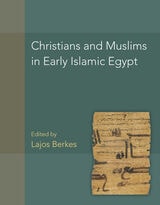
Christians and Muslims in Early Islamic Egypt
Lajos Berkes, Editor
University of Michigan Press, 2022
This volume collects studies exploring the relationship of Christians and Muslims in everyday life in Early Islamic Egypt (642–10th c.) focusing mainly, but not exclusively on administrative and social history. The contributions concentrate on the papyrological documentation preserved in Greek, Coptic, and Arabic. By doing so, this book transcends traditional disciplinary boundaries and offers results based on a holistic view of the documentary material. The articles of this volume discuss various aspects of change and continuity from Byzantine to Islamic Egypt and offer also the (re)edition of 23 papyrus documents in Greek, Coptic, and Arabic. The authors provide a showcase of recent papyrological research on this under-studied, but dynamically evolving field.
After an introduction by the editor of the volume that outlines the most important trends and developments of the period, the first two essays shed light on Egypt as part of the Caliphate. The following six articles, the bulk of the volume, deal with the interaction and involvement of the Egyptian population with the new Muslim administrative apparatus. The last three studies of the volume focus on naming practices and language change.
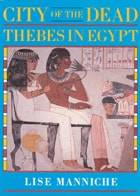
City of the Dead
Thebes in EgyptLise Manniche
University of Chicago Press, 1987
The author traces the history of the site discussing the more important tombs in some detail, and sheds new light on the symbolism used in painting to help the deceased in the Afterlife. She also surveys the role of the treasure hunters and travellers of the eighteenth and early nineteenth-centuries and the pioneer epigraphers who followed them and paved the way for the archeological investigation and research that continues today.
Clio's Other Sons
Berossus and ManethoJohn Dillery
University of Michigan Press, 2015
Confiscation or Coexistence
Egyptian Temples in the Age of AugustusAndrew Connor
University of Michigan Press, 2022
The interpretative consensus developed after the publication of a handful of key documents—P.Tebt. 2.302 especially, alongside BGU 4.1198 and 1200, and P.Berl.Leihg. 1.5. Connor offers a fundamentally revised interpretation of these texts, building from a fresh examination of the papyri themselves. The book frames the interpretation in a wider discussion of Roman interactions with Egyptian religion, including material from inside and outside Egypt, and locates the development of an interpretative consensus in early 20th-century scholarship within the wider context of empire and colonization at the time. In doing so, Connor explores these papyri through their historical, intellectual, and linguistic contexts, alongside a number of other important texts bearing on the relationship between the temples and the Roman state.
Conflicted Antiquities
Egyptology, Egyptomania, Egyptian ModernityElliott Colla
Duke University Press, 2007
Colla draws on medieval and modern Arabic poetry, novels, and travel accounts; British and French travel writing; the history of archaeology; and the history of European and Egyptian museums and exhibits. The struggle over the ownership of Pharaonic Egypt did not simply pit Egyptian nationalists against European colonial administrators. Egyptian elites found arguments about the appreciation and preservation of ancient objects useful for exerting new forms of control over rural populations and for mobilizing new political parties. Finally, just as the political and expressive culture of Pharaonism proved critical to the formation of new concepts of nationalist identity, it also fueled Islamist opposition to the Egyptian state.
Contemporary Art and the Display of Ancient Egypt
Alice Stevenson
University College London, 2025
Contemporary art installations in Egyptian galleries are often framed as dialogues between past and present—but what if they are, instead, shaped by the museum itself? Contemporary Art and the Display of Ancient Egypt argues that both contemporary and ancient works are mediated through the structures and ideologies of the museum space. In this seminal work, Alice Stevenson examines how artists’ work influences museum discourse and public engagement with ancient artifacts.
Drawing on case studies from the British Museum, the Egyptian Museum in Turin, and the State Museum of Egyptian Art in Munich, this book assesses the motivations behind these interventions and their lasting impact. Through an evidence-based approach, Stevenson offers new insights into how curators, scholars, and artists can collaborate to create more meaningful and politically engaged museum experiences. Of particular interest to Egyptologists, museum professionals, and contemporary art scholars, this work redefines the role of artistic intervention in shaping our understanding of ancient cultures.
Cultivating the Nile
The Everyday Politics of Water in EgyptJessica Barnes
Duke University Press, 2014