Results by title
193 books match the query 'Empire' and 15 start with c
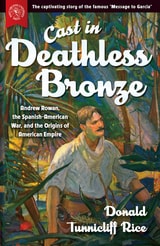
Cast in Deathless Bronze
Andrew Rowan, the Spanish-American War, and the Origins of American EmpireDonald Tunnicliff Rice
West Virginia University Press, 2016
Donald Tunnicliff Rice reveals the facts behind the story of “A Message to García” while using Rowan’s biography as a window into the history of the Spanish-American War, the Philippine War, and the Moro Rebellion. The result is a compellingly written narrative containing many details never before published in any form, and also an accessible perspective on American diplomatic and military history in the late nineteenth and early twentieth centuries.
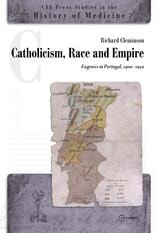
Catholicism, Race and Empire
Eugenics in Portugal, 1900-1950Richard Cleminson
Central European University Press, 2014
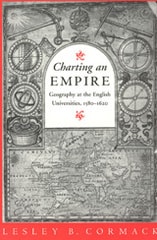
Charting an Empire
Geography at the English Universities 1580-1620Lesley B. Cormack
University of Chicago Press, 1997
Cormack demonstrates that geography was part of the Arts curriculum between 1580 and 1620, read at university by a broad range of soon-to-be political, economic, and religious leaders. By teaching these young Englishmen to view their country in a global context, and to see England playing a major role on that stage, geography supplied a set of shared assumptions about the feasibility and desirability of an English empire. Thus, the study of geography helped create an ideology of empire that made possible the actual forays of the next century.
Geography emerges in Cormack's account as the fruitful ground between college and court, in whose well-prepared soil the seeds of English imperialism took root. Charting an Empire will interest historians of science, geography, cartography, education, and empire.
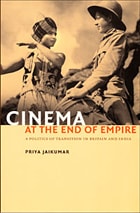
Cinema at the End of Empire
A Politics of Transition in Britain and IndiaPriya Jaikumar
Duke University Press, 2006
In addition to close readings of British and Indian films of the late colonial era, Jaikumar draws on a wealth of historical and archival material, including parliamentary proceedings, state-sponsored investigations into colonial filmmaking, trade journals, and intra- and intergovernmental memos regarding cinema. Her wide-ranging interpretations of British film policies, British initiatives in colonial film markets, and genres such as the Indian mythological film and the British empire melodrama reveal how popular film styles and controversial film regulations in these politically linked territories reconfigured imperial relations. With its innovative examination of the colonial film archive, this richly illustrated book presents a new way to track historical change through cinema.
Climate in Motion
Science, Empire, and the Problem of ScaleDeborah R. Coen
University of Chicago Press, 2018
Climate in the Age of Empire
Weather Observers in Colonial CanadaVictoria C. Slonosky
American Meteorological Society, 2018
Close Encounters of Empire
Writing the Cultural History of U.S.-Latin American RelationsGilbert M. Joseph, Catherine C. LeGrand, and Ricardo D. Salvatore, eds.
Duke University Press, 1998
Exploring a variety of nineteenth- and twentieth-century encounters in Latin America, these theoretically engaged essays by distinguished U.S. and Latin American historians and anthropologists illuminate a wide range of subjects. From the Rockefeller Foundation’s public health initiatives in Central America to the visual regimes of film, art, and advertisements; these essays grapple with new ways of conceptualizing public and private spheres of empire. As such, Close Encounters of Empire initiates a dialogue between postcolonial studies and the long-standing scholarship on colonialism and imperialism in the Americas as it rethinks the cultural dimensions of nationalism and development.
Cold War and Decolonisation
Australia's Policy towards Britain's End of Empire in Southeast AsiaAndrea Benvenuti
National University of Singapore Press, 2017
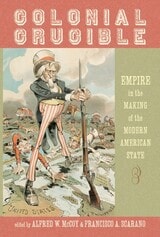
Colonial Crucible
Empire in the Making of the Modern American StateEdited by Alfred W. McCoy and Francisco A. Scarano
University of Wisconsin Press, 2009
Moving well beyond theory, this volume takes the next step, adding a fine-grained, empirical texture to the study of U.S. imperialism by analyzing its specific consequences. Across a broad range of institutions—policing and prisons, education, race relations, public health, law, the military, and environmental management—this formative experience left a lasting institutional imprint. With each essay distilling years, sometimes decades, of scholarship into a concise argument, Colonial Crucible reveals the roots of a legacy evident, most recently, in Washington’s misadventures in the Middle East.
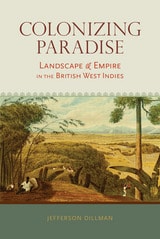
Colonizing Paradise
Landscape and Empire in the British West IndiesJefferson Dillman
University of Alabama Press, 2015
Explores how perceptions and depictions of the physical landscape both reflected and influenced the history of the British colonial Caribbean
In Colonizing Paradise, historian Jefferson Dillman charts the broad spectrum of sentiments that British citizens and travelers held regarding their colonial possessions in the West Indies. Myriad fine degrees of ambivalence separated extreme views of the region as an idyllic archipelago or a nest of Satanic entrapments. Dillman shows the manner in which these authentic or spontaneous depictions of the environment were shaped to form a narrative that undergirded Britain’s economic and political aims in the region.
Because British sentiments in the Caribbean located danger and evil not just in indigenous populations but in Spanish Catholics as well, Dillman’s work begins with the arrival of Spanish explorers and conquistadors. Colonizing Paradise spans the arrival of English ships and continues through the early nineteenth century and the colonial era. Dillman shows how colonial entrepreneurs, travelers, and settlers engaged in a disquieted dialogue with the landscape itself, a dialogue the examination of which sheds fresh light on the culture of the Anglophone colonial Caribbean.
Of particular note are the numerous mythical, metaphorical, and biblical lenses through which Caribbean landscapes were viewed, from early views of the Caribbean landscape as a New World paradise to later depictions of the landscape as a battleground between the forces of Christ and Satan. The ideal of an Edenic landscape persisted, but largely, Dillman argues, as one that needed to be wrested from the forces of darkness, principally through the work of colonization, planting, cataloguing, and a rational ordering of the environment.
Ultimately, although planters and their allies continued to promote pastoral and picturesque views of the Caribbean landscape, the goal of such narratives was to rationalize British rule as well as to mask and obscure emerging West Indian problems such as diseases, slavery, and rebellions. Colonizing Paradise offers much to readers interested in Caribbean, British, and colonial history.
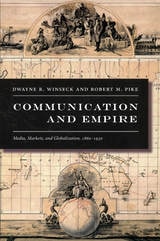
Communication and Empire
Media, Markets, and Globalization, 1860-1930Dwayne R. Winseck and Robert M. Pike
Duke University Press, 2007
Drawing on extensive research in corporate and government archives, Winseck and Pike illuminate the actions of companies and cartels during the late nineteenth century and early twentieth, in many different parts of the globe, including Africa, Asia, and Central and South America as well as Europe and North America. The complex history they relate shows how cable companies exploited or transcended national policies in the creation of the global cable network, how private corporations and government agencies interacted, and how individual reformers fought to eliminate cartels and harmonize the regulation of world communications. In Communication and Empire, the multinational conglomerates, regulations, and the politics of imperialism and anti-imperialism as well as the cries for reform of the late nineteenth century and early twentieth emerge as the obvious forerunners of today’s global media.
Confronting Margaret Mead
Scholarship, Empire, and the South Pacificedited by Lenora Foerstel and Angela Gilliam
Temple University Press, 1994
Conrad and Empire
Stephen Ross
University of Missouri Press, 2004
Crisis of the Wasteful Nation
Empire and Conservation in Theodore Roosevelt's AmericaIan Tyrrell
University of Chicago Press, 2014
In Crisis of the Wasteful Nation, Ian Tyrrell gives us a cohesive picture of Roosevelt’s engagement with the natural world along with a compelling portrait of how Americans used, wasted, and worried about natural resources in a time of burgeoning empire. Countering traditional narratives that cast conservation as a purely domestic issue, Tyrrell shows that the movement had global significance, playing a key role in domestic security and in defining American interests around the world. Tyrrell goes beyond Roosevelt to encompass other conservation advocates and policy makers, particularly those engaged with shaping the nation’s economic and social policies—policies built on an understanding of the importance of crucial natural resources. Crisis of the Wasteful Nation is a sweeping transnational work that blends environmental, economic, and imperial history into a cohesive tale of America’s fraught relationships with raw materials, other countries, and the animal kingdom.
Culture of Empire
American Writers, Mexico, and Mexican Immigrants, 1880–1930By Gilbert G. González
University of Texas Press, 2003
A history of the Chicano community cannot be complete without taking into account the United States' domination of the Mexican economy beginning in the late nineteenth and early twentieth centuries, writes Gilbert G. González. For that economic conquest inspired U.S. writers to create a "culture of empire" that legitimated American dominance by portraying Mexicans and Mexican immigrants as childlike "peons" in need of foreign tutelage, incapable of modernizing without Americanizing, that is, submitting to the control of U.S. capital. So powerful was and is the culture of empire that its messages about Mexicans shaped U.S. public policy, particularly in education, throughout the twentieth century and even into the twenty-first.
In this stimulating history, Gilbert G. González traces the development of the culture of empire and its effects on U.S. attitudes and policies toward Mexican immigrants. Following a discussion of the United States' economic conquest of the Mexican economy, González examines several hundred pieces of writing by American missionaries, diplomats, business people, journalists, academics, travelers, and others who together created the stereotype of the Mexican peon and the perception of a "Mexican problem." He then fully and insightfully discusses how this misinformation has shaped decades of U.S. public policy toward Mexican immigrants and the Chicano (now Latino) community, especially in terms of the way university training of school superintendents, teachers, and counselors drew on this literature in forming the educational practices that have long been applied to the Mexican immigrant community.