Results by title
83 books match the query 'Enlightenment' and 6 start with c

Changing Identities in Early Modern France
Michael Wolfe, ed.
Duke University Press, 1997
After examining the interplay between competing ideologies and public institutions, from the monarchy to the Parlement of Paris to the aristocratic household, the volume explores the dynamics of deviance and dissent, particularly in regard to women’s roles in religious reform movements and such sensationalized phenomena as the witch hunts and infanticide trials. Concluding essays examine how regional and confessional identities reshaped French identity in response to the discovery of the New World and the spectacular spread of Calvinism.
Contributors. Charmarie Blaisdell, William Bouwsma, Lawrence M. Bryant, Denis Crouzet, Robert Descimon, Barbara B. Diefendorf, Richard M. Golden, Sarah Hanley, Mack P. Holt, Donald R. Kelley, Kristen B. Neuschel, J. H. M. Salmon, Zachary Sayre Schiffman, Silvia Shannon, Alfred Soman, Michael Wolfe

Cherubino's Leap
In Search of the Enlightenment MomentRichard Kramer
University of Chicago Press, 2016
In Cherubino’s Leap, Richard Kramer unmasks such prismatic moments in iconic music from the Enlightenment, from the “chromatic” moment—the single tone that disturbs the thrust of a diatonic musical discourse—and its deployment in seminal instrumental works by Emanuel Bach, Haydn, and Mozart; on to the poetic moment, taking the odes of Klopstock, in their finely wrought prosody, as a challenge to the problem of strophic song; and finally to the grand stage of opera, to the intense moment of recognition in Gluck’s Iphigénie en Tauride and the exquisitely introverted phrase that complicates Cherubino’s daring moment of escape in Mozart’s Figaro. Finally, the tears of the disconsolate Konstanze in Mozart’s Die Entführung aus dem Serail provoke a reflection on the tragic aspect of Mozart’s operatic women. Throughout, other players from literature and the arts—Diderot, Goethe, Lessing among them—enrich the landscape of this bold journey through the Enlightenment imagination.

Christian Felix Weiße the Translator
Cultural Transfer and Literary Entrepreneurship in the EnlightenmentTom Zille
University of London Press, 2021
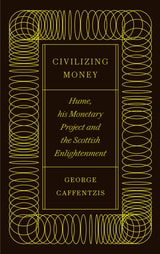
Civilizing Money
Hume, his Monetary Project, and the Scottish EnlightenmentGeorge Caffentzis
Pluto Press, 2021
Taking the Scottish Enlightenment philosopher David Hume as its subject, this book breaks new ground in focusing its lens on a little-studied aspect of Hume’s thinking: his understanding of money.
George Caffentzis makes both an intervention in the field of monetary philosophy and into Marxian conceptions of the relation between philosophy and capitalist development. He vividly charts the ways in which Hume’s philosophy directly informed the project of ‘civilizing’ the people of the Scottish Highlands and pacifying the English proletariat in response to the revolts of both groups at the heart of the empire.
Built on careful historical and philosophical detective work, Civilizing Money offers a stimulating and radical political reading of the ways in which Hume’s fundamental philosophical claims performed concrete political functions.

Communication Ethics and Tenacious Hope
Contemporary Implications of the Scottish EnlightenmentRonald C. Arnett with Foreword by Thomas M. Lessl
Southern Illinois University Press, 2022
Tenacious hope, the heart of a just and free society
During the Enlightenment, Scottish intellectuals and administrators met the demands of profit and progress while shepherding concerns for self and other, individual and community, and family and work. Communication Ethics and Tenacious Hope captures the “unity of contraries,” offering the Scottish Enlightenment as an exemplar of tenacious hope countering the excesses of individualism. Ronald C. Arnett reveals two stories: the struggle between optimism and tenacious hope, and optimism’s ultimate triumph in the exclusion of difference and the reification of progress as an ultimate good.
In chapters that detail the legacies of Lord Provost George Drummond, Adam Smith, David Hume, Thomas Reid, George Campbell, Adam Ferguson, and Sir Walter Scott, Arnett highlights the problematic nature of optimism and the ethical agency of tenacious hope. Arnett illustrates the creative union of education and administration, the ability to accept doubt within systems of knowledge and imagination, and an abiding connection to local soil. As principles of progress, free will, and capitalism swept Europe, proponents of optimism envisioned a world of consumerism and absolutes. In contrast, practitioners of tenacious hope embraced uncertainty and compassion as pragmatic necessities.
This work continues Arnett’s scholarship, articulating the vital importance of communication ethics. Those seeking to discern and support a temporal sense of the good in this historical moment will find in this timely work the means to pursue, hold, and nourish tenacious hope. This insightful theorization of the Scottish Enlightenment distills the substance of a just and free society for meeting dangerous and uncertain times.

Cultural Revolution in Berlin
Jews in the Age of EnlightenmentShmuel Feiner and Natalie Naimark-Goldberg
Bodleian Library Publishing, 2011