Results by title
51 books match the query 'Entrepreneurship' and 5 start with c
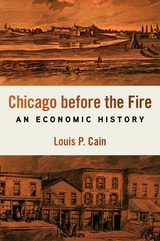
Chicago Before the Fire
An Economic HistoryLouis P. Cain
University of Illinois Press, 2025
An advantageous location and entrepreneurial passion helped fuel Chicago’s transformation from a fur trading post to a thriving city. Louis P. Cain’s economic history places pre-1871 Chicago within the narrative of national expansion and examines infrastructure, finance, and other areas of city life. Business histories tell the story of fortunes made with essential products like meat and grain. Sketches of titans like William Ogden and Cyrus McCormick reveal how real estate, farm equipment, and other industries became engines of local growth. Cain also details public health improvements that made Lake Michigan safe as a water supply while census data informs a portrait of Chicago’s population and the lives of the free Blacks and Irish immigrants at the bottom of the socioeconomic ladder.
Panoramic and up to date, Chicago before the Fire looks at how an intersection of geography, vision, and investment built a great American city.

Competition and Entrepreneurship
Israel M. Kirzner
University of Chicago Press, 1978
Kirzner's book establishes a theory of the market and the price system which differs from orthodox price theory. He sees orthodox price theory as explaining the configuration of prices and quantities that satisfied the conditions for equilibrium. Mr. Kirzner argues that "it is more useful to look to price theory to help understand how the decisions of individual participants in the market interact to generate the market forces which compel changes in prices, outputs, and methods of production and in the allocation of resources."
Although Competition and Entrepreneurship is primarily concerned with the operation of the market economy, Kirzner's insights can be applied to crucial aspects of centrally planned economic systems as well. In the analysis of these processes, Kirzner clearly shows that the rediscovery of the entrepreneur must emerge as a step of major importance.

Confessions of an Entrepreneur
Simple Wisdom for Starting, Building, and Running a BusinessMark C. Zweig
Epic Books, 2022
Finalist, 2022 Goody Business Book Awards, Entrepreneur, Start Ups / New Business Category
With more than fifty years of professional experience, Mark C. Zweig has seen it all—from the fear and excitement of starting a new business to the joys and challenges of life as an entrepreneur. In Confessions of an Entrepreneur: Simple Wisdom for Starting, Building, and Running a Business, Zweig draws upon this wealth of experience to offer practical, easy-to-understand guidance for bringing a business to life and cultivating success at every stage of its development. The candid stories he shares from his career provide insight into the realities of business ownership and illustrate proven principles for both personal and professional success. Written by an entrepreneur for entrepreneurs, this book is an indispensable guide filled with wisdom for new and seasoned business leaders alike.
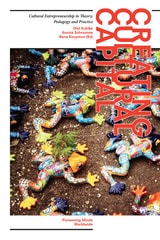
Creating Cultural Capital
Cultural Entrepreneurship in Theory, Pedagogy and PracticeEdited by Olaf Kuhlke, Annick Schramme, and René Kooyman
Eburon Academic Publishers, 2015
Parallel to these research and policy interests, academic institutions and professional organizations have begun to develop training programs for future professionals in the creative and cultural industries. In this book, more than fifty scholars from across the globe shed light on this phenomenon of cultural entrepreneurship. Readers will find conceptual frameworks for building new programs for the creative industries, examples of pedagogical approaches and skills-based training, and concrete examples of program and course implementation.
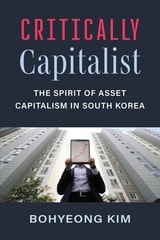
Critically Capitalist
The Spirit of Asset Capitalism in South KoreaBohyeong Kim
University of Michigan Press, 2025
Drawing on multi-sited ethnography and in-depth interviews with a broad community of aspiring millionaires, Critically Capitalist illuminates how contemporary capitalism thrives by channeling discontent into financial and real estate markets, which in turn has cemented critical capitalism as the cultural and affective backbone of South Korea’s economy.