Results by title
434 books match the query 'Ethics & Moral Philosophy' and 16 start with c
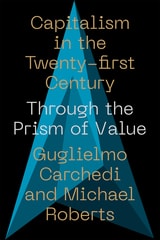
Capitalism in the 21st Century
Through the Prism of ValueMichael Roberts
Pluto Press, 2022
Contemporary capitalism is always evolving. From digital technologies to cryptocurrencies, current trends in political economy are much discussed, but often little understood. So where can we turn for clarity? As Michael Roberts and Guglielmo Carchedi argue, new trends don't necessarily call for a new theory.
In Capitalism in the 21st Century, the authors show how Marx's law of value explains numerous issues in our modern world. In both advanced economies and the periphery, value theory provides a piercing analytical framework through which we can approach topics as varied as labor, profitability, technology, the environment, the role of China, imperialism, and the state.
An ambitious work that will appeal to both heterodox economists and labor movement activists alike, as it demonstrates the ongoing contemporary relevance of Marxist theory to current trends in political economy.
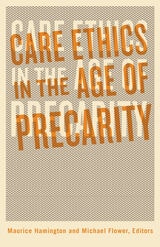
Care Ethics in the Age of Precarity
Maurice Hamington
University of Minnesota Press, 2021
How care can resist the stifling force of the neoliberal paradigm
In a world brimming with tremendous wealth and resources, too many are suffering the oppression of precarious existences—and with no adequate relief from free market–driven institutions. Care Ethics in the Age of Precarity assembles an international group of interdisciplinary scholars to explore the question of care theory as a response to market-driven capitalism, addressing the relationship of three of the most compelling social and political subjects today: care, precarity, and neoliberalism.
While care theory often centers on questions of individual actions and choices, this collection instead connects theory to the contemporary political moment and public sphere. The contributors address the link between neoliberal values—such as individualism, productive exchange, and the free market—and the pervasive state of precarity and vulnerability in which so many find themselves. From disability studies and medical ethics to natural-disaster responses and the posthuman, examples from Māori, Dutch, and Japanese politics to the COVID-19 pandemic and the Black Lives Matter movement, this collection presents illuminating new ways of considering precarity in our world.
Care Ethics in the Age of Precarity offers a hopeful tone in the growing valorization of care, demonstrating the need for an innovative approach to precarity within entrenched systems of oppression and a change in priorities around the basic needs of humanity.
Contributors: Andries Baart, U Medical Center Utrecht, Tilburg U, and Catholic Theological U Utrecht, the Netherlands; Vrinda Dalmiya, U of Hawaii, Mānoa; Emilie Dionne, U Laval; Maggie FitzGerald, U of Saskatchewan; Sacha Ghandeharian, Carleton U; Eva Feder Kittay, Stony Brook U/SUNY; Carlo Leget, U of Humanistic Studies in Utrecht, the Netherlands; Sarah Clark Miller, Penn State U; Luigina Mortari, U of Verona; Yayo Okano, Doshisha U, Kyoto, Japan; Elena Pulcini, U of Florence.
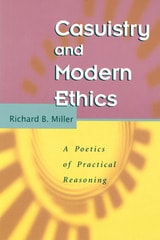
Casuistry and Modern Ethics
A Poetics of Practical ReasoningRichard B. Miller
University of Chicago Press, 1996
Rejecting the packaging of moral experience within simple descriptions and inflexible principles, Miller argues instead for identifying and making sense of the ethically salient features of individual cases. Because this practical approach must cope with a diverse array of experiences, Miller draws on a wide variety of diagnostic tools from such fields as philosophy of science, legal reasoning, theology, literary theory, hermeneutics, and moral philosophy.
Opening new avenues for practical reasoning, Miller's interdisciplinary work will challenge scholars who are interested in the intersections of ethics and political philosophy, cultural criticism, and debates about method in religion and morality.
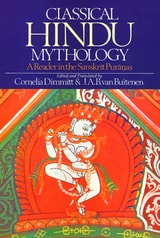
Classical Hindu Mythology
A Reader in the Sanskrit PuranasCornelia Dimmitt
Temple University Press, 1978
The Mahapuranas embody the received tradition of Hindu mythology. This anthology contains fresh translations of these myths, only a few of which have ever been available in English before, thus providing a rich new portion of Hindu mythology.
The book is organized into six chapters. "Origins" contains myths relating to creation, time, and space. "Seers, Kings and Supernaturals" relates tales of rivers, trees, animals, demons, and men, particularly heroes and sages. Myths about the chief gods are dealt with in three separate chapters: "Krsna," "Visnu," and "Siva." The chapter "The Goddess" presents stories of the wives and lovers of the gods, as well as of Kali, the savage battle goddess.
In their introductions, the editors provide a historical setting in which to discuss Hindu mythology as well as a full analysis of its basic sources. The many names given the gods and goddesses in the Sanskrit texts have been retained since their multiplicity is an essential part of the richness of the original. The editors have provided a thorough glossary to make these names accessible.
Common Values
Sissela Bok
University of Missouri Press, 2002

Communication Ethics and Tenacious Hope
Contemporary Implications of the Scottish EnlightenmentRonald C. Arnett with Foreword by Thomas M. Lessl
Southern Illinois University Press, 2022
Tenacious hope, the heart of a just and free society
During the Enlightenment, Scottish intellectuals and administrators met the demands of profit and progress while shepherding concerns for self and other, individual and community, and family and work. Communication Ethics and Tenacious Hope captures the “unity of contraries,” offering the Scottish Enlightenment as an exemplar of tenacious hope countering the excesses of individualism. Ronald C. Arnett reveals two stories: the struggle between optimism and tenacious hope, and optimism’s ultimate triumph in the exclusion of difference and the reification of progress as an ultimate good.
In chapters that detail the legacies of Lord Provost George Drummond, Adam Smith, David Hume, Thomas Reid, George Campbell, Adam Ferguson, and Sir Walter Scott, Arnett highlights the problematic nature of optimism and the ethical agency of tenacious hope. Arnett illustrates the creative union of education and administration, the ability to accept doubt within systems of knowledge and imagination, and an abiding connection to local soil. As principles of progress, free will, and capitalism swept Europe, proponents of optimism envisioned a world of consumerism and absolutes. In contrast, practitioners of tenacious hope embraced uncertainty and compassion as pragmatic necessities.
This work continues Arnett’s scholarship, articulating the vital importance of communication ethics. Those seeking to discern and support a temporal sense of the good in this historical moment will find in this timely work the means to pursue, hold, and nourish tenacious hope. This insightful theorization of the Scottish Enlightenment distills the substance of a just and free society for meeting dangerous and uncertain times.
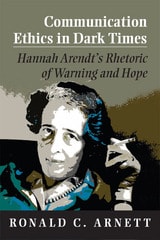
Communication Ethics in Dark Times
Hannah Arendt's Rhetoric of Warning and HopeRonald C. Arnett
Southern Illinois University Press, 2013
Renowned in the disciplines of political theory and philosophy, Hannah Arendt’s searing critiques of modernity continue to resonate in other fields of thought decades after she wrote them. In Communication Ethics in Dark Times: Hannah Arendt’s Rhetoric of Warning and Hope, author Ronald C. Arnett offers a groundbreaking examination of fifteen of Arendt’s major scholarly works, considering the German writer’s contributions to the areas of rhetoric and communication ethics for the first time.
Arnett focuses on Arendt’s use of the phrase “dark times” to describe the mistakes of modernity, defined by Arendt as the post-Enlightenment social conditions, discourses, and processes ruled by principles of efficiency, progress, and individual autonomy. These principles, Arendt argues, have led humanity down a path of folly, banality, and hubris. Throughout his interpretive evaluation, Arnett illuminates the implications of Arendt’s persistent metaphor of “dark times” and engages the question, How might communication ethics counter the tenets of dark times and their consequences? A compelling study of Hannah Arendt’s most noteworthy works and their connections to the fields of rhetoric and communication ethics, Communication Ethics in Dark Times provides an illuminating introduction for students and scholars of communication ethics and rhetoric, and a tool with which experts may discover new insights, connections, and applications to these fields.
Top Book Award for Philosophy of Communication Ethics by Communication Ethics Division of the National Communication Association, 2013
Communities of Health Care Justice
Galarneau, Charlene
Rutgers University Press, 2016

Community and Progress in Kant's Moral Philosophy
Kate A. Moran
Catholic University of America Press, 2012
Confronting Aristotle's Ethics
Ancient and Modern MoralityEugene Garver
University of Chicago Press, 2006
What is the good life? Posing this question today would likely elicit very different answers. Some might say that the good life means doing good—improving one’s community and the lives of others. Others might respond that it means doing well—cultivating one’s own abilities in a meaningful way. But for Aristotle these two distinct ideas—doing good and doing well—were one and the same and could be realized in a single life. In Confronting Aristotle’s Ethics, Eugene Garver examines how we can draw this conclusion from Aristotle's works, while also studying how this conception of the good life relates to contemporary ideas of morality.
The key to Aristotle’s views on ethics, argues Garver, lies in the Metaphysics or, more specifically, in his thoughts on activities, actions, and capacities. For Aristotle, Garver shows, it is only possible to be truly active when acting for the common good, and it is only possible to be truly happy when active to the extent of one’s own powers. But does this mean we should aspire to Aristotle’s impossibly demanding vision of the good life? In a word, no. Garver stresses the enormous gap between life in Aristotle’s time and ours. As a result, this bookwill be a welcome rumination on not only Aristotle, but the relationship between the individual and society in everyday life.
Conrad's Shadow
Catastrophe, Mimesis, TheoryNidesh Lawtoo
Michigan State University Press, 2016
Contemporary Athletics and Ancient Greek Ideals
Daniel A. Dombrowski
University of Chicago Press, 2009
Despite their influence in our culture, sports inspire dramatically less philosophical consideration than such ostensibly weightier topics as religion, politics, or science. Arguing that athletic playfulness coexists with serious underpinnings, and that both demand more substantive attention, Daniel Dombrowski harnesses the insights of ancient Greek thinkers to illuminate contemporary athletics.
Dombrowski contends that the ideas of Plato, Aristotle, and Plotinus shed important light on issues—such as the pursuit of excellence, the concept of play, and the power of accepting physical limitations while also improving one’s body—that remain just as relevant in our sports-obsessed age as they were in ancient Greece. Bringing these concepts to bear on contemporary concerns, Dombrowski considers such questions as whether athletic competition can be a moral substitute for war, whether it necessarily constitutes war by other means, and whether it encourages fascist tendencies or ethical virtue. The first volume to philosophically explore twenty-first-century sport in the context of its ancient predecessor, Contemporary Athletics and Ancient Greek Ideals reveals that their relationship has great and previously untapped potential to inform our understanding of human nature.

Contesting Nietzsche
Christa Davis Acampora
University of Chicago Press, 2013
In this groundbreaking work, Christa Davis Acampora offers a profound rethinking of Friedrich Nietzsche’s crucial notion of the agon. Analyzing an impressive array of primary and secondary sources and synthesizing decades of Nietzsche scholarship, she shows how the agon, or contest, organized core areas of Nietzsche’s philosophy, providing a new appreciation of the subtleties of his notorious views about power. By focusing so intensely on this particular guiding interest, she offers an exciting, original vantage from which to view this iconic thinker: Contesting Nietzsche.

Cooperation with Evil
Thomistic Tools of AnalysisKevin L. Flannery, SJ
Catholic University of America Press, 2019
Critical Terms for Animal Studies
Edited by Lori Gruen
University of Chicago Press, 2018
Animal Studies is a rapidly growing interdisciplinary field devoted to examining, understanding, and critically evaluating the complex relationships between humans and
other animals. Scholarship in Animal Studies draws on a variety of methodologies to explore these multi-faceted relationships in order to help us understand the ways in which other animals figure in our lives and we in theirs.
Bringing together the work of a group of internationally distinguished scholars, the contribution in Critical Terms for Animal Studies offers distinct voices and diverse perspectives, exploring significant concepts and asking important questions. How do we take non-human animals seriously, not simply as metaphors for human endeavors, but as subjects themselves? What do we mean by anthropocentrism, captivity, empathy, sanctuary, and vulnerability, and what work do these and other critical terms do in Animal Studies?
An indispensable reference for the field, Critical Terms for Animal Studies not only provides a framework for thinking about animals as subjects of their own experiences, but also serves as a touchstone to help us think differently about our conceptions of what it means to be human, and the impact human activities have on the more than human world.
Curating As Ethics
Jean-Paul Martinon
University of Minnesota Press, 2020
A new ethics for the global practice of curating
Today, everyone is a curator. What was once considered a hallowed expertise is now a commonplace and global activity. Can this new worldwide activity be ethical and, if yes, how? This book argues that curating can be more than just selecting, organizing, and presenting information in galleries or online. Curating can also constitute an ethics, one of acquiring, arranging, and distributing an always conjectural knowledge about the world.
Curating as Ethics is primarily philosophical in scope, evading normative approaches to ethics in favor of an intuitive ethics that operates at the threshold of thought and action. It explores the work of authors as diverse as Heidegger, Spinoza, Meillassoux, Mudimbe, Chalier, and Kofman. Jean-Paul Martinon begins with the fabric of these ethics: how it stems from matter, how it addresses death, how it apprehends interhuman relationships. In the second part he establishes the ground on which the ethics is based, the things that make up the curatorial—for example, the textual and visual evidence or the digital medium. The final part focuses on the activity of curating as such—sharing, caring, preparing, dispensing, and so on.
With its invigorating new approach to curatorial studies, Curating as Ethics moves beyond the field of museum and exhibition studies to provide an ethics for anyone engaged in this highly visible activity, including those using social media as a curatorial endeavor, and shows how philosophy and curating can work together to articulate the world today.