Results by title
316 books match the query 'Ethnomusicology' and 18 start with c
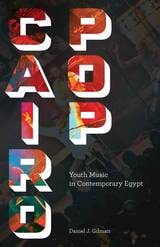
Cairo Pop
Youth Music in Contemporary EgyptDaniel J. Gilman
University of Minnesota Press, 2014
Cairo Pop is the first book to examine the dominant popular music of Egypt, shababiyya. Scorned or ignored by scholars and older Egyptians alike, shababiyya plays incessantly in Cairo, even while Egyptian youth joined in mass protests against their government, which eventually helped oust longtime Egyptian president Hosni Mubarak in early 2011. Living in Cairo at the time of the revolution, Daniel Gilman saw, and more importantly heard, the impact that popular music can have on culture and politics. Here he contributes a richly ethnographic analysis of the relationship between mass-mediated popular music, modernity, and nationalism in the Arab world.
Before Cairo Pop, most scholarship on the popular music of Egypt focused on musiqa al-ṭarab. Immensely popular in the 1950s and ’60s and even into the ’70s, musiqa al-ṭarab adheres to Arabic musical theory, with non-Western scales based on tunings of the strings of the ‘ud—the lute that features prominently, nearly ubiquitously, in Arabic music. However, today one in five Egyptians is between the ages of 15 and 24; half the population is under the age of 25. And shababiyya is their music of choice. By speaking informally with dozens of everyday young people in Cairo, Gilman comes to understand shababiyya as more than just a musical genre: sometimes it is for dancing or seduction, other times it propels social activism, at others it is simply sonic junk food.
In addition to providing a clear Egyptian musical history as well as a succinct modern political history of the nation, Cairo Pop elevates the aural and visual aesthetic of shababiyya—and its role in the lives of a nation’s youth.
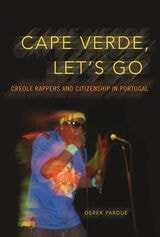
Cape Verde, Let's Go
Creole Rappers and Citizenship in PortugalDerek Pardue
University of Illinois Press, 2015
Drawing on fieldwork and archival research in Portugal and Cape Verde, Derek Pardue introduces Lisbon's kriolu rap scene and its role in challenging metropolitan Portuguese identities. Pardue demonstrates that Cape Verde, while relatively small within the Portuguese diaspora, offers valuable lessons about the politics of experience and social agency within a postcolonial context that remains poorly understood. As he argues, knowing more about both Cape Verdeans and the Portuguese invites clearer assessments of the relationship between the experience and policies of migration. That in turn allows us to better gauge citizenship as a balance of individual achievement and cultural ascription.
Deftly shifting from domestic to public spaces and from social media to ethnographic theory, Pardue describes an overlooked phenomenon transforming Portugal, one sure to have parallels in former colonial powers across twenty-first-century Europe.
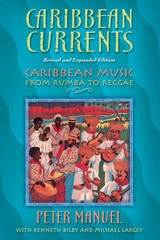
Caribbean Currents
Caribbean Music from Rumba to ReggaePeter Manuel
Temple University Press, 2006
This revised and expanded version features:
* Twenty-seven new illustrations
* Recent developments in the region's music, such as the emergence of reggaetón and timba
* A new and extensive study of Jamaican dancehall
Caribbean Currents
Caribbean Music from Rumba to ReggaePeter Manuel
Temple University Press, 2016
The authors succinctly and perceptively situate the musical styles and developments in the context of themes of gender and racial dynamics, sociopolitical background, and diasporic dimensions. Caribbean Currents showcases the rich and diverse musics of Cuba, Puerto Rico, the Dominican Republic, Jamaica, Trinidad, the French Caribbean, the lesser Antilles, and their transnational communities in the United States and elsewhere to provide an engaging panorama of this most dynamic aspect of Caribbean culture.
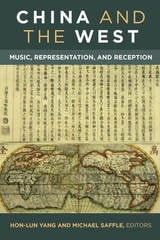
China and the West
Music, Representation, and ReceptionHon-Lun Yang and Michael Saffle, editors
University of Michigan Press, 2017
China and the West brings together essays on centuries of Sino-Western musical exchange by musicologists, ethnomusicologists, and music theorists from around the world. It opens with a look at theoretical approaches of prior studies of musical encounters and a comprehensive survey of the intercultural and cross-cultural theoretical frameworks—exoticism, orientalism, globalization, transculturation, and hybridization—that inform these essays. Part I focuses on the actual encounters between Chinese and European musicians, their instruments and institutions, and the compositions inspired by these encounters, while Part II examines theatricalized and mediated East-West cultural exchanges, which often drew on stereotypical tropes, resulting in performances more inventive than accurate. Part III looks at the musical language, sonority, and subject matters of “intercultural” compositions by Eastern and Western composers. Essays in Part IV address reception studies and consider the ways in which differences are articulated in musical discourse by actors serving different purposes, whether self-promotion, commercial marketing, or modes of nationalistic—even propagandistic—expression. The volume’s extensive bibliography of secondary sources will be invaluable to scholars of music, contemporary Chinese culture, and the globalization of culture.

Chinese Street Opera in Singapore
Tong Soon Lee
University of Illinois Press, 2009
Since Singapore declared independence from Malaysia in 1965, Chinese street opera has played a significant role in defining Singaporean identity. Carefully tracing the history of amateur and professional performances in Singapore, Tong Soon Lee reflects on the role of street performance in fostering cultural nationalism and entrepreneurship. He explains that the government welcomes Chinese street opera performances because they combine tradition and modernism and promote a national culture that brings together Singapore's four main ethnic groups--Eurasian, Malay, Chinese, and South Asian.
Chinese Street Opera in Singapore documents the ways in which this politically motivated art form continues to be influenced and transformed by Singaporean politics, ideology, and context in the twenty-first century. By performing Chinese street opera, amateur troupes preserve their rich heritage, underscoring the Confucian mind-set that a learned person engages in the arts for moral and unselfish purposes. Educated performers also control behavior, emotions, and values. They are creative and innovative, and their use of new technologies indicates a modern, entrepreneurial spirit. Their performances bring together diverse ethnic groups to watch and perform, Lee argues, while also encouraging a national attitude focused on both remembering the past and preparing for the future in Singapore.
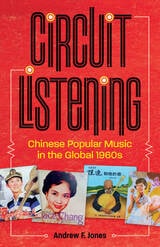
Circuit Listening
Chinese Popular Music in the Global 1960sAndrew F. Jones
University of Minnesota Press, 2020
How the Chinese pop of the 1960s participated in a global musical revolution
What did Mao’s China have to do with the music of youth revolt in the 1960s? And how did the mambo, the Beatles, and Bob Dylan sound on the front lines of the Cold War in Asia? In Circuit Listening, Andrew F. Jones listens in on the 1960s beyond the West, and suggests how transistor technology, decolonization, and the Green Revolution transformed the sound of music around the globe.
Focusing on the introduction of the transistor in revolutionary China and its Cold War counterpart in Taiwan, Circuit Listening reveals the hidden parallels between music as seemingly disparate as rock and roll and Maoist anthems. It offers groundbreaking studies of Mandarin diva Grace Chang and the Taiwanese folk troubadour Chen Da, examines how revolutionary aphorisms from the Little Red Book parallel the Beatles’ “Revolution,” uncovers how U.S. military installations came to serve as a conduit for the dissemination of Anglophone pop music into East Asia, and shows how consumer electronics helped the pop idol Teresa Teng bring the Maoist era to a close, remaking the contemporary Chinese soundscape forever.
Circuit Listening provides a multifaceted history of Chinese-language popular music and media at midcentury. It profiles a number of the most famous and best loved Chinese singers and cinematic icons, and places those figures in a larger geopolitical and technological context. Circuit Listening’s original research and far-reaching ideas make for an unprecedented look at the role Chinese music played in the ’60s pop musical revolution.
Collecting Music in the Aran Islands
A Century of History and PracticeDeirdre Ní Chonghaile
University of Wisconsin Press, 2022
For more than 150 years, individuals have traveled the countryside with pen, paper, tape recorders, and even video cameras to document versions of songs, music, and stories shared by communities. As technologies and methodologies have advanced, the task of gathering music has been taken up by a much broader group than scholars. The resulting collections created by these various people can be impacted by the individual collectors’ political and social concerns, cultural inclinations, and even simple happenstance, demonstrating a crucial yet underexplored relationship between the music and those preserving it.
Collecting Music in the Aran Islands, a critical historiographical study of the practice of documenting traditional music, is the first to focus on the archipelago off the west coast of Ireland. Deirdre Ní Chonghaile argues for a culturally equitable framework that considers negotiation, collaboration, canonization, and marginalization to fully understand the immensely important process of musical curation. In presenting four substantial, historically valuable collections from the nineteenth and twentieth centuries, she illustrates how understanding the motivations and training (or lack thereof) of individual music collectors significantly informs how we should approach their work and contextualize their place in the folk music canon.
Comparative Musicology and Anthropology of Music
Essays on the History of EthnomusicologyEdited by Bruno Nettl and Philip V. Bohlman
University of Chicago Press, 1991
"This is a useful and enriching collection of articles of interest to musicologists and ethnomusicologists. . . . The authors manage to cover much ground, presenting fascinating insights into the history of the discipline while also exploring new directions in both theory and analysis. . . . the most sweeping work of this kind to be published since the 1960s."—L. D. Loeb, University of Utah, for Choice
Composing Japanese Musical Modernity
Bonnie C. Wade
University of Chicago Press, 2013
Wade examines the short history of the composer in Japanese society, looking at the creative and economic opportunities that have sprung up around them—or that they forged—during Japan’s astonishingly fast modernization. She shows that modernist Japanese composers have not bought into the high modernist concept of the autonomous artist, instead remaining connected to the people. Articulating Japanese modernism in this way, Wade tells a larger story of international musical life, of the spaces in which tradition and modernity are able to meet and, ultimately, where modernity itself has been made.
Conjuring Freedom
Music and Masculinity in the Civil War's “Gospel Army”Johari Jabir
The Ohio State University Press, 2017
Reflecting the structure of the ring shout—the counterclockwise song, dance, drum, and story in African American history and culture—Conjuring Freedom offers three new concepts to cultural studies in order to describe the practices, techniques, and implications of the troop’s performance: (1) Black Communal Conservatories, borrowing from Robert Farris Thompson’s “invisible academies” to describe the structural but spontaneous quality of black music-making, (2) Listening Hermeneutics, which accounts for the generative and material affects of sound on meaning-making, and (3) Sonic Politics, which points to the political implications of music’s use in contemporary representations of race and history.
Cosmopolitan Intimacies
Malay Film Music of the Independence EraAdil Johan
National University of Singapore Press, 2018
Drawing on analyses of lyrics and music, interviews with musicians, and the content of Malay entertainment magazines, in an approach that spans ethnomusicology and cultural studies, he reveals this body of work to be a product of a musical and cultural cosmopolitanism in the service of a nation-making process based on ideas of Malay ethnonationalism, initially fluid but increasingly homogenized over time. Malay film music of the period covertly expressed radical sentiments despite being produced within a commercialized film industry.
Written in a lively style and illustrated with musical examples, the book will satisfy ethnomusicologists, composers, and film studies scholars interested in Southeast Asia and the Malay world. It will equally be of interest to scholars interested in the role of culture in nation-making more broadly.

Creatures of the Air
Music, Atlantic Spirits, Breath, 1817–1913J. Q. Davies
University of Chicago Press, 2023
Often experienced as universal and incorporeal, music seems an innocent art form. The air, the very medium by which music constitutes itself, shares with music a claim to invisibility. In Creatures of the Air, J. Q. Davies interrogates these claims, tracing the history of music’s elemental media system in nineteenth-century Atlantic worlds. He posits that air is a poetic domain, and music is an art of that domain.
From West Central African ngombi harps to the European J. S. Bach revival, music expressed elemental truths in the nineteenth century. Creatures of the Air tells these truths through stories about suffocation and breathing, architecture and environmental design, climate strife, and racial turmoil. Contributing to elemental media studies, the energy humanities, and colonial histories, Davies shows how music, no longer just an innocent luxury, is implicated in the struggle for control over air as a precious natural resource. What emerges is a complex political ecology of the global nineteenth century and beyond.
Creolized Aurality
Guadeloupean Gwoka and Postcolonial PoliticsJérôme Camal
University of Chicago Press, 2019
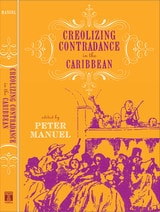
Creolizing Contradance in the Caribbean
Peter Manuel
Temple University Press, 2011
The contradance and quadrille, in their diverse forms, were the most popular, widespread, and important genres of creole caribbean music and dance in the nineteenth century. Throughout the region they constituted sites for interaction of musicians and musical elements of different racial, social, and ethnic origins, and they became crucibles for the evolution of genres like the Cuban danzón and son, the Dominican merengue, and the Haitian mereng.
Creolizing Contradance in the Caribbean is the first book to explore this phenomenon in detail and with a pan-regional perspective. Individual chapters by respected area experts discuss the Spanish, French, and English-speaking Caribbean. For each area they cover the musical and choreographic features, social dynamics, historical development and significance, and discuss them in relation to the broader Caribbean historical context. This groundbreaking text fills a significant gap in studies of Caribbean cultural history and of social dance.
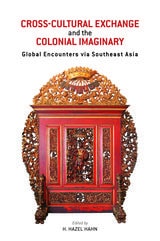
Cross-Cultural Exchange and the Colonial Imaginary
Global Encounters via Southeast AsiaEdited by H. Hazel Hahn
National University of Singapore Press, 2019
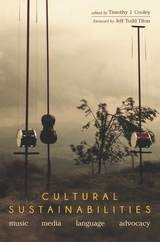
Cultural Sustainabilities
Music, Media, Language, AdvocacyEdited by Timothy J. Cooley
University of Illinois Press, 2019

Czech Bluegrass
Notes from the Heart of EuropeLee Bidgood
University of Illinois Press, 2017
Lee Bidgood offers a fascinating study of the Czech bluegrass phenomenon that merges intimate immersion in the music with on-the-ground fieldwork informed by his life as a working musician. Drawing on his own close personal and professional interactions, Bidgood charts how Czech bluegrass put down roots and looks at its performance as a uniquely Czech musical practice. He also reflects on “Americanist” musical projects and the ways Czech musicians use them to construct personal and social identities. Bidgood sees these acts of construction as a response to the Czech Republic’s postsocialist environment but also to US cultural prominence within our global mediascape.