Results by title
162 books match the query 'Europe, Eastern' and 10 start with c
COMMITTEES IN POST-COMMUNIST DEMOCRATIC PARLIAMENTS
COMPARATIVE INSTITUTIONALIZATIONDAVID M. OLSON
The Ohio State University Press, 2002
The former Communist countries of Eastern Europe provide a treasure-trove of data on the development of democratic institutions. The contributors to this volume use the recent experiences of these countries to identify how the various committee systems are structured and tie the relative strength of the committee system in each country to the relative strength of its legislature. A uniform theoretical framework connects the work of each essay and ties the parts into an informative whole.
Comparative analysis based on seven indicators of institutionalization suggests that the committee systems of Hungary, Poland, and the Czech Republic are more institutionalized than those found elsewhere. Bulgaria is a middle case, while the parliaments of Moldova, Lithuania, and Estonia are the least. Of the indicators, stability in committee membership and extent of committee activity are among the most important for post-communist parliaments in their first decade.
This examination of legislative committees in their beginning stages suggests that the processes of institutionalization are sequenced: expertise in a policy sector is the basis of both the assertion of jurisdictional autonomy by committees and the motive for party control of their membership and officer positions. Basic to these developments, however, is the emergence of a stable and consistent structure of the committee system as a whole. More broadly, committee attributes are closely linked to the condition and functioning of both parliamentary party groups and the government.
Canada and Eastern Europe, 1945–1991
Meeting in the MiddleAndrea Chandler
Central European University Press, 2024
How democratic regimes should engage with authoritarian regimes, or self-proclaimed authorities in states under occupation, has long been a subject of debate. The work examines Canada's relations with member-states of the Warsaw Pact during the Cold War. Central and East European communist states were nominally independent but established under occupation. Canadian leaders explored whether engaging in foreign relations with these countries would encourage liberalization or embolden dictatorships. Over time, Canada's position evolved as a policy of encouraging bilateral and multilateral diplomacy, while calling for the respect of human rights. However, Canada's economic relationship with East European states was at times at cross-purposes with its democratic principles. Andrea Chandler concludes that while Canada did play a role in encouraging democratization, the country's leaders did not sufficiently consider the impact of these policies on the citizens of Warsaw Pact countries.
This book treats Canada’s engagement with Hungary, Poland, the German Democratic Republic, Romania, Bulgaria and Czechoslovakiaduring the Cold War, in which the Western countries of the North Atlantic Treaty Organization (including Canada) had an adversarial relation with the Soviet bloc nations.
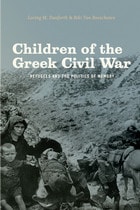
Children of the Greek Civil War
Refugees and the Politics of MemoryLoring M. Danforth and Riki Van Boeschoten
University of Chicago Press, 2011
Marshalling archival records, oral histories, and ethnographic fieldwork, the authors analyze the evacuation process, the political conflict surrounding it, the children’s upbringing, and their fates as adults cut off from their parents and their homeland. They also give voice to seven refugee children who poignantly recount their childhood experiences and heroic efforts to construct new lives in diaspora communities throughout the world. A much-needed corrective to previous historical accounts, Children of the Greek Civil War is also a searching examination of the enduring effects of displacement on the lives of refugee children.
Christianity and Modernity in Eastern Europe
Bruce R. Berglund
Central European University Press, 2010
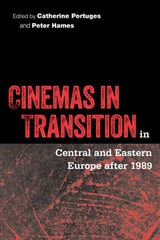
Cinemas in Transition in Central and Eastern Europe after 1989
Catherine Portuges
Temple University Press, 2013
The contributors and editors of this exciting volume examine the interrelations between thematic, aesthetic, and infrastructural changes; the globalization of the international cinema marketplace; and the problems and promises arising from the privatization of national cinemas.
Cinemas in Transition in Central and Eastern Europe after 1989 also addresses the strategies employed for preserving national cinemas and cultures through an analysis of films from the Czech and Slovak republics, the former German Democratic Republic, Hungary, Poland, Romania, Ukraine, and the former Yugoslavia. The study provides a picture of Eastern European cinema at a critical juncture as well as its connections to the emergent world of transnational media.
Contributors include Barton Byg, Alexandra Foamente, Andrew Horton, Dina Iordanova, Ewa Mazierska, Bohdan Y. Nebesio, and Bogdan Stefanescu,
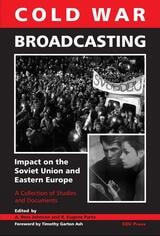
Cold War Broadcasting
Impact on the Soviet Union and Eastern EuropeR. Eugene Parta
Central European University Press, 2010
Comparative Media Systems
European and Global PerspectivesMiklós Sükösd
Central European University Press, 2010
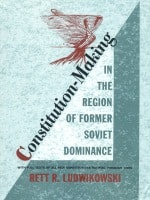
Constitution-Making in the Region of Former Soviet Dominance
Rett R. Ludwikowski
Duke University Press, 1996
Beginning with a review of the constitutional traditions of Eastern and Central Europe, Ludwikowski goes on to offer analysis of the recent process of political change in the region. A second section focuses specifically on the the new constitutions and such issues as the selection of the form of government, concepts of divisions of power, unicameralism vs. bicameralism, the flexibility or rigidity of constitutions as working documents, and the process of reviewing the constitutionality of laws. Individual states as framed in these documents are analyzed in economic, political, and cultural terms. Although it is too soon to fully consider the implementation of these constitutions, special attention is devoted to the effect of reform on human rights protection, a notorious problem of continuing concern in the region. A final section offers an insightful comparative study of constitutional law by reviewing the post-Soviet process of constitution-making against the backdrop of Western constitutional traditions.
Constitution-Making in the Region of Former Soviet Dominance is both a comprehensive study of constitutional developments in the former Soviet bloc and a primary reference tool for scholars of constitutional law, and Eastern European and post-Soviet studies.
Contesting Copyright
A History of Intellectual Property in East Central Europe and the BalkansAugusta Dimou
Central European University Press, 2026
Cultural Formations Of Postcommunism
Emancipation, Transition, Nation, and WarMichael D. Kennedy
University of Minnesota Press, 2002
A powerful exposition of how culture shapes social and political change.
"Transition" is the name typically given to the time of radical change following the fall of communism, connoting a shift from planned to market economy, from dictatorship to democracy. Transition is also, in Michael Kennedy’s analysis, a culture in its own right-with its own contentions, repressions, and unrealized potentials. By elaborating transition as a culture of power and viewing it in its complex relation to emancipation, nationalism, and war, Kennedy’s book clarifies the transformations of postcommunism as well as, more generally, the ways in which culture articulates social change. This ambitious work is, in effect, a nuanced critical-cultural sociology of change.
Kennedy examines transition culture’s historical foundation by looking at the relationship among perestroika, Poland, and Hungary, and considers its structure and practice in the following decade across fields and nations. His wide-ranging analysis-of the artifacts of transition culture’s proponents, of interviews with providers and recipients of technical assistance in business across Eastern Europe, and of focus groups assessing the successes and failures of social change in Estonia and Ukraine-suggests a transition culture deeply implicated in nationalism. But this association, Kennedy contends, is not necessarily antithetical to transition’s emancipation. By reconsidering transition culture’s relationship to the Wars of Yugoslav Succession and communism’s negotiated collapse in Poland and Hungary, he shows how transition might be reconceived in terms of solidarity, freedom, and peace. Distinguished by its focus on culture, not only within particular nations but in the transnational community organized around transition, this book will help reframe the debate about postcommunist social change.