Results by title
148 books match the query 'Evaluation' and 10 start with c
Chance or Dance
An Evaluation of DesignJimmy H. Davis
Templeton Press, 2008
Chance or Dance provides an overview of design and clarification of the controversial Intelligent Design (ID) movement and ultimately concludes there is no scientific proof behind Intelligent Design. As the controversy over Intelligent Design has grown over the past few years, there is a tendency to confuse all statements about design with the Intelligent Design movement and to confuse any affirmation of creation with Scientific Creationism. Davis and Poe begin with a brief historical perspective of the design argument and then examine the significant breakthroughs in cosmology, math, physics, chemistry, and biology that have provided renewed speculation in design.
The authors discuss that the idea of design is far more expansive than the ID movement’s version of it, evaluate Dawkins’ interpretation of genetic determinism, include a chapter that explores the tendency since Darwin to assume that the presence of an observable cause excludes the possibility of divine involvement; and introduce further reflections on wonder and awe that take into account the recent surge of interest in this area. The book concludes with an argument for the correlation between faith and sensory experience and suggests that science has successfully described processes but failed to explain origins.
Chance or Dance is ideal for students and general readers interested in understanding how modern science gives evidence for nature’s creation by the Bible’s God.
Charleston Voices
Perspectives from the 2018 ConferenceEdited by Lars Meyer
Against the Grain, LLC, 2019
TESTIMONIALS
“The best library gathering around. I look forward to it.”
“The Charleston Conference is an incredibly stimulating venue. I am tired afterwards, but get so many great ideas, network with my colleagues, and learn what is going on. I recommend it highly.”
“Charleston is the only conference that is worth attending.”
https://www.charlestonlibraryconference.com/about/

Classroom Assessment Techniques For Librarians
Melissa Bowles-Terry
Assoc of College & Research Libraries, 2015
Coming To Terms
A Theory of Writing AssessmentPatricia Lynne
Utah State University Press, 2004
In a provocative book-length essay, Patricia Lynne argues that most programmatic assessment of student writing in U.S. public and higher education is conceived in the terms of mid-20th century positivism. Since composition as a field had found its most compatible home in constructivism, she asks, why do compositionists import a conceptual frame for assessment that is incompatible with composition theory?
By casting this as a clash of paradigms, Lynne is able to highlight the ways in which each theory can and cannot influence the shape of assessment within composition. She laments, as do many in composition, that the objectively oriented paradigm of educational assessment theory subjugates and discounts the very social constructionist principles that empower composition pedagogy. Further, Lynne criticizes recent practice for accommodating the big business of educational testing—especially for capitulating to the discourse of positivism embedded in terms like "validity" and "reliability." These terms and concepts, she argues, have little theoretical significance within composition studies, and their technical and philosophical import are downplayed by composition assessment scholars.
There is a need, Lynne says, for terms of assessment that are native to composition. To open this needed discussion within the field, she analyzes cutting-edge assessment efforts, including the work of Broad and Haswell, and she advances a set of alternate terms for evaluating assessment practices, a set of terms grounded in constructivism and composition.
Coming to Terms is ambitious and principled, and it takes a controversial stand on important issues. This strong new volume in assessment theory will be of serious interest to assessment specialists and their students, to composition theorists, and to those now mounting assessments in their own programs.
Composition Commons
Writing a New Idea of the UniversityJessica Yood
Utah State University Press, 2024
Jessica Yood traces the century-long origins of a writing-centered idea of the American university and tracks the resurgence of this idea today. Drawing on archival and classroom evidence from public colleges and universities and written in a lively autoethnographic voice, Yood names “genres of the commons”: intimate, informal writing activities that create peer-to-peer knowledge networks. She shows how these unique genres create collectivity—an academic commons—and calls on scholars to invest in composition as a course cultivating reflective, emergent, shared knowledge. Yood departs from movements that divest from the first-year composition classroom and details how an increasingly diverse student population composes complex, evolving cultural literacies that forge social bonds and forward innovation and intellectual and civic engagement.
The Composition Commons reclaims the commons as critical idea and writing classroom activities as essential practices for remaking higher education in the United States.
Considering Students, Teachers, and Writing Assessment, Vol 2
Emerging Theoretical and Pedagogical PracticeDiane Kelly-Riley
University Press of Colorado, 2024
Considering Students, Teachers, and Writing Assessment, Vol. 1
Technical and Political ContextsDiane Kelly-Riley
University Press of Colorado, 2024
Critical Library Pedagogy Handbook Volume One
Essays and Workbooks ActivitiesNicole Pagowsky
Assoc of College & Research Libraries, 2016
Critical Library Pedagogy Handbook Volume Two
Lesson PlansNicole Pagowsky
Assoc of College & Research Libraries, 2016
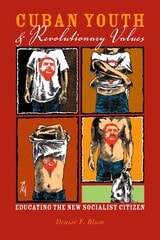
Cuban Youth and Revolutionary Values
Educating the New Socialist CitizenBy Denise F. Blum
University of Texas Press, 2011
Drawing on extensive fieldwork in Havana's secondary schools, Cuban Youth and Revolutionary Values is a remarkable ethnography, charting the government's attempts to transform a future generation of citizens. While Cuba's high literacy rate is often lauded, the little-known dropout rates among teenagers receive less scrutiny. In vivid, succinct reporting, educational anthropologist Denise Blum now shares her findings regarding this overlooked aspect of the Castro legacy.
Despite the fact that primary-school enrollment rates exceed those of the United States, the reverse is true for the crucial years between elementary school and college. After providing a history of Fidel Castro's educational revolution begun in 1953, Denise Blum delivers a close examination of the effects of the program, which was designed to produce a society motivated by benevolence rather than materialism. Exploring pioneering pedagogy, the notion of civic education, and the rural components of the program, Cuban Youth and Revolutionary Values brims with surprising findings about one of the most intriguing social experiments in recent history.