Results by title
421 books match the query 'Evolution' and 20 start with c
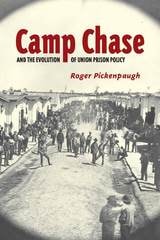
Camp Chase and the Evolution of Union Prison Policy
Roger Pickenpaugh
University of Alabama Press, 2007
Camp Chase was a major Union POW camp and also served at various times as a Union military training facility and as quarters for Union soldiers who had been taken prisoner by the Confederacy and released on parole or exchanged. As such, this careful, thorough, and objective examination of the history and administration of the camp will be of true significance in the literature on the Civil War.
Can Microbial Communities Regenerate?
Uniting Ecology and Evolutionary BiologyAndrew Inkpen and Ford Doolittle
University of Chicago Press, 2022
Microorganisms, such as bacteria, are important determinants of health at the individual, ecosystem, and global levels. And yet many aspects of modern life, from the overuse of antibiotics to chemical spills and climate change, can have devastating, lasting impacts on the communities formed by microorganisms. Drawing on the latest scientific research and real-life examples such as attempts to reengineer these communities through microbial transplantation, the construction of synthetic communities of microorganisms, and the use of probiotics, this book explores how and why communities of microorganisms respond to disturbance, and what might lead to failure. It also unpacks related and interwoven philosophical questions: What is an organism? Can a community evolve by natural selection? How can we make sense of function and purpose in the natural world? How should we think about regeneration as a phenomenon that occurs at multiple biological scales? Provocative and nuanced, this primer offers an accessible conceptual and theoretical understanding of regeneration and evolution at the community level that will be essential across disciplines including philosophy of biology, conservation biology, microbiomics, medicine, evolutionary biology, and ecology.
Canyon and Cosmos
Searching for Human Identity in the Grand CanyonDon Lago
University of Nevada Press, 2025
Named one of the 2026 Southwest Books of the Year
Throughout history, humans have sought creation stories to define our identity and affirm our connections with the universe, diverse life forms, and one another. Over the last two centuries, science has delivered a bold new creation story full of immense time and space, extraordinary objects, and powerful natural forces. Science ideas can seem mere abstractions, but at the Grand Canyon, better than anywhere else on Earth, our new creation story is manifested physically and powerfully.
A major work of literary nature writing, Canyon and Cosmos takes readers on a journey through the Grand Canyon's deep time, geological forces, and biological evolution, making them very real, personal, and meaningful. Through decades of hiking and kayaking, author Don Lago has gotten to know the canyon intimately. Ranging through world mythologies and Native American spirituality, he explores how humans have sought to understand the universe. He confronts existential questions of whether humans can find enough meaning in the scientific cosmos. Through poetic prose, symbolism, and philosophical insight, he shows how existence itself is our deepest source of life and meaning.
Cardiology
The Evolution of the Science and the ArtBing, Richard J.
Rutgers University Press, 1999
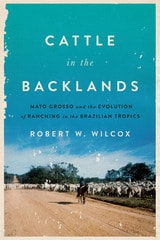
Cattle in the Backlands
Mato Grosso and the Evolution of Ranching in the Brazilian TropicsBy Robert W. Wilcox
University of Texas Press, 2017
Henry A. Wallace Award, The Agricultural History Society, 2018
Brazil has the second-largest cattle herd in the world and is a major exporter of beef. While ranching in the Amazon—and its destructive environmental consequences—receives attention from both the media and scholars, the states of Mato Grosso and Mato Grosso do Sul actually host the most cattle. A significant beef producer in Brazil beginning in the late nineteenth century, the region served as a laboratory for raising cattle in the tropics, where temperate zone ranching practices do not work. Mato Grosso ranchers and cowboys transformed ranching’s relationship with the environment, including the introduction of an exotic cattle breed—the Zebu—that now dominates Latin American tropical ranching.
Cattle in the Backlands presents a comprehensive history of ranching in Mato Grosso. Using extensive primary sources, Robert W. Wilcox explores three key aspects: the economic transformation of a remote frontier region through modern technical inputs; the resulting social changes, especially in labor structures and land tenure; and environmental factors, including the long-term impact of ranching on ecosystems, which, he contends, was not as detrimental as might be assumed. Wilcox demonstrates that ranching practices in Mato Grosso set the parameters for tropical beef production in Brazil and throughout Latin America. As the region was incorporated into national and international economic structures, its ranching industry experienced the entry of foreign investment, the introduction of capitalized processing facilities, and nascent discussions of ecological impacts—developments that later affected many sectors of the Brazilian economy.
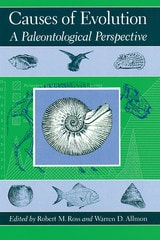
Causes of Evolution
A Paleontological PerspectiveEdited by Robert M. Ross and Warren D. Allmon
University of Chicago Press, 1990
Causes of Evolution presents a broad sampling of paleontological research programs encompassing vertebrates, invertebrates, and vascular plants; empirical work and theoretical models; organisms ranging in age from Cambrian to Recent; and temporal scales from ecological time to hundreds of millions of years. The diverse array of research styles and opinions presented will acquaint scientists in related fields with the strengths and weaknesses of paleontology as an approach to evolutionary studies and will give evolutionary biologists of every stripe new bases for evaluating the scope and bias of their own work.
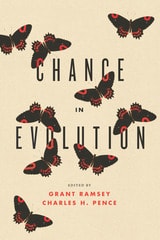
Chance in Evolution
Edited by Grant Ramsey and Charles H. Pence
University of Chicago Press, 2016
The book begins by placing chance in historical context, starting with the ancients and moving through Darwin and his contemporaries, documenting how the understanding of chance changed as Darwin’s theory of evolution by natural selection developed into the modern synthesis, and how the acceptance of chance in Darwinian theory affected theological resistance to it. Subsequent chapters detail the role of chance in contemporary evolutionary theory—in particular, in connection with the concepts of genetic drift, mutation, and parallel evolution—as well as recent empirical work in the experimental evolution of microbes and in paleobiology. By engaging in collaboration across biology, history, philosophy, and theology, this book offers a comprehensive and synthetic overview both of the history of chance in evolution and of our current best understanding of the impact of chance on life on earth.
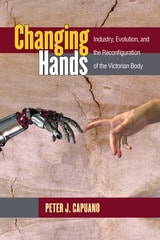
Changing Hands
Industry, Evolution, and the Reconfiguration of the Victorian BodyPeter J. Capuano
University of Michigan Press, 2015

City Games
The Evolution of American Urban Society and the Rise of SportsSteven A. Riess
University of Illinois Press, 1989
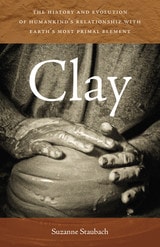
Clay
The History and Evolution of Humankind’s Relationship with Earth’s Most Primal ElementSuzanne Staubach
University Press of New England, 2013
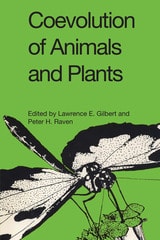
Coevolution of Animals and Plants
Symposium V, First International Congress of Systematic and Evolutionary Biology, 1973Edited by Lawrence E. Gilbert and Peter H. Raven
University of Texas Press, 1975
It has long been recognized that plants and animals profoundly affect one another’s characteristics during the course of evolution. However, the importance of coevolution as a dynamic process involving such diverse factors as chemical communication, population structure and dynamics, energetics, and the evolution, structure, and functioning of ecosystems has been widely recognized for a comparatively short time. Coevolution represents a point of view about the structure of nature that only began to be fully explored in the late twentieth century. The papers presented here herald its emergence as an important and promising field of biological research.
Coevolution of Animals and Plants is the first book to focus on the dynamic aspects of animal-plant coevolution. It covers, as broadly as possible, all the ways in which plants interact with animals. Thus, it includes discussions of leaf-feeding animals and their impact on plant evolution as well as of predator-prey relationships involving the seeds of angiosperms. Several papers deal with the most familiar aspect of mutualistic plant-animal interactions—pollination relationships. The interactions of orchids and bees, ants and plants, and butterflies and plants are discussed. One article provides a fascinating example of more indirect relationships centered around the role of carotenoids, which are produced by plants but play a fundamental part in the visual systems of both plants and animals.
Coevolution of Animals and Plants provides a general conceptual framework for studies on animal-plant interaction. The papers are written from a theoretical, rather than a speculative, standpoint, stressing patterns that can be applied in a broader sense to relationships within ecosystems.
Contributors to the volume include Paul Feeny, Miriam Rothschild, Christopher Smith, Brian Hocking, Lawrence Gilbert, Calaway Dodson, Herbert Baker, Bernd Heinrich, Doyle McKey, and Gordon Frankie.
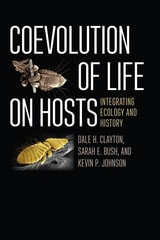
Coevolution of Life on Hosts
Integrating Ecology and HistoryDale H. Clayton, Sarah E. Bush, and Kevin P. Johnson
University of Chicago Press, 2015
Following an introduction to coevolutionary concepts, the authors combine experimental and comparative host-parasite approaches for testing coevolutionary hypotheses to explore the influence of ecological interactions and coadaptation on patterns of diversification and codiversification among interacting species. Ectoparasites—a diverse assemblage of organisms that ranges from herbivorous insects on plants, to monogenean flatworms on fish, and feather lice on birds—are powerful models for the study of coevolution because they are easy to observe, mark, and count. As lice on birds and mammals are permanent parasites that spend their entire lifecycles on the bodies of their hosts, they are ideally suited to generating a synthetic overview of coevolution—and, thereby, offer an exciting framework for integrating the concepts of coadaptation and codiversification.
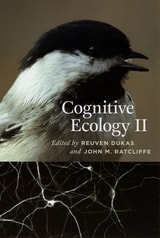
Cognitive Ecology II
Edited by Reuven Dukas and John M. Ratcliffe
University of Chicago Press, 2009
Merging evolutionary ecology and cognitive science, cognitive ecology investigates how animal interactions with natural habitats shape cognitive systems, and how constraints on nervous systems limit or bias animal behavior. Research in cognitive ecology has expanded rapidly in the past decade, and this second volume builds on the foundations laid out in the first, published in 1998.
Cognitive Ecology II integrates numerous scientific disciplines to analyze the ecology and evolution of animal cognition. The contributors cover the mechanisms, ecology, and evolution of learning and memory, including detailed analyses of bee neurobiology, bird song, and spatial learning. They also explore decision making, with mechanistic analyses of reproductive behavior in voles, escape hatching by frog embryos, and predation in the auditory domain of bats and eared insects. Finally, they consider social cognition, focusing on alarm calls and the factors determining social learning strategies of corvids, fish, and mammals.
With cognitive ecology ascending to its rightful place in behavioral and evolutionary research, this volume captures the promise that has been realized in the past decade and looks forward to new research prospects.
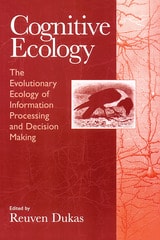
Cognitive Ecology
The Evolutionary Ecology of Information Processing and Decision MakingEdited by Reuven Dukas
University of Chicago Press, 1998
Individual chapters consider such issues as the evolution of learning and its influence on behavior; the effects of cognitive mechanisms on the evolution of signaling behavior; how neurobiological and evolutionary processes have shaped navigational activities; functional and mechanical explanations for altered behaviors in response to changing environments; how foragers make decisions and how these decisions are influenced by the risks of predation; and how cognitive mechanisms affect partner choice.
Cognitive Ecology will encourage biologists to consider how animal cognition affects behavior, and will also interest comparative psychologists and cognitive scientists.
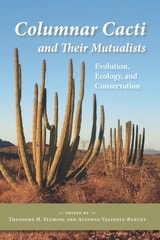
Columnar Cacti and Their Mutualists
Evolution, Ecology, and ConservationEdited by Theodore H. Fleming and Alfonso Valiente-Banuet
University of Arizona Press, 2002
This book summarizes our current knowledge about the ecology, evolution, and conservation of columnar cacti and their vertebrate mutualists to show that the very survival of these cacti depends on animals who pollinate them and disperse their seeds. Contributors from the United States, Mexico, Venezuela, and Colombia explore aspects of geology and evolution that have forged this relationship, review findings in anatomy and physiology, and discuss recent research in population and community ecology as well as conservation issues. Ranging from the Sonoran Desert to the northern Andes, these studies reflect recent progress in understanding how abiotic and biotic factors interact to influence the evolution, distribution, and abundance of cacti and mutualists alike.
In addition, this book examines the ways in which humans, through the process of domestication, have modified these plants for economic benefit. The contributors also review phylogenetic relationships between cacti and nectar-feeding bats in an effort to understand how bat-plant interactions have influenced the evolution of diversity and ecological specialization of both. Because of the number of migratory pollinators feeding on columnar cacti, the authors make conservation recommendations aimed at preserving fully functional ecosystems in arid portions of the New World tropics and subtropics.
No other book treats the pollination ecology of cacti in such depth or offers such a wealth of up-to-date material on the nectar-feeding bats of the New World. As scientists become increasingly concerned with the need to protect biotic interactions, Columnar Cacti and Their Mutualists provides a benchmark for both conservation efforts and future research.
Constructing Cooperation
The Evolution of Institutions of ComanagementSara Singleton
University of Michigan Press, 1999
This book will appeal to policy makers concerned with the management of natural resources as well as to economists, political scientists, and sociologists concerned with collective action problems.
Sara Singleton is Assistant Professor of Political Science, Tulane University.

Contingency Across the Life Sciences
How Accidents Can Be ConsequentialEdited by Alison K McConwell, Roberta L. Millstein, Michael R. Dietrich, and John Beatty
University of Chicago Press, 0
With perspectives from biology, history, and philosophy, an investigation of the meaning and importance of contingency in the life sciences.
Were the outcomes of evolution, humans included, inevitable? In his 1989 book Wonderful Life, Stephen Jay Gould invited his readers to replay “life’s tape”—“You press the rewind button and, making sure you thoroughly erase everything that actually happened, go back to any time and place in the past—say, to the seas of the Burgess Shale. Then let the tape run again.” If the outcomes of evolution truly depend on historical contingencies, you might not get anything at all like the same trajectory—maybe no humans or anything human-like. In the first book of its kind, Contingency Across the Life Sciences brings together scientists, philosophers, and historians to explore when historical contingency really matters for our understanding of the biological past and our place within it.
Using Darwin’s and Gould’s views on chance and contingency as a starting point, the chapters clarify the many different meanings of contingency and show how biologists have moved beyond the tape of life metaphor to find contingency in a range of ecological, evolutionary, and developmental processes, including experiments with contingency in actual populations. The collection ends with a set of reflections on how historical contingency can change the ways we see ourselves as biological and moral agents in a world that could have been otherwise.
Creation through Evolution
New Perspectives from Thomistic Theology and PhilosophyNicanor Pier Giorgio Austriaco
Catholic University of America Press, 2025
Culture and the Course of Human Evolution
Gary Tomlinson
University of Chicago Press, 2018
Tomlinson offers a new model for understanding this period in our emergence, one based on analysis of advancing human cultures in an evolution that was simultaneously cultural and biological—a biocultural evolution. He places front and center the emergence of culture and the human capacities to create it, in a fashion that expands the conceptual framework of recent evolutionary theory. His wide-ranging vision encompasses arguments on the development of music, modern technology, and metaphysics. At the heart of these developments, he shows, are transformations in our species’ particular knack for signmaking. With its innovative synthesis of humanistic and scientific ideas, this book will be an essential text.
Culture and the Evolutionary Process
Robert Boyd and Peter J. Richerson
University of Chicago Press, 1985