Results by title
56 books match the query 'Faculty' and 6 start with c
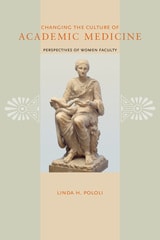
Changing the Culture of Academic Medicine
Perspectives of Women FacultyLinda H. Pololi
Dartmouth College Press, 2010

Chosen Path
A MemoirD. Michael Quinn
Signature Books, 2022
From the age of nine, Quinn felt convicted he would one day serve as an apostle of the Church of Jesus Christ of Latter-day Saints. He chose the path he believed would take him there, eventually living as a straight LDS family man in a mixed-orientation marriage. In the 1970s and 1980s he became a BYU professor and one of Mormonism’s most promising, prolific, and respected historians. But his uncompromising commitment to total honesty about his religion’s history, along with his homosexuality, set him on a collision course with church leaders and the end of his seemingly idyllic Mormon life. Throughout his telling, Quinn unflinchingly opens up about his feelings and experiences that shaped his enigmatic life.
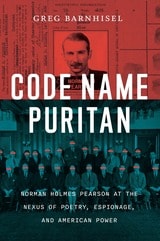
Code Name Puritan
Norman Holmes Pearson at the Nexus of Poetry, Espionage, and American PowerGreg Barnhisel
University of Chicago Press, 2024
Although his impact on twentieth-century American cultural life was profound, few people know the story of Norman Holmes Pearson. Pearson’s life embodied the Cold War alliances among US artists, scholars, and the national-security state that coalesced after World War II. As a Yale professor and editor, he helped legitimize the study of American culture and shaped the public’s understanding of literary modernism—significantly, the work of women poets such as Hilda Doolittle and Gertrude Stein. At the same time, as a spy, recruiter, and cultural diplomat, he connected the academy, the State Department, and even the CIA.
In Code Name Puritan, Greg Barnhisel maps Pearson’s life, from his childhood injury that led to a visible, permanent disability to his wartime counterespionage work neutralizing the Nazis’ spy network to his powerful role in the cultural and political heyday sometimes called the American Century. Written with clarity and informed by meticulous research, Barnhisel’s revelatory portrait of Pearson details how his unique experiences shaped his beliefs about the American character, from the Puritans onward.
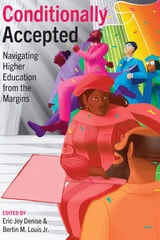
Conditionally Accepted
Navigating Higher Education from the MarginsEdited by Eric Joy Denise and Bertin M. Louis, Jr.
University of Texas Press, 2024
A collection of essays that provides advice and strategies for BIPOC scholars on how to survive, thrive, and resist in academic institutions.
Conditionally Accepted builds upon an eponymous blog on InsideHigherEd.com, which is now a decade-old national platform for BIPOC academics in the United States. Bringing together perspectives from academics of color on navigating intersecting forms of injustice in the academy, each chapter offers situated knowledge about experiencing—and resisting—marginalization in academia. Contextualized within existing scholarship, these personal narratives speak to institutional betrayals while highlighting agency and sharing stories of surviving on treacherous terrain. Covering topics from professional development to the emptiness of diversity, equity, and inclusion efforts, and redefining what it means to be an academic in our contemporary moment, this edited collection directly confronts issues of systemic exclusion, discrimination, harassment, microaggressions, tokenism, and surveillance. Letting marginalized scholars know they are not alone, Conditionally Accepted offers concrete wisdom for readers seeking to navigate and transform oppressive academic institutions.
Contingency, Exploitation, and Solidarity
Labor and Action in English CompositionSeth Kahn
University Press of Colorado, 2017
Composition has been a microcosm of the corporatization of higher education for thirty years, with adjuncts often handling the hard work of writing instruction. We've learned enough to know that change is needed. Influenced by the efforts of organizations such as New Faculty Majority, Faculty Forward, PrecariCorps, and national faculty unions, this collection highlights action, describing efforts that have improved adjunct working conditions in English departments. The editors categorize these efforts into five threads: strategies for self-advocacy; organizing within and across ranks; professionalizing in complex contexts; working for local changes to workload, pay, and material conditions; and protecting gains.
Contributors to this collection include contingent and tenure-line faculty from private, public, and community colleges, as well as writing program administrators and writing center faculty. Their voices address contingency, exploitation, and solidarity in activist terms deriving from institutional realities and cases. Collectively, they offer creative and constructive responses that can enact labor justice and champion the disciplinary energies of all members of our collegial community.
Contributors: Janelle Adsit, Jacob Babb, Chris Blankenship, Rebekah Shultz Colby, Richard Colby, Anicca Cox, Sue Doe, Tracy Donhardt, Dawn Fels, Barbara Heifferon, Desirée M. Holter, Justin Jory, Jeffrey Klausman, Michelle LaFrance, Sarah Layden, Carol Lind, Maria Maisto, Amanda Martin, Mark McBeth, Tim McCormack, Joan Mullin, Dani Nier-Weber, Glenn Moomau, Michael Murphy, Anna K. Nardo, Rolf Norgaard, Courtney Adams Wooten, Lacey Wootton, Allison Laubach Wright
Creating Community
Life and Learning at Alabama State UniversityEdited by Karl E. Westhauser, Elaine M. Smith, and Jennifer A. Fremlin
University of Alabama Press, 2008