Results by title
81 books match the query 'Farm life' and 7 start with c
Cabin 135
A Memoir of AlaskaKatie Eberhart
University of Alaska Press, 2020
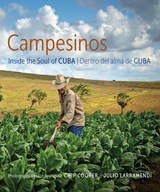
Campesinos
Inside the Soul of CubaChip Cooper and Julio Larramendi
University of Alabama Press, 2017
Into the center of this world traveled two photographers to document these extraordinary people. One, Julio Larramendi, was born in Cuba and has spent his whole life there. The other, Chip Cooper, came to visit for the first time from his native Alabama more than a decade ago. Together, Cooper and Larramendi have captured the light, sounds, and spirit of the campesino landscape and the humble and determined people who inhabit it, ways of living that have not changed, in many instances, for a century or more. From green tobacco fields and winding roads to the faces, both stern and smiling, of children and their close-knit families, Cooper and Larramendi have captured in this landmark volume the rhythms and traditions of contemporary rural Cuban life in ways never before documented.

Cidermaster Of Rio Oscuro
Harvey Frauenglas
University of Utah Press, 2000
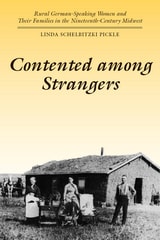
Contented among Strangers
Rural German-Speaking Women and Their Families in the Nineteenth-Century MidwestLinda Schelbitzki Pickle
University of Illinois Press, 1995
German-Americans make up one of the largest ethnic groups in the United States, yet their very success at assimilating has also made them one of the least visible. Contented among Strangers examines the central role German-speaking women in rural areas of the Midwest played in preserving their ethnic and cultural identity. Even while living far from their original homelands, these women applied traditional European patterns of rural family life and values to their new homes in Illinois, Iowa, Kansas, Missouri, and Nebraska. As a result they were more content with their modest lives than were their Anglo-American counterparts. Through personal recollections--including interesting diary material translated by the author, church and community documents, and migration and census data--Pickle reveals the diversity and richness of the women's experiences.
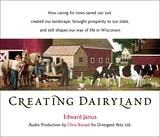
Creating Dairyland
How caring for cows saved our soil, created our landscape, brought prosperity to our state, and still shapes our way of life in WisconsinEdward Janus
Wisconsin Historical Society Press, 2011
The story of dairying in Wisconsin is the story of how our very landscape and way of life were created. By making cows the center of our farm life and learning how to care for them, our ancestors launched a revolution that changed much more than the way farmers earned their living — it changed us.
Creating Dairyland
How caring for cows saved our soil, created our landscape, brought prosperity to our state, and still shapes our way of life in WisconsinEdward Janus
Wisconsin Historical Society Press, 2011
The story of dairying in Wisconsin is the story of how our very landscape and way of life were created. By making cows the center of our farm life and learning how to care for them, our ancestors launched a revolution that changed much more than the way farmers earned their living — it changed us.
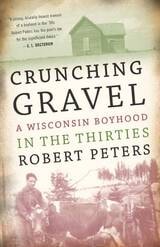
Crunching Gravel
A Wisconsin Boyhood in the ThirtiesRobert Louis Peters
University of Wisconsin Press, 1993
No nostalgic tale of the good old days, Robert Peters’s recollections of his adolescence vividly evoke the Depression on a hardscrabble farm near Eagle River: Dad driving the Vilas County Relief truck, Lars the Swede freezing to death on his porch, the embarassment of graduation in a suit from welfare. The hard efforts to put fish and potatoes and blueberries on the table are punctuated by occasional pleasures: the Memorial Day celebration, swimming at Perch Lake, the county fair with Mother’s prizes for jam and the exotic delights of the midway. Peters’s clear-eyed memoir reveals a poet’s eye for rich and stark detail even as a boy of twelve.
“Peters misses nothing, from the details of the town’s Fourth of July celebration to the cause and effect of a young cousin’s suicide to the calibrations of racism toward Indians that was so acceptable then. It is a fascinating, unsentimental look at a piece of our past.”—Margaret E. Guthrie, New York Times Book Review
“It’s unlikely that any other contemporary poet and scholar as distinguished has risen from quite so humble beginnings as Robert Peters. Born and raised by semiliterate parents on a subsistence farm in northeastern Wisconsin, Peters lived harrowingly close to the eventual stuff of his poetry—the dependency of humans on animal lives, the inexplicable and ordinary heroism and baseness of people facing extreme conditions, the urgency of physical desire. . . . Sterling childhood memoirs.”—Booklist
“Robert Peters has written a memoir exemplary because he insists on the specific, on the personal and the local. It is also enormously satisfying to read, and it is among the most authentic accounts of childhood and youth I know—a Wisconsin David Copperfield!”—Thom Gunn