Results by title
72 books match the query 'Field Guide' and 6 start with c
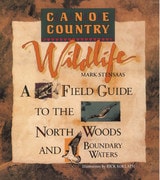
Canoe Country Wildlife
A Field Guide to the North Woods and Boundary WatersMark Stensaas
University of Minnesota Press, 2004
Warblers, wolves, and whirligig beetles—the creatures of the canoe countrywilderness come alive in Canoe Country Wildlife. In this read-aloud treasure, “Sparky” Stensaas, naturalist and storyteller, intrigues you with his tales of encounters with the forest inhabitants—from tiny toads to majestic moose.
Canoe Country Wildlife, a friendly field guide, introduces you to the wildlife you are most likely to see as you travel in the North Woods. It describes these creatures and their habits accurately so you’ll know where and when to look for them. Detailed line drawings illustrate each animal clearly so you’ll recognize what you’re seeing.
The book is filled with fascinating little-known facts: Did you know that wood frogs can freeze solid, only to live again? That loons can fly a hundred miles an hour? That chipmunks can carry seventy sunflower seeds in their cheeks?
Canoe Country Wildlife includes handy checklists to help you keep track of the critters you encounter, a calendar for you to record the natural events you witness, and activities—one for each animal—that will help both adults and children learn by discovery.
Carry Canoe Country Wildlife in your pack. Your trip will be more enjoyable and your memories will last forever. It’s a great gift for anyone who loves the outdoors.
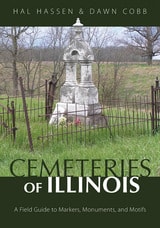
Cemeteries of Illinois
A Field Guide to Markers, Monuments, and MotifsHal Hassen
University of Illinois Press, 2017
- the ways different materials used as gravestones and markers reflect historical trends;
- how to understanding the changes in the use of iconographic images;
- the story behind architectural features like fencing, roads, and gates;
- what enthusiasts can do to preserve local cemeteries for future generations.
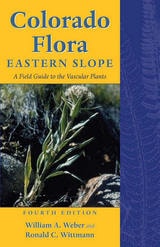
Colorado Flora
Eastern Slope, Fourth Edition <br>A Field Guide to the Vascular PlantsWilliam A. Weber
University Press of Colorado, 2011
The revised and updated editions reflect current taxonomic knowledge. The authors describe botanical features of this unparalleled biohistorical region and its mountain ranges, basins, and plains and discuss plant geography, giving detailed notes on habitat, ecology, and range. The keys recount interesting anecdotes and introductions for each plant family. The book is rounded out with historical background of botanical work in the state, suggested readings, glossary, index to scientific and common names, references, and hundreds of illustrations. The books also contain a new contribution from Donald R. Farrar and Steve J. Popovich on moonworts. The fourth editions of both Colorado Flora: Eastern Slope and Colorado Flora: Western Slope are ideal for both student and scientist and essential for readers interested in Colorado's plant life.
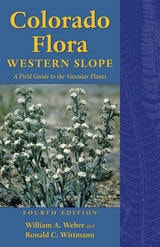
Colorado Flora
Western Slope, Fourth Edition <br>A Field Guide to the Vascular PlantsWilliam A. Weber
University Press of Colorado, 2011
These thoroughly revised and updated editions reflect current taxonomic knowledge. The authors describe botanical features of this unparalleled biohistorical region and its mountain ranges, basins, and plains and discuss plant geography, giving detailed notes on habitat, ecology, and range. The keys contain interesting anecdotes and introductions for each plant family. The book is rounded out with historical background of botanical work in the state, suggested readings, glossary, index to scientific and common names, references, and hundreds of illustrations. The books also contain a new contribution from Donald R. Farrar and Steve J. Popovich on moonworts. The fourth editions of Colorado Flora: Eastern Slope and Colorado Flora: Western Slope are ideal for both student and scientist and essential for readers interested in Colorado's plant life.
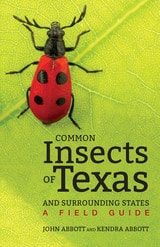
Common Insects of Texas and Surrounding States
A Field GuideBy John Abbott and Kendra Abbott
University of Texas Press, 2020
Thanks to its size and geographic position, Texas is home to nearly 30,000 species of insects, likely making its insect population the most diverse in the nation. Ranging from eastern and western to temperate and tropical species, this vast array of insects can be difficult to identify. In Common Insects of Texas and Surrounding States, John and Kendra Abbott have created the state's most comprehensive field guide to help readers recognize and understand these fascinating creatures.
Containing 1,300 species and more than 2,700 photographs, this guide offers a wealth of information about the characteristics and behaviors of Texas's insects. Each chapter introduces an order with a discussion of general natural history and a description of other qualities helpful in distinguishing its various species, while every species' entry provides a state map showing where it is most likely to be found, a key displaying its seasonal distribution, information about its habitat, and corresponding photos. Featuring colored tabs for quick reference, a glossary, and information about other arthropods, this guide is the perfect companion for anyone wanting to identify and learn more about the many insects of Texas.
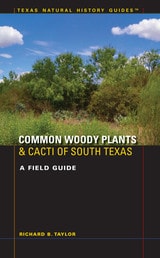
Common Woody Plants and Cacti of South Texas
A Field GuideBy Richard B. Taylor with Texas Parks & Wildlife Department
University of Texas Press, 2014
Woody plants and cacti are vital staple foods for cattle, deer, and other wildlife in drought-prone South Texas. Ranchers, hunters, and land managers who need to identify these plants relied on A Field Guide to Common South Texas Shrubs (published by Texas Parks & Wildlife Press and distributed by UT Press), which is no longer in print. Responding to ongoing demand for the book, Richard B. Taylor has completely updated and expanded it with seven new species, new photographs, and a quick plant identification key.
Common Woody Plants and Cacti of South Texas is an easy-to-use plant identification field guide to fifty species that comprise an estimated 90 percent of the region’s woody canopy cover north of the Rio Grande Valley. The species accounts include photographs, descriptions, values to livestock and wildlife, and nutritional information. The book also provides historical perspectives and information on brush management techniques and strategies, as well as habitat appraisal. All of these resources will enable readers to analyze stocking rates for deer and cattle, evaluate a prospective hunting lease, or buy property.