Results by title
77 books match the query 'Fieldwork' and 4 start with c
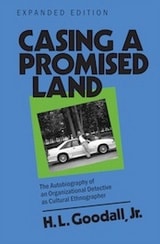
Casing a Promised Land, Expanded Edition
The Autobiography of an Organizational Detective as Cultural EthnographerH.L. Goodall, Jr.
Southern Illinois University Press, 1994
H. L. Goodall’s ground-breaking study of what people do with symbols and what symbols do to people explores the lives led by people in organizations. His narratives take on the form of six detective mysteries in which the narrator figures into the plot of the intrigue and then works out its essential patterns.
In the first mystery, "Notes on a Cultural Evolution: The Remaking of a Software Company," Goodall looks at the transition of a Huntsville regional office of a Boston-based computer software company where the lives and social dramas of the participants reflect the current state of high technology. The second essay and perhaps the most insightful, "The Way the World Ends: Inside Star Wars," penetrates the various defenses of the Star Wars command office in Huntsville to discover its secrets and surprises. Goodall shows how media, technology, fear of relationships, and symbolic images of the future unite into the day-to-day operations of people who believe they are responsible for the outer limits of our nation’s defense.
"Lost in Space: The Layers of Illusion Called Adult Space Camp" illustrates how a supposedly innocent theme park invites participation in rituals and ceremonies designed to influence a future generation of taxpayers. In "Articles of Faith," Goodall enters a super mall in Huntsville, noting how shopping centers provide consumers with far more than places to purchase goods and services. "How I Spent My Summer Vacation" finds Goodall back in an academic environment, at a conference of communication scholars, where he demonstrates the difficult task of translating cultural understandings from one context to another. "The Consultant as Organizational Detective" offers the sobering message that real-life mysteries may surprise even the most accomplished sleuth. A concluding chapter, "Notes on Method," and a new autobiographical afterword round out Goodall’s penetrating look at our symbol-making culture.
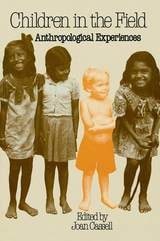
Children In The Field
edited by Joan Cassell
Temple University Press, 1994
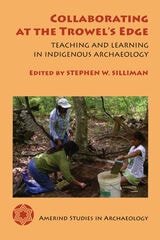
Collaborating at the Trowel's Edge
Teaching and Learning in Indigenous ArchaeologyEdited by Stephen W. Silliman
University of Arizona Press, 2008
Eighteen contributors—many with tribal ties—cover the current state of collaborative indigenous archaeology in North America to show where the discipline is headed. Continent-wide cases, from the Northeast to the Southwest, demonstrate the situated nature of local practice alongside the global significance of further decolonizing archaeology. And by probing issues of indigenous participation with an eye toward method, theory, and pedagogy, many show how the archaeological field school can be retailored to address politics, ethics, and critical practice alongside traditional teaching and research methods.
These chapters reflect the strong link between politics and research, showing what can be achieved when indigenous values, perspectives, and knowledge are placed at the center of the research process. They not only draw on experiences at specific field schools but also examine advances in indigenous cultural resource management and in training Native American and non-native students.
Theoretically informed and practically grounded, Collaborating at the Trowel’s Edge is a virtual guide for rethinking field schools and is an essential volume for anyone involved in North American archaeology—professionals, students, tribal scholars, or avocationalists—as well as those working with indigenous peoples in other parts of the world. It both reflects the rapidly changing landscape of archaeology and charts new directions to ensure the ongoing vitality of the discipline.
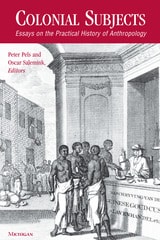
Colonial Subjects
Essays on the Practical History of AnthropologyPeter Pels and Oscar Salemink, Editors
University of Michigan Press, 2000
The essays in this volume share the assumption that "ethnography," far from being the unique purview of anthropology, is a broader field of practice out of which and alongside which anthropology attempted to distinguish itself as a scientific discipline. They explore a variety of situations in colonial South and Southeast Asia and Africa and in the treatment of the indigenous inhabitants of North America and Australia to provide genealogies of present-day anthropological practices, tracing them back to the subjects of colonial ethnography.
This book introduces into the history of anthropology many of the insights developed in recent studies in history, cultural studies, and the anthropology of colonialism. It can serve as a course book in the history of anthropology and the anthropology of colonialism, while at the same time addressing a much larger audience of students of colonial history, of the history of science and modernity, and of globalization.
Peter Pels is Lecturer in Anthropology, University of Amsterdam. Oscar Salemink is Program Officer for Social Sciences and Humanities, The Ford Foundation-Vietnam.