Results by title
102 books match the query 'Florida' and 3 start with c
Churches and Charity in the Immigrant City
Religion, Immigration, and Civic Engagement in MiamiStepick, Alex
Rutgers University Press, 2009
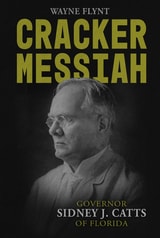
Cracker Messiah
Governor Sidney J. Catts of FloridaWayne Flynt
University of Alabama Press, 1977
The definitive biography of Sidney J. Catts—Florida’s fiery governor who fused pulpit rhetoric with populist politics in the early twentieth century.
Cracker Messiah by Wayne Flynt is a riveting portrait of Sidney J. Catts, one of the most controversial figures in Southern political history. Catts rose from Baptist pulpits and Chautauqua stages to Florida’s governor’s mansion in 1916, riding a wave of rural populism, prohibition fervor, and anti-Catholic rhetoric. His fiery oratory and outsider persona electrified “Florida crackers” at a time when industrial and urban forces were reshaping the South. Yet Catts was more than a demagogue. His administration championed progressive reforms—good roads, penal improvements, vocational education, and even women’s political participation—while his career oscillated between idealism and opportunism.
Wayne Flynt’s meticulously documented biography illuminates this complicated politician, tracing Catts’s battles with the Democratic establishment, his failed Senate bid, and his later flirtations with gambling and real estate during Florida’s boom years. Drawing on interviews, archival sources, and legislative records, Cracker Messiah illuminates the tensions between nativism and reform, faith and hypocrisy, populism and progressivism in the early twentieth-century South. This new edition will appeal to readers of Southern history, political biography, and Progressive Era studies, as well as anyone interested in the roots of American populism and the enduring complexities of cultural and political identity in the Deep South.

Cuban Miami
Robert M Levine
Rutgers University Press, 2000
For two centuries, Cuban exiles have found their way to the United States, especially to Florida. But since Castro's victory in 1959, Miami has seen almost one million Cubans arrive by sea and air. The impact on this area has been enormous. Miami---known as the "Exile Capital"---has a greater cultural affinity to Havana and the rest of Latin America than to Tallahassee, Florida's capital.
Cuban Miami is the first analytical, photographic record of Cuban migration to south Florida. Robert M. Levine and Moises Asis have interviewed members of every sector of the Cuban exile community, from the first pioneers to the mass waves in the early 1960s to those who arrived by raft during the late 1990s. In their wide-ranging investigation of Cuban-U.S. history, they touch upon all aspects of Cuban influence: politics, cuisine, music, assimilation, discrimination, and institution buildings. Miami has more Cuban food establishments than the nearby island does. The city has been fertile ground for germinating a unique synthesis of Cuban and Americans are the most prosperous immigrant group in the United States today, this success has come at a price---living in exile can exact a personal toll.
Cuban Miami is a feast for the eyes, including 180 photographs and original cartoons drawn for the book by Jose M. Varela, a well-known member of the Cuban-American community.