Results by title
252 books match the query 'Future' and 16 start with c
CCAR Journal - Winter 2025
Opening the Doors to LGBTQIA+ Clergy: Past, Present, and FutureRabbi Edwin C. Goldberg
Central Conference of American Rabbis, 2025

Canaries in the Code Mine
Precarity and the Future of Tech WorkMax Papadantonakis
Temple University Press, 2025
Interviewing 120 software developers from leading tech firms, Papadantonakis shows how temporary contracts, project cancellations, and company downsizing undermine the security of even highly skilled professionals. He also highlights the systemic inequalities that shape the tech industry, showing how age, race, and gender often dictate the opportunities and responsibilities software developers have—or are denied.
Canaries in the Code Mine highlights a disturbing reality of privilege and vulnerability within the tech industry. Papadantonakis engages in a critical discourse on the evolving nature of work in the digital era, emphasizing the need to shape an equitable future in the rapidly evolving landscape.

Capitalism’s Tomorrows
Imagining the Future of BusinessGavin Benke
University of Chicago Press, 0
The institutional evolution of “corporate futurism” and its influence on our view of the role of private enterprise in society.
While the bright capitalist future that the power elite of postwar America dreamed of hasn’t come to pass, its influence and repercussions continue to resonate. Gavin Benke shows that the cultural, intellectual, and political rise of neoliberalism was not inevitable. Instead, beginning in the early 1960s, a group that he dubs “corporate futurists” imagined a differently shaped and community-minded version of capitalism. Most interestingly, Benke goes beyond the once-big names in the field (such as Alvin Toffler and Daniel Bell) to show how deep-seated and granular the engagement with futurism was.
Using an incredible array of futurists’ reports, conference proceedings, and internal deliberations at places like the infamous RAND Corporation, Capitalism’s Tomorrows uncovers a moment of genuine introspection about capitalism’s development and shows how it is subject to our imaginative capacity and ability to shape how these systems work.
Choctaw Prophecy
A Legacy for the FutureTom Mould
University of Alabama Press, 2002
Explores the power and artistry of prophecy among the Mississippi Band of Choctaw Indians, who use predictions about the future to interpret the world around them
This book challenges the common assumption that American Indian prophecy was an anomaly of the 18th and 19th centuries that resulted from tribes across the continent reacting to the European invasion. Tom Mould’s study of the contemporary prophetic traditions of the Mississippi Band of Choctaw Indians reveals a much larger system of prophecy that continues today as a vibrant part of the oral tradition.
Mould shows that Choctaw prophecy is more than a prediction of the future; it is a way to unite the past, present, and future in a moral dialogue about how one should live. Choctaw prophecy, he argues, is stable and continuous; it is shared in verbal discourse, inviting negotiation on the individual level; and, because it is a tradition of all the people, it manifests itself through myriad visions with many themes. In homes, casinos, restaurants, laundromats, day care centers, and grocery stores, as well as in ceremonial and political situations, people discuss current events and put them into context with traditional stories that govern the culture. In short, recitation is widely used in everyday life as a way to interpret, validate, challenge, and create the world of the Choctaw speaker.
Choctaw Prophecy stands as a sound model for further study into the prophetic traditions of not only other American Indian tribes but also communities throughout the world. Weaving folklore and oral tradition with ethnography, this book will be useful to academic and public libraries as well as to scholars and students of southern Indians and the modern South.
Civic Talk
Peers, Politics, and the Future of DemocracyAuthored by Casey A. Klofstad
Temple University Press, 2011
Does talking about civic issues encourage civic participation? In his innovative book, Civic Talk, Casey Klofstad shows that our discussions about politics and current events with our friends, colleagues, and relatives—"civic talk"—has the ability to turn thought into action—from voting to volunteering in civic organizations.
Klofstad’s path breaking research is the first to find evidence of a causal relationship between the casual chatting and civic participation. He employs survey information and focus groups consisting of randomly assigned college freshman roommates to show this behavior in action. Klofstad also illustrates how civic talk varies under different circumstances and how the effects can last years into the future. Based on these findings, Klofstad contends that social context plays a central role in maintaining the strength of democracy. This conclusion cuts against the grain of previous research, which primarily focuses on individual-level determinants of civic participation, and negates social-level explanations.
Clean Energy
Past to futurePeter Tavner
The Institution of Engineering and Technology, 2024
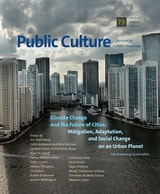
Climate Change and the Future of Cities
Eric Klinenberg, special issue editor
Duke University Press, 0
We live in the age of extremes, a period punctuated by significant disasters that have changed the way we understand risk, vulnerability, and the future of communities. Violent ecological events such as Superstorm Sandy attest to the urgent need to analyze what cities around the world are doing to reduce carbon emissions, develop new energy systems, and build structures to enhance preparedness for catastrophe. The essays in this issue illustrate that the best techniques for safeguarding cities and critical infrastructure systems from threats related to climate change have multiple benefits, strengthening networks that promote health and prosperity during ordinary times as well as mitigating damage during disasters. The contributors provide a truly global perspective on topics such as the toxic effects of fracking, water rights in the Los Angeles region, wind energy in southern Mexico, and water scarcity from Brazil to the Arabian Peninsula.
Contributors: Nina Berman, Dominic Boyer, Daniel Aldana Cohen, Gökçe Günel, Cymene Howe, Colin Jerolmack, Eric Klinenberg, Liz Koslov, Andrew Lakoff, Valeria Procupez, Jerome Whitington, Austin Zeiderman
Climate Trauma
Foreseeing the Future in Dystopian Film and FictionKaplan, E. Ann
Rutgers University Press, 2015
Drawing from recent scholarship that analyzes climate change as a form of “slow violence” that humans are inflicting on the environment, Climate Trauma theorizes that such violence is accompanied by its own psychological condition, what its author terms “Pretraumatic Stress Disorder.” Examining a variety of films that imagine a dystopian future, renowned media scholar E. Ann Kaplan considers how the increasing ubiquity of these works has exacerbated our sense of impending dread. But she also explores ways these films might help us productively engage with our anxieties, giving us a seemingly prophetic glimpse of the terrifying future selves we might still work to avoid becoming.
Examining dystopian classics like Soylent Green alongside more recent examples like The Book of Eli, Climate Trauma also stretches the limits of the genre to include features such as Blindness, The Happening, Take Shelter, and a number of documentaries on climate change. These eclectic texts allow Kaplan to outline the typical blind-spots of the genre, which rarely depicts climate catastrophe from the vantage point of women or minorities. Lucidly synthesizing cutting-edge research in media studies, psychoanalytic theory, and environmental science, Climate Trauma provides us with the tools we need to extract something useful from our nightmares of a catastrophic future.
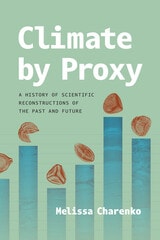
Climate by Proxy
A History of Scientific Reconstructions of the Past and FutureMelissa Charenko
University of Chicago Press, 2025
Unlike our daily reckoning with the weather, our experience of climate must be mediated through methods that measure the ebb and flow of climate, such as computer models, instruments like thermometers, and organic and inorganic remains known as “proxies.” Climate by Proxy by Melissa Charenko explores how scientists read the record of past climates and how their readings have engendered particular understandings of climate. Charenko focuses on the twentieth century, a period when scientists in Europe and North America began to believe that climate had a dynamic history worth studying. Scientists in this period developed several techniques to infer past climate from fossil pollen, tree rings, pieces of vegetation, and other organic remains imprinted upon by former climates. Climate by Proxy examines how these techniques helped shape notions of climate itself.
Charenko also shows how these varied interpretations of climate played an outsized role in explanations of human history and destiny. Geologists, botanists, ecologists, and other scientists interested in climate over long timescales routinely discussed how climate influenced plants, animals, and, notably, people. By following the scientists who reconstructed climate using natural archives, Climate by Proxy demonstrates how material objects worked with scientists’ perceptions of human groups to compel, constrain, and reinforce their understandings of climate, history, and the future.
Constructivism Reconsidered
Past, Present, and FutureMariano E. Bertucci, Jarrod Hayes, and Patrick James, Editors
University of Michigan Press, 2018
Constructivism Reconsidered synthesizes the nature of and debates on constructivism in international relations, providing a systematic assessment of the constructivist research program in IR to answer specific questions: What extent of (dis)agreement exists with regard to the meaning of constructivism? To what extent is constructivism successful as an alternative approach to rationalism in explaining and understanding international affairs? Constructivism Reconsidered explores constructivism’s theoretical, empirical, and methodological strengths and weaknesses, and debates what these say about its past, present, and future to reach a better understanding of IR in general and how constructivism informs IR in particular.

Continuities in Popular Culture
The Present in the Past and the Past in the Present and FutureEdited by Ray B. Brown and Ronald J. Ambrosetti
University of Wisconsin Press, 1993
Core Europe and Greater Eurasia
A Roadmap for the FutureEdited by Peter W. Schulze
Campus Verlag, 2017
Crafting Presence
The American Essay and the Future of Writing StudiesNicole B. Wallack
Utah State University Press, 2016
Wallack analyzes examples drawn primarily from volumes of The Best American Essays to illuminate the most important quality of the essay as a literary form: the writer’s “presence.” She demonstrates how accounting for presence provides a flexible and rigorous heuristic for reading the contexts, formal elements, and purposes of essays. Such readings can help students learn writing principles, practices, and skills for crafting myriad presences rather than a single voice.
Crafting Presence holds serious implications for writing pedagogy by providing new methods to help teachers and students become more insightful and confident readers and writers of essays. At a time when liberal arts education faces significant challenges, this important contribution to literary studies, composition, and creative writing shows how an essay-centered curriculum empowers students to show up in the world as public thinkers who must shape the “knowledge economy” of the twenty-first century.

Curriculum Materials Collections and Centers
Legacies from the Past, Visions of the FutureRita Kohrman
Assoc of College & Research Libraries, 2012
Curriculum Materials Collections and Centers
Legacies from the Past, Visions of the FutureRita Kohrman
Assoc of College & Research Libraries, 2012
Curtains?
The Future of the Arts in AmericaMichael M. Kaiser
Brandeis University Press, 2015