129 books match the query 'God' and 8 start with c
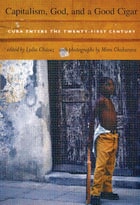
cover of Capitalism, God, and a Good Cigar: Cuba Enters the Twenty-first Century

Capitalism, God, and a Good Cigar

Cuba Enters the Twenty-first Century

Lydia Chávez, ed.

Duke University Press, 2005

When the Soviet Union dissolved, so did the easy credit, cheap oil, and subsidies it had provided to Cuba. The bottom fell out of the Cuban economy, and many expected that Castro’s revolution—the one that had inspired the Left throughout Latin America and elsewhere—would soon be gone as well. More than a decade later, the revolution lives on, albeit in a modified form. Following the collapse of Soviet communism, Castro legalized the dollar, opened the island to tourism, and allowed foreign investment, small-scale private enterprise, and remittances from exiles in Miami. Capitalism, God, and a Good Cigar describes what the changes implemented since the early 1990s have meant for ordinary Cubans: hotel workers, teachers, priests, factory workers, rap artists, writers, homemakers, and others.

Based on reporting by journalists, writers, and documentary filmmakers since 2001, each of the essays collected here covers a particular dimension of contemporary Cuban society, revealing what it is like to have lived, for more than a decade, suspended between communism and capitalism. There are pieces on hip hop musicians, fiction writing and censorship, the state of ballet and the performing arts, and the role of computers and the Internet. Other essays address the shrinking yet still sizeable numbers of true believers in the promise of socialist revolution, the legendary cigar industry, the changing state of religion, the significance of the recent influx of money and people from Spain, and the tensions between recent Cuban emigrants and previous generations of exiles. Including more than seventy striking documentary photographs of Cuba’s people, countryside, and city streets, this richly illustrated collection offers keen, even-handed insights into the abundant ironies of life in Cuba today.

Contributors. Juliana Barbassa, Ana Campoy, Mimi Chakarova, Lydia Chávez, John Coté, Julian Foley, Angel González, Megan Lardner, Ezequiel Minaya, Daniela Mohor, Archana Pyati, Alicia Roca, Olga R. Rodríguez, Bret Sigler, Annelise Wunderlich
[more]
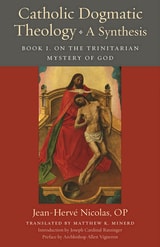
cover of Catholic Dogmatic Theology: A Synthesis: Book 1, On the Trinitarian Mystery of God

Catholic Dogmatic Theology

A Synthesis: Book 1, On the Trinitarian Mystery of God

Jean Herve Nicolas, OP

Catholic University of America Press, 2021
Every discipline, including theology, requires a synthetic overview of its acquisitions and open questions, a kind of “topography” to guide the new student and refresh the gaze of specialists. In his Synthèse dogmatique, Fr. Jean-Hervé Nicolas, OP (1910-2001) presents just such a map of Thomistic theology, focusing on the central topics of Dogmatic Theology: The One and Triune God, Christology, Mariology, Ecclesiology, the Sacraments, and the Last Things. Drawing on decades of research and teaching, Fr. Nicolas synthetically presents these topics from a faithfully Thomistic perspective. While broadly and genially engaging the theological literature of the 20th century, he nonetheless remains deeply indebted to the Thomistic school that would have formed him in his youth as a theologian. This provides the reader with an unparalleled theological vision, masterfully bringing forth, at once, what is new and what is classical. Catholic Theology: A Dogmatic Synthesis will be published in English as a multi-volume work. In this volume, Fr. Nicolas discusses the nature of theological science and the mystery of the Triune God. At once historically-informed and speculatively-detailed, this volume carefully introduces the reader to classical Thomistic positions concerning the theological articulation of the Trinitarian mystery, including the topic of the divine missions, that is, the sending of the Son and the Spirit in the economy of salvation, thereby providing an important connection between the dogmatic portion of theology and its spiritual / moral concerns. Given the central luminosity of the Trinitarian mystery in the life of faith and in theology, this volume is a pivotal chapter in theological reflection. Indeed, objectively speaking, it is the most important discussion in all of theology. Serving as a professor for decades, including at the University of Fribourg, Fr. Nicolas was at once a profound scholar and a masterful pedagogue. Gathering the work of a lifetime into a single pedagogical narrative, Fr. Nicolas’s Catholic Theology: A Dogmatic Synthesis provides a resource for students and scholars alike. In view of the hyper-specialization of theology today, this series of volumes provides readers with a synthetic and sapiential overview of the fundamentals of dogmatic theology from a robust and profound Thomistic perspective.
[more]
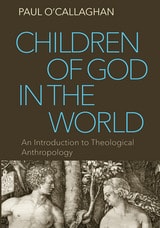
cover of Children of God in the World

Children of God in the World

Paul O'Callaghan

Catholic University of America Press, 2016
Children of God in the World is a textbook of theological anthropology structured in four parts. The first attempts to clarify the relationship between theology, philosophy and science in their respective approaches to anthropology, and establishes the fundamental principle of the text, stated in Vatican II's Gaudium et spes, n. 22, "Christ manifests man to man." The second part provides a historical overview of the doctrine of grace: in Scripture (especially the teaching of the book of Genesis on humans 'made in the image of God', as well as Paul and John), among the Fathers (in particular the oriental doctrine of 'divinization' and Augustine), during the Middle Ages (especially Thomas Aquinas) and the Reformation period (centered particularly on Luther and the Council of Trent), right up to modern times. The third part of the text, the central one, provides a systematic understanding of Christian grace in terms of the God's life present in human believers by which they become children of God, disciples, friends and brothers of Christ, temples of the Holy Spirit. This section also provides a reflection on the theological virtues (faith, hope and charity), on the relationship between grace and human freedom, on the role of the Church and Christian apostolate in the communication of grace, and on the need humans have for divine grace. After considering the relationship between the natural and the supernatural order, the fourth and last part deals with different philosophical aspects of the human condition, in the light of Christian faith: the union between body and soul, humans as free, historical, social, sexual and working beings. The last chapter concludes with a consideration of the human person, Christianity's greatest and most enduring contribution to human thought.
[more]
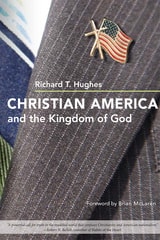
cover of Christian America and the Kingdom of God

Christian America and the Kingdom of God

Richard T. Hughes

University of Illinois Press, 2012
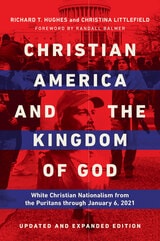
The idea of the United States as a Christian nation is a powerful, seductive, and potentially destructive theme in American life, culture, and politics. And yet, as Richard T. Hughes reveals in this powerful book, the biblical vision of the "kingdom of God" stands at odds with the values and actions of an American empire that sanctions war instead of peace, promotes dominance and oppression instead of reconciliation, and exalts wealth and power instead of justice for the poor and needy. With extensive analysis of both Christian scripture and American history from the founding of the republic to the present day, Christian America and the Kingdom of God illuminates the devastating irony of a "Christian America" that so often behaves in unchristian ways.
[more]
cover of Christian America and the Kingdom of God: White Christian Nationalism from the Puritans through January 6, 2021

Christian America and the Kingdom of God

White Christian Nationalism from the Puritans through January 6, 2021

Richard T. Hughes and Christina Littlefield

University of Illinois Press, 2025

The myth of a Christian America fuels a powerful political force sure of its moral superiority and intent on implementing a Christian nationalist agenda. Richard T. Hughes and Christina Littlefield draw on discussions of civil religion and forms of nationalism to explore the complex legal and cultural arguments for a Christian America. The authors also provide an in-depth examination of the Bible’s words on the “chosen nation” and “kingdom of God” that Christian nationalists quote to support the idea of the US as a Christian nation.

A timely new edition of the acclaimed work, Christian America and the Kingdom of God spotlights how the centuries-long pursuit of a Christian America has bred an aggressive white Christian nationalism that twists faith, unleashes unchristian behavior, and threatens the nation.

[more]
cover of Climate, God and Uncertainty: A Transcendental Naturalistic Approach Beyond Bruno Latour

Climate, God and Uncertainty

A Transcendental Naturalistic Approach Beyond Bruno Latour

Arthur C. Petersen

University College London, 2023

An inquiry into the philosophical implications of climate change and its associated uncertainties.

Climate, God and Uncertainty brings together the philosophical approaches of pragmatism and (neo-) Kantianism in transcendental naturalism. The new approach is based on combining an expansive concept of “nature” with an emphasis on the separate ontological status of transcendental values. This book moves beyond Bruno Latour’s thought to understand what climate change means for philosophical anthropology and wider culture.

Referring mainly to works by Latour, William James, and Heinrich Rickert, this book develops a cultural philosophical approach called “transcendental naturalism.” This approach reinterprets the interface between science and politics in the context of climate change, highlighting, for instance, issues such as the religious disenchantment of nature, the scientific disbelief in a plurality of value-laden perspectives, and the disregard for non-modern worldviews in politics. In developing its argument, the book makes a methodological intervention on the sort of naturalism that guides both Latour’s work and a large part of the academic field called “science and religion.”
 
[more]
cover of Commentary on the Book of Causes (Thomas Aquinas in Translation)

Commentary on the Book of Causes (Thomas Aquinas in Translation)

Saint Thomas Aquinas

Catholic University of America Press, 1996
[more]
cover of Cosmic Impressions: Traces of God in the Laws of Nature

Cosmic Impressions

Traces of God in the Laws of Nature

Walter Thirring

Templeton Press, 2007

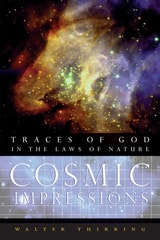
Walter Thirring is an internationally renowned scientist who took part in and worked among those involved in many of the scientific developments of the twentieth century. His book, about the knowledge of the world as illuminated by twentieth century science, was originally published in German. This is the first English translation and is a book that is easily accessible to readers of popular science books and magazines.
Professor Thirring starts with cosmology as he examines scientific questions and theories concerning the intricacy of nature and the universe. He branches into an exposition of chaos and its connection to the macroscopic world, as well as to life sciences, touching on such diverse related subjects as the structure of the water molecule. He speaks of advances with which he was personally involved, and offers priceless vignettes of great scientists with whom he exchanged discussions, including Albert Einstein, Werner Heisenberg, Erwin Schrödinger, and Wolfgang Pauli.
His study of scientific theory and the intricacy of nature and the universe illuminates his argument for the role of a Creator. "Reflections on the creation of the universe lead to reflections about the creator," he writes. And arguing against atheism, he points out:
“When we are moved by a fantastic building, a cathedral or a mosque and have finally realized what is behind the glorious proportions, who would then say, ‘Now we don't need the architect anymore. There might not even be one, that could all just be the random product of circumstance.’”
Furthermore, in making humankind special in his creation, the Creator gave us the responsibility of seeking an understanding of creation and protecting it.
Tackling complex issues in science and religion, Professor Thirring presents a compelling argument for their synthesis. His tenure and influence in the scientific field make this argument even more compelling.
[more]