Results by title
218 books match the query 'Handbooks, manuals, etc' and 14 start with c

Cataloging Cultural Objects
A Guide to Describing Cultural Works and Their ImagesMurtha Baca
American Library Association, 2006
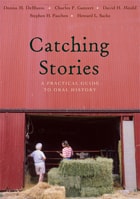
Catching Stories
A Practical Guide to Oral HistoryDonna M. DeBlasio
Ohio University Press, 2009
In neighborhoods, schools, community centers, and workplaces, people are using oral history to capture and collect the kinds of stories that the history books and the media tend to overlook: stories of personal struggle and hope, of war and peace, of family and friends, of beliefs, traditions, and values—the stories of our lives.
Catching Stories: A Practical Guide to Oral History is a clear and comprehensive introduction for those with little or no experience in planning or undertaking oral history projects. Opening with the key question, “Why do oral history?” the guide outlines the stages of a project from idea to final product—planning and research, the interviewing process, basic technical principles, and audio and video recording techniques. The guide covers interview transcribing, ethical and legal issues, archiving, funding sources, and sharing oral history with audiences.
Intended for teachers, students, librarians, local historians, and volunteers as well as individuals, Catching Stories is the place to start for anyone who wants to document the memories and collect the stories of community or family.
Character, Scene, and Story
New Tools from the Dramatic Writer's CompanionWill Dunne
University of Chicago Press, 2017
Featuring forty-two new workshop-tested exercises, this sequel to The Dramatic Writer’s Companion allows writers to dig deeper into their scripts by fleshing out images, exploring characters from an emotional perspective, tapping the power of color and sense memory to trigger ideas, and trying other visceral techniques. The guide also includes a troubleshooting section to help tackle problem scenes. Writers with scripts already in progress will find they can think deeper about their characters and stories. And those who are just beginning to write will find the guidance they need to discover their best starting point. The guide is filled with hundreds of examples, many of which have been developed as both plays and films.
Character, Scene, and Story is fully aligned with the new edition of The Dramatic Writer’s Companion, with cross-references between related exercises so that writers have the option to explore a given topic in more depth. While both guides can stand alone, together they give writers more than one hundred tools to develop more vivid characters and craft stronger scripts.
Chemical Alert!
A Community Action HandbookEdited by Marvin S. Legator and Sabrina F. Strawn
University of Texas Press, 1993
In the 1978 Love Canal toxic waste crisis, concerned citizens "did a far better job of evaluating the health of the community than did the professionals of the New York Health Department," asserts Marvin Legator. In Chemical Alert! A Community Action Handbook, he and coeditor Sabrina Strawn offer a step-by-step guide that can be used by any lay person or citizens' group to determine whether a health risk exists in their area.
Writing for the general reader with no scientific expertise, environmental, medical, and legal professionals instruct communities on the organizational and investigative techniques that will produce a valid, scientific case study. With these tools, citizens living near petrochemical plants or waste disposal areas—or who may have simply noticed a high incidence of certain health problems in their community—can determine for themselves whether a problem really exists and seek remediation. Given the reality that government agencies often lack the resources—or the will—to detect health hazards before they affect a community, an informed citizenry should be its own best environmental watchdog.

Chicago Guide to Preparing Electronic Manuscripts
The University of Chicago Press
University of Chicago Press, 1987
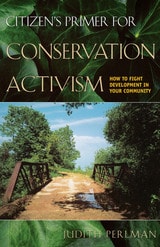
Citizen's Primer for Conservation Activism
How to Fight Development in Your CommunityBy Judith Perlman
University of Texas Press, 2004
Is there anything you can do when development threatens your local forest, beach, prairie, or wetland? Yes, there is. Across America, citizen activists are fighting and winning battles against unwanted development in their own communities. To help you resist the urban sprawl and absentee landowners that can wreck small towns and cities alike, this book is a practical, hands-on guide for building a grassroots campaign to defeat undesirable development.
Written by a successful activist, Citizen's Primer for Conservation Activism takes you through all the steps necessary to stop unplanned development in your community:
- Identifying the issues at stake
- Getting involved and developing leadership
- Devising a strategy
- Hiring and working with legal counsel
- Building coalitions and partnerships
- Influencing local government
- Conducting a media campaign
- Raising money
- Countering developer tactics
- Managing the whole process
With the proven strategies in this easy-to-access book, you can quickly gear up to challenge unwanted development and preserve the character of your local community.
Coaching Copyright
Erin L. Ellis
American Library Association, 2019
From researching to remixing, library users need your guidance on a wide range of copyright topics. The way to move beyond “yes, you can” or “no, you can’t” is to become a copyright coach. In this collection librarian and attorney Smith teams up with information literacy expert Ellis to offer a framework for coaching copyright, empowering users to take a practical approach to specific situations. Complete with in-depth case studies, this collection provides valuable information rooted in pragmatic techniques, including
- in-depth discussion of the five questions that will help you clarify any copyright situation;
- storytelling techniques to enliven copyright presentations, plus ways to use music or YouTube to hook students into copyright topics;
- three coaching scenarios that tie into ACRL’s Framework for Information Literacy for Higher Education and bring real-world applications to your library instruction;
- how-to guidance on leading mock negotiations over real journal publishing agreements;
- a 90-minute lesson plan on author rights for writers in a student journal;
- tips for teaching instructional designers how to apply copyright and fair use principles to course management systems; and
- an LIS copyright course assessment model.
This resource will help you become a copyright coach by showing you how to discern the most important issues in a situation, determine which questions you need to ask, and give a response that is targeted to the specific need.
Constructing Library Buildings That Work
Fred Schlipf
American Library Association, 2020
When it’s time to start planning for a renovation or construction project, you don’t need a book that covers everything from A to Z. Instead you need a concentrated set of tools and techniques that will guide you and your team to find the best solutions for your specific project. That’s exactly what library building expert Schlipf provides in his new book, which will be a key resource for library directors, administrators, board members, trustees, and planning professionals. Pinpointing the elements that make library buildings functional, in this book readers will find
- a streamlined organization of the text that enables quick consultation and facilitates collaboration;
- concise coverage of the essentials of the library construction process, including who does what, how things work, and how to stay out of trouble along the way;
- advice on important planning and workflow considerations such as site selection, schematic design, funding, design development, the bidding process, construction, and post-construction occupancy;
- discussion of the characteristics of successful library buildings—buildings that are easy to maintain, welcoming to people with disabilities, have less trouble-prone restrooms, and provide security for users, staff, and collections; and
- an overview of bad ideas in library architecture, with pointed guidance on how to steer clear of them from the very beginning of your project.
Copyright Essentials for Librarians and Educators
American Library Association, 2000
Copyright Law for Librarians and Educators
Creative Strategies and Practical SolutionsKenneth D. Crews
American Library Association, 2020
Copyright law never sleeps, making it imperative to keep abreast of the latest developments. Declared “an exemplary text that seals the standards for such books” (Managing Information), this newly revised and updated edition by respected copyright authority Crews offers timely insights and succinct guidance for LIS students, librarians, and educators alike. Readers will
- learn basic copyright definitions and key exceptions for education and library services;
- find information quickly with “key points” sidebars, legislative citations, and cross-references;
- get up to speed on fresh developments, such as how the recently signed Marrakesh Treaty expands access for people with disabilities and why the latest ruling in the Georgia State University case makes developing a fair use policy so important;
- understand the concept of fair use, with fresh interpretations of its many gray areas that will aid decision making;
- learn the current state of affairs regarding mass digitization, Creative Commons, classroom use and distance education, the Digital Millennium Copyright Act, and other important topics;
- receive guidance on setting up on a copyright service at a library, college, or university; and
- find many helpful checklists for navigating copyright in various situations.
This straightforward, easy-to-use guide provides the tools librarians and educators need to take control of their rights and responsibilities as copyright owners and users.
Copyright Law for Librarians and Educators
Creative Strategies and Practical SolutionsKenneth D. Crews
American Library Association, 2012
Copyright for Academic Librarians and Professionals
Rebecca P. Butler
American Library Association, 2014
Creating Family Archives
A Step-by-Step Guide to Saving Your Memories for Future GenerationsMargot Note
Society of American Archivists, 2019
Creating a Winning Online Exhibit
Martin R. Kalfatovic
American Library Association, 2002