Results by title
116 books match the query 'Health aspects' and 6 start with c
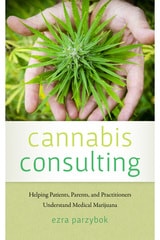
Cannabis Consulting
Helping Patients, Parents, and Practitioners Understand Medical MarijuanaEzra Parzybok
University Press of New England, 2018
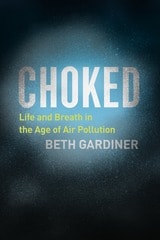
Choked
Life and Breath in the Age of Air PollutionBeth Gardiner
University of Chicago Press, 2019
Air pollution prematurely kills seven million people every year, including more than one hundred thousand Americans. It is strongly linked to strokes, heart attacks, many kinds of cancer, dementia, and premature birth, among other ailments. In Choked, Beth Gardiner travels the world to tell the story of this modern-day plague, taking readers from the halls of power in Washington and the diesel-fogged London streets she walks with her daughter to Poland’s coal heartland and India’s gasping capital. In a gripping narrative that’s alive with powerful voices and personalities, she exposes the political decisions and economic forces that have kept so many of us breathing dirty air. This is a moving, up-close look at the human toll, where we meet the scientists who have transformed our understanding of pollution’s effects on the body and the ordinary people fighting for a cleaner future.
In the United States, air is far cleaner than it once was. But progress has failed to keep up with the science, which tells us that even today’s lower pollution levels are doing real damage. And as the Trump administration rips up the regulations that have brought us where we are, decades of gains are now at risk. Elsewhere, the problem is far worse, and choking nations like China are scrambling to replicate the achievements of an American agency—the EPA—that until recently was the envy of the world.
Clean air feels like a birthright. But it can disappear in a puff of smoke if the rules that protect it are unraveled. At home and around the world, it’s never been more important to understand how progress happened and what dangers might still be in store. Choked shows us that we hold the power to build a cleaner, healthier future: one in which breathing, life’s most basic function, no longer carries a hidden danger.
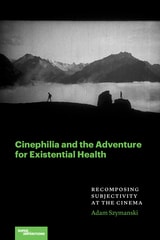
Cinephilia and the Adventure for Existential Health
Recomposing Subjectivity at the CinemaAdam Szymanski
Northwestern University Press, 2025
Exploring how art cinema cultivates existential health through the films of Olivier Assayas
This book proposes that cinephilia can facilitate existential health, which makes palpable the potential for subjectivity to be recomposed through meaningful encounters with cinema. Adam Szymanskidraws on the ethos of psychoanalyst Félix Guattari and thinks with select films from director Olivier Assayas—including Clouds of Sils Maria and Personal Shopper—to theorize how the cinema can be invested with therapeutic value. Cinephilia and the Adventure for Existential Health engages the history of psychoanalytic film theory, excavates its long-standing concern with the production of spectatorial subjectivity, and challenges pathologizing understandings of cinema spectatorship couched in identification, fetishism, and voyeurism. By embracing the indeterminacy of the cinematic experience and the adventurous disposition of cinephilia, the book allies itself to the pursuit of collective health and challenges the logic of medical power.
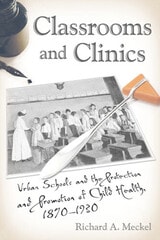
Classrooms and Clinics
Urban Schools and the Protection and Promotion of Child Health, 1870-1930Meckel, Richard A
Rutgers University Press, 2013
Classrooms and Clinics is the first book-length assessment of the development of public school health policies from the late nineteenth century through the early years of the Great Depression. Richard A. Meckel examines the efforts of early twentieth-century child health care advocates and reformers to utilize urban schools to deliver health care services to socioeconomically disadvantaged and medically underserved children in the primary grades. Their goal, Meckel shows, was to improve the children’s health and thereby improve their academic performance.
Meckel situates these efforts within a larger late nineteenth- and early twentieth-century public discourse relating schools and schooling, especially in cities and towns, to child health. He describes and explains how that discourse and the school hygiene movement it inspired served as critical sites for the constructive negotiation of the nature and extent of the public school’s—and by extension the state’s—responsibility for protecting and promoting the physical and mental health of the children for whom it was providing a compulsory education.
Tracing the evolution of that negotiation through four overlapping stages, Meckel shows how, why, and by whom the health of schoolchildren was discursively constructed as a sociomedical problem and charts and explains the changes that construction underwent over time. He also connects the changes in problem construction to the design and implementation of various interventions and services and evaluates how that design and implementation were affected by the response of the civic, parental, professional, educational, public health, and social welfare groups that considered themselves stakeholders and took part in the discourse. And, most significantly, he examines the responses called forth by the question at the heart of the negotiations: what services are necessitated by the state’s and school’s taking responsibility for protecting and promoting the health and physical and mental development of schoolchildren. He concludes that the negotiations resulted both in the partial medicalization of American primary education and in the articulation and adoption of a school health policy that accepted the school’s responsibility for protecting and promoting the health of its students while largely limiting the services called for to the preventive and educational.
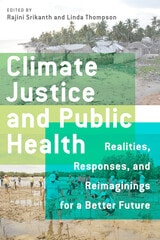
Climate Justice and Public Health
Realities, Responses, and Reimaginings for a Better FutureEdited by Rajini Srikanth and Linda Thompson
University of Massachusetts Press, 2024
When climate disasters like hurricanes, heatwaves, and tsunamis strike, they reveal the inequities of our social, political, and economic structures. They also lay bare the negative impacts of these structures on the health and safety of all people, and particularly socioeconomically vulnerable groups. With original contributions from scholars from a wide range of diverse fields—including environmental studies, public health, legal studies, urban planning, literary studies, and nursing—Climate Justice and Public Health examines this nexus of climate change, which has become impossible to ignore in the twenty-first century.
Expanding the climate and health equity discussions to populations all over the globe, the contributors in this volume address an impressive and broad range of topics that include Indigenous health and cultural practices, mental and emotional health, senior health, and impacts on African American communities. Collectively, they present radical new ways of confronting these issues and propose holistic solutions.
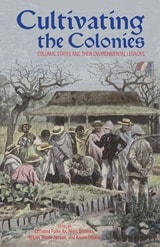
Cultivating the Colonies
Colonial States and their Environmental LegaciesChristina Folke Ax
Ohio University Press, 2011
The essays collected in Cultivating the Colonies demonstrate how the relationship between colonial power and nature revealsthe nature of power. Each essay explores how colonial governments translated ideas about the management of exoticnature and foreign people into practice, and how they literally “got their hands dirty” in the business of empire.
The eleven essays include studies of animal husbandry in the Philippines, farming in Indochina, and indigenous medicine in India. They are global in scope, ranging from the Russian North to Mozambique, examining the consequences of colonialismon nature, including its impact on animals, fisheries, farmlands, medical practices, and even the diets of indigenouspeople.
Cultivating the Colonies establishes beyond all possible doubt the importance of the environment as a locus for studyingthe power of the colonial state.