Results by title
184 books match the query 'Hispanic Americans' and 15 start with c
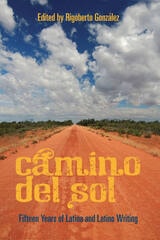
Camino del Sol
Fifteen Years of Latina and Latino WritingEdited by Rigoberto González
University of Arizona Press, 2010
Featuring both established writers and first-time authors, Camino del Sol has published poetry and prose that convey something about the Latina/o experience—works that tap into universal truths through a distinct cultural lens. This volume celebrates fifteen years of books by bringing together some of the series’ best work, such as poetry from Francisco X. Alarcón, fiction from Christine Granados, and nonfiction from Luis Alberto Urrea. These voices echo the entire spectrum of Latina/o writing, from Chicana/o to Puerto Rican to Brazilian-American, and take in themes ranging from migration to gender.
Awards bestowed upon Camino del Sol titles include the PEN/Beyond Margins Award to Richard Blanco’s Directions to the Beach of the Dead; Before Columbus Foundation American Book Awards to Diana García’s When Living Was a Labor Camp and Luis Alberto Urrea’s Nobody’s Son; International Latino Book Awards to Pat Mora’s Adobe Odes and Kathleen Alcalá’s The Desert Remembers My Name; the Premio Aztlán literary prize to Sergio Troncoso’s The Last Tortilla; and the PEN Oakland-Josephine Miles National Literary Award to Kathleen de Azevedo’s Samba Dreamers. All of these works are represented in this outstanding collection.
In a short span of time, Camino del Sol has cultivated an admirable and sizeable list of distinguished contemporary authors—and even garnered the first National Book Critics Circle Award for a Chicana/o for Juan Felipe Herrera’s Half of the World in Light. Camino del Sol: Fifteen Years of Latina and Latino Writing is a benchmark for the series and a wonderful introduction to the world of Latina/o literature.
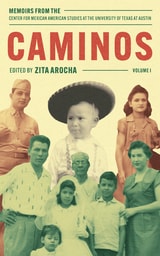
Caminos
Memoirs from the Center for Mexican American Studies at the University of Texas at AustinEdited by Zita Arocha
University of Texas Press, 2026
Fourteen writers reflect on the complexities of Mexican American identity in hyphenated America.
At a time when memoir has become an increasingly popular form of self-expression, fourteen writers from diverse backgrounds engaged with one another in a series of writing workshops sponsored by the Center for Mexican American Studies at UT Austin to reflect on their life journeys. They wrestle with issues that shaped them in provocative, evocative, and sometimes humorous short essays. The writers include a lawyer, a civil rights activist, actors, journalists, and professors who write of belonging, national and sexual identity, coping with illness and loss, career challenges, and life-altering events familiar to us all. The contributors write poignantly about losing a parent at an early age; growing up in segregated communities; bravely confronting serious health problems; living in a household with a mentally disturbed family member; the complexity of being “American” as well as “Mexican”; and the professional challenges facing all hyphenated Americans, many of whom are often the first person of color in their workplaces.
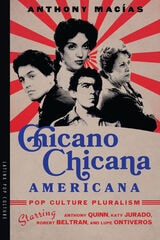
Chicano-Chicana Americana
Pop Culture Pluralism Starring Anthony Quinn, Katy Jurado, Robert Beltran, and Lupe OntiverosAnthony Macías
University of Arizona Press, 2023
Each biographical chapter analyzes an underappreciated actor, revealing their artistic contributions to U.S. common culture. Their long-shot careers tell a tale of players taking action with agency and fighting for screen time and equal opportunity despite disadvantages and differential treatment in Hollywood. These dynamic and complex individuals altered cinematic representations—and audience expectations—by surpassing stereotypes.
The book explores American national character by showing how ethnic Mexicans attained social and cultural status through fair, open competition without a radical realignment of political or economic structures. Their creative achievements demanded dignity and earned respect. Anthony Macías argues that these performances demonstrated a pop culture pluralism that subtly changed mainstream America, transforming it from the mythological past of the Wild West to the speculative future of science fiction.
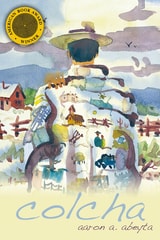
Colcha
Aaron Abeyta
University Press of Colorado, 2001
Winner of a 2002 American Book Award
Winner of the 2002 Colorado Book Award in Poetry
"The natural voice at work in the poetry sings of one human life as if it were our own. I loved listening."
—Rita Kiefer, author of Nesting Doll
"This just may be one of the best books of poetry I have ever read. . . . This is the kind of writing that give poetry a good name."
—Mike Nobles, Tulsa World
"Abeyta's poetry amazingly captures this struggle with poems that are simultaneously tortured and thankful, celebratory and melancholy, earthly and ethereal. . . . Poet Abeyta beautifully captures the hardships of living in rural Colorado."
—Blue Sky Quarterly
"Abeyta writes about family, friends, and famous (and infamous) locals. His approach is intimate and daring while avoiding the self-absorbed, coffee-house clichés we fear. Yes, death plays a role in the connection of community and the land, but these poems are sly rather than dark, modulated rather than graphic, sweet rather than maudlin."
—Wayne Sheldrake, Colorado Central Magazine
In Colcha, Aaron Abeyta blends the contrasting rhythms of the English and Spanish languages, finding music in a simple yet memorable lyricism without losing the complexity and mystery of personal experience. His forty-two poems take the reader on a journey through a contemplative personal history that explores communal, political and societal issues as well as the individual experiences of family and friends. With his distinctive voice, Abeyta invites people of all cultures to enter his poems by exploring the essence of humanity as expressed by his particular Hispanic culture and heritage.
Marked by intimacy and deep sentiment, Colcha not only acquaints us with the land of Abeyta's people, but also reveals the individuals from his life and family history in the most colorful and delicate detail. We meet his abuelitos (grandparents) in poems such as "colcha" and "3515 Wyandot," and hear of their connection to the tierra and its seasons, their labor and its bounty presented both viscerally and lovingly. We also meet the nameless people: the rancheros and the herders and the farmers, the locals in their pick-up trucks, and the women who make the tortillas. Abeyta's reflections on the plight, loves, joys, failures, and exploitation of the common person in such poems as "cuando se secan las acequias," "untitled (verde)," and "cinco de mayo" belong to the literary heritage of such poets as Pablo Neruda, Federico Garcia Lorca, and Walt Whitman.
Colcha is not just for those who love poetry, but for all people who wish to be moved by the music of language and, while listening, perhaps to gain some personal insight into their own lives and cultural traditions.
Cold Anger
A Story of Faith and Power PoliticsMary Beth Rogers
University of North Texas Press, 1990
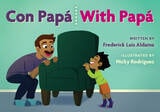
Con Papá / With Papá
Written by Frederick Luis Aldama Illustrated by Nicky Rodriguez
The Ohio State University Press, 2022
With Papá, anything is possible! With playful illustrations and rich imagery, this gentle bilingual story for ages 3–8 celebrates fathers, children, and Latinx identity as it takes readers on a childhood journey of growth and discovery. From delivery from the serpent god’s wings to Papá’s safe arms to witnessing the magical tapestry of stars, Con Papá / With Papá shows us the world through a child’s eyes, hand in hand with Papá, until they are ready to set off on their own adventures.
Constituting Central American–Americans
Transnational Identities and the Politics of DislocationCárdenas, Maritza E
Rutgers University Press, 2018
Contemporary Latina/o Theater
Wrighting EthnicityJon D. Rossini
Southern Illinois University Press, 2008
In Contemporary Latina/o Theater, Jon D. Rossini explores the complex relationship between theater and the creation of ethnicity in an unprecedented examination of six Latina/o playwrights and their works: Miguel Piñero, Luis Valdez, Guillermo Reyes, Octavio Solis, José Rivera, and Cherríe Moraga. Rossini exposes how these writers use the genre as a tool to reveal and transform existing preconceptions about their culture. Through “wrighting”—the triplicate process of writing plays, righting misconceptions about ethnic identity, and creating an entirely new way of understanding Latina/o culture—these playwrights directly intervene in current conversations regarding ethnic identity, providing the tools for audiences to reexplore their previously held perspectives outside the theater.
Examining these writers and their works in both cultural and historical contexts, Rossini reveals how playwrights use the liminal space of the stage—an area on the thresholds of both theory and reality—to “wright” new insights into Latina/o identity. They use the limits of the theater itself to offer practical explorations of issues that could otherwise be discussed only in highly theoretical terms.
Rossini traces playwrights’ methods as they address some of the most challenging issues facing contemporary Latinas/os in America: from the struggles for ethnic solidarity and the dangers of a community based in fear, to stereotypes of Latino masculinity and the problematic fusion of ethnicity and politics. Rossini discusses the looming specter of the border in theater, both as a conceptual device and as a literal reality—a crucial subject for modern Latinas/os, given recent legislation and other actions. Throughout, the author draws intriguing comparisons to the cultural limbo in which many Latinas/os find themselves today.
An indispensable volume for anyone interested in drama and ethnic studies, Contemporary Latina/o Theater underscores the power of theatricality in exploring and rethinking ethnicity. Rossini provides the most in-depth analysis of these plays to date, offering a groundbreaking look at the ability of playwrights to correct misconceptions and create fresh perspectives on diversity, culture, and identity in Latina/o America.
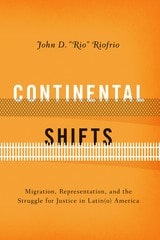
Continental Shifts
Migration, Representation, and the Struggle for Justice in Latin(o) AmericaBy John D. "Rio" Riofrio
University of Texas Press, 2015
Applying a broad geographical approach to comparative Latino literary and cultural studies, Continental Shifts illuminates how the discursive treatment of Latinos changed dramatically following the enactment of NAFTA—a shift exacerbated by 9/11. While previous studies of immigrant representation have focused on single regions (the US/Mexico border in particular), specific genres (literature vs. political rhetoric), or individual groups, Continental Shifts unites these disparate discussions in a provocative, in-depth examination.
Bringing together a wide range of groups and genres, this intercultural study explores novels by Latin American and Latino writers, a border film by Tommy Lee Jones and Guillermo Arriaga, “viral” videos of political speeches, popular television programming (particularly shows that feature incarceration and public shaming), and user-generated YouTube videos. These cultural products reveal the complexity of Latino representations in contemporary discourse. While tropes of Latino migrants as threatening, diseased foreign bodies date back to the nineteenth century, Continental Shifts marks the more pernicious, recent images of Latino laborers (legal and not) in a variety of contemporary media. Using vivid examples, John Riofrio demonstrates the connections between rhetorical and ideological violence and the physical and psychological violence that has more intensely plagued Latino communities in recent decades. Culminating with a consideration of the “American” identity, this eye-opening work ultimately probes the nation’s ongoing struggle to uphold democratic ideals amid dehumanizing multiethnic tension.
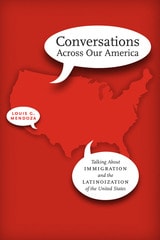
Conversations Across Our America
Talking About Immigration and the Latinoization of the United StatesBy Louis G. Mendoza
University of Texas Press, 2012
In the summer of 2007, Louis G. Mendoza set off on a bicycle trip across the United States with the intention of conducting a series of interviews along the way. Wanting to move beyond the media’s limited portrayal of immigration as a conflict between newcomers and “citizens,” he began speaking with people from all walks of life about their views on Latino immigration. From the tremendous number of oral histories Mendoza amassed, the resulting collection offers conversations with forty-three different people who speak of how they came to be here and why they made the journey. They touch upon how Latino immigration is changing in this country, and how this country is being changed by Latinoization. Interviewees reflect upon the concerns and fears they’ve encountered about the transformation of the national culture, and they relate their own experiences of living and working as “other” in the United States.
Mendoza’s collection is unique in its vastness. His subjects are from big cities and small towns. They are male and female, young and old, affluent and impoverished. Many are political, striving to change the situation of Latina/os in this country, but others are “everyday people,” reflecting upon their lives in this country and on the lives they left behind. Mendoza’s inclusion of this broad swath of voices begins to reflect the diverse nature of Latino immigration in the United States today.
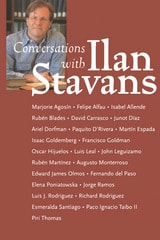
Conversations with Ilan Stavans
Ilan Stavans
University of Arizona Press, 2005
Spontaneous and surprising, these conversations reflect Latino life in the United States in all its facets. Among the more than two dozen selections, Edward James Olmos talks about Hispanics in Hollywood; John Leguizamo describes how he shapes a stage show; author Richard Rodriguez reflects on his gang background; Esmeralda Santiago takes on the Puerto Rican stereotype; and Piri Thomas shares thoughts on the writing of Down These Mean Streets. "A conversation is a tango," writes Stavans, "for it takes two to dance it." Conversations with Ilan Stavans invites readers to catch the rhythm and enjoy these unique meetings of minds.
Creating Ourselves
African Americans and Hispanic Americans on Popular Culture and Religious ExpressionAnthony B. Pinn and Benjamín Valentín, eds.
Duke University Press, 2009
Corresponding to a particular form of popular culture, each section features two essays, one by an African American scholar and one by a Latino/a scholar, as well as a short response by each scholar to the other’s essay. The essays and responses are lively, varied, and often personal. One contributor puts forth a “brown” theology of hip hop that celebrates hybridity, contradiction, and cultural miscegenation. Another analyzes the content of the message transmitted by African American evangelical preachers who have become popular sensations through television broadcasts, video distribution, and Internet promotions. The other essays include a theological reading of the Latina body, a consideration of the “authenticity” of representations of Jesus as white, a theological account of the popularity of telenovelas, and a reading of African American ideas of paradise in one of Toni Morrison’s novels. Creating Ourselves helps to make popular culture available as a resource for theology and religious studies and for facilitating meaningful discussions across racial and ethnic boundaries.
Contributors. Teresa Delgado, James H. Evans Jr., Joseph De León, Cheryl Kirk-Duggan, Angel F. Méndez Montoya, Alexander Nava, Anthony B. Pinn, Mayra Rivera, Suzanne E. Hoeferkamp Segovia, Benjamín Valentín, Jonathan L. Walton, Traci C. West, Nancy Lynne Westfield, Sheila F. Winborne
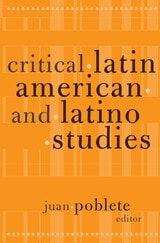
Critical Latin American And Latino Studies
Juan Poblete
University of Minnesota Press, 2003
Situates these dynamic disciplines within debates around globalization
This book brings together some of the most prominent scholars working across the spectrum of Latin American and Latino studies to explore their changing intellectual undertaking in relation to global processes of change. Critical Latin American and Latino Studies identifies the challenges and possibilities of more politically engaged and theoretically critical modes of scholarly practice.
One objective is to provide a brief critical history of the study of various Latin American cultures—Latino, Chicano, Puerto Rican, among others. But these essays also serve to assess the roles of ethnic and area studies in light of changing scholarly trends, from emphases on gender and sexuality to a focus on postcoloniality and globalization. The result is an important contribution to current debates on the conditions of contemporary knowledge production. Contributors: Tomás Almaguer, San Francisco State U; Frances R. Aparicio, U of Illinois, Chicago; John Beverley, U of Pittsburgh; Angie Chabram-Dernersesian, U of California, Davis; Román de la Campa, SUNY, Stony Brook; Juan Flores, Hunter College and CUNY; Walter D. Mignolo, Duke U; Giorgio Perissinotto, U of California, Santa Barbara; Kirsten Silva Gruesz, U of California, Santa Cruz; Stefano Varese, U of California, Davis; George Yúdice, NYU; Juan Zevallos Aguilar, Villanova U.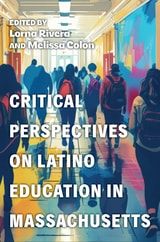
Critical Perspectives on Latino Education in Massachusetts
Lorna Rivera and Melissa Colón, editors
University of Massachusetts Press, 2025
In Massachusetts, the Latino population increased by 475 percent between 1980 and 2017, marking a dramatic growth. This diverse ethnic community of Puerto Ricans, Dominicans, Salvadoreans, Colombians, Brazilians, and more also contains a wide range of cultures, immigration and migration experiences, languages, and socio-political backgrounds. However, there are numerous commonalities involving education. Recent research at the Mauricio Gastón Institute for Latino Community Development and Policy reveals that Latino students in Massachusetts are more likely to attend public schools, in communities with significant academic achievement and opportunity gaps as well as other challenges, from food scarcity to higher rates of unemployment. At the same time, the state-wide shift to standards-based education has had a disproportionately negative impact on Latino students, who already feel the effects of politically motivated anti-immigrant policies and laws that limit bilingual education.
This collection of essays, from those working inside the classroom as well as researchers taking a broader look at policy, addresses the array of issues facing Latino students in Massachusetts. These perspectives paint a complex picture of the educational experience for Latinos, and offer expert suggestions for improving classrooms, school environments, and ultimate educational outcomes for an important growing demographic in the Commonwealth.
In addition to editors Lorna Rivera and Melissa Colón, this volume’s contributors include Almudena G. Abeyta, Nasteho Ali, Cristina Araujo Brinkerhoff, Michael Berardino, Alex Briesacher, Thomas Conroy, Judenie Dabel, Liya Escalera, Luis Enrique Esquivel, Deyja Enriquez, Isahiah Erilus, Nyal Fuentes, Jazmin Rubi Flete Gomez, Manuel Frau-Ramos, Kimberly A. S. Howard, Patricia Krueger-Henney, Steven Lue, Mary Jo Marion, Timothy E. Murphy, Cecilia Nardi, Laurie Occhipinti, Alexandra Oliver-Davila, Chong Myung Park, Angelica Rodriquez, Marta T. Rosa, Diana Santiago, Melissa Sargent, Ester Shapiro, V. Scott H. Solberg, Fabián Torres-Ardila, Ashley Torres Carrasquillo, Paul Trunfio, Carmen N. Veloria, and Heilam Xie.
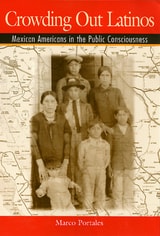
Crowding Out Latinos
Marco Portales
Temple University Press, 2000
As bandidos or gigolos, drug users or unwed mothers, Latinos continue to figure in the public consciousness primarily as undesirables. Despite decades of effort by Spanish-speaking Americans to improve their image in the United States, Mexican Americans and other resident Latinos are still largely perceived by other Americans as poverty-stricken immigrants and second-class citizens. Accordingly, the great majority of Latino citizens receive substandard educations, equipping them for substandard jobs in substandard living environments.
The lives of Mexican Americans and other Latinos, Portales contends, can best be illuminated by looking at the history of Chicanos and particularly Chicano literature, which dramatizes the impact of education and the media on Latinos. Like Irish literature, Chicano literature has sought to articulate and to establish itself as a postcolonial voice that has struggles for national attention. Through psychological and sociopolitical representations, Chicano writers have variously used anger, indifference, fear, accommodation, and other conflicting emotions and attitudes to express how it feels to be seen as an immigrant or a foreigner in one's own country.
Portales looks at four Chicano literary works -- Americo Paredes' George Washington Gomez, Anthony Quinn's The Original Sin, Sandra Cisnero's House on Mango Street, and Ana Castillo's Massacre of the Dreamers -- to focus attention on social issues that impede the progress of Latinos. By doing so, he hopes to engage both Latino and non-Latino Americans in an overdue dialogue about the power of education and the media to form perceptions that can either empower or repress Latino citizens.