Results by title
143 books match the query 'History of doctrines' and 10 start with c
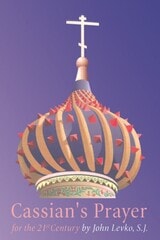
Cassian's Prayer for the 21st Century
John Levko
University of Scranton Press, 2000
Though Saint John Cassian lived and wrote centuries ago (c. 360-435), his spiritual writings continue to be important to contemporary church life and personal spirituality. The rich religious traditions of Eastern Christianity influenced the course and development of monasticism in the West. Today, all Christians can, through Saint Cassian's focus on prayer, reach a higher state.
[more]
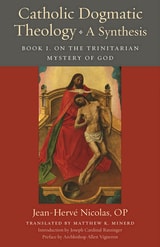
Catholic Dogmatic Theology
A Synthesis: Book 1, On the Trinitarian Mystery of GodJean Herve Nicolas, OP
Catholic University of America Press, 2021
Every discipline, including theology, requires a synthetic overview of its acquisitions and open questions, a kind of “topography” to guide the new student and refresh the gaze of specialists. In his Synthèse dogmatique, Fr. Jean-Hervé Nicolas, OP (1910-2001) presents just such a map of Thomistic theology, focusing on the central topics of Dogmatic Theology: The One and Triune God, Christology, Mariology, Ecclesiology, the Sacraments, and the Last Things. Drawing on decades of research and teaching, Fr. Nicolas synthetically presents these topics from a faithfully Thomistic perspective. While broadly and genially engaging the theological literature of the 20th century, he nonetheless remains deeply indebted to the Thomistic school that would have formed him in his youth as a theologian. This provides the reader with an unparalleled theological vision, masterfully bringing forth, at once, what is new and what is classical.
Catholic Theology: A Dogmatic Synthesis will be published in English as a multi-volume work. In this volume, Fr. Nicolas discusses the nature of theological science and the mystery of the Triune God. At once historically-informed and speculatively-detailed, this volume carefully introduces the reader to classical Thomistic positions concerning the theological articulation of the Trinitarian mystery, including the topic of the divine missions, that is, the sending of the Son and the Spirit in the economy of salvation, thereby providing an important connection between the dogmatic portion of theology and its spiritual / moral concerns. Given the central luminosity of the Trinitarian mystery in the life of faith and in theology, this volume is a pivotal chapter in theological reflection. Indeed, objectively speaking, it is the most important discussion in all of theology.
Serving as a professor for decades, including at the University of Fribourg, Fr. Nicolas was at once a profound scholar and a masterful pedagogue. Gathering the work of a lifetime into a single pedagogical narrative, Fr. Nicolas’s Catholic Theology: A Dogmatic Synthesis provides a resource for students and scholars alike. In view of the hyper-specialization of theology today, this series of volumes provides readers with a synthetic and sapiential overview of the fundamentals of dogmatic theology from a robust and profound Thomistic perspective.
[more]
Children of Ezekiel
Aliens, UFOs, the Crisis of Race, and the Advent of End TimeMichael Lieb
Duke University Press, 1998
Are Milton’s Paradise Lost, Ronald Reagan’s “Star Wars” missile defense program, our culture’s fascination with UFOs and alien abductions, and Louis Farrakhan’s views on racial Armageddon somehow linked? In Children of Ezekiel Michael Lieb reveals the connections between these phenomena and the way culture has persistently related the divine to the technological. In a work of special interest at the approach of the millennium, Lieb traces these and other diverse cultural moments—all descended from the prophet Ezekiel’s vision of a fiery divine chariot in the sky—from antiquity to the present, across high and low culture, to reveal the pervasive impact of this visionary experience on the modern world.
Beginning with the merkabah chariot literature of Hebrew and Gnostic mysticism, Lieb shows how religiously inspired people concerned with annihilating their heretical enemies seized on Ezekiel’s vision as revealing the technologically superior instrument of God’s righteous anger. He describes how many who seek to know the unknowable that is the power of God conceive it in technological terms—and how that power is associated with political aims and a heralding of the end of time. For Milton, Ezekiel’s chariot becomes the vehicle in which the Son of God does battle with the rebellious angels. In the modern age, it may take the form of a locomotive, tank, airplane, missile, or UFO. Technology itself is seen as a divine gift and an embodiment of God in the temporal world. As Lieb demonstrates, the impetus to produce modern technology arises not merely from the desire for profit or military might but also from religious-spiritual motives.
Including discussions of conservative evangelical Christian movements, Reagan’s ballistic shooting gallery in the sky, and the Nation of Islam’s vision of the “mother plane” as the vehicle of retribution in the war against racial oppression, Children of Ezekiel will enthrall readers who have been captivated, either through religious belief or intellectual interests, by a common thread uniting millennial religious beliefs, racial conflict, and political and militaristic aspirations.
[more]
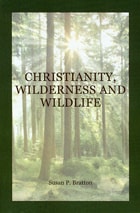
Christianity, Wilderness, and Wildlife
Susan Bratton
University of Scranton Press, 2009
In Christianity, Wilderness, and Wildlife, Susan Bratton brings to life the tradition of Christian wilderness spirituality, from Noah’s and Moses’ experiences in the Old Testament to Celtic monasteries and the Franciscan order. She traces a long history of divine encounters in biblical literature such as visions, providential protection, spiritual guidance and calls to leadership—all of which highlight the importance of nature in Christian thought. This book will command the attention of the growing audience for works at the intersection of environment and spirituality.
[more]
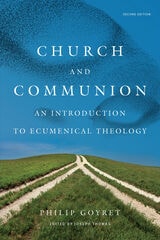
Church and Communion
An Introduction to Ecumenical Theology, Second EditionPhilip Goyret
Catholic University of America Press, 2021
This book is about ecumenism, from a Catholic point of view. The first part, chapters 1 and 2, describe the history of divisions within the Church, as well as of the efforts to bring about Christian unity. The second part examines Ecumenism from a systematic theological perspective.
This first part takes into account the different factors that led to definitive ruptures within the Church, which usually are not only theological. The text gives useful information about what happened after the respective divisions as well as about the various attempts to restore unity, the development of the Ecumenical Movement in the 20th Century, and the current situation of ecumenical dialogue within the Catholic Church. While offering insight into the sad history that has led to the present disunity, this work also highlights the way Christians have sought to bring to fulfill the petition of Christ that his disciples might be one, as He and the Father are one.
The second part―chapters three, four and five―offers a systematic theological analysis of unity in the Church, from the point of view of dogmatic theology. We find here an explanation of the Catholic concept of ecumenism, of how Catholic theology understands the unity of the Church, and, finally, of the Catholic principles which sustain the efforts for regaining unity in the Church. The Second Vatican Council, and particularly the Constitution Lumen gentium and the Decree Unitatis redintegratio, are at the foundation of these reflections. At the same time, since the theology of the Church and the life of the Church are intimately connected, there is a profound link between this dogmatic section and the earlier historical section.
The last chapter, about the practice of ecumenism, is also written from a theological perspective, but with more links with life and spirituality. The chapter recalls that ecumenism can never simply remain a set of theological principles, but rather inspires an attitude and action in charity which are essential to the Christian life.
[more]
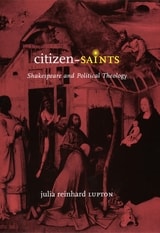
Citizen-Saints
Shakespeare and Political TheologyJulia Reinhard Lupton
University of Chicago Press, 2005
Turning to the potent idea of political theology to recover the strange mix of political and religious thinking during the Renaissance, this bracing study reveals in the works of Shakespeare and his sources the figure of the citizen-saint, who represents at once divine messenger and civil servant, both norm and exception. Embodied by such diverse personages as Antigone, Paul, Barabbas, Shylock, Othello, Caliban, Isabella, and Samson, the citizen-saint is a sacrificial figure: a model of moral and aesthetic extremity who inspires new regimes of citizenship with his or her death and martyrdom.
Among the many questions Julia Reinhard Lupton attempts to answer under the rubric of the citizen-saint are: how did states of emergency, acts of sovereign exception, and Messianic anticipations lead to new forms of religious and political law? What styles of universality were implied by the abject state of the pure creature, at sea in a creation abandoned by its creator? And how did circumcision operate as both a marker of ethnicity and a means of conversion and civic naturalization?
Written with clarity and grace, Citizen-Saints will be of enormous interest to students of English literature, religion, and early modern culture.
[more]
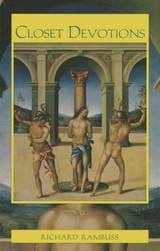
Closet Devotions
Richard Rambuss
Duke University Press, 1998
Religion and sex, body and soul, sacred and profane: In Closet Devotions, Richard Rambuss traces the relays between these cultural formations by examining the issue of “sacred eroticism,” the literary or artistic expression of devotional feelings in erotic terms that has repeatedly occurred over the centuries. Rather than dismissing such expression as mere convention, Rambuss takes it seriously as a form of erotic discourse, one that gives voice to desires that, outside the sphere of sacred rapture, would otherwise be deemed taboo.
Through startling rereadings of works ranging from the devotional verse of the metaphysical poets (Donne, Herbert, Crashaw, and Traherne) to photographer Andres Serrano’s controversial “Piss Christ,” from Renaissance religious iconography to contemporary gay porn, Rambuss uncovers the highly charged erotic imagery that suffuses religious devotional art and literature. And he explores one of Christian culture’s most guarded (and literal) closets—the prayer closet itself, a privileged space where the vectors of same-sex desire can travel privately between the worshiper and his or her God.
Elegantly written and theoretically astute, Closet Devotions illuminates the ways in which sacred Christian devotion is homoeroticized, a phenomenon that until now has gone unexplored in current scholarship on religion, the body, and its passions. This book will attract readers across a wide array of disciplines, including gay and lesbian studies, literary theory and criticism, Renaissance studies, and religion.
[more]
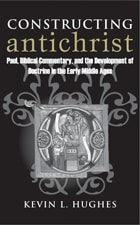
Constructing Antichrist
Paul, Biblical Commentary, and the Development of Doctrine in the Early Middle AgesKevin L. Hughes
Catholic University of America Press, 2005
Constructing Antichrist engages readers with the question: what does Paul have to do with the Antichrist? Integrating new scholarship in apocalypticism and the history of exegesis, this book is the first longitudinal study of the role of Paul in apocalyptic thought
[more]
Contested Boundaries
Itinerancy and the Reshaping of the Colonial American Religious WorldTimothy D. Hall
Duke University Press, 1994
The First Great Awakening in eighteenth-century America challenged the institutional structures and raised the consciousness of colonial Americans. These revivals gave rise to the practice of itinerancy in which ministers and laypeople left their own communities to preach across the countryside. In Contested Boundaries, Timothy D. Hall argues that the Awakening was largely defined by the ensuing debate over itinerancy. Drawing on recent scholarship in cultural and social anthropology, cultural studies, and eighteenth-century religion, he reveals at the center of this debate the itinerant preacher as a catalyst for dramatic change in the religious practice and social order of the New World.
This book expands our understanding of evangelical itinerancy in the 1740s by viewing it within the context of Britain’s expanding commercial empire. As pro- and anti-revivalists tried to shape a burgeoning transatlantic consumer society, the itinerancy of the Great Awakening appears here as a forceful challenge to contemporary assumptions about the place of individuals within their social world and the role of educated leaders as regulators of communication, order, and change. The most celebrated of these itinerants was George Whitefield, an English minister who made unprecedented tours through the colonies. According to Hall, the activities of the itinerants, including Whitefield, encouraged in the colonists an openness beyond local boundaries to an expanding array of choices for belief and behavior in an increasingly mobile and pluralistic society. In the process, it forged a new model of the church and its social world.
As a response to and a source of dynamic social change, itinerancy in Hall’s powerful account provides a prism for viewing anew the worldly and otherworldly transformations of colonial society. Contested Boundaries will be of interest to students and scholars of colonial American history, religious studies, and cultural and social anthropology.
[more]
Contesting Sacrifice
Religion, Nationalism, and Social Thought in FranceIvan Strenski
University of Chicago Press, 2002
From the counter-reformation through the twentieth century, the notion of sacrifice has played a key role in French culture and nationalist politics. Ivan Strenski traces the history of sacrificial thought in France, starting from its origins in Roman Catholic theology. Throughout, he highlights not just the dominant discourse on sacrifice but also the many competing conceptions that contested it.
Strenski suggests that the annihilating spirituality rooted in the Catholic model of Eucharistic sacrifice persuaded the judges in the Dreyfus Case to overlook or play down his possible innocence because a scapegoat was needed to expiate the sins of France and save its army from disgrace. Strenski also suggests that the French army's strategy in World War I, French fascism, and debates over public education and civic morals during the Third Republic all owe much to Catholic theology of sacrifice and Protestant reinterpretations of it. Pointing out that every major theorist of sacrifice is French, including Bataille, Durkheim, Girard, Hubert, and Mauss, Strenski argues that we cannot fully understand their work without first taking into account the deep roots of sacrificial thought in French history.
Strenski suggests that the annihilating spirituality rooted in the Catholic model of Eucharistic sacrifice persuaded the judges in the Dreyfus Case to overlook or play down his possible innocence because a scapegoat was needed to expiate the sins of France and save its army from disgrace. Strenski also suggests that the French army's strategy in World War I, French fascism, and debates over public education and civic morals during the Third Republic all owe much to Catholic theology of sacrifice and Protestant reinterpretations of it. Pointing out that every major theorist of sacrifice is French, including Bataille, Durkheim, Girard, Hubert, and Mauss, Strenski argues that we cannot fully understand their work without first taking into account the deep roots of sacrificial thought in French history.
[more]