Results by title
219 books match the query 'Holocaust, Jewish (1939-1945)' and 9 start with c
Cadaverland
Inventing a Pathology of Catastrophe for Holocaust Survival [The Limits of Medical Knowledge and Historical Memory in France]Michael Dorland
Brandeis University Press, 2009
Catastrophe and Meaning
The Holocaust and the Twentieth CenturyEdited by Moishe Postone and Eric Santner
University of Chicago Press, 2003
This collection features essays that consider the role of anti-Semitism in the recounting of the Holocaust; the place of the catastrophe in the narrative of twentieth-century history; the questions of agency and victimhood that the Holocaust inspires; the afterlife of trauma in literature written about the tragedy; and the gaps in remembrance and comprehension that normal historical works fail to notice.
Contributors:
Omer Bartov, Dan Diner, Debòrah Dwork, Saul Friedländer, Geoffrey Hartman, Dominick LaCapra, Paul Mendes-Flohr, Anson Rabinbach, Frank Trommler, Shulamit Volkov, Froma Zeitlin
Children of the Holocaust
Arnost Lustig
Northwestern University Press, 1995
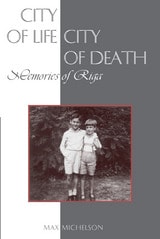
City of Life, City of Death
Memories of RigaMax Michelson
University Press of Colorado, 2001
Michelson had a serene boyhood in an upper middle-class Jewish family in Riga, Latvia--at least until 1940, when the fifteen-year old Michelson witnessed the annexation of Latvia by the Soviet Union. Private properties were nationalized, and Stalin's terror spread to Soviet Latvia. Soon after, Michelson's family was torn apart by the 1941 Nazi invasion of the Soviet Union. He quickly lost his entire family, while witnessing the unspeakable brutalities of war and genocide.
Michelson's memoir is an ode to his lost family; it is the speech of their muted voices and a thank you for their love. Although badly scarred by his experiences, like many other survivors he was able to rebuild his life and gain a new sense of what it means to be alive.
His experiences will be of interest to scholars of both the Holocaust and Eastern European history, as well as the general reader.
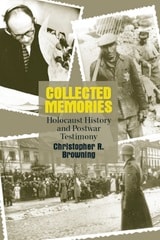
Collected Memories
Holocaust History and Postwar TestimonyChristopher R. Browning
University of Wisconsin Press, 2003
Despite these controversies and challenges, Browning delineates the ways in which the critical use of such problematic sources can provide telling evidence for writing Holocaust history. He examines and discusses two starkly different sets of "collected memories"—the voluminous testimonies of notorious Holocaust perpetrator Adolf Eichmann and the testimonies of 175 survivors of an obscure complex of factory slave labor camps in the Polish town of Starachowice.

Conscience and Memory
Meditations in a Museum of the HolocaustHarold Kaplan
University of Chicago Press, 1994
Kaplan simulates the response to a long visit to the new Holocaust museum in Washington, D.C., which, crucially for Kaplan, is sited in direct view of the Jefferson and Lincoln monuments, powerful symbols of humanist democracy. He insists the Holocaust be viewed not only in terms of personal ethics but modern political ethics as well: for Kaplan the affirmative legacy of the Holocaust is its focus on the dangers of nationalism, racism, and all forms of separatist group identities. It challenges the historicism, cults of power, and scientistic politics of modernity. And it challenges the moral passivity and relativism of mass politics in Western and Eastern societies.
The opening of the Holocaust museum has sparked a debate that reflects a larger debate over the Holocaust's "meaning," its translatability for ordinary understanding. Some deny any possible response except that of overwhelming grief and horror. For others, the "lesson" of the Holocaust implies, in the words of Robert Nozick, that "mankind has fallen. . . . Humanity has lost its claim to continue." The moral life and political institutions will remain endlessly tormented by the Holocaust. That, Kaplan tells us, is the ultimate content of its "meaning," and is what makes the discussion of "meaning" much more than a mourner's symposium.
The Museum itself, according to Kaplan, has become an impressive memorial to the principle of humanism, instructing the collective memory of this democracy and that of nations everywhere which aspire to civil existence. Out of its awful darkness the Holocaust throws the light of conscience for those capable of receiving it.
Considering Maus
Approaches to Art Spiegelman's "Survivor's Tale" of the HolocaustDeborah R. Geis
University of Alabama Press, 2007
The first collection of critical essays on Maus, the searing account of one Holocaust survivor's experiences rendered in comic book form.
In 1992, Art Spiegelmans two-volume illustrated work Maus: A Survivor’s Tale was awarded a special-category Pulitzer Prize. In a comic book form, Spiegelman tells the gripping, heart-rending story of his father's experiences in the Holocaust. The book renders in stark clarity the trials Spiegelman's father endured as a Jewish refugee in the ghettos and concentration camps of Poland during World War II, his American life following his immigration to New York, and the author's own troubled sense of self as he grapples with his father's history. Mixing autobiography, biography, and oral history in the comic form, Maus has been hailed as a daring work of postmodern narration and as a vivid example of the power of the graphic narrative.
Now, for the first time in one collection, prominent scholars in a variety of fields take on Spiegelman's text and offer it the critical and artistic scrutiny it deserves. They explore many aspects of the work, including Spiegelman’s use of animal characters, the influence of other "comix" artists, the role of the mother and its relation to gender issues, the use of repeating images such as smoke and blood, Maus's position among Holocaust testimonials, its appropriation of cinematic technique, its use of language and styles of dialect, and the implications of the work’s critical and commercial success.
Informed readers in many areas of study, from popular culture and graphic arts to psychoanalysis and oral history, will value this first substantial collection of criticism on a revered work of literature.
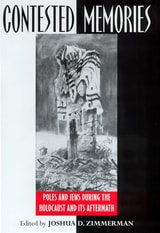
Contested Memories
Poles and Jews during the Holocaust and Its AftermathZimmerman, Joshua D.
Rutgers University Press, 2003
This collection of essays, representing three generations of Polish and Jewish scholars, is the first attempt since the fall of Communism to reassess the existing historiography of Polish-Jewish relations just before, during, and after the Second World War. In the spirit of detached scholarly inquiry, these essays fearlessly challenge commonly held views on both sides of the debates. The authors are committed to analyzing issues fairly and to reaching a mutual understanding. Contributors cover six topics:
1. The prewar legacy
2. The deterioration of Polish-Jewish relations during the first years of the war
3. Institutional Polish responses to the Nazi Final Solution
4. Poles and the Polish nation through Jewish eyes
5. The destruction of European Jewry and Polish popular opinion
6. Polish-Jewish relations since 1945
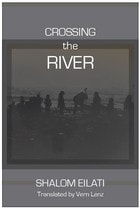
Crossing the River
Shalom Eilati
University of Alabama Press, 2009
A child’s journey through war, memory, and survival—told with haunting clarity and poetic grace.
Crossing the River is a personal memoir—and more. Against the backdrop of Lithuania’s occupation—first by the Red Army, next by the Germans, and then again by the Russians—it is a story reflected through the prism of a sharp-eyed young child, Shalom Eilati. His story starts in the occupied Kovno Ghetto and ends with his flight across the Soviet border, through Poland and Germany and finally, his arrival in Palestine.
The adult survivor, while recalling the terrorized child that he was and how he then perceived the adult world, also takes stock of his present life. Throughout the memoir, Eilati attempts to reconcile his present life as a husband, father, scientist, and writer, with the images, feelings, and thoughts from the past that have left an indelible mark on his life and that continue to haunt him.