Results by title
57 books match the query 'Horror' and 4 start with c
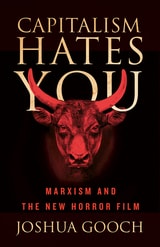
Capitalism Hates You
Marxism and the New Horror FilmJoshua Gooch
University of Minnesota Press, 2025
What contemporary horror films teach us about the cruelties of capitalist society
Capitalism Hates You uses the horror film genre as a tool to diagnose and expose the hostile conditions of life under capitalism. Through incisive critical analyses of popular films such as Get Out, Drag Me to Hell, Hereditary, The Babadook, and many others, Joshua Gooch draws connections between Marxist theory and contemporary narratives of psychological unease.
Gooch highlights the work of women, trans, and nonwhite filmmakers to show how the remarkable diversity of twenty-first-century horror cinema can provide an expansive catalog of capitalism’s varying forms of oppression. Studying films that interrogate such urgent topics as gentrification, climate change, and reproductive labor, he demonstrates how contemporary horror films give affective shape to the negative undercurrents of our present socioeconomic system.
Capitalism Hates You argues that these films and their material conditions can deepen our understanding of essential concepts in contemporary Marxism, from the theory of value and changing forms of commodification to the labor of social reproduction, the abolition of the family, and the necessity of ecosocialism. Synthesizing various strands of Marxist thought, Gooch sheds light on the growing field of socially conscious horror films, examining how they pinpoint and exaggerate latent feelings of dread and discomfort to reflect the ills of society.
Retail e-book files for this title are screen-reader friendly with images accompanied by short alt text and/or extended descriptions.
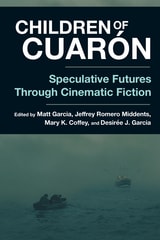
Children of Cuarón
Speculative Futures Through Cinematic FictionMatt Garcia
Rutgers University Press, 2027
Alfonso Cuarón’s Children of Men thrusts readers into a gripping near-future world where environmental collapse and global infertility have fortified borders and torn apart the fabric of society. Its stark depictions of mass deportation, lawless border zones, and the desperate fight for survival echo powerfully through Octavia Butler’s prophetic novels Parable of the Sower and Parable of the Talents, where environmental breakdown, migration, childbirth, and the resilience of women’s bodies form the core of her visionary storytelling. Remarkably, the futures imagined in these works are no longer distant—Butler’s 2024 has arrived, and Cuarón’s 2027 is nearly here. Children of Cuarón: Speculative Futures Through Cinematic Fiction ignites bold, necessary conversations about borders, immigration, and the urgent political, environmental, and social challenges facing our world today. By examining how speculative fiction dares to imagine what comes next, this book invites readers to confront the realities of our present—and the possibilities of our future—with fresh eyes and uncompromising clarity.
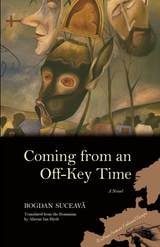
Coming from an Off-Key Time
A NovelBogdan Suceava
Northwestern University Press, 2011
The fall of communism in Eastern Europe in 1989 marked, in one famous formulation, the "end of history." In his apocalyptic novel Coming from an Off-Key Time, Bogdan Suceavă satirizes the events in his native Romania since the violent end of the Ceauşescu regime that fateful year.
Suceavă uses three interrelated narratives to illustrate the destructive power of Romanian society’s most powerful mythologies. He depicts madness of all kinds but especially religious beliefs and their perversion by all manner of outrageous sects. Here horror and humor reside impossibly in the same time and place, and readers experience the vertiginous feeling of living in the middle of a violent historical upheaval.
Even as Coming from an Off-Key Time suggests the influence of such writers as Mikhail Bulgakov, the fantastic satirist of the early Soviet Union, Suceavă engages the complexities of a quickly changing country in search of its bearings and suspicious of its past. Bogdan Suceavă is an associate professor of mathematics at California State University, Fullerton. One of Romanian literature’s most promising and original young writers, he is the author of four novels, two books of short stories, and several collections of poems.
Alistair Ian Blyth’s previous translations include Filip Florian, Little Fingers (2009); Lucian Dan Teodorovici, Our Circus Presents (2009); and Catalin Avramescu’s An Intellectual History of Cannibalism (2009).
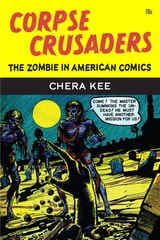
Corpse Crusaders
The Zombie in American ComicsChera Kee
University of Michigan Press, 2024
Using archival research into Golden Age comics and extended analyses of comics from the 1940s to today, Corpse Crusaders explores the profound influence early action/adventure and superheroic generic conventions had on shaping comic book zombies. It takes the reader from the 1940s superhero, the Purple Zombie, through 1950s revenge-from-the-grave zombies, to the 1970s anti-hero, Simon Garth (“The Zombie”) and the gruesome heroes-turned-zombies of Marvel Zombies. In becoming immersed in superheroic logics early on, the zombie in comics became a figure that, unlike the traditional narrative uses of other monsters, actually served to defend the status quo. This continuing trend not only provides insight into the overwhelming influence superheroes have had on the comic book medium, but it also provides a unique opportunity to explore the ways in which zombiism and superheroism parallel each other. Corpse Crusaders explores the ways that truth, justice, and the American way have influenced the undead in comics and turned what is often a rebellious figure into one that works to save the day.