Results by title
395 books match the query 'How' and 9 start with c

COVID and...
How to Do Rhetoric in a PandemicEmily Winderman
Michigan State University Press, 2023
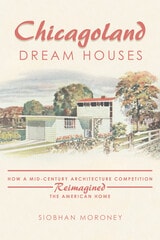
Chicagoland Dream Houses
How a Mid-Century Architecture Competition Reimagined the American HomeSiobhan Moroney
University of Illinois Press, 2024

Circle of Winners
How the Guggenheim Foundation Composition Awards Shaped American Music CultureDenise Von Glahn
University of Illinois Press, 2023
An essential high culture institution, the John Simon Guggenheim Memorial Foundation has both supported and molded American musical culture. Denise Von Glahn examines the Foundation and its immense influence from the organization’s prehistory and origins through the onset of World War II.
Funded by the Guggenheim mining fortune, the Foundation took early shape from the efforts of Carroll Wilson, Frank Aydelotte, and Henry Allen Moe--three Rhodes Scholars who initially struggled to envision and implement the organization’s ambitious goals. Von Glahn also examines the career of the longtime musical advisor Thomas Whitney Surette while profiling early awardees Aaron Copland, Ruth Crawford Seeger, William Grant Still, Roger Sessions, George Antheil, and Carlos Chàvez. She examines the processes behind their selection, their values and aesthetics, and their relationships with the insiders and others who championed their work.
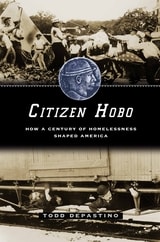
Citizen Hobo
How a Century of Homelessness Shaped AmericaTodd DePastino
University of Chicago Press, 2003
In this eye-opening work of American history, Todd DePastino tells the epic story of hobohemia's rise and fall, and crafts a stunning new interpretation of the "American century" in the process. Drawing on sources ranging from diaries, letters, and police reports to movies and memoirs, Citizen Hobo breathes life into the largely forgotten world of the road, but it also, crucially, shows how the hobo army so haunted the American body politic that it prompted the creation of an entirely new social order and political economy. DePastino shows how hoboes—with their reputation as dangers to civilization, sexual savages, and professional idlers—became a cultural and political force, influencing the creation of welfare state measures, the promotion of mass consumption, and the suburbanization of America. Citizen Hobo's sweeping retelling of American nationhood in light of enduring struggles over "home" does more than chart the change from "homelessness" to "houselessness." In its breadth and scope, the book offers nothing less than an essential new context for thinking about Americans' struggles against inequality and alienation.
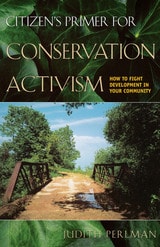
Citizen's Primer for Conservation Activism
How to Fight Development in Your CommunityBy Judith Perlman
University of Texas Press, 2004
Is there anything you can do when development threatens your local forest, beach, prairie, or wetland? Yes, there is. Across America, citizen activists are fighting and winning battles against unwanted development in their own communities. To help you resist the urban sprawl and absentee landowners that can wreck small towns and cities alike, this book is a practical, hands-on guide for building a grassroots campaign to defeat undesirable development.
Written by a successful activist, Citizen's Primer for Conservation Activism takes you through all the steps necessary to stop unplanned development in your community:
- Identifying the issues at stake
- Getting involved and developing leadership
- Devising a strategy
- Hiring and working with legal counsel
- Building coalitions and partnerships
- Influencing local government
- Conducting a media campaign
- Raising money
- Countering developer tactics
- Managing the whole process
With the proven strategies in this easy-to-access book, you can quickly gear up to challenge unwanted development and preserve the character of your local community.

Climate Bridge
An International Perspective on How to Enact Climate Action at the Government Public InterfaceWolfram Höfer
Rutgers University Press, 2025
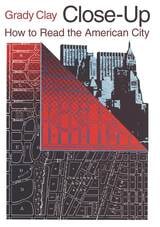
Close-Up
How to Read the American CityGrady Clay
University of Chicago Press, 1980
"The emphasis on the informal aspects of city-shaping—topographical, historical, economic and social—does much to counteract the formalist approach to American urban design. Close-Up...should be required reading for anyone wishing to understand Americans and their cities."—Roger Cunliffe, Architectural Review
"Close-Up is a provocative and stimulating book."—Thomas J. Schlereth, Winterthur Portfolio
"Within this coherent string of essays, the urban dweller or observer, as well as the student, will find refreshing strategies for viewing the environmental 'situations' interacting to form a landscape."—Dallas Morning News
"Clay's Close-Up, first published in 1973, is still a key book for looking at the real American city. Too many urban books and guidebooks concentrate on the good parts of the city....Clay looks at all parts of the city, the suburbs, and the places between cities, and develops new terms to describe parts of the built environment—fronts, strips, beats, stacks, sinks, and turf. No one who wants to understand American cities or to describe them, should fail to know this book. The illustrations are of special interest to the guidebook writer."—American Urban Guidenotes
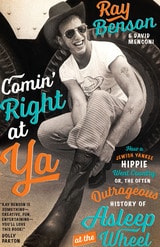
Comin' Right at Ya
How a Jewish Yankee Hippie Went Country, or, the Often Outrageous History of Asleep at the WheelBy Ray Benson, and David Menconi
University of Texas Press, 2015
A who’s who of American popular music fills this lively memoir, in which Ray Benson recalls how a Philadelphia Jewish hippie and his bandmates in Asleep at the Wheel turned on generations of rock and country fans to Bob Wills–style Western swing.
A six-foot-seven-inch Jewish hippie from Philadelphia starts a Western swing band in 1970, when country fans hate hippies and Western swing. It sounds like a joke but—more than forty years, twenty-five albums, and ten Grammy Awards later—Asleep at the Wheel is still drawing crowds around the world. The roster of musicians who’ve shared a stage with the Wheel is a who’s who of American popular music—Van Morrison, Willie Nelson, Dolly Parton, Emmylou Harris, George Strait, Vince Gill, Lyle Lovett, and so many more. And the bandleader who’s brought them all together is the hippie that claimed Bob Wills’s boots: Ray Benson.
In this hugely entertaining memoir, Benson looks back over his life and wild ride with Asleep at the Wheel from the band’s beginning in Paw Paw, West Virginia, through its many years as a Texas institution. He vividly recalls spending decades in a touring band, with all the inevitable ups and downs and changes in personnel, and describes the making of classic albums such as Willie and the Wheel and Tribute to the Music of Bob Wills and the Texas Playboys. The ultimate music industry insider, Benson explains better than anyone else how the Wheel got rock hipsters and die-hard country fans to love groovy new-old Western swing. Decades later, they still do.

Cutting the Fuse
The Explosion of Global Suicide Terrorism and How to Stop ItRobert A. Pape and James K. Feldman
University of Chicago Press, 2012