Results by title
192 books match the query 'Humor' and 8 start with c
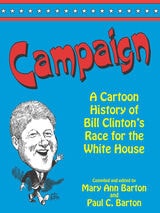
Campaign
A Cartoon History of Bill Clinton's Race for the White HouseMary Ann Barton
University of Arkansas Press, 1993
For many people, in the United States and abroad, the dramas of the campaign created the character of Clinton. From the Gennifer Flowers debacle to Clinton’s
resurrection at the Democratic National Convention and the triumph of the election win, the incisive cartoons in this collection capture Clinton’s emerging image in a way that no written word can. The forty-five contributing artists use these cartoons to depict the breathtaking and colorful events that only a presidential campaign can produce and offer hours of entertainment for any reader.
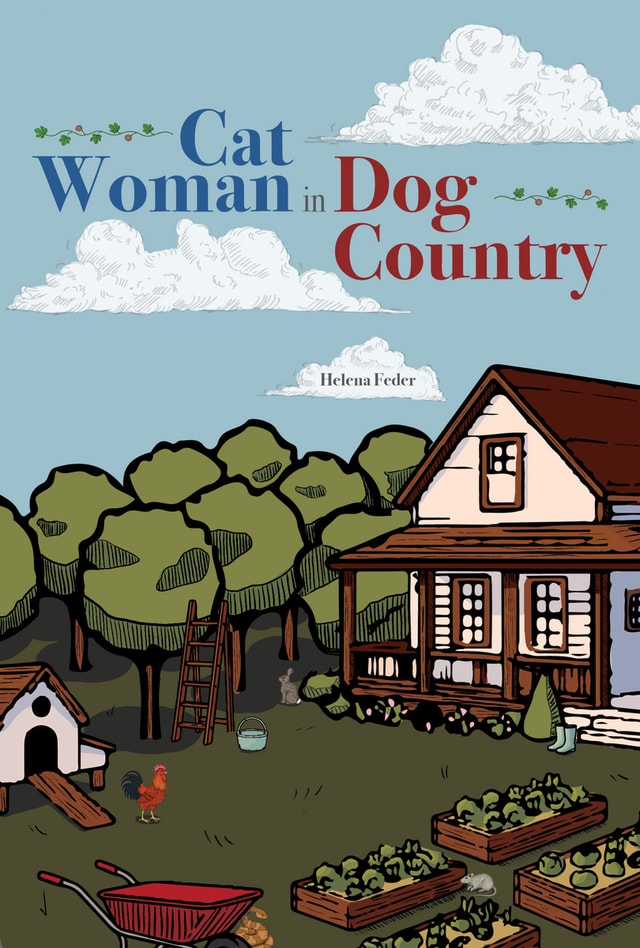
Cat Woman in Dog Country
A Year on a Southern FarmHelena Feder
University of Alabama Press, 2026
One woman, a tiny farm, unruly chickens, and the challenge of putting down roots in a rapidly changing world
Cat Woman in Dog Country is Helena Feder's witty, perceptive account of life on a tiny North Carolina farm. Part memoir, part nature writing, and part literary how-not-to guide to growing and raising things, it chronicles her attempts to cultivate a small plot while marveling at the symbiotic wonders of figs and wasps, navigating chicken politics, and learning to laugh at her own mistakes.
A transplanted Yankee by way of California, Feder often feels like exactly what the title suggests: a cat woman in dog country. Conspicuous in a place where men still largely own and work the land, she finds herself at once welcomed, bewildered, and fascinated by the culture around her. Along the way, she discovers that teaching Walden requires a very different skill set from growing her own beans and that country life comes with its share of challenges, from failed crops to an alarming abundance of rats and copperheads.
Charming, laugh-out-loud funny, and deeply thoughtful, Cat Woman in Dog Country reflects making a home in an era of climate change, forever chemicals, and environmental uncertainty. It is a book for anyone who ponders the personal, social, and planetary meaning of home.
Comic China
Representing Common Ground, 1890-1945Wendy Gan
Temple University Press, 2018
Wendy Gan’s Comic China investigates the circumstances and motivations of cross-cultural humor. How do works that trade in laughter shape our understanding of Western discourses about China? Is humor meant to be inclusive or exclusive? Does it protect or challenge the status quo? Gan suggests that the simple, straightforward laugh may actually be a far more intricate negotiation of power relations.
Gan unpacks texts by authors who had little real contact with China as well as writers whose proximity to China influenced their representations. Looking beyond the familiar canon of serious modernist texts and the Yellow Peril classics of popular fiction, Gan analyzes turn-of-the-twentieth-century musical comedies set in the Far East, Ernest Bramah’s chinoiserie-inspired tales, and interwar travel writing. She also considers the comic works of the missionary Arthur Henderson Smith, the former Maritime Customs Officer J.O.P. Bland, and the Shanghai journalist and advertising man Carl Crow.
Though it includes humor that is less than complimentary to the Chinese, Comic China reminds us that laughter is tied to our common humanity. Gan navigates the humor used in comic depictions ultimately to find, not superiority or ridicule, but common ground.
Comic Faith
The Great Tradition from Austen to JoyceRobert M. Polhemus
University of Chicago Press, 1980
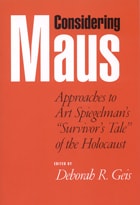
Considering Maus
Approaches to Art Spiegelman's "Survivor's Tale" of the HolocaustDeborah R. Geis
University of Alabama Press, 2007
The first collection of critical essays on Maus, the searing account of one Holocaust survivor's experiences rendered in comic book form.
In 1992, Art Spiegelmans two-volume illustrated work Maus: A Survivor’s Tale was awarded a special-category Pulitzer Prize. In a comic book form, Spiegelman tells the gripping, heart-rending story of his father's experiences in the Holocaust. The book renders in stark clarity the trials Spiegelman's father endured as a Jewish refugee in the ghettos and concentration camps of Poland during World War II, his American life following his immigration to New York, and the author's own troubled sense of self as he grapples with his father's history. Mixing autobiography, biography, and oral history in the comic form, Maus has been hailed as a daring work of postmodern narration and as a vivid example of the power of the graphic narrative.
Now, for the first time in one collection, prominent scholars in a variety of fields take on Spiegelman's text and offer it the critical and artistic scrutiny it deserves. They explore many aspects of the work, including Spiegelman’s use of animal characters, the influence of other "comix" artists, the role of the mother and its relation to gender issues, the use of repeating images such as smoke and blood, Maus's position among Holocaust testimonials, its appropriation of cinematic technique, its use of language and styles of dialect, and the implications of the work’s critical and commercial success.
Informed readers in many areas of study, from popular culture and graphic arts to psychoanalysis and oral history, will value this first substantial collection of criticism on a revered work of literature.
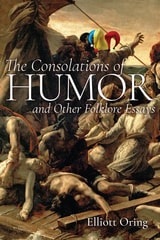
Consolations of Humor and Other Folklore Essays
Elliott Oring
Utah State University Press, 2023
While recognizing the study of jokes and other forms of folklore as a humanistic endeavor, Oring believes in the relevance of a scientific perspective to the enterprise. He values clear definitions, tests of hypotheses and theories, empirical evidence, experiment, and the search for laws. Written in a sophisticated yet accessible style, The Consolations of Humor and Other Folklore Essays stimulates both scholars and students alike and contributes to the creation of a more robust folkloristics in the twenty-first century.
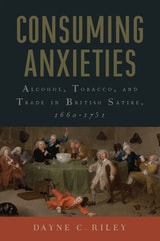
Consuming Anxieties
Alcohol, Tobacco, and Trade in British Satire, 1660-1751Dayne C. Riley
Bucknell University Press, 2024
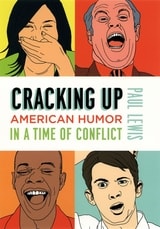
Cracking Up
American Humor in a Time of ConflictPaul Lewis
University of Chicago Press, 2006
What do Jon Stewart, Freddy Krueger, Patch Adams, and George W. Bush have in common? As Paul Lewis shows in Cracking Up, they are all among the ranks of joke tellers who aim to do much more than simply amuse. Exploring topics that range from the sadistic mockery of Abu Ghraib prison guards to New Age platitudes about the healing power of laughter, from jokes used to ridicule the possibility of global climate change to the heartwarming performances of hospital clowns, Lewis demonstrates that over the past thirty years American humor has become increasingly purposeful and embattled.
Navigating this contentious world of controversial, manipulative, and disturbing laughter, Cracking Up argues that the good news about American humor in our time—that it is delightful, relaxing, and distracting—is also the bad news. In a culture that both enjoys and quarrels about jokes, humor expresses our most nurturing and hurtful impulses, informs and misinforms us, and exposes as well as covers up the shortcomings of our leaders. Wondering what’s so funny about a culture determined to laugh at problems it prefers not to face, Lewis reveals connections between such seemingly unrelated jokers as Norman Cousins, Hannibal Lecter, Rush Limbaugh, Garry Trudeau, Jay Leno, Ronald Reagan, Beavis and Butt-Head, and Bill Clinton. The result is a surprising, alarming, and at times hilarious argument that will appeal to anyone interested in the ways humor is changing our cultural and political landscapes.