57 books match the query 'Hunting' and 3 start with c
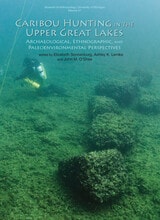
cover of Caribou Hunting in the Upper Great Lakes

Caribou Hunting in the Upper Great Lakes

Edited by Elizabeth Sonnenburg, Ashley K. Lemke and John M. O'Shea

University of Michigan Press, 2015
Bringing together American and Canadian scholars of Great Lakes prehistory to provide a holistic picture of caribou hunters, this volume covers such diverse topics as paleoenvironmental reconstruction, ethnographic surveys of hunting features with Native informants in Canada, and underwater archaeological research, and presents a synthetic model of ancient caribou hunters in the Great Lakes region.
[more]
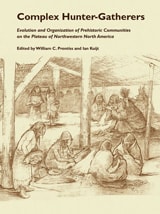
cover of Complex Hunter Gatherers: Evolution Organization of Prehistoric Communities Plateau of Northwestern NA

Complex Hunter Gatherers

Evolution Organization of Prehistoric Communities Plateau of Northwestern NA

William C Prentiss

University of Utah Press, 2004

The Plateau region of the Pacific Northwest witnessed the emergence, persistence, and decline of a diverse array of hunter-gatherer communities during the course of a past several thousand year period. Consequently, the region contains an archaeological record of groups who lived at times in permanent villages, employed complex resource procurement and processing strategies, participated in wide-ranging trade networks, and maintained social organizations featuring high degrees of social inequality.

Complex Hunter-Gatherers presents a broad synthesis of the archaeology of the Plateau, inclusive of the Columbia and Fraser-Thompson drainages. The contributors seek to further our understanding of the nature of prehistoric social organization, subsistence practices, and lifeways of those living on the Plateau, and to expand upon this foundation to understand the evolution and organization of complex hunter-gatherers in general.
[more]
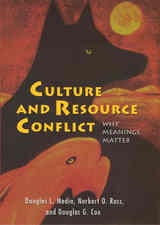
cover of Culture and Resource Conflict: Why Meanings Matter

Culture and Resource Conflict

Why Meanings Matter

Douglas L. Medin

Russell Sage Foundation, 2006

In a multi-cultural society, differing worldviews among groups can lead to conflict over competing values and behaviors. Nowhere is this tension more concrete than in the wilderness, where people of different cultures hunt and fish for the same animals. White Americans tend to see nature as something external which they have some responsibility to care for. In contrast, Native Americans are more likely to see themselves as one with nature. In Culture and Resource Conflict, authors Douglas Medin, Norbert Ross, and Douglas Cox investigate the discord between whites and Menominee American Indians over hunting and fishing, and in the process, contribute to our understanding of how and why cultures so often collide. Based on detailed ethnographic and experimental research, Culture and Resource Conflict finds that Native American and European American hunters and fishermen have differing approaches—or mental models—with respect to fish and game, and that these differences lead to misunderstanding, stereotyping, and conflict. Menominee look at the practice of hunting and fishing for sport as a sign of a lack of respect for nature. Whites, on the other hand, define respect for nature more on grounds of resource management and conservation. Some whites believe—contrary to fact—that Native Americans are depleting animal populations with excessive hunting and fishing, while the Menominee protest that they only hunt what they need and make extensive use of their catch. Yet the authors find that, despite these differences, the two groups share the fundamental underlying goal of preserving fish and game for future generations, and both groups see hunting and fishing as deeply meaningful activities. At its core, the conflict between these two groups is more about mistrust and stereotyping than actual disagreement over values. Combining the strengths of psychology and anthropology, Culture and Resource Conflict shows how misunderstandings about the motives of others can lead to hostility and conflict. As debates over natural resources rage worldwide, this unique book demonstrates the obstacles that must be overcome for different groups to reach consensus over environmental policy.
[more]