Results by title
468 books match the query 'Identity' and 33 start with c
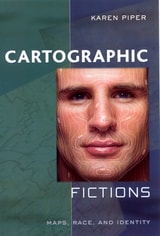
Cartographic Fictions
Maps, Race, and IdentityPiper, Karen
Rutgers University Press, 2002
Maps are stories as much about us as about the landscape. They reveal changing perceptions of the natural world, as well as conflicts over the acquisition of territories. Cartographic Fictions looks at maps in relation to journals, correspondence, advertisements, and novels by authors such as Joseph Conrad and Michael Ondaatje. In her innovative study, Karen Piper follows the history of cartography through three stages: the establishment of the prime meridian, the development of aerial photography, and the emergence of satellite and computer mapping.
Piper follows the cartographer’s impulse to “leave the ground” as the desire to escape the racialized or gendered subject. With the distance that the aerial view provided, maps could then be produced “objectively,” that is, devoid of “problematic” native interference. Piper attempts to bring back the dialogue of the “native informant,” demonstrating how maps have historically constructed or betrayed anxieties about race. The book also attempts to bring back key areas of contact to the map between explorer/native and masculine/feminine definitions of space.
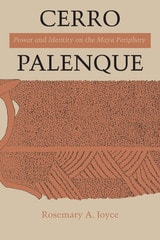
Cerro Palenque
Power and Identity on the Maya PeripheryBy Rosemary A. Joyce
University of Texas Press, 1991
Excavations at Cerro Palenque, a hilltop site in the Ulua Valley of northwest Honduras, revolutionized scholars’ ideas about the Terminal Classic period (roughly ad 850–1050) of Maya history and about the way in which cultures of the southeast Maya periphery related to the Lowland Maya. In this pathfinding study, Rosemary Joyce combines archaeological data gleaned from site research in 1980–1983 with anthropological theory about the evolution of social power to reconstruct something of the culture and lifeways of the prehispanic inhabitants of Cerro Palenque.
Joyce organizes her study in a novel way. Rather than presenting each category of excavated material (ceramics, lithics, etc.) in a separate chapter, she integrates this data in discussions of what people did and where they did it, resulting in a reconstruction of social activity more than in a description of material culture.
Joyce’s findings indicate that the precolumbian elites of the Ulua Valley had very strong and diversified contacts with Lowland Maya culture, primarily through the Bay of Honduras, with far less contact with Copán in the Highlands. The elites used their contacts with these distant, powerful cultures to reinforce their difference from the people they ruled and the legitimacy of their privileged status. Indeed, their dependence on foreign contacts ultimately led to their downfall when their foreign partners reorganized their economic and social order during the Terminal Classic period.
Although archaeological research in the region has been undertaken since the 1890s, Cerro Palenque is the first full-length study of an Ulua Valley site ever published. Joyce’s pioneering approach—archaeological ethnography—will be of interest to scholars dealing with any prehistoric people whose material remains provide the only clues to their culture.

Changing Identities in Early Modern France
Michael Wolfe, ed.
Duke University Press, 1997
After examining the interplay between competing ideologies and public institutions, from the monarchy to the Parlement of Paris to the aristocratic household, the volume explores the dynamics of deviance and dissent, particularly in regard to women’s roles in religious reform movements and such sensationalized phenomena as the witch hunts and infanticide trials. Concluding essays examine how regional and confessional identities reshaped French identity in response to the discovery of the New World and the spectacular spread of Calvinism.
Contributors. Charmarie Blaisdell, William Bouwsma, Lawrence M. Bryant, Denis Crouzet, Robert Descimon, Barbara B. Diefendorf, Richard M. Golden, Sarah Hanley, Mack P. Holt, Donald R. Kelley, Kristen B. Neuschel, J. H. M. Salmon, Zachary Sayre Schiffman, Silvia Shannon, Alfred Soman, Michael Wolfe
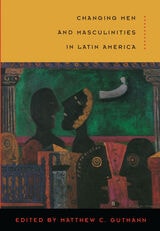
Changing Men and Masculinities in Latin America
Matthew C. Gutmann ed.
Duke University Press, 2003
The contributors look at Mexico, Argentina, Ecuador, Brazil, Colombia, Peru, Venezuela, Chile, and the United States. They bring to bear a number of disciplines—anthropology, history, literature, public health, and sociology—and a variety of methodologies including ethnography, literary criticism, and statistical analysis. Whether analyzing rape legislation in Argentina, the unique space for candid discussions of masculinity created in an Alcoholics Anonymous group in Mexico, the role of shame in shaping Chicana and Chicano identities and gender relations, or homosexuality in Brazil, Changing Men and Masculinities highlights the complex distinctions between normative conceptions of masculinity in Latin America and the actual experiences and thoughts of particular men and women.
Contributors. Xavier Andrade, Daniel Balderston, Peter Beattie, Stanley Brandes, Héctor Carrillo, Miguel Díaz Barriga, Agustín Escobar, Francisco Ferrándiz, Claudia Fonseca, Norma Fuller, Matthew C. Gutmann, Donna Guy, Florencia Mallon, José Olavarría, Richard Parker, Mara Viveros
Childfree and Happy
Transforming the Rhetoric of Women's Reproductive ChoicesCourtney Adams Wooten
Utah State University Press, 2023
Through interviews with thirty-four childfree women and analysis of childfree rhetorics circulating in historical and contemporary texts and events, this book demonstrates how childfree women individually and collectively try to speak back to common beliefs about their reproductive experiences, even as they struggle to make their identities legible in a sociocultural context that centers motherhood. Childfree and Happy theorizes how affect and rhetoric work together to circulate reproductive doxa by using Sara Ahmed’s theories of gendered happiness scripts to analyze what reproductive doxa is embedded in those scripts and how they influence rhetoric by, about, and around childfree women.
Delving into how childfree women position their decision not to have children and the different types of interactions they have with others about this choice, including family members, friends, colleagues, and medical professionals, Childfree and Happy also explores how communities that make space for alternative happiness scripts form between childfree women and those who support them. It will be of interest to scholars in the fields of the rhetoric of motherhood/mothering, as well as feminist rhetorical studies.

Chinese Cinema
Identity, Power, and GlobalizationEdited by Jeff Kyong-McClain, Russell Meeuf, and Jing Jing Chang
Hong Kong University Press, 2022
In Chinese Cinema: Identity, Power, and Globalization, a variety of scholars explore the history, aesthetics, and politics of Chinese cinema as the Chinese film industry grapples with its place as the second-largest film industry in the world. Exploring the various ways that Chinese cinema engages with global politics, market forces, and film cultures, this edited volume places Chinese cinema against an array of contexts informing the contours of Chinese cinema today. The book also demonstrates that Chinese cinema in the global context is informed by the intersections and tensions found in Chinese and world politics, national and international co-productions, the local and global in representing Chineseness, and the lived experiences of social and political movements versus screened politics in Chinese film culture.
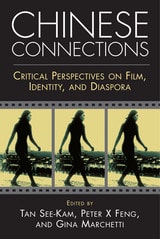
Chinese Connections
Critical Perspectives on Film, Identity, and DiasporaGina Marchetti
Temple University Press, 2009
Chinese Connections is a valuable new anthology that provides a prismatic look at the cross-fertilization between Chinese film and global popular culture. Leading film scholars consider the influence of world cinema on China-related and Chinese-related cinema over the last five decades. Highlighting the neglected connections between Chinese films and American and European cinema, the editors and contributors examine popular works such as Ang Lee’s The Hulk and Olivier Assayas’ Irma Vep to show the nexus of international film production and how national, political, social and sexual identities are represented in the Chinese diaspora.
With talent flowing back and forth between East and West, Chinese Connections explores how issues of immigration, class, race and economic displacement are viewed on a global level, ultimately providing a greater understanding of the impact of Chinese filmmaking at home and abroad.
Contributors include: Grace An, Aaron Anderson, Chris Berry, Evans Chan, Li-Mei Chang, Frances Gateward, Andrew Grossman, Peter Hitchcock, Chuck Kleinhans, Jenny Kwok Wah Lau, Helen Leung, Aaron Magnan-Park, Gayle Wald, Esther C.M. Yau, Emilie Yueh-yu Yeh, Xuelin Zhou and the editors.
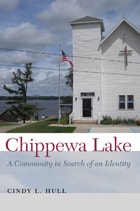
Chippewa Lake
A Community in Search of an IdentityCindy L. Hull
Michigan State University Press, 2012
Chippewa Lake is an idyllic waterfront community in north-central Michigan, popular with retirees and weekenders. The lake is surrounded by a rural farming community, but the area is facing a difficult transition as local demographics shift, and as it transforms from an agriculture-based economy to one that relies on wage labor. As farms have disappeared, local residents have employed a variety of strategies to adapt to a new economic structure. The community, meanwhile, has been indelibly affected by the advent of newcomers and retirees challenging the rural cultural values. An anthropologist with a background in sociology, Cindy L. Hull deftly weaves together oral accounts, historic documents, and participant surveys compiled from her nearly thirty years of living in the area to create a textured portrait of a community in flux.

Choices Women Make
Agency in Domestic Violence, Assisted Reproduction, and Sex WorkCarisa R. Showden
University of Minnesota Press, 2010
In Showden’s analysis, women’s agency emerges as an individual and social construct, rooted in concrete experience, complex and changing over time. She traces the development and deployment of agency, illustrating how it plays out in the messy workings of imperfect lives. In a series of case studies, she considers women within situations of intimate partner violence, reproductive decision making, and sex work such as prostitution and pornography. Each narrative offers insight into how women articulate their self-understanding and political needs in relation to the pressures they confront.
Showden’s understanding of women’s agency ultimately leads her to review possible policy and legal interventions that could improve the conditions within which agency develops and that could positively enhance women’s ability to increase and exercise their political and personal options.
Choosing an Identity
A General Model of Preference and Belief FormationSun-Ki Chai
University of Michigan Press, 2001

Cisgender
Disorienting a CategoryPerry Zurn
Duke University Press, 2026
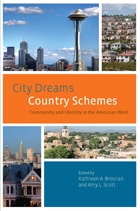
City Dreams, Country Schemes
Community and Identity in the American WestKathleen A. Brosnan
University of Nevada Press, 2011
The American West, from the beginning of Euro-American settlement, has been shaped by diverse ideas about how to utilize physical space and natural environments to create cohesive, sometimes exclusive community identities. When westerners developed their towns, they constructed spaces and cultural identities that reflected alternative understandings of modern urbanity. The essays in City Dreams, Country Schemes utilize an interdisciplinary approach to explore the ways that westerners conceptualized, built, and inhabited urban, suburban, and exurban spaces in the twentieth century.
The contributors examine such topics as the attractions of open space and rural gentrification in shaping urban development; the role of tourism in developing national parks, historical sites, and California's Napa Valley; and the roles of public art, gender, and ethnicity in shaping urban centers. City Dreams, Country Schemes reveals the values and expectations that have shaped the West and the lives of the people who inhabit it.

Clothing Matters
Dress and Identity in IndiaEmma Tarlo
University of Chicago Press, 1996
Clothes have been used to assert power, challenge authority, and instigate social change throughout Indian society. During the struggle for independence, members of the Indian elite incorporated elements of Western style into their clothes, while Gandhi's adoption of the loincloth symbolized the rejection of European power and the contrast between Indian poverty and British wealth. Similar tensions are played out today, with urban Indians adopting "ethnic" dress as villagers seek modern fashions.
Illustrated with photographs, satirical drawings, and magazine advertisements, this book shows how individuals and groups play with history and culture as they decide what to wear.
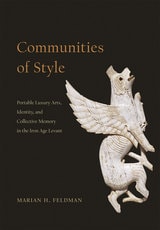
Communities of Style
Portable Luxury Arts, Identity, and Collective Memory in the Iron Age LevantMarian H. Feldman
University of Chicago Press, 2014
Marian H. Feldman brings her dual training as an art historian and an archaeologist to bear on the networks that were essential to the movement and trade of luxury goods—particularly ivories and metal works—and how they were also central to community formation. The interest in, and relationships to, these art objects, Feldman shows, led to wide-ranging interactions and transformations both within and between communities. Ultimately, she argues, the production and movement of luxury goods in the period demands a rethinking of our very geo-cultural conception of the Levant, as well as its influence beyond what have traditionally been thought of as its borders.
Compañeros
Latino Activists in the Face of AIDSJesus Ramirez-Valles
University of Illinois Press, 2011
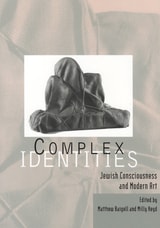
Complex Identities
Jewish Consciousness and Modern ArtBaigell, Matthew
Rutgers University Press, 2001
Complex Identities is a joint effort by American and Israeli scholars who ask challenging questions about art as formed by society and ethnicity. Focusing on nineteenth– and twentieth–century European, American, and Israeli artists, the contributors delve into the many ways in which Jewish artists have responded to their Jewishness and to the societies in which they lived, and how these factors have influenced their art, their choice of subject matter, and presentation of their work.
The contributions reflect a broad range of contemporary art criticism drawn from the history of art, culture, and literature. By analyzing how Jewish experiences have depicted and shaped art, the collection begins to answer how art, in its turn, depicts and shapes Jewish experience. An introduction by the volume editors unifies the essays and gives a historical overview.
Conceiving Masculinity
Male Infertility, Medicine, and IdentityLiberty Walther Barnes
Temple University Press, 2014
In Conceiving Masculinity, Liberty Walther Barnes puts the world of male infertility under the microscope to examine how culturally pervasive notions of gender shape our understanding of disease, and how disease impacts our personal ideas about gender.
Taking readers inside male infertility clinics, and interviewing doctors and couples dealing with male infertility, Barnes provides a rich account of the social aspects of the confusing and frustrating diagnosis of infertility. She explains why men resist a stigmatizing label like "infertile," and how men with poor fertility redefine for themselves what it means to be manly and masculine in a society that prizes male virility. Conceiving Masculinity also details how and why men embrace medical technologies and treatment for infertility.
Broaching a socially taboo topic, Barnes emphasizes that infertility is not just a women's issue. She shows how gender and disease are socially constructed within social institutions and by individuals.
Confronting the Nation
Jewish and Western NationalismGeorge L. Mosse
University of Wisconsin Press, 2024
Mosse considers a broad range of topics, from Nazi book burnings to Americans’ search for unifying national symbols during the Great Depression, exploring how the development of particular modes of art, architecture, and mass movements served nationalist agendas by dictating who was included in the image of the nation. These essays retain their significance today in their examination of the cultural and social implications of contemporary nationalism. A new critical introduction by Shulamit Volkov, professor emerita of history at Tel Aviv University, situates Mosse’s analysis within its historiographical context.
Connected Communities
Networks, Identity, and Social Change in the Ancient Cibola WorldMatthew A. Peeples
University of Arizona Press, 2018
In Connected Communities, Matthew A. Peeples examines a period of dramatic social and political transformation in the ancient Cibola region (ca. A.D. 1150–1325). He analyzes archaeological data generated during a century of research through the lens of new and original social theories and methods focused on exploring identity, social networks, and social transformation. In so doing, he demonstrates the value of comparative, synthetic analysis.
The book addresses some of the oldest enduring questions in archaeology: How do large-scale social identities form? How do they change? How can we study such processes using material remains? Peeples approaches these questions using a new set of methods and models from the broader comparative social sciences (relational sociology and social networks) to track the trajectories of social groups in terms of both networks of interactions (relations) and expressions of similarity or difference (categories). He argues that archaeological research has too often conflated these different kinds of social identity and that this has hindered efforts to understand the drivers of social change.
In his strikingly original approach, Peeples combines massive amounts of new data and comparative explorations of contemporary social movements to provide new insights into how social identities formed and changed during this key period.
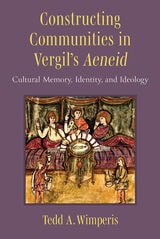
Constructing Communities in Vergil's Aeneid
Cultural Memory, Identity, and IdeologyTedd A. Wimperis
University of Michigan Press, 2024
Where previous studies of identity and memory in the Aeneid have focused on the poem’s constructions of Roman identity, Constructing Communities turns the spotlight onto the characters themselves to show how the world inside the poem is replicating, as if in miniature, real forms of contemporary political and cultural discourse, reflecting an historical milieu where appeals to Roman identity were vigorously asserted in political rhetoric. The book applies this evidence to a broad literary analysis of the Aeneid, as well as a reevaluation of its engagement with Roman imperial ideology in the Age of Augustus.
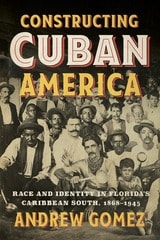
Constructing Cuban America
Race and Identity in Florida's Caribbean South, 1868–1945Andrew Gomez
University of Texas Press, 2024
How Black and white Cubans navigated issues of race, politics, and identity during the post-Civil War and early Jim Crow eras in South Florida.
On July 4, 1876, during the centennial celebration of US independence, the city of Key West was different from other cities. In some of post–Civil War Florida, Black residents were hindered from participating in 4th of July festivities, but Key West's celebration, “led by a Cuban revolutionary mayor working in concert with a city council composed of Afro-Bahamians, Cubans, African Americans, and Anglos,” represented a profound exercise in interracial democracy amid the Radical Reconstruction era.
Constructing Cuban America examines the first Cuban American communities in South Florida—Key West and Tampa—and how race played a central role in shaping the experiences of white and Black Cubans. Andrew Gomez argues that factors such as the Cuban independence movement and Radical Reconstruction produced interracial communities of Cubans that worked alongside African Americans and Afro-Bahamians in Florida, yielding several successes in interracial democratic representation, even as they continued to wrestle with elements of racial separatism within the Cuban community. But the conclusion of the Cuban War of Independence and early Jim Crow laws led to a fracture in the Cuban-American community. In the process, both Black and white Cubans posited distinct visions of Cuban-American identity.
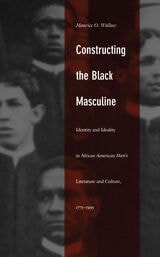
Constructing the Black Masculine
Identity and Ideality in African American Men’s Literature and Culture, 1775–1995Maurice O. Wallace
Duke University Press, 2002
Highlighting their chronic objectification under the gaze of white eyes, Wallace argues that black men suffer a social and representational crisis in being at once seen and unseen, fetish and phantasm, spectacle and shadow in the American racial imagination. Invisible and disregarded on one hand, black men, perceived as potential threats to society, simultaneously face the reality of hypervisibility and perpetual surveillance. Paying significant attention to the sociotechnologies of vision and image production over two centuries, Wallace shows how African American men—as soldiers, Freemasons, and romantic heroes—have sought both to realize the ideal image of the American masculine subject and to deconstruct it in expressive mediums like modern dance, photography, and theatre. Throughout, he draws on the experiences and theories of such notable figures as Frederick Douglass, W. E. B. Du Bois, Booker T. Washington, and James Baldwin.
Contours of Israeli Politics
Jewish Ethnicity, Religious Nationalism, and DemocracyHannah M. Ridge
Temple University Press, 2025
The timely Contours of Israeli Politics focuses on the socio-political ramifications of this hierarchy within the upper stratum of Israeli society. Using public opinion studies and qualitative data, Hannah Ridge examines the effects of this social hierarchy to address attitudes on Israeli ethnicity and religious majoritarianism, support for Israeli democracy, and preference for an expanded territorial state and peace with its neighbors.
As various Jewish ethnic groups face greater pressure to assert their in-group membership (their Jewishness), they are more likely to protect the status privileges of that group. This can strengthen their ideas about identity, nationalism, democratic values, and conflict attitudes. Ridge’s findings reveal the ways in which Jewish ethnicity continues to influence the politics of Israel, a Jewish ethno-religious state.

Cosmopolitanisms and the Jews
Cathy S. Gelbin and Sander L. Gilman
University of Michigan Press, 2017
Crafting Selves
Power, Gender, and Discourses of Identity in a Japanese WorkplaceDorinne K. Kondo
University of Chicago Press, 1990
"Kondo's work is significant because she goes beyond disharmony, insisting on complexity. Kondo shows that inequalities are not simply oppressive-they are meaningful ways to establish identities."—Nancy Rosenberger, Journal of Asian Studies
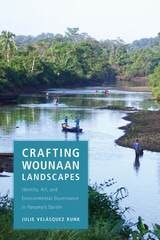
Crafting Wounaan Landscapes
Identity, Art, and Environmental Governance in Panama's DariénJulie Velásquez Runk
University of Arizona Press, 2017
Panama’s Darién is a name many conservationists know. Renowned for its lowland tropical forests, its fame is more pronounced because a road that should be there is not: environmentalists have repeatedly, and remarkably, blocked all attempts to connect the Americas via the Pan American Highway. That lacuna, that absence of a road, also serves to occlude history in the region as its old-growth forests give the erroneous impression of a peopleless nature.
In Crafting Wounaan Landscapes, Julie Velásquez Runk upends long-standing assumptions about the people that call Darién home, and she demonstrates the agency of the Wounaan people to make their living and preserve and transform their way of life in the face of continuous and tremendous change. Velásquez Runk focuses on Wounaan crafting—how their ability to subtly effect change has granted them resilience in a dynamic and globalized era. She theorizes that unpredictable landscapes, political decisions, and cultural beliefs are responsible for environmental conservation problems, and she unpacks environmental governance efforts that illustrate what happens when conservation is confronted with people in a purportedly peopleless place.
The everyday dangers of environmental governance without local crafting include logging, land grabbing, and loss of carbon in a new era of carbon governance in the face of climate change. Crafting Wounaan Landscapes provides recognition of local ways of knowing and being in the world that may be key to the future of conservation practice.
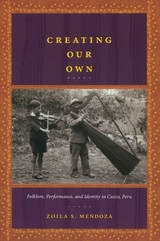
Creating Our Own
Folklore, Performance, and Identity in Cuzco, PeruZoila S. Mendoza
Duke University Press, 2007
Mendoza draws on early-twentieth-century newspapers and other archival documents as well as interviews with key artistic and intellectual figures and their descendants. She offers vivid descriptions of the Peruvian Mission of Incaic Art, a tour undertaken by a group of artists from Cuzco, at their own expense, to represent Peru to Bolivia, Argentina, and Uruguay in 1923–24, as well as of the origins in the 1920s of the Qosqo Center of Native Art, the first cultural institution dedicated to regional and national folkloric art. She highlights other landmarks, including both The Charango Hour, a radio show that contributed to the broad acceptance of rural Andean music from its debut in 1937, and the rise in that same year of another major cultural institution, the American Art Institute of Cuzco. Throughout, she emphasizes the intricate local, regional, national, and international pressures that combined to produce folkloric art, especially the growing importance of national and international tourism in Cuzco.
Please visit the Web site http://nas.ucdavis.edu/creatingbook for samples of the images and music discussed in this book.

Crossing
A MemoirDeirdre Nansen McCloskey
University of Chicago Press, 1999
Cultural Disjunctions
Post-Traditional Jewish IdentitiesPaul Mendes-Flohr
University of Chicago Press, 2021
Cultural Memory
Resistance, Faith, and IdentityBy Jeanette Rodriguez and Ted Fortier
University of Texas Press, 2007
Culturally Speaking
The Rhetoric of Voice and Identity in a Mediated CultureAmanda Nell Edgar
The Ohio State University Press, 2019
Recent pieces by NPR, the BBC, and Forbes have called attention to the power of voice—positing that “your voice is the secret to getting hired” and that “voice can accelerate or hold back a career.” While it has become clearer that such things as pitch and intonation can be tied to assumptions about one’s gender, race/ethnicity, and class, studying voice as a socially constructed artifact carries with it unique challenges. In response, Culturally Speaking: The Rhetoric of Voice and Identity in a Mediated Culture presents an innovative approach to studying the spoken voice in media, showing how racial and gendered oppression bubble beneath the surface of American culture’s most recognized speaking voices, spreading invisible messages about which kinds of vocal identities are privileged and which kinds should be silenced.
Through her analysis of prominent voices in American culture—including Morgan Freeman, Tina Fey, Barack Obama, Adele, Dave Chappelle, Richard Pryor, and George Lopez—Amanda Nell Edgar argues that voices carry a residue of the particular cultural environments in which they are formed, and that these environments can be traced and analyzed to add a sonic dimension to our understanding of race and gender as rhetorically situated identities—pushing back against the often-unnoticed systems of sound-based discrimination.
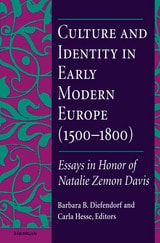
Culture and Identity in Early Modern Europe (1500-1800)
Essays in Honor of Natalie Zemon DavisBarbara B. Diefendorf and Carla Hesse, Editors
University of Michigan Press, 1993
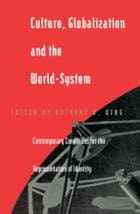
Culture, Globalization and the World-System
Contemporary Conditions for the Representation of IdentityAnthony D. King
University of Minnesota Press, 1997
A foundational work in the study of the globalization of culture.
First published in 1991, Culture, Globalization and the World-System is one of the inaugural books discussing the increasing tendency of cultural practices to cross national boundaries. Now widely available in the United States for the first time and updated with a new preface, these influential essays by a distinguished group of scholars and cultural critics lay the groundwork for a vital and exciting new field of inquiry.
Culture, Globalization and the World-System views culture through different prisms and categories—including race, gender, ethnicity, class, and nation. The contributors consider how socially organized systems of meaning are produced and represented. Drawing from sociology, art history, film studies, and anthropology, these essays—many of them representing their authors’ only treatment of globalization—provide paradigms for understanding cultures and the representation of identity in “the world as a single place.” Contributors: Barbara Abou-El-Haj, SUNY, Binghamton; Janet Abu-Lughod, New School for Social Research; Stuart Hall, Open U, UK; Ulf Hannerz, U of Stockholm, Sweden; Roland Robertson, U of Pittsburgh; John Tagg, SUNY, Binghamton; Maureen Turim, U of Florida, Gainesville; Immanuel Wallerstein, SUNY, Binghamton; Janet Wolff, U of Rochester.