Results by title
221 books match the query 'Imperialism' and 21 start with c
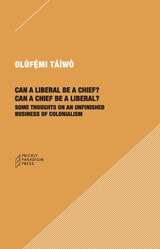
Can a Liberal be a Chief? Can a Chief be a Liberal?
Some Thoughts on an Unfinished Business of ColonialismOlúfémi Táíwò
Prickly Paradigm Press, 2021
Across Africa, it is not unusual for proponents of liberal democracy and modernization to make room for some aspects of indigenous culture, such as the use of a chief as a political figure. Yet for Olúfẹ́mi Táíwò, no such accommodation should be made. Chiefs, he argues, in this thought-provoking and wide-ranging pamphlet, cannot be liberals—and liberals cannot be chiefs. If we fail to recognize this, we fail to acknowledge the metaphysical underpinnings of modern understandings of freedom and equality, as well as the ways in which African intellectuals can offer a distinctive take on the unfinished business of colonialism.
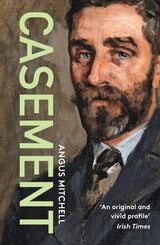
Casement
Angus Mitchell
Haus Publishing, 2026
At the time of his execution for treason in 1916, few were aware who Roger Casement was or what he represented. Since then, he has been lauded for his investigations into Belgian brutality in the Congo Free State and human rights abuses in the Peruvian rubber industry, but much else about him has remained obscured behind speculation about his sexuality and secret Irish revolutionary activity while in service of the British Empire. As such, his place in history has been ill-defined and multifarious: his involvement in the waging of war followed by the delicate negotiation of peace; his republicanism perceived variously as an eccentric enthusiasm and as a threat to the British Empire; his contemporary legacy overshadowed by the Black Diaries of disputed legitimacy, detailing alleged liaisons with young men.
In Casement, Angus Mitchell illuminates a life shrouded in mystery, which operated in the conflicting spheres of British foreign diplomacy and Irish revolutionary activity. Considering Casement’s rebellious nature, Mitchell asks if it was motivated as much by his “incorrigible” Irishness as by his exposure of the appalling crimes against humanity that he witnessed in Africa and South America. Most significantly, Casement demonstrates that his legacy cannot be ascribed to just one cause, whether as a critic of global colonialism or as a founding father of the modern Irish nation-state. Casement’s true commitment was to a universal understanding based on humanity, tolerance, and justice.
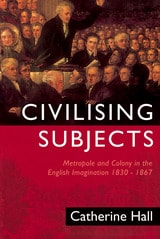
Civilising Subjects
Metropole and Colony in the English Imagination 1830-1867Catherine Hall
University of Chicago Press, 2002
Hall uses the stories of two groups of Englishmen and -women to explore British self-constructions both in the colonies and at home. In Jamaica, a group of Baptist missionaries hoped to make African-Jamaicans into people like themselves, only to be disappointed when the project proved neither simple nor congenial to the black men and women for whom they hoped to fashion new selves. And in Birmingham, abolitionist enthusiasm dominated the city in the 1830s, but by the 1860s, a harsher racial vocabulary reflected a new perception of the nonwhite subjects of empire as different kinds of men from the "manly citizens" of Birmingham.
This absorbing study of the "racing" of Englishness will be invaluable for imperial and cultural historians.
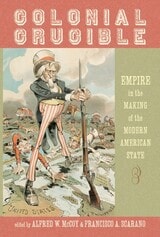
Colonial Crucible
Empire in the Making of the Modern American StateEdited by Alfred W. McCoy and Francisco A. Scarano
University of Wisconsin Press, 2009
Moving well beyond theory, this volume takes the next step, adding a fine-grained, empirical texture to the study of U.S. imperialism by analyzing its specific consequences. Across a broad range of institutions—policing and prisons, education, race relations, public health, law, the military, and environmental management—this formative experience left a lasting institutional imprint. With each essay distilling years, sometimes decades, of scholarship into a concise argument, Colonial Crucible reveals the roots of a legacy evident, most recently, in Washington’s misadventures in the Middle East.
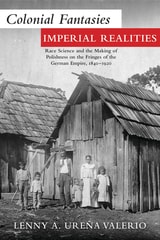
Colonial Fantasies, Imperial Realities
Race Science and the Making of Polishness on the Fringes of the German Empire, 1840–1920Lenny A. Ureña Valerio
Ohio University Press, 2019
In Colonial Fantasies, Imperial Realities, Lenny Ureña Valerio offers a transnational approach to Polish-German relations and nineteenth-century colonial subjectivities. She investigates key cultural dynamics in the history of medicine, colonialism, and migration that bring Germany and Prussian Poland closer to the colonial and postcolonial worlds in Africa and Latin America. She also analyzes how Poles in the German Empire positioned themselves in relation to Germans and native populations in overseas colonies. She thus recasts Polish perspectives and experiences, allowing new insights into identity formation and nationalist movements within the German Empire.
Crucially, Ureña Valerio also studies the medical projects and scientific ideas that traveled from colonies to the German metropole, and vice versa, which were influential not only in the racialization of Slavic populations, but also in bringing scientific conceptions of race to the everydayness of the German Empire. As a whole, Colonial Fantasies, Imperial Realities illuminates nested imperial and colonial relations using sources that range from medical texts and state documents to travel literature and fiction. By studying these scientific and political debates, Ureña Valerio uncovers novel ways to connect medicine, migration, and colonialism and provides an invigorating model for the analysis of Polish history from a global perspective.
Colonial Fantasies
Conquest, Family, and Nation in Precolonial Germany, 1770-1870Susanne Zantop
Duke University Press, 1997
From as early as the sixteenth century, Germans preoccupied themselves with an imaginary drive for colonial conquest and possession that eventually grew into a collective obsession. Zantop illustrates the gendered character of Germany’s colonial imagination through critical readings of popular novels, plays, and travel literature that imagine sexual conquest and surrender in colonial territory—or love and blissful domestic relations between colonizer and colonized. She looks at scientific articles, philosophical essays, and political pamphlets that helped create a racist colonial discourse and demonstrates that from its earliest manifestations, the German colonial imagination contained ideas about a specifically German national identity, different from, if not superior to, most others.
Colonial Racial Capitalism
Susan Koshy, Lisa Marie Cacho, Jodi A. Byrd, and Brian Jordan Jefferson, editors
Duke University Press, 2022
Contributors. Joanne Barker, Jodi A. Byrd, Lisa Marie Cacho, Michael Dawson, Iyko Day, Ruth Wilson Gilmore, Alyosha Goldstein, Cheryl I. Harris, Kimberly Kay Hoang, Brian Jordan Jefferson, Susan Koshy, Marisol LeBrón, Jodi Melamed, Laura Pulido
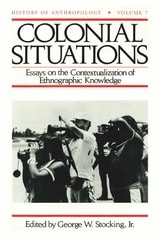
Colonial Situations
Essays on the Contextualization of Ethnographic KnowledgeEdited by George W. Stocking, Jr.
University of Wisconsin Press, 1993
As European colonies in Asia and Africa became independent nations, as the United States engaged in war in Southeast Asia and in covert operations in South America, anthropologists questioned their interactions with their subjects and worried about the political consequences of government-supported research. By 1970, some spoke of anthropology as “the child of Western imperialism” and as “scientific colonialism.” Ironically, as the link between anthropology and colonialism became more widely accepted within the discipline, serious interest in examining the history of anthropology in colonial contexts diminished.
This volume is an effort to initiate a critical historical consideration of the varying “colonial situations” in which (and out of which) ethnographic knowledge essential to anthropology has been produced. The essays comment on ethnographic work from the middle of the nineteenth century to nearly the end of the twentieth, in regions from Oceania through southeast Asia, the Andaman Islands, and southern Africa to North and South America.
The “colonial situations” also cover a broad range, from first contact through the establishment of colonial power, from District Officer administrations through white settler regimes, from internal colonialism to international mandates, from early “pacification” to wars of colonial liberation, from the expropriation of land to the defense of ecology. The motivations and responses of the anthropologists discussed are equally varied: the romantic resistance of Maclay and the complicity of Kubary in early colonialism; Malinowski’s salesmanship of academic anthropology; Speck’s advocacy of Indian land rights; Schneider’s grappling with the ambiguities of rapport; and Turner’s facilitation of Kaiapo cinematic activism.
“Provides fresh insights for those who care about the history of science in general and that of anthropology in particular, and a valuable reference for professionals and graduate students.”—Choice
“Among the most distinguished publications in anthropology, as well as in the history of social sciences.”—George Marcus, Anthropologica
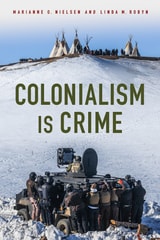
Colonialism Is Crime
Marianne Nielsen
Rutgers University Press, 2019
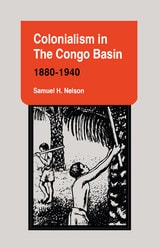
Colonialism in the Congo Basin, 1880–1940
Samuel H. Nelson
Ohio University Press, 1993
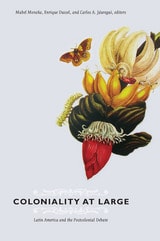
Coloniality at Large
Latin America and the Postcolonial DebateMabel Moraña, Enrique Dussel, and Carlos A. Jáuregui, eds.
Duke University Press, 2008
Written by internationally renowned scholars based in Latin America, the United States, and Europe, the essays reflect multiple disciplinary and ideological perspectives. Some are translated into English for the first time. The collection includes theoretical reflections, literary criticism, and historical and ethnographic case studies focused on Ecuador, Guatemala, Mexico, Brazil, the Andes, and the Caribbean. Contributors examine the relation of Marxist thought, dependency theory, and liberation theology to Latin Americans’ experience of and resistance to coloniality, and they emphasize the critique of Occidentalism and modernity as central to any understanding of the colonial project. Analyzing the many ways that Latin Americans have resisted imperialism and sought emancipation and sovereignty over several centuries, they delve into topics including violence, identity, otherness, memory, heterogeneity, and language. Contributors also explore Latin American intellectuals’ ambivalence about, or objections to, the “post” in postcolonial; to many, globalization and neoliberalism are the contemporary guises of colonialism in Latin America.
Contributors: Arturo Arias, Gordon Brotherston, Santiago Castro-Gómez, Sara Castro-Klaren, Amaryll Chanady, Fernando Coronil, Román de la Campa, Enrique Dussel, Ramón Grosfoguel, Russell G. Hamilton, Peter Hulme, Carlos A. Jáuregui, Michael Löwy, Nelson Maldonado-Torres, José Antonio Mazzotti, Eduardo Mendieta, Walter D. Mignolo, Mario Roberto Morales, Mabel Moraña, Mary Louise Pratt, Aníbal Quijano, José Rabasa, Elzbieta Sklodowska, Catherine E. Walsh
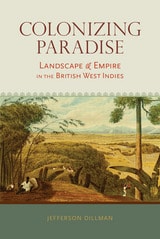
Colonizing Paradise
Landscape and Empire in the British West IndiesJefferson Dillman
University of Alabama Press, 2015
Explores how perceptions and depictions of the physical landscape both reflected and influenced the history of the British colonial Caribbean
In Colonizing Paradise, historian Jefferson Dillman charts the broad spectrum of sentiments that British citizens and travelers held regarding their colonial possessions in the West Indies. Myriad fine degrees of ambivalence separated extreme views of the region as an idyllic archipelago or a nest of Satanic entrapments. Dillman shows the manner in which these authentic or spontaneous depictions of the environment were shaped to form a narrative that undergirded Britain’s economic and political aims in the region.
Because British sentiments in the Caribbean located danger and evil not just in indigenous populations but in Spanish Catholics as well, Dillman’s work begins with the arrival of Spanish explorers and conquistadors. Colonizing Paradise spans the arrival of English ships and continues through the early nineteenth century and the colonial era. Dillman shows how colonial entrepreneurs, travelers, and settlers engaged in a disquieted dialogue with the landscape itself, a dialogue the examination of which sheds fresh light on the culture of the Anglophone colonial Caribbean.
Of particular note are the numerous mythical, metaphorical, and biblical lenses through which Caribbean landscapes were viewed, from early views of the Caribbean landscape as a New World paradise to later depictions of the landscape as a battleground between the forces of Christ and Satan. The ideal of an Edenic landscape persisted, but largely, Dillman argues, as one that needed to be wrested from the forces of darkness, principally through the work of colonization, planting, cataloguing, and a rational ordering of the environment.
Ultimately, although planters and their allies continued to promote pastoral and picturesque views of the Caribbean landscape, the goal of such narratives was to rationalize British rule as well as to mask and obscure emerging West Indian problems such as diseases, slavery, and rebellions. Colonizing Paradise offers much to readers interested in Caribbean, British, and colonial history.
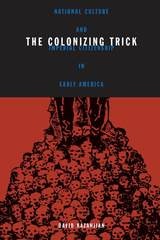
Colonizing Trick
National Culture And Imperial Citizenship In Early AmericaDavid Kazanjian
University of Minnesota Press, 2003
An illuminating look at the concepts of race, nation, and equality in eighteenth- and nineteenth-century America
The idea that “all men are created equal” is as close to a universal tenet as exists in American history. In this hard-hitting book, David Kazanjian interrogates this tenet, exploring transformative flash points in early America when the belief in equality came into contact with seemingly contrary ideas about race and nation. The Colonizing Trick depicts early America as a white settler colony in the process of becoming an empire-—one deeply integrated with Euro-American political economy, imperial ventures in North America and Africa, and pan-American racial formations.
Kazanjian traces tensions between universal equality and racial or national particularity through theoretically informed critical readings of a wide range of texts: the political writings of David Walker and Maria Stewart, the narratives of black mariners, economic treatises, the personal letters of Thomas Jefferson and Phillis Wheatley, Charles Brockden Brown’s fiction, congressional tariff debates, international treaties, and popular novelettes about the U.S.–Mexico War and the Yucatán’s Caste War. Kazanjian shows how emergent racial and national formations do not contradict universalist egalitarianism; rather, they rearticulate it, making equality at once restricted, formal, abstract, and materially embodied.
Constructing the Pluriverse
The Geopolitics of KnowledgeBernd Reiter, editor
Duke University Press, 2018
Contributors. Zaid Ahmad, Manuela Boatcă, Hans-Jürgen Burchardt, Raewyn Connell, Arturo Escobar, Sandra Harding, Ehsan Kashfi, Venu Mehta, Walter D. Mignolo, Ulrich Oslender, Issiaka Ouattara, Bernd Reiter, Manu Samnotra, Catherine E. Walsh, Aram Ziai

Counter-Colonial Criminology
A Critique of Imperialist ReasonBiko Agozino
Pluto Press, 2003
He looks at how radical critiques of mainstream criminology by critical feminist and postmodernist thinkers contribute to an understanding of the relationship between colonial experience and criminology. But he also shows that even critical feminist and postmodernist assessments of conventional criminology do not go far enough as they remain virtually silent on colonial issues.
Biko Agozino considers African and other postcolonial literature and contributions to counter colonial criminology, their originality, relevance and limitations. Finally he advocates a “committed objectivity” approach to race-class-gender criminology investigations in order to come to terms with imperialistic and neo-colonialist criminology.
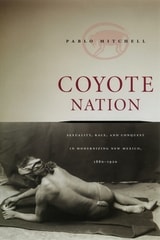
Coyote Nation
Sexuality, Race, and Conquest in Modernizing New Mexico, 1880-1920Pablo Mitchell
University of Chicago Press, 2005
Coyote Nation considers these questions as it explores how New Mexicans evaluated and categorized racial identities through bodily practices. Where ethnic groups were numerous and—in the wake of miscegenation—often difficult to discern, the ways one dressed, bathed, spoke, gestured, or even stood were largely instrumental in conveying one's race. Even such practices as cutting one's hair, shopping, drinking alcohol, or embalming a deceased loved one could inextricably link a person to a very specific racial identity.
A fascinating history of an extraordinarily plural and polyglot region, Coyote Nation will be of value to historians of race and ethnicity in American culture.
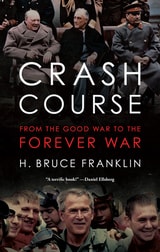
Crash Course
From the Good War to the Forever WarFranklin, H. Bruce
Rutgers University Press, 2024
Now, after fifty years as a renowned cultural historian, Franklin offers a set of hard-learned lessons about modern American history. Crash Course is essential reading for anyone who wonders how America ended up where it is today: with a deeply divided and disillusioned populace, led by a dysfunctional government, and mired in unwinnable wars. It also finds startling parallels between America’s foreign military exploits and the equally brutal tactics used on the home front to crush organized labor, antiwar, and civil rights movements.
More than just a memoir or a history book, Crash Course gives readers a unique firsthand look at the building of the American empire and the damage it has wrought. Shocking and gripping as any thriller, it exposes the endless deception of the American public, and reveals from inside how and why many millions of Americans have been struggling for decades against our own government in a fight for peace and justice.
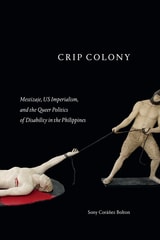
Crip Colony
Mestizaje, US Imperialism, and the Queer Politics of Disability in the PhilippinesSony Coráñez Bolton
Duke University Press, 2023
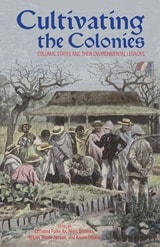
Cultivating the Colonies
Colonial States and their Environmental LegaciesChristina Folke Ax
Ohio University Press, 2011
The essays collected in Cultivating the Colonies demonstrate how the relationship between colonial power and nature revealsthe nature of power. Each essay explores how colonial governments translated ideas about the management of exoticnature and foreign people into practice, and how they literally “got their hands dirty” in the business of empire.
The eleven essays include studies of animal husbandry in the Philippines, farming in Indochina, and indigenous medicine in India. They are global in scope, ranging from the Russian North to Mozambique, examining the consequences of colonialismon nature, including its impact on animals, fisheries, farmlands, medical practices, and even the diets of indigenouspeople.
Cultivating the Colonies establishes beyond all possible doubt the importance of the environment as a locus for studyingthe power of the colonial state.
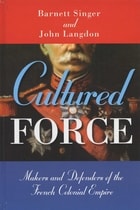
Cultured Force
Makers and Defenders of the French Colonial EmpireBarnett Singer and John Langdon
University of Wisconsin Press, 2008

Cultures of United States Imperialism
Amy Kaplan and Donald Pease, editors
Duke University Press, 1994
Drawing on a broad range of interpretive practices, these essays range across American history, from European representations of the New World to the mass media spectacle of the Persian Gulf War. The volume breaks down the boundary between the study of foreign relations and American culture to examine imperialism as an internal process of cultural appropriation and as an external struggle over international power. The contributors explore how the politics of continental and international expansion, conquest, and resistance have shaped the history of American culture just as much as the cultures of those it has dominated. By uncovering the dialectical relationship between American cultures and international relations, this collection demonstrates the necessity of analyzing imperialism as a political or economic process inseparable from the social relations and cultural representations of gender, race, ethnicity, and class at home.
Contributors. Lynda Boose, Mary Yoko Brannen, Bill Brown, William Cain, Eric Cheyfitz, Vicente Diaz, Frederick Errington, Kevin Gaines, Deborah Gewertz, Donna Haraway, Susan Jeffords, Myra Jehlen, Amy Kaplan, Eric Lott, Walter Benn Michaels, Donald E. Pease, Vicente Rafael, Michael Rogin, José David Saldívar, Richard Slotkin, Doris Sommer, Gauri Viswanathan, Priscilla Wald, Kenneth Warren, Christopher P. Wilson