Results by title
456 books match the query 'India' and 35 start with c
CASE 3.2A SAMRIDH Blended Finance Facility
Accelerating Pandemic Responseand Building Equitable Health Systems in India (A)Archita Adlakha, Neeta Rao, Achin B. N. Biyani, Ritika Pandey, and Sudheer Nadipally
Brandeis University Press, 2024
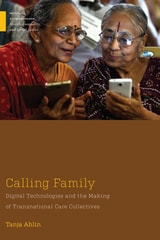
Calling Family
Digital Technologies and the Making of Transnational Care CollectivesTanja Ahlin
Rutgers University Press, 2023
This book is also freely available online as an open access digital edition. The open access publication was financially supported by the Social Science Research Master and partly also by the Health, Care and the Body Programme Group of the Department of Anthropology, both at the Amsterdam Institute of Social Science Research, University of Amsterdam.

Camera Indica
The Social Life of Indian PhotographsChristopher Pinney
University of Chicago Press, 1997
These quiet but moving images represent the changing role of photographic portraiture in India, a topic anthropologist Christopher Pinney explores in Camera Indica. Studying photographic practice in India, Pinney traces photography's various purposes and goals from colonial through postcolonial times. He identifies three key periods in Indian portraiture: the use of photography under British rule as a quantifiable instrument of measurement, the later role of portraiture in moral instruction, and the current visual popular culture and its effects on modes of picturing. Photographic culture thus becomes a mutable realm in which capturing likeness is only part of the project. Lavishly illustrated, Pinney's account of the change from depiction to invention uncovers fascinating links between these evocative images and the society and history from which they emerge.

Capital, Interrupted
Agrarian Development and the Politics of Work in IndiaVinay Gidwani
University of Minnesota Press, 2008
The central Gujarat region of western India is home to the entrepreneurial landowning Patel caste who have leveraged their rural dominance to become a powerful global diaspora of merchants, industrialists, and professionals. Investigating the Patels’ intriguing ascent, Vinay Gidwani analyzes its broad implications for the nature of labor and capital worldwide.
With the Patels as his central case, Gidwani interrogates established concepts of value, development, and the relationship between capital and history. Capitalism, he argues, is not a frame of economic organization based on the smooth, consistent operation of a series of laws, but rather an assemblage of contingent and interrupted logics stitched together into the appearance of a deus ex machina. Following this line of thinking, Gidwani points to ways in which political economy might be freed of its lingering Eurocentrism, raises questions about the adequacy of postcolonial studies’ critique of Marx and capitalism, and opens the possibility of situating capitalism as a geographically uneven social formation in which different normative or value-creating practices are imperfectly sutured together in ways that can equally impair and enable profit and accumulation.
Both theoretically astute and empirically informed, Capital, Interrupted unsettles encrusted understandings of staple concepts within the human sciences such as hegemony, governmentality, caste, and agency and, ultimately, does nothing less than rethink the very constitution of capitalism.
Vinay Gidwani is associate professor of geography and global studies at the University of Minnesota.
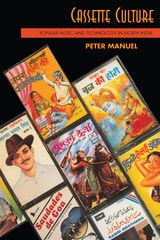
Cassette Culture
Popular Music and Technology in North IndiaPeter Manuel
University of Chicago Press, 1993
Manuel shows that the cassette revolution, however, has brought new contradictions and problems to Indian culture. While inexpensive cassettes revitalized local subcultures and community values throughout the subcontinent, they were also a vehicle for regional and political factionalism, new forms of commercial vulgarity, and, disturbingly, the most provocative sorts of hate-mongering and religious chauvinism.
Cassette Culture is the first scholarly account of Indian popular music and the first case study of a technological revolution now occurring throughout the world. It will be an essential resource for anyone interested in modern India, communications theory, world popular music, or contemporary global culture.
Caste, Country, and Creed
Struggles for Social Justice in the Contemporary Indian DiasporaNisha Thapliyal
Rutgers University Press, 2026
What happens when ancient systems of oppression travel across oceans? How do Indian diaspora communities across five nations challenge centuries-old systems of oppression while building new forms of solidarity? Caste, Country, and Creed: Struggles for Social Justice in the Contemporary Indian Diaspora takes readers inside the dynamic world of contemporary social justice activism spanning Aotearoa New Zealand, Australia, Canada, the United States, and the United Kingdom.
This groundbreaking collection brings together the voices of artists, activists, and scholar-activists who are reshaping conversations about caste discrimination, Islamophobia, and Hindu nationalism beyond India's borders. Through intimate first-person accounts and critical reflections, contributors reveal how diaspora activists are creating powerful counter-narratives and mobilizing collective resistance across local and transnational networks.
The book documents the lived realities of organizing—the values, knowledge traditions, and pivotal moments that spark political protest. Caste, Country, and Creed shows how activists construct alternative knowledge to dissent, build solidarity, and inspire political participation. Contributors offer nuanced insights into the complex relationships and power dynamics that sustain collective action for social justice in the Indian diaspora.
For copyright reasons, this edition is not for sale in India.
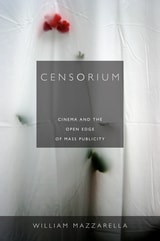
Censorium
Cinema and the Open Edge of Mass PublicityWilliam Mazzarella
Duke University Press, 2013
At the intersection of anthropology, media studies, and critical theory, Censorium is a pathbreaking analysis of Indian film censorship. The book encompasses two moments of moral panic: the consolidation of the cinema in the 1910s and 1920s, and the global avalanche of images unleashed by liberalization since the early 1990s. Exploring breaks and continuities in film censorship across colonial and postcolonial moments, William Mazzarella argues that the censors' obsessive focus on the unacceptable content of certain images and the unruly behavior of particular audiences displaces a problem that they constantly confront yet cannot directly acknowledge: the volatile relation between mass affect and collective meaning. Grounded in a close analysis of cinema regulation in the world's largest democracy, Censorium ultimately brings light to the elusive foundations of political and cultural sovereignty in mass-mediated societies.
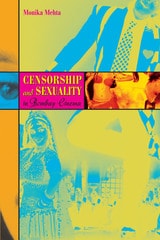
Censorship and Sexuality in Bombay Cinema
By Monika Mehta
University of Texas Press, 2011
India produces an impressive number of films each year in a variety of languages. Here, Monika Mehta breaks new ground by analyzing Hindi films and exploring the censorship of gender and heterosexuality in Bombay cinema. She studies how film censorship on various levels makes the female body and female sexuality pivotal in constructing national identity, not just through the films themselves but also through the heated debates that occur in newspapers and other periodicals. The standard claim is that the state dictates censorship and various prohibitions, but Mehta explores how relationships among the state, the film industry, and the public illuminate censorship's role in identity formation, while also examining how desire, profits, and corruption are generated through the act of censoring.
Committed to extending a feminist critique of mass culture in the global south, Mehta situates the story of censorship in a broad social context and traces the intriguing ways in which the heated debates on sexuality in Bombay cinema actually produce the very forms of sexuality they claim to regulate. She imagines afresh the theoretical field of censorship by combining textual analysis, archival research, and qualitative fieldwork. Her analysis reveals how central concepts of film studies, such as stardom, spectacle, genre, and sound, are employed and (re)configured within the ambit of state censorship, thereby expanding the scope of their application and impact.
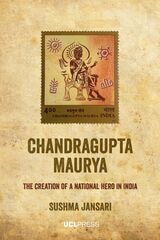
Chandragupta Maurya
The Creation of a National Hero in IndiaSushma Jansari
University College London, 2023
The writing and reception of history fundamentally influence how we engage with the past, and nowhere is that more clear than in the rise from obscurity of Chandragupta Maurya (350–295 BCE), the first emperor of the Mauryan Empire. The key moment in the transformation of Chandragupta into a contemporary national icon was a peace-making meeting between Chandragupta and Seleucus, founder of the Seleucid empire and one of Alexander the Great’s generals. But no reliable account exists in early sources, and it is not even clear which ruler was victorious in battle. That uncertainty enabled British and Indian historians of the nineteenth and twentieth centuries to interpret the sources in radically different ways. With Chandragupta representing India and Seleucus standing in for Britain, British scholars argued that Seleucus defeated Chandragupta, while Indian academics contended the opposite. In India, the image of Chandragupta as an idealized hero who vanquished the foreign invader has prevailed and found expression in contemporary popular culture. In plays, films, television series, comic books, and historical novels, Chandragupta is the powerful and virtuous Hindu ruler par excellence. Sushma Jansari shows how that transformation came about and points out the lessons we can learn from it for understanding other historical figures.
Change and the Persistence of Tradition in India
Five LecturesRichard L. Park, Editor
University of Michigan Press, 1971
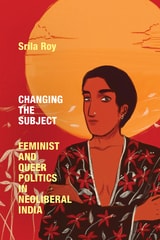
Changing the Subject
Feminist and Queer Politics in Neoliberal IndiaSrila Roy
Duke University Press, 2022
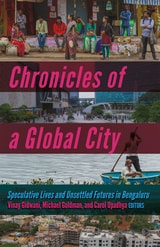
Chronicles of a Global City
Speculative Lives and Unsettled Futures in BengaluruVinay Gidwani
University of Minnesota Press, 2024
Tracking Bengaluru’s dramatic urban transformation through the entanglements of finance, land frenzy, real estate volatility, and livelihood upheavals
Over the past two decades, Bengaluru’s exploding real estate sector and massive infrastructure investments have led to land speculation targeting working-class neighborhoods and agricultural land for development. Chronicles of a Global City turns Bengaluru inside out to examine its “world-city” transformation that stimulated rapid urbanization and unbounded growth. Moving the spotlight away from the urban elites and “new middle class,” this book explores how people caught up in the whirlwinds of change in Bengaluru—from construction laborers, street vendors, domestic workers, and platform delivery workers to small-time property brokers, petty landlords, and local politicians—experience, struggle, aspire, invent, strive, and speculate to make a livable city for themselves.
Grounded in long-term ethnographic research and activist experiences, Chronicles of a Global City vividly illuminates the multifaceted entanglements of finance capital, real estate markets, livelihood struggles, and fraying ecologies in urban and peri-urban Bengaluru. Its anchoring concept, “speculative urbanism,” provides a powerful, innovative lens for understanding the risk-laden practices of leveraging land, labor, and resources for the promise of future profit.
Contributors: Hemangini Gupta, Pierre Hauser, Priyanka Krishna, Eesha Kunduri, Kaveri Medappa, Usha Rao, Shaheen Shasa, Swathi Shivanand, Vinay K. Sreenivasa.

Cinema India
The Visual Culture of Hindi FilmRachel Dwyer and Divia Patel
Rutgers University Press, 2002
The economic influence of advertising in actually determining film content and the dissemination of its imagery are also discussed. Film studies scholars recently have begun to investigate advertising in the film industry and this book makes an important contribution to this emerging subfield in its engagement with Indian cinema and the impact of advertising on the culture at large.
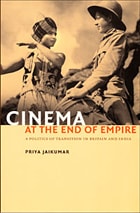
Cinema at the End of Empire
A Politics of Transition in Britain and IndiaPriya Jaikumar
Duke University Press, 2006
In addition to close readings of British and Indian films of the late colonial era, Jaikumar draws on a wealth of historical and archival material, including parliamentary proceedings, state-sponsored investigations into colonial filmmaking, trade journals, and intra- and intergovernmental memos regarding cinema. Her wide-ranging interpretations of British film policies, British initiatives in colonial film markets, and genres such as the Indian mythological film and the British empire melodrama reveal how popular film styles and controversial film regulations in these politically linked territories reconfigured imperial relations. With its innovative examination of the colonial film archive, this richly illustrated book presents a new way to track historical change through cinema.
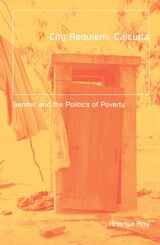
City Requiem, Calcutta
Gender And The Politics Of PovertyAnanya Roy
University of Minnesota Press, 2002
Uses Calcutta as a site for the exploration of persistent structures of deprivation and want.
Housing developments emerge amid the paddy fields on the fringes of Calcutta; overflowing trains carry peasant women to informal urban labor markets in a daily commute against hunger; land is settled and claimed in a complex choreography of squatting and evictions: such, Ananya Roy contends, are the distinctive spaces of a communism for the new millennium-where, at a moment of liberalization, the hegemony of poverty is quietly reproduced. An ethnography of urban development in Calcutta, Roy’s book explores the dynamics of class and gender in the persistence of poverty.
City Requiem, Calcutta emphasizes how gender itself is spatialized and how gender relations are negotiated through the everyday practices of territory. Thus Roy shows how urban developmentalism, in its populist guise, reproduces the relations of masculinist patronage, and, in its entrepreneurial guise, seeks to reclaim a bourgeois Calcutta, gentlemanly in its nostalgias. In doing so, her work expands the field of poverty studies by showing how a politics of poverty is also a poverty of knowledge, a construction and management of social and spatial categories.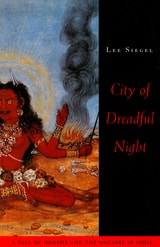
City of Dreadful Night
A Tale of Horror and the Macabre in IndiaLee Siegel
University of Chicago Press, 1995
But what started out as a study of other people's stories became a compelling story itself. City of Dreadful Night is an astonishing work of fiction, a tangle of tales that transports the reader from the Medieval India of magicians, witches, and vampires, through the British India of Brahm Kathuwala's childhood, into the chaos and political terror of contemporary India. Vividly recreating Indian literary and oral traditions, Siegel weaves a web of possession, reincarnation, and magical transformation unlike any found in the Western tradition. Flesh-eating demons, Rajiv Gandhi's assassin, even Bram Stoker and Dracula populate the serpentine narrative, which intermingles stories about the characters with the terrifying tales they tell.
Siegel pursues Brahm Kathuwala from the ghastly lights of the cremation ground at Banaras through villages all over north India. Brahm's life story is revealed through countless tales along the way. We learn that he was raised, and abandoned, by two mothers—one the destitute floor sweeper who bore him; the other her employer, a wealthy Irish woman who read and reread to him the story of Dracula. We hear of his marriage to the daughter of a cremation ground attendant, his battles against her demonic possession, and their painful parting. We come to understand the daily life and motivations of this "horror professional," who uses terrifying tales to ward off the evil he himself fears.
This unorthodox book is more than a story; it blends scholarship, fantasy, travelogue, and autobiography—fusing and overlapping historical accounts and newscasts, literary texts and films, dreams and nocturnal tales. Siegel uses imagination to explore the relation of real terror to horror fiction and to contemplate the ways fear and disgust become thrilling elements in stories of the macabre.
This book is the product of Siegel's deep knowledge of both Indian and Western literary and philosophical traditions. It is also an attempt to come to grips with the omnipresence of political and religious terror in contemporary India. Shocking, original, beautifully written, City of Dreadful Night offers readers a captivating immersion in the wonder and terror of India, past and present.
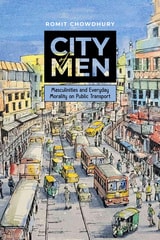
City of Men
Masculinities and Everyday Morality on Public TransportRomit Chowdhury
Rutgers University Press, 2023
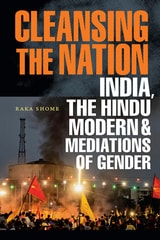
Cleansing the Nation
India, the Hindu Modern, and Mediations of GenderRaka Shome
Duke University Press, 2025
Clothing Matters
Dress and Identity in IndiaEmma Tarlo
University of Chicago Press, 1996
Clothes have been used to assert power, challenge authority, and instigate social change throughout Indian society. During the struggle for independence, members of the Indian elite incorporated elements of Western style into their clothes, while Gandhi's adoption of the loincloth symbolized the rejection of European power and the contrast between Indian poverty and British wealth. Similar tensions are played out today, with urban Indians adopting "ethnic" dress as villagers seek modern fashions.
Illustrated with photographs, satirical drawings, and magazine advertisements, this book shows how individuals and groups play with history and culture as they decide what to wear.
Codes of Misconduct
Regulating Prostitution in Late Colonial BombayAshwini Tambe
University of Minnesota Press, 2009
Against the backdrop of the industrial growth of Bombay, Codes of Misconduct examines the relationship between lawmaking, law enforcement, and sexual commerce. Ashwini Tambe challenges linear readings of how laws create effects and demonstrates that the regulation and criminalization of prostitution were not contrasting approaches to prostitution but different modes of state coercion. By analyzing legal prohibitions as productive forces, she also probes the pornographic imagination of the colonial state, showing how regulations made sexual commerce more visible but rendered the prostitute silent.
Codes of Misconduct engages with debates on state control of sex work and traces how a colonial legacy influences contemporary efforts to contain the spread of HIV and decriminalize sex workers in India today. In doing so, Tambe’s work not only adds to our understanding of empire, sexuality, and the law, it also sheds new light on the long history of Bombay’s transnational links and the social worlds of its underclasses.
Colonial Power, Colonial Texts
India in the Modern British NovelM. Keith Booker
University of Michigan Press, 1997
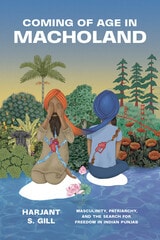
Coming of Age in Macholand
Masculinity, Patriarchy, and the Search for Freedom in Indian PunjabHarjant S. Gill
University of Chicago Press, 2026
Through Punjabi men’s struggles to marry, migrate, love, and escape, Coming of Age in Macholand reveals what patriarchy costs the men it promises to empower.
In 2019, Sandeep, a twenty-seven-year-old from a Punjabi family, killed five relatives and himself after a date was set for his wedding. His suicide note described feeling trapped by social expectations and condemned to a life he had not chosen. Harjant S. Gill recognized something unsettling in his story. Gill grew up in Punjab as the eldest grandson of a Sikh patriarch before immigrating to California as a teenager. Although he built an openly gay life in Washington, DC, he returned to the closet for safety while researching in India, even as his grandfather sought a “suitable” bride for him. Gill could refuse marriage and return to America, but many men he met had no easy exit. What happens when patriarchy promises men power while denying them the freedom to choose who they will become?
Coming of Age in Macholand explores how young men respond to patriarchy—submitting, rebelling, escaping, and sometimes coming undone. Drawing on research spanning a decade, Gill enters the worlds of Punjabi boys learning to become men, where masculinity is shaped through violence yet sustained by emotional bonds. Amid political upheaval, a faltering agrarian economy, and migration hollowing out Punjab’s villages, this book portrays men struggling for power while losing intimacy and control over their lives. Blending memoir, ethnography, and social investigation, Gill exposes a system that brutalizes women and queer people while constricting the men it claims to serve. At a moment when men feel angry, lonely, and adrift, this book asks what they must relinquish—and reclaim—to become truly free.
Complex Rivalry
The Dynamics of India-Pakistan ConflictSurinder Mohan
University of Michigan Press, 2022
While a substantial body of research explains how the conflict between India and Pakistan originated and developed over time, a systematic and multivariate inquiry cutting across different IR paradigms to understand this rivalry is rare or limited. Surinder Mohan contributes to the understanding of India and Pakistan’s rivalry by presenting a new type of framework, also known as complex rivalry model. This comprehensive model, by not limiting its theoretical tool-kit to any single paradigm, is unique in its approach and better positioned to debate and answer baffling questions that the single-paradigm-based studies address rather inadequately and in isolation.
This book, through an examination of fifty-seven militarized disputes between 1947 and 2021, explains the life cycle of India-Pakistan rivalry in four phases: initiation; development; maintenance; and a possible transformation/termination. Mohan delineates five specific conditions that evolved the subcontinental conflict into a complex rivalry: first, its survival in spite of the Bangladesh War and the end of the Cold War; second, its linkage with other rivalries; third, the inclusion of nuclear factor; fourth, the dyadic stability in the militarized disputes and hostility level despite changes in the regime type; and fifth, the dyad’s involvement in a multilayered conflict pattern. To break this deadlock and mitigate their longstanding differences, Mohan proposes that India and Pakistan must reframe their national priorities and political goals so that the new situation or combinations of conditions would assist their peace strategists to downgrade the dyadic hostility and implement risky policies to make headway to a promising transformation.
Composing Violence
The Limits of Exposure and the Making of MinoritiesMoyukh Chatterjee
Duke University Press, 2023
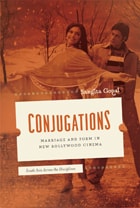
Conjugations
Marriage and Form in New Bollywood CinemaSangita Gopal
University of Chicago Press, 2011
Bollywood movies have been long known for their colorful song-and-dance numbers and knack for combining drama, comedy, action-adventure, and music. But when India entered the global marketplace in the early 1990s, its film industry transformed radically. Production and distribution of films became regulated, advertising and marketing created a largely middle-class audience, and films began to fit into genres like science fiction and horror. In this bold study of what she names New Bollywood, Sangita Gopal contends that the key to understanding these changes is to analyze films’ evolving treatment of romantic relationships.
Conquest and Community
The Afterlife of Warrior Saint Ghazi MiyanShahid Amin
University of Chicago Press, 2016
Conquest and Community is Shahid Amin's answer. Covering more than eight hundred years of history, the book centers on the enduringly popular saint Ghazi Miyan, a youthful soldier of Islam whose shrines are found all over India. Amin details the warrior saint’s legendary exploits, then tracks the many ways he has been commemorated in the centuries since. The intriguing stories, ballads, and proverbs that grew up around Ghazi Miyan were, Amin shows, a way of domesticating the conquest—recognizing past conflicts and differences but nevertheless bringing diverse groups together into a community of devotees. What seems at first glance to be the story of one mythical figure becomes an allegory for the history of Hindu-Muslim relations over an astonishingly long period of time, and a timely contribution to current political and historical debates.
Consuming Modernity
Public Culture in a South Asian WorldCarol A. Breckenridge
University of Minnesota Press, 1995
Consuming Modernity illustrates that what is distinctive of any particular society is not the fact of its modernity, but rather its own unique debates about modernity. Behind the embattled arena of culture in India, for example, lie particular social and political interests such as the growing middle class; the entrepreneurs and commercial institutions; and the state.
The contributors address the roles of these various intertwined interests in the making of India's public culture, each examining different sites of consumption. The sites they explore include cinema, radio, cricket, restaurants, and tourism. Consuming Modernity also makes clear the differences among public, mass, and popular culture.Contributors include Arjun Appadurai, University of Chicago; Frank F. Conlon, University of Washington; Sara Dickey, Bowdoin College; Paul Greenough, University of Iowa; David Lelyveld, Columbia University; Barbara N. Ramusack, University of Cincinnati; Rosie Thomas, University of Westminster; and Phillip B. Zarrilli, University of Wisconsin, Madison.Contrasting Styles of Industrial Reform
China and India in the 1980sGeorge Rosen
University of Chicago Press, 1992
For economists, the two countries offer an interesting test case for examining similar reform programs launched from disparate political and economic systems. For policymakers concerned with the region's stability, a clear view of the economic futures of these two major powers is paramount.
Examining and comparing the reform experiences of China and India up to the present, George Rosen shows that although China enacted more sweeping reform measures and produced more impressive local growth, it also experienced more significant inflationary spurts. Two-thirds of each nation's population was involved in agriculture at the start of the reform period and nearly that many at the conclusion. Ultimately, the effects of the past industrial reforms in both countries in terms of significantly greater industrial employment or well-being of their populations were limited. An important lesson in these findings, argues Rosen, is that they actually reveal more about the political factors that limit and shape economic policy reforms in a dictatorship or democracy than they confirm the virtues of either capitalism or communism.
Cookstove Chronicles
Social Life of a Women’s Technology in IndiaMeena R. Khandelwal
University of Arizona Press, 2024
Based on anthropological research in Rajasthan, Cookstove Chronicles argues that the supposedly obsolete chulha persists because it offers women control over the tools needed to feed their families. Their continued use of old stoves alongside the new is not a failure to embrace new technologies but instead a strategy to maximize flexibility and autonomy. The chulha is neither the villain nor hero of this story. It produces particulate matter that harms people’s bodies, leaves soot on utensils and walls, and accelerates glacial melting and atmospheric warming. Yet it also depends on renewable biomass fuel and supports women’s autonomy as a local, do-it-yourself technology.
Meena Khandelwal, a feminist anthropologist, describes her collaboration with engineers, archaeologists, and others. She employs critical social theory and reflections from fieldwork to bring together research from a range of fields, including history, geography, anthropology, energy and environmental studies, public health, and science and technology studies (STS). In so doing she not only demystifies multidisciplinary research but also highlights the messy reality of actual behavior.
Cookstove Chronicles critically examines why, despite extensive development efforts, use of the chulha persists. It offers an important new framework for looking at development, technology, environmental change, and human behavior.

Crooked Cats
Beastly Encounters in the AnthropoceneNayanika Mathur
University of Chicago Press, 2021
There are many theories on why and how a big cat comes to prey on humans, with the ecological collapse emerging as a central explanatory factor. Yet, uncertainty over the precise cause of crookedness persists. Crooked Cats explores in vivid detail the many lived complexities that arise from this absence of certain knowledge to offer startling new insights into both the governance of nonhuman animals and their intimate entanglements with humans. Through creative ethnographic storytelling, Crooked Cats illuminates the Anthropocene in three critical ways: as method, as a way of reframing human-nonhuman relations on the planet, and as a political tool indicating the urgency of academic engagement. Weaving together “beastly tales” spun from encounters with big cats, Mathur deepens our understanding of the causes, consequences, and conceptualization of the climate crisis.
Crooked Stalks
Cultivating Virtue in South IndiaAnand Pandian
Duke University Press, 2009
In vivid, inventive, and engaging prose, Pandian weaves together ethnographic encounters, archival investigations, and elements drawn from Tamil poetry, prose, and popular cinema. Tacking deftly between ploughed soils and plundered orchards, schoolroom lessons and stationhouse registers, household hearths and riverine dams, he reveals moral life in the postcolonial present as a palimpsest of traces inherited from multiple pasts. Pursuing these legacies through the fragmentary play of desire, dream, slander, and counsel, Pandian calls attention not only to the moral potential of ordinary existence, but also to the inescapable force of accident, chance, and failure in the making of ethical lives. Rarely are the moral coordinates of modern power sketched with such intimacy and delicacy.
Crossing the Border to India
Youth, Migration, and Masculinities in NepalJeevan R. Sharma
Temple University Press, 2018
Given the limited economic opportunities in rural Nepal, the desire of young men of all income and education levels, castes and ethnicities to migrate has never been higher. Crossing the Border to India provides an ethnography of male labor migration from the western hills of Nepal to Indian cities. Jeevan Sharma shows how a migrant’s livelihood and gender, as well as structural violence impacts his perceptions, experiences, and aspirations.
Based on long-term fieldwork, Sharma captures the actual experiences of crossing the border. He shows that Nepali migration to India does not just allow young men from poorer backgrounds to “save there and eat here,” but also offers a strategy to escape the more regimented social order of the village. Additionally, migrants may benefit from the opportunities offered by the “open-border” between India and Nepal to attain independence and experience a distant world. However, Nepali migrants are subjected to high levels of ill treatment. Thus, while the idea of freedom remains extremely important in Nepali men’s migration decisions, their actual experience is often met with unfreedom and suffering.

Cultivating Development
An Ethnography of Aid Policy and PracticeDavid Mosse
Pluto Press, 2005
Development agencies and researchers are preoccupied with policy; with exerting influence over policy, linking research to policy and with implementing policy around the world.
But what if development practice is not driven by policy? Suppose that the things that make for 'good policy' - policy that legitimises and mobilises political support - in reality make it impossible to implement?
By focusing in detail on the unfolding activities of a development project in western India over more than ten years, as it falls under different policy regimes, this book takes a close look at the relationship between policy and practice in development.
David Mosse shows how the actions of development workers are shaped by the exigencies of organisations and the need to maintain relationships rather than by policy; but also that development actors work hardest of all to maintain coherent representations of their actions as instances of authorised policy. Raising unfamiliar questions, Mosse provides a rare self-critical reflection on practice, while refusing to endorse current post-modern dismissal of development.
Cultivating Knowledge
Biotechnology, Sustainability, and the Human Cost of Cotton Capitalism in IndiaAndrew Flachs
University of Arizona Press, 2019
In Cultivating Knowledge anthropologist Andrew Flachs shows how rural farmers come to plant genetically modified or certified organic cotton, sometimes during moments of agrarian crisis. Interweaving ethnographic detail, discussions of ecological knowledge, and deep history, Flachs uncovers the unintended consequences of new technologies, which offer great benefits to some—but at others’ expense. Flachs shows that farmers do not make simple cost-benefit analyses when evaluating new technologies and options. Their evaluation of development is a complex and shifting calculation of social meaning, performance, economics, and personal aspiration. Only by understanding this complicated nexus can we begin to understand sustainable agriculture.
By comparing the experiences of farmers engaged with these mutually exclusive visions for the future of agriculture, Cultivating Knowledge investigates the human responses to global agrarian change. It illuminates the local impact of global changes: the slow, persistent dangers of pesticides, inequalities in rural life, the aspirations of people who grow fibers sent around the world, the place of ecological knowledge in modern agriculture, and even the complex threat of suicide. It all begins with a seed.
Cultivating Livability
Food, Class, and the Urban Future in BengaluruCamille Frazier
University of Minnesota Press, 2024
What urban food networks reveal about middle class livability in times of transformation
In recent years, the concept of “livability” has captured the global imagination, influencing discussions about the implications of climate change on human life and inspiring rankings of “most livable cities” in popular publications. But what really makes for a livable life, and for whom?
Cultivating Livability takes Bengaluru, India, as a case study—a city that is alternately described as India’s most and least livable megacity, where rapid transformation is undergirded by inequalities evident in the food networks connecting peri-urban farmers and the middle-class public. Anthropologist Camille Frazier probes the meaning of “livability” in Bengaluru through ethnographic work among producers and consumers, corporate intermediaries and urban information technology professionals.
Examining the varying efforts to reconfigure processes of food production, distribution, retail, and consumption, she reveals how these intersections are often rooted in and exacerbate ongoing forms of disenfranchisement that privilege some lives at the expense of others.