Results by title
338 books match the query 'Indigenous Studies' and 21 start with c
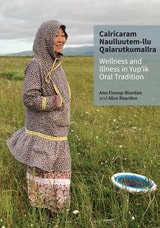
Calricaram Naulluutem-llu Qanrutkumallra / Wellness and Illness in Yup'ik Oral Tradition
Ann Fienup-Riordan
University of Alaska Press, 2027
Calricaram Naulluutem-llu Qanrutkumallra / Wellness and Illness in Yup’ik Oral Tradition brings together stories and information shared by more than a hundred Yup’ik tradition bearers over more than thirty years. Recorded during elder gatherings hosted by the Calista Elders Council beginning in 1997 and, since 2014, by Calista Education and Culture, the book passes on the words of wisdom that will remain enduring parts of these elders’ legacy.
Combining recent recordings with material from earlier gatherings, the narratives address various aspects of personal and community health: how people talk about sickness and health, traditional foods, qanruyutet (oral instructions) for living a healthy life, medicinal plants, medicinal uses of bodily fluids, ailments and treatments, traditional healing techniques, caring for those who are sick, mental health and mental illness, and epidemics.
Calricaram Naulluutem-llu Qanrutkumallra / Wellness and Illness in Yup’ik Oral Tradition invites readers to listen to these elders to better understand past practices and how they can contribute to a healthier future for all.
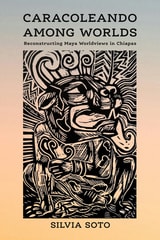
Caracoleando Among Worlds
Reconstructing Maya Worldviews in ChiapasSilvia Soto
University of Arizona Press, 2024
This shared vision emerges in Caracoleando Among Worlds, which provides an in-depth analysis of poetry, short stories, and one of the first novels written by a Maya Tsotsil writer of Chiapas alongside close readings of the EZLN’s six declarations of the Lacandon Jungle. Themes echoing ancestral connections, informing epistemologies, and sustaining cultural and spiritual practices emerge and weave the texts to each other. The work brings into the conversation literature that has been translated into English for the first time and places Maya writers of Chiapas in discussion with other Native American and Indigenous scholars.
This work shows how literature, culture, and activism intertwine, and offers a compelling narrative that transcends boundaries and fosters a deeper understanding of Maya identities and resilience.
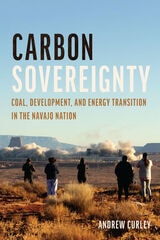
Carbon Sovereignty
Coal, Development, and Energy Transition in the Navajo NationAndrew Curley
University of Arizona Press, 2023
This comprehensive new work offers a deep dive into the complex inner workings of energy shift in the Navajo Nation. Geographer Andrew Curley, a member of the Navajo Nation, examines the history of coal development within the Navajo Nation, including why some Diné supported coal and the consequences of doing so. He explains the Navajo Nation’s strategic choices to use the coal industry to support its sovereignty as a path forward in the face of ongoing colonialism. Carbon Sovereignty demonstrates the mechanism of capitalism through colonialism and the construction of resource sovereignty, in both the Navajo Nation’s embrace and its rejection of a coal economy.
For the people of the Navajo Nation, energy sovereignty is dire and personal. Thanks to on-the-ground interviews with Diné coal workers, environmental activists, and politicians, Curley documents the real consequences of change as they happened. While some Navajo actors have doubled down for coal, others have moved toward transition. Curley argues that political struggles ultimately shape how we should understand coal, capitalism, and climate change. The rise and fall of coal magnify the nuance and complexity of change. Historical and contemporary issues intermingle in everyday life with lasting consequences.
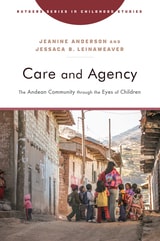
Care and Agency
The Andean Community through the Eyes of ChildrenJeanine Anderson
Rutgers University Press, 2025
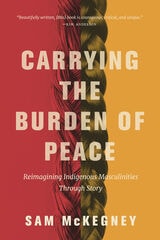
Carrying the Burden of Peace
Reimagining Indigenous Masculinities Through StorySam McKegney
University of Arizona Press, 2021
Sam McKegney answers affirmatively. Countering the perception that masculinity has been so contaminated as to be irredeemable, the book explores Indigenous literary art for understandings of masculinity that exceed the impoverished inheritance of colonialism.
Carrying the Burden of Peace weaves together stories of Indigenous life, love, eroticism, pain, and joy to map the contours of diverse, empowered, and non-dominant Indigenous masculinities. It is from here that a more balanced world may be pursued.

Caste War Now and Never
Unreading Gender, Race, and Land in YucatánS. B. West
University of Arizona Press, 2026
In Caste War Now and Never scholar S. B. West considers Yucatán’s nineteenth-century Caste War, the longest and most violent Indigenous uprising of the Western Hemisphere, to argue that it actually never occurred.
Instead, West writes that the violent events grouped under the “Caste War” label must be understood through alternative frameworks that resist the emergent logics of race war and include related regulatory matrices like gender and land. Through this lens, the Caste War emerges as a discursive construct rooted in an anti-Indigenous archive that served the political interests of a frustrated regional elite during the rise of liberalism and nationhood. West argues that Caste War discourse unfolds as a technology that mobilized and legitimized genocidal actions against racialized rebels and inspired assimilation into hegemonic political and social structures.
In the second half of the book, West looks at the Caste War to engage its contemporary polysemic nature through close readings of Yucatec Maya texts, stories, and other forms of knowledge production. These sources reframe the Caste War as an important part of a framework of resistance that defies colonial time and reclaims narrative control of its events.
Caste War Now and Never captures how Maya communities understand the conflict as ongoing and demonstrates that although the Caste War never occurred as such, it continues to endure presently.
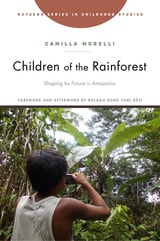
Children of the Rainforest
Shaping the Future in AmazoniaCamilla Morelli
Rutgers University Press, 2023
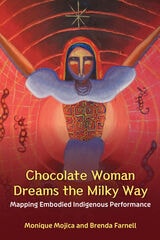
Chocolate Woman Dreams the Milky Way
Mapping Embodied Indigenous PerformanceMonique Mojica and Brenda Farnell
University of Michigan Press, 2023
Co-authored with anthropologist Brenda Farnell, the book challenges the divide between artist and scholar, and addresses the many levels of cultural, disciplinary, and linguistic translations required to achieve this. Placing the complex intellect inherent to Indigenous Knowledges at its center, the book engages Indigenous performance theory, and concepts that link body, land, and story, such as terra nullius/corpus nullius, mapping, pattern literacy, land literacy, and movement literacy. Enhanced by contributions from other artists and scholars, the book challenges Eurocentric ideologies about what counts as “performance” and what is required from an “audience,” as well as long-standing body-mind dualisms.
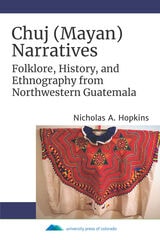
Chuj (Mayan) Narratives
Folklore, History, and Ethnography from Northwestern GuatemalaNicholas A. Hopkins
University Press of Colorado, 2020
The book illustrates the broad range of stories people tell each other, from mythological and legendary topics to procedural discussions and stories borrowed from European and African societies. Hopkins provides context for the narratives by introducing the reader to Chuj culture and history, conveying important events as described by indigenous participants. These events include customs and practices related to salt production as well as the beginnings of the disastrous civil war of the last century, which resulted in the destruction of several villages from which the narratives in this study originated. Hopkins also provides an analytical framework for the strategies of the storytellers and presents the narratives with Chuj text and English translation side-by-side.
Chuj (Mayan) Narratives analyzes the strategies of storytelling in an innovative framework applicable to other corpora and includes sufficient grammatical information to function as an introduction to the Chuj language. The stories illustrate the persistence of Classic Maya themes in contemporary folk literature, making the book significant to Mesoamericanists and Mayanists and an essential resource for students and scholars of Maya linguistics and literary traditions, storytelling, and folklore.
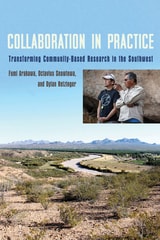
Collaboration in Practice
Transforming Community-Based Research in the SouthwestFumi Arakawa, Octavius Seowtewa, and Dylan Retzinger
University of Arizona Press, 2026
The book situates this collaboration within the broader historical and political context of archaeology and museology. It critically explores how museums and academic institutions can shift from extractive practices to ones that prioritize Indigenous sovereignty, knowledge systems, and cultural continuity. Through personal narratives, historical context, and methodological insights, the authors highlight the challenges and transformative potential of working collaboratively. They show how true collaboration requires humility, mutual respect, and a commitment to shared authority in both research and representation.
Ultimately, this work charts a path forward for community-based research that centers Indigenous voices and values. It advocates for an archaeology that is not only more inclusive but also more meaningful to the communities whose histories are being studied. A vital resource for scholars, students, and practitioners, this work seeks to engage in ethical, reciprocal, and culturally grounded research in the Southwest and beyond.
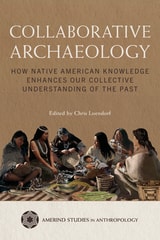
Collaborative Archaeology
How Native American Knowledge Enhances Our Collective Understanding of the PastEdited by Chris Loendorf
University of Arizona Press, 2026
Collaborative Archaeology brings together a diverse group of scholars and tribal cultural resource professionals to showcase how Indigenous knowledge is transforming archaeological practice. Edited by Chris Loendorf, this volume features twelve case studies that highlight the power of partnership between Native American communities and archaeologists. These collaborations not only enrich our understanding of the past but also affirm Indigenous cultural continuity. From the establishment of Tribal Historic Preservation Offices to tribally led research initiatives, the book illustrates how Native voices are reshaping the field.
This timely collection bridges disciplinary divides between archaeology, history, and traditional knowledge, challenging outdated narratives that separate “prehistory” from living Indigenous communities. Contributors demonstrate how ethical, community-based research can lead to more accurate and respectful interpretations of the past. Collaborative Archaeology is essential reading for scholars, students, and practitioners committed to scientific understanding and cultural preservation.
Contributors
Nicole Armstrong-Best
Skylar Begay
Jennifer Bess
Hannah F. Chavez
Robert B. Ciaccio
Shannon Cowell
William H. Doelle
Karl A. Hoerig
Anabel Galindo
Barnaby V. Lewis
Chris Loendorf
Brian Medchill
Linda Morgan
Laurene G. Montero
Stephen E. Nash
Eloise Pedro
Glen E. Rice
Teresa Rodrigues
Hoski Schaafsma
Thomas E. Sheridan
Katrina Soke
Lindsey Vogel-Teeter
Anastasia Walhovd
Reylynne Williams
M. Kyle Woodson
Aaron M. Wright
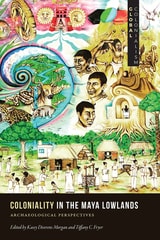
Coloniality in the Maya Lowlands
Archaeological Perspectivesedited by Kasey Diserens Morgan &Tiffany C. Fryer
University Press of Colorado, 2022
The work takes a hemispheric approach to the historical and material analysis of colonialism, bridging the often disparate literatures on coloniality and settler colonialism. Archaeologists and anthropologists working in what are today southeastern Mexico, Belize, Guatemala, and Honduras grapple with the material realities of coloniality at a regional level. They provide sustained discussions of Maya experiences with wide-ranging colonial endurances: violence, resource insecurity, land rights, refugees, the control of borders, the movement of contraband, surveillance, individual and collective agency, consumption, and use of historic resources.
Considering a future for historical archaeologies of the Maya region that bridges anthropology, ethnohistory, Indigenous studies, settler colonial studies, and Latin American studies, Coloniality in the Maya Lowlands presents a new understanding of how ways of being in the Maya world have formed and changed over time, as well as the shared investments of historical archaeologists and sociocultural anthropologists working in the Maya region.
Contributors: Fernando Armstrong-Fumero, Alejandra Badillo Sánchez, Adolfo Iván Batún Alpuche, A. Brooke Bonorden, Maia C. Dedrick, Scott L. Fedick, Fior García Lara, John Gust, Brett A. Houk, Rosemary A. Joyce, Gertrude B. Kilgore, Jennifer P. Mathews, Patricia A. McAnany, James W. Meierhoff, Fabián A. Olán de la Cruz, Julie K. Wesp
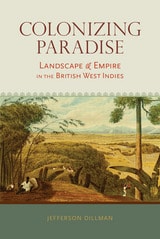
Colonizing Paradise
Landscape and Empire in the British West IndiesJefferson Dillman
University of Alabama Press, 2015
Explores how perceptions and depictions of the physical landscape both reflected and influenced the history of the British colonial Caribbean
In Colonizing Paradise, historian Jefferson Dillman charts the broad spectrum of sentiments that British citizens and travelers held regarding their colonial possessions in the West Indies. Myriad fine degrees of ambivalence separated extreme views of the region as an idyllic archipelago or a nest of Satanic entrapments. Dillman shows the manner in which these authentic or spontaneous depictions of the environment were shaped to form a narrative that undergirded Britain’s economic and political aims in the region.
Because British sentiments in the Caribbean located danger and evil not just in indigenous populations but in Spanish Catholics as well, Dillman’s work begins with the arrival of Spanish explorers and conquistadors. Colonizing Paradise spans the arrival of English ships and continues through the early nineteenth century and the colonial era. Dillman shows how colonial entrepreneurs, travelers, and settlers engaged in a disquieted dialogue with the landscape itself, a dialogue the examination of which sheds fresh light on the culture of the Anglophone colonial Caribbean.
Of particular note are the numerous mythical, metaphorical, and biblical lenses through which Caribbean landscapes were viewed, from early views of the Caribbean landscape as a New World paradise to later depictions of the landscape as a battleground between the forces of Christ and Satan. The ideal of an Edenic landscape persisted, but largely, Dillman argues, as one that needed to be wrested from the forces of darkness, principally through the work of colonization, planting, cataloguing, and a rational ordering of the environment.
Ultimately, although planters and their allies continued to promote pastoral and picturesque views of the Caribbean landscape, the goal of such narratives was to rationalize British rule as well as to mask and obscure emerging West Indian problems such as diseases, slavery, and rebellions. Colonizing Paradise offers much to readers interested in Caribbean, British, and colonial history.
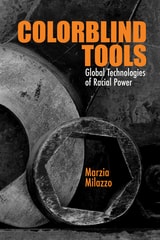
Colorblind Tools
Global Technologies of Racial PowerMarzia Milazzo
Northwestern University Press, 2023
Winner of the 2023 Association for Ethnic Studies Outstanding Book Award
A study of anti-Blackness and white supremacy across four continents demonstrates that colorblindness is neither new nor a subtype of racist ideology, but a constitutive technology of racism
In Colorblind Tools, Marzia Milazzo offers a transnational account of anti-Blackness and white supremacy that pushes against the dominant emphasis on historical change pervading current racial theory. This emphasis on change, she contends, misses critical lessons from the past.
Bringing together a capacious archive of texts on race produced in Brazil, Cuba, Mexico, Panama, the United States, and South Africa from multiple disciplines and genres, Milazzo uncovers transnational continuities in structural racism and white supremacist discourse from the inception of colonial modernity to the present. In the process, she traces the global workings of what she calls colorblind tools: technologies and strategies that at once camouflage and reproduce white domination. Whether examining Rijno van der Riet’s defense of slavery in the Cape Colony, discourses of racial mixture in Latin American eugenics and their reverberations in contemporary scholarship, the pitfalls of white “antiracism,” or Chicana indigenist aesthetics, Milazzo illustrates how white people collectively disavow racism to maintain power across national boundaries, and how anti-Black and colonial logics can be reproduced even in some decolonial literatures. Milazzo’s groundbreaking study proves that colorblindness is not new, nor is it a subtype of racist ideology or a hallmark of our era. It is a constitutive technology of racism—a tool the master cannot do without.
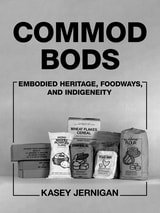
Commod Bods
Embodied Heritage, Foodways, and IndigeneityKasey Jernigan
University of Arizona Press, 2026
The term “commod bod” is used with humor and affection. It also offers a critical way to describe bodies shaped by long-term reliance on U.S. federal commodity food programs.
In Commod Bods, Kasey Jernigan shares her ongoing collaborative research with Choctaw women and describes the ways that shifting patterns of participation in food and nutrition assistance programs (commodity foods) have shaped foodways; how these foodways are linked to bodies and health, particularly “obesity” and related conditions; and how foodways and bodies are intertwined with settler colonialism and experiences of structural violence, identity making, and heritage in the Choctaw Nation of Oklahoma.
Organized thematically, the book moves from a critical history of obesity and health in Indian Country to narratives of Choctaw women navigating food, memory, and belonging. Chapters such as “Food and Fellowship” and “Heritage, Embodied” center personal stories that show how food is not only sustenance but also a site of connection, resistance, and meaning making.
Food is critical to cultural survival and affirmation. For Choctaw people, the intentional demise of traditional foodways and dependence on federal food programs are specific experiences that inform part of what it means to be Choctaw today.
Confronting Colonial Legacies
A History of Chicana/o Indigeneities and Transnational ActivismJosé Luis Serrano Nájera
University of Arizona Press, 2026
This work offers a groundbreaking account of how Chicana/o activists have engaged in sustained efforts to reclaim Indigenous identity through political struggle, cultural expression, and transnational solidarity.
Author José Luis Serrano Nájera takes an in-depth look at the history of Chicana/o indigeneity, starting with the Chicana/o Movement of the 1960s and 1970s and through twenty-first century transnational activism and solidarity movements. Serrano Nájera reveals how claims to indigeneity were rooted in reciprocal relationships with Indigenous communities and driven by a shared commitment to decolonization. Through chapters on visual and performing arts, ceremony, education, and grassroots organizing, this book challenges reductive narratives of cultural appropriation and instead foregrounds the complex and historically grounded nature of Chicana/o indigeneity.
Drawing on extensive archival research, Serrano Nájera demonstrates how Chicana/o indigeneity has contributed to broader Indigenous rights movements, including efforts that culminated in the 2007 United Nations Declaration on the Rights of Indigenous Peoples. This work highlights the intercontinental dimensions of Chicana/o activism and offers a vital source for scholars and students in Chicana/o studies, Indigenous studies, ethnic studies, history, and political science. Confronting Colonial Legacies is a compelling call to rethink the politics of identity, sovereignty, and solidarity across the Americas.
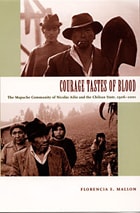
Courage Tastes of Blood
The Mapuche Community of Nicolás Ailío and the Chilean State, 1906-2001Florencia E. Mallon
Duke University Press, 2005
Mallon recounts the land usurpation Nicolás Ailío endured in the first decades of the twentieth century and the community’s ongoing struggle for restitution. Facing extreme poverty and inspired by the agrarian mobilizations of the 1960s, some community members participated in the agrarian reform under the government of socialist president Salvador Allende. With the military coup of 1973, they suffered repression and desperate impoverishment. Out of this turbulent period the Mapuche revitalization movement was born. What began as an effort to protest the privatization of community lands under the military dictatorship evolved into a broad movement for cultural and political recognition that continues to the present day. By providing the historical and local context for the emergence of the Mapuche revitalization movement, Courage Tastes of Blood offers a distinctive perspective on the evolution of Chilean democracy and its rupture with the military coup of 1973.
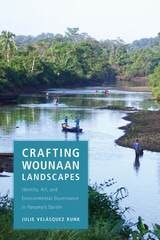
Crafting Wounaan Landscapes
Identity, Art, and Environmental Governance in Panama's DariénJulie Velásquez Runk
University of Arizona Press, 2017
Panama’s Darién is a name many conservationists know. Renowned for its lowland tropical forests, its fame is more pronounced because a road that should be there is not: environmentalists have repeatedly, and remarkably, blocked all attempts to connect the Americas via the Pan American Highway. That lacuna, that absence of a road, also serves to occlude history in the region as its old-growth forests give the erroneous impression of a peopleless nature.
In Crafting Wounaan Landscapes, Julie Velásquez Runk upends long-standing assumptions about the people that call Darién home, and she demonstrates the agency of the Wounaan people to make their living and preserve and transform their way of life in the face of continuous and tremendous change. Velásquez Runk focuses on Wounaan crafting—how their ability to subtly effect change has granted them resilience in a dynamic and globalized era. She theorizes that unpredictable landscapes, political decisions, and cultural beliefs are responsible for environmental conservation problems, and she unpacks environmental governance efforts that illustrate what happens when conservation is confronted with people in a purportedly peopleless place.
The everyday dangers of environmental governance without local crafting include logging, land grabbing, and loss of carbon in a new era of carbon governance in the face of climate change. Crafting Wounaan Landscapes provides recognition of local ways of knowing and being in the world that may be key to the future of conservation practice.
Critical Indigenous Studies
Engagements in First World LocationsEdited by Aileen Moreton-Robinson
University of Arizona Press, 2016
Aileen Moreton-Robinson’s introductory essay provides a context for the emerging discipline. The volume is organized into three sections: the first includes essays that interrogate the embedded nature of Indigenous studies within academic institutions; the second explores the epistemology of the discipline; and the third section is devoted to understanding the locales of critical inquiry and practice.
Each essay places and contemplates critical Indigenous studies within the context of First World nations, which continue to occupy Indigenous lands in the twenty-first century. The contributors include Aboriginal, Metis, Maori, Kanaka Maoli, Filipino-Pohnpeian, and Native American scholars working and writing through a shared legacy born of British and later U.S. imperialism. In these countries, critical Indigenous studies is flourishing and transitioning into a discipline, a knowledge/power domain where distinct work is produced, taught, researched, and disseminated by Indigenous scholars.
View the Table of Contents here.
Contributors:
Hokulani K. Aikau
Chris Andersen
Larissa Behrendt
Vicente M. Diaz
Noelani Goodyear Kaopua
Daniel Heath Justice
Brendan Hokowhitu
Aileen Moreton-Robinson
Jean M. O'Brien
Noenoe Silva
Kim Tallbear
Robert Warrior
Critically Sovereign
Indigenous Gender, Sexuality, and Feminist StudiesJoanne Barker, editor
Duke University Press, 2017
Contributors. Jodi A. Byrd, Joanne Barker, Jennifer Nez Denetdale, Mishuana Goeman, J. Kēhaulani Kauanui, Melissa K. Nelson, Jessica Bissett Perea, Mark Rifkin
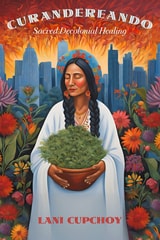
Curandereando
Sacred Decolonial HealingLani Cupchoy
University of Arizona Press, 2026
Curandereando: Sacred Decolonial Healing reclaims curanderismo as a living and revolutionary practice of ancestral wisdom, resilience, and renewal. Blending poetry, Spanglish storytelling, oral histories, and testimonios, this hybrid work illuminates healing as both a sacred tradition and a decolonial act of resistance.
The book traces curanderismo’s survival under colonial oppression, its adaptations across diasporas, and its vital role in addressing contemporary struggles for ecological balance, cultural survival, and social justice. By centering diverse healers and community voices, it resists folkloric portrayals and instead presents curanderismo as an evolving practice deeply relevant to today’s crises.
Accessible yet scholarly, Curandereando bridges sacred traditions with academic discourse, challenging Western medical dominance while offering holistic frameworks grounded in ancestral knowledge. This book is an essential resource for Chicana/o and Latina/o studies, ethnic studies, Indigenous studies, gender and sexuality studies, and environmental justice. It will also resonate with community healers, educators, and readers seeking decolonial approaches to wellness, spirituality, and cultural renewal.