Results by title
110 books match the query 'Individual Photographers' and 4 start with c
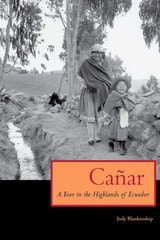
Cañar
A Year in the Highlands of EcuadorBy Judy Blankenship
University of Texas Press, 2005
Once isolated from the modern world in the heights of the Andean mountains, the indigenous communities of Ecuador now send migrants to New York City as readily as they celebrate festivals whose roots reach back to the pre-Columbian past. Fascinated by this blending of old and new and eager to make a record of traditional customs and rituals before they disappear entirely, photographer-journalist Judy Blankenship spent several years in Cañar, Ecuador, photographing the local people in their daily lives and conducting photography workshops to enable them to preserve their own visions of their culture. In this engaging book, Blankenship combines her sensitively observed photographs with an inviting text to tell the story of the most recent year she and her husband Michael spent living and working among the people of Cañar.
Very much a personal account of a community undergoing change, Cañar documents such activities as plantings and harvests, religious processions, a traditional wedding, healing ceremonies, a death and funeral, and a home birth with a native midwife. Along the way, Blankenship describes how she and Michael went from being outsiders only warily accepted in the community to becoming neighbors and even godparents to some of the local children. She also explains how outside forces, from Ecuador's failing economy to globalization, are disrupting the traditional lifeways of the Cañari as economic migration virtually empties highland communities of young people. Blankenship's words and photographs create a moving, intimate portrait of a people trying to balance the demands of the twenty-first century with the traditions that have formed their identity for centuries.

Cindy Sherman's Office Killer
Another Kind of MonsterDahlia Schweitzer
Intellect Books, 2014
The first book on this neglected piece of an esteemed artist’s oeuvre, Cindy Sherman’s “Office Killer” rescues the film from critical oblivion and situates it next to the artist’s other iconic works.
Cosmopolitics of the Camera
Albert Kahn's Archives of the PlanetEdited by Trond Erik Bjorli and Kjetil Ansgar Jakobsen
Intellect Books, 2020
The Archives of the Planet was one of a string of institutions for research and international cooperation established in Kahn’s utopian World Gardens near Paris. Some of the best-known minds of the age met there regularly to discuss the problem of how to make new media of communication serve the cause of peace and human development. Cosmopolitics of the Camera presents ten expert voices from seven different countries, studying the work of Kahn and his key collaborators, the geographer Jean Brunhes and the philosopher Henri Bergson, in the spirit of their culturally diverse venture, placing it in its proper historical and intellectual context, and exploring its ambitious achievements and failures. By pushing Kahn’s work back into active discussion, the analysis forces us to reflect on the ways our world is shaped and recorded by the media, and reactivates the time capsule that Kahn designed to communicate with the future.
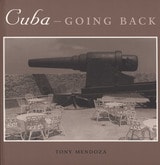
Cuba--Going Back
By Tony Mendoza
University of Texas Press, 1999
Imagine being unable to return to your homeland for thirty-six years. What would you do if you finally got a chance to go back?
In 1996, after travel restrictions between the United States and Cuba were relaxed, Cuban exile Tony Mendoza answered that question. Taking his cameras, notebooks, and an unquenchable curiosity, he returned for his first visit to Cuba since summer of 1960, when he emigrated with his family at age eighteen. In this book he presents over eighty evocative photographs accompanied by a beautifully written text that mingles the voices of many Cubans with his own to offer a compelling portrait of a resilient people awaiting the inevitable passing of the socialist system that has failed them.
His photographs and interviews bear striking witness to the hardships and inequalities that exist in this workers' "paradise," where the daily struggle to make ends meet on an average income of eight dollars a month has created a longing for change even in formerly ardent revolutionaries. At the same time, Cuba—Going Back is an eloquent record of a personal journey back in time and memory that will resonate with viewers and readers both within and beyond the Cuban American community. It belongs on the shelves of anyone who values excellent photography and well-crafted prose.