Results by title
65 books match the query 'Intercultural communication' and 9 start with c
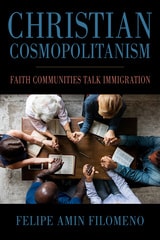
Christian Cosmopolitanism
Faith Communities Talk ImmigrationFelipe Amin Filomeno
Temple University Press, 2024
Christian Cosmopolitanism shows that mutual understanding can result when people share their personal stories, feelings, and thoughts about immigration. They reflect and deliberate on collaborative action to advance common interests and shared values, which can unleash the cosmopolitan potential of the Christian community.
Including practical tools for church leaders, Christian Cosmopolitanism promotes dialogue as a cultural practice that can help diverse communities overcome segregation and become socially cohesive.
Communicating with Brazilians
When "Yes" Means "No"By Tracy Novinger
University of Texas Press, 2004
Brazilians are gracious, friendly, fun-loving people, which makes their country a very inviting place to visit for pleasure or business. So great is their cordiality that Brazilians will say "yes" to almost any request—even when they actually mean "no"—which can be quite confusing for U.S. visitors who are used to a more direct style of communication. In fact, as Americans spend time in Brazil, they discover a number of cultural differences that can hamper their communication with Brazilians. To overcome these barriers, this book analyzes Brazilian culture and modes of communication and compares them with their American counterparts to help Americans learn to communicate successfully with Brazilians and vice versa.
To aid Americans in understanding the Brazilian perspective, Tracy Novinger presents a portrait of Brazil's history, racial fusion, economy, and contemporary lifestyles. She focuses in on many aspects of Brazilian culture, such as social organization and ranking systems; preconceptions, worldviews, and values; sexual behaviors and eating customs; thought patterns; nonverbal communication such as the use of time, space, gestures, touch, eye contact, rituals, etc.; and differences in Brazilian and American point-making styles when negotiating, persuading, and conversing. For quick reference, she concludes the book with a summary and checklist of the leading Brazilian cultural characteristics, as well as eight recommendations for enhancing intercultural communication.
Communication and the Human Condition
W. Barnett Pearce
Southern Illinois University Press, 1989
Starting with the premise that we live in communication (rather than standing outside communication and using it for secondary purposes), Pearce claims that people who live in various cultures and historical epochs not only communicate differently but experience different ways of being human because they communicate differently.
This century, he notes, ushered in the "communication revolution," the discovery that communication is far more important and central to the human condition than ever before realized. Essential to the communication revolution is the recognition that multiple forms of discourse exist in contemporary human society. Further, these forms of discourse are not benign; they comprise alternative ways of being human.
Thus communication theory must encompass all that it "means to live a life, the shape of social institutions and cultural traditions, the pragmatics of social action, and the poetics of social order."
Community Literacy and the Rhetoric of Public Engagement
Linda Flower
Southern Illinois University Press, 2008
Community Literacy and the Rhetoric of Public Engagement explores the critical practice of intercultural inquiry and rhetorical problem-solving that encourages urban writers and college mentors alike to take literate action. Author Linda Flower documents an innovative experiment in community literacy, the Community Literacy Center in Pittsburgh, and posits a powerful and distinctively rhetorical model of community engagement and pedagogy for both marginalized and privileged writers and speakers. In addition, she articulates a theory of local publics and explores the transformative potential of alternative discourses and counter-public performances.
In presenting a comprehensive pedagogy for literate action, the volume offers strategies for talking and collaborating across difference, forconducting an intercultural inquiry that draws out situated knowledge and rival interpretations of shared problems, and for writing and speaking to advocate for personal and public transformation. Flower describes the competing scripts for social engagement, empowerment, public deliberation, and agency that characterize the interdisciplinary debate over models of social engagement.
Extending the Community Literacy Center’s initial vision of community literacy first published a decade ago, Community Literacy and the Rhetoric of Public Engagement makes an important contribution to theoretical conversations about the nature of the public sphere while providing practical instruction in how all people can speak publicly for values and visions of change.
Winner, 2009 Rhetoric Society of America Book Award

Copy, Rip, Burn
The Politics of Copyleft and Open SourceDavid M. Berry
Pluto Press, 2008
From downloading music and movies to accessing free software, digital media is forcing us to rethink the very idea of intellectual property.
While big companies complain about lost profits, the individual has never enjoyed such freedom and autonomy.
Berry explores this debate in a concise way, offering an ideal introduction for anyone not versed in the legalistic terminology that -- up until now -- has dominated coverage of this issue.
Looking at the historical development of the free software and the open source movement he examines its growth, politics and potential impact, showing how the ideas that inspired the movement have now begun to influence the wider cultural landscape. He explores whether free software offers us the potential to re-think our relationship with technology in the information society.
This book will appeal to students of media and journalism, and anyone interested in new opportunities for creating a truly independent and democratic media.
Corporate Tribalism
White Men/White Women and Cultural Diversity at WorkThomas Kochman and Jean Mavrelis
University of Chicago Press, 2009
The 2008 elections shattered historical precedents and pushed race and gender back to the forefront of our national consciousness. The wide range of reactions to the efforts of Barack Obama, Hillary Clinton, and Sarah Palin dramatically reflected ongoing conflicts over diversity in our society, especially in the venue where people are most likely to encounter them: work. As more and more people who aren’t white men enter corporate America, we urgently need to learn how to avoid clashes over these issues and how to resolve them when they do occur.
Thomas Kochman and Jean Mavrelis have been helping corporations successfully do that for over twenty years. Their diversity training and consulting firm has helped managers and employees at numerous companies recognize and overcome the cultural bases of miscommunication between ethnic groups and across gender lines—and in Corporate Tribalism they seek to share their expertise with the world. In the first half of the book, Kochman addresses white men, explicating the ways that their cultural background can motivate their behavior, work style, and perspective on others. Then Mavrelis turns to white women, focusing on the particular problems they face, including conflicts with men, other women, and themselves. Together they emphasize the need for a multicultural—rather than homogenizing—approach and offer constructive ideas for turning the workplace into a more interactive community for everyone who works there.
Written with the wisdom and clarity gained from two decades of hands-on work, Corporate Tribalism will be an invaluable resource as we look toward a future beyond the glass ceiling.
Crossing Divides
Exploring Translingual Writing Pedagogies and ProgramsBruce Horner
Utah State University Press, 2017
Translingualism perceives the boundaries between languages as unstable and permeable; this creates a complex challenge for writing pedagogy. Writers shift actively among rhetorical strategies from multiple languages, sometimes importing lexical or discoursal tropes from one language into another to introduce an effect, solve a problem, or construct an identity. How to accommodate this reality while answering the charge to teach the conventions of one language can be a vexing problem for teachers. Crossing Divides offers diverse perspectives from leading scholars on the design and implementation of translingual writing pedagogies and programs.
The volume is divided into four parts. Part 1 outlines methods of theorizing translinguality in writing and teaching. Part 2 offers three accounts of translingual approaches to the teaching of writing in private and public colleges and universities in China, Korea, and the United States. In Part 3, contributors from four US institutions describe the challenges and strategies involved in designing and implementing a writing curriculum with a translingual approach. Finally, in Part 4, three scholars respond to the case studies and arguments of the preceding chapters and suggest ways in which writing teachers, scholars, and program administrators can develop translingual approaches within their own pedagogical settings.
Illustrated with concrete examples of teachers’ and program directors’ efforts in a variety of settings, as well as nuanced responses to these initiatives from eminent scholars of language difference in writing, Crossing Divides offers groundbreaking insight into translingual writing theory, practice, and reflection.
Contributors: Sara Alvarez, Patricia Bizzell, Suresh Canagarajah, Dylan Dryer, Chris Gallagher, Juan Guerra, Asao B. Inoue, William Lalicker, Thomas Lavelle, Eunjeong Lee, Jerry Lee, Katie Malcolm, Kate Mangelsdorf, Paige Mitchell, Matt Noonan, Shakil Rabbi, Ann Shivers-McNair, Christine M. Tardy
Cultural Misunderstandings
The French-American ExperienceRaymonde Carroll
University of Chicago Press, 1990
Raymonde Carroll presents an intriguing and thoughtful analysis of the many ways French and Americans—and indeed any members of different cultures—can misinterpret each other, even when ostensibly speaking the same language.Cultural misunderstandings, Carroll points out, can arise even where we least expect them—in our closest relationships. The revealing vignettes that Carroll relates, and her perceptive comments, bring to light some fundamental differences in French and American presuppositions about love, friendship, and raising children, as well as such everyday activities as using the telephone or asking for information.
Cultural Transmission and Material Culture
Breaking Down BoundariesEdited by Miriam T. Stark, Brenda J. Bowser, and Lee Horne
University of Arizona Press, 2008
Working in several subdisciplines, contributors report on research in the areas of cultural boundaries, cultural transmission, and the socially organized nature of learning. Boundaries are found not only within and between the societies in these studies but also within and between the communities of scholars who study them. To break down these boundaries, this volume includes scholars who use multiple theoretical perspectives, including practice theory and evolutionary traditions, which are sometimes complementary and occasionally clashing. Geographic coverage ranges from the indigenous Americas to Africa, the Near East, and South Asia, and the time frame extends from the prehistoric or precontact to colonial periods and up to the ethnographic present. Contributors include leading scholars from the United States, Canada, the United Kingdom, and Europe. Together, they employ archaeological, ethnographic, ethnoarchaeological,experimental, and simulation data to link micro-scale processes of cultural transmission to macro-scale processes of social group boundary formation, continuity, and change.