Results by title
328 books match the query 'Islam' and 19 start with c
Capital Cities of Arab Islam
Philip Hitti
University of Minnesota Press, 1973
Caucasus
A Journey to the Land between Christianity and IslamNicholas Griffin
University of Chicago Press, 2004
Delving deep into the Caucasus, Griffin transcends the headlines trumpeting Chechen insurgency to give the land and its conflicts dimension: evoking the weather, terrain, and geography alongside national traditions, religious affiliations, and personal legends as barriers to peaceful co-existence. In focusing his tale on Shamil while retracing his steps, Griffin compellingly demonstrates the way history repeats itself.
Cervantes in Algiers
A Captive's TaleMaria Antonia Garces
Vanderbilt University Press, 2005
No work has documented in such vivid and illuminating detail the socio-political world of sixteenth-century Algiers, Cervantes's life in the prison-house, his four escape attempts, and the conditions of his final ransom. Garces's portrait of a sophisticated multi-ethnic culture in Algiers, moreover, is likely to open up new discussions about early modern encounters between Christians and Muslims. By bringing together evidence from many different sources, historical and literary, Garces reconstructs the relations between Christians, Muslims, and renegades in a number of Cervantes's writings.
The idea that survivors of captivity need to repeat their story in order to survive (an insight invoked from Coleridge to Primo Levi to Dori Laub) explains not only Cervantes's storytelling but also the book that theorizes it so compellingly. As a former captive herself (a hostage of Colombian guerrillas), the author reads and listens to Cervantes with another ear.
Changing Masters
Spirit Possession and Identity Construction among the Descendants of Slaves in the SudanG.P. Makris
Northwestern University Press, 2000
Makris engages the tumbura devotees of the area of Greater Khartoum in an animated discussion of their understanding of themselves and their world. Using oral histories, songs associated with the various spirits, and accounts of ceremonies he witnessed, he shows tumbura to be a response to victimization first in slavery and later by subordination. It functions as a counterdiscourse challenging the dominant discourse of the ex-slaveholding classes and enables its practitioners to assert a separate, alternative identity. This assertion, embodied in the idiom of possession, is achieved through a continuous reworking of meaning as it is imparted by religion, descent, and historical consciousness.
Chapters on Marriage and Divorce
Responses of Ibn Hanbal and Ibn RahwayhTranslated with introduction and notes by Susan A. Spectorsky
University of Texas Press, 1993
While western-derived legal codes have superseded Islamic law in many parts of the Muslim world, Islamic, Koran-based law still retains its force in the area of marriage and family relations, the area that is key to the status of women. This work makes available for the first time in English three compilations of responses to questions about family law given by two prominent Muslim jurists of the ninth century (third century of Islam)—Ahmad b. Hanbal, the eponymous founder of the Hanbali rite of Sunni Islam (the one dominant in Saudi Arabia), and Ishaq b. Rahwayh. These compilations are basic sources for the study of the development of legal thinking in Islam.
The introduction to the translation locates the compilations in a historical context and elucidates how the various issues of family law are treated. An appendix contains a collation of the significant variants among the manuscripts and printed versions of the Arabic texts. The volume concludes with a topical index and an index of names.
Children in the Muslim Middle East
Edited by Elizabeth Warnock Fernea
University of Texas Press, 1995
Today nearly half of all people in the Middle East are under the age of fifteen. Yet little is known about the new generation of boys and girls who are growing up in a world vastly different from that of their parents, a generation who will be the leaders of tomorrow. This groundbreaking anthology is an attempt to look at the current situation of children by presenting materials by both Middle Eastern and Western scholars. Many of the works have been translated from Arabic, Persian, and French.
The forty-one pieces are organized into sections on the history of childhood, growing up, health, work, education, politics and war, and play and the arts. They are presented in many forms: essays in history and social science, poems, proverbs, lullabies, games, and short stories. Countries represented are Egypt, Jordan, Morocco, Tunisia, Israel/West Bank, Kuwait, Saudi Arabia, Iran, Iraq, Syria, Sudan, Lebanon, Turkey, Yemen, and Afghanistan.
This book complements Elizabeth Fernea's earlier works, Women and the Family in the Middle East and Middle Eastern Muslim Women Speak (coedited with Basima Bezirgan). Like them, it will be important reading for everyone interested in the Middle East and in women's and children's issues.
Chinese Ways of Being Muslim
Negotiating Ethnicity and Religiosity in IndonesiaHew Wai Weng
National University of Singapore Press, 2018

Christianity and Islam
The Struggling DialogueRichard Rousseau
University of Scranton Press, 1985
Christians and Muslims in Early Islamic Egypt
Lajos Berkes, Editor
University of Michigan Press, 2022
This volume collects studies exploring the relationship of Christians and Muslims in everyday life in Early Islamic Egypt (642–10th c.) focusing mainly, but not exclusively on administrative and social history. The contributions concentrate on the papyrological documentation preserved in Greek, Coptic, and Arabic. By doing so, this book transcends traditional disciplinary boundaries and offers results based on a holistic view of the documentary material. The articles of this volume discuss various aspects of change and continuity from Byzantine to Islamic Egypt and offer also the (re)edition of 23 papyrus documents in Greek, Coptic, and Arabic. The authors provide a showcase of recent papyrological research on this under-studied, but dynamically evolving field.
After an introduction by the editor of the volume that outlines the most important trends and developments of the period, the first two essays shed light on Egypt as part of the Caliphate. The following six articles, the bulk of the volume, deal with the interaction and involvement of the Egyptian population with the new Muslim administrative apparatus. The last three studies of the volume focus on naming practices and language change.
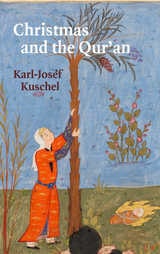
Christmas and the Qur'an
Karl-Josef Kuschel
Gingko, 2017
Christmas and the Qur’an is a sensitive and precise analysis of the Christmas story as it appears in the Gospels and the Qur’an. Karl-Josef Kuschel presents both scriptures in a convincing comparative exegesis and reveals startling similarities as well as significant differences. Kuschel explores how Christians and Muslims read these texts and reveals an intertwining legacy that serves as a base for greater understanding. Without leaving the realm of theology, Kuschel approaches his analysis in a theocentric way by emphasizing the shared belief that God is almighty, which, he argues, can act as a healing suture between Christianity and Islam. Christmas and the Qur’an gives the reader the chance to remember the message of hope that the birth of Jesus brings and invites to a dialogue between Muslims and Christians.
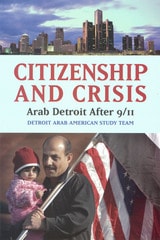
Citizenship and Crisis
Arab Detroit After 9/11Russell Sage Foundation, 2009
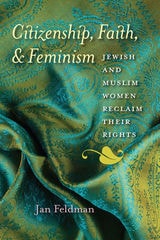
Citizenship, Faith, and Feminism
Jewish and Muslim Women Reclaim Their RightsJan Feldman
Brandeis University Press, 2011
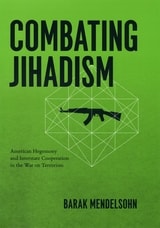
Combating Jihadism
American Hegemony and Interstate Cooperation in the War on TerrorismBarak Mendelsohn
University of Chicago Press, 2009
Comparing Muslim Societies
Knowledge and the State in a World CivilizationJuan R. I. Cole, Editor
University of Michigan Press, 1992
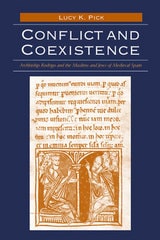
Conflict and Coexistence
Archbishop Rodrigo and the Muslims and Jews of Medieval SpainLucy K. Pick
University of Michigan Press, 2004
---J. N. Hillgarth, Professor Emeritus, University of Toronto
"By focusing on the diversified activities of the talented mid-thirteenth-century archbishop of Toledo, Lucy Pick brilliantly illuminates the complex relations between the Christian conquerors of Spain and the conquered Muslim and Jewish populations. Students of medieval Spain, of the medieval Roman Catholic Church, of medieval Muslims and Islam, and of medieval Jews and Judaism will benefit from this excellent study."
---Robert Chazan, New York University.
In Conflict and Coexistence, Lucy Pick sets out to explain how Christians, Muslims, and Jews lived alongside one another in medieval Spain. By examining the life and works of Rodrigo Jiménez de Rada, the Archbishop of Toledo (1209-47), Pick explains that the perceived threat of the non-Christian presence was managed through the subordination of Muslims and Jews.
Rodrigo stood at the center of a transformative period of history in the Iberian peninsula. During his long and varied career as archbishop, he acted as scholar, warrior, builder, and political leader. The wave of victories he helped initiate were instrumental in turning back the tide of Muslim attacks on Christian Spain and restarting the process of Christian territorial conquest. However, Toledo was still a multiethnic city in which Christians lived side by side with Jews and Muslims. As archbishop, he was faced with the considerable challenge of maintaining peace and prosperity in a city where religious passions and intolerance were a constant threat to stability.
This work seeks to examine Rodrigo's relations with the Muslims and Jews of his community both as he idealized them on paper and as he worked through them in real life. Though Rodrigo wrote an anti-Jewish polemic, and set out to conquer Muslim-held lands, he also used scholarly patronage and literary creation to combat internal and external, Christian and non-Christian threats alike. His intended and actual consequences of these varied techniques were to allow Christians, Muslims, and Jews to live together under Christian authority. Rodrigo was bound by practical necessity to find a means of accommodating these groups that was both effective and theologically satisfactory. Throughout this influential work, Pick examines the various aspects of Rodrigo's life and career that led to his policies and the consequences that his work and beliefs brought about in medieval Spain.
This book will be of interest to anyone who studies the history, religion, and literature of medieval Spain, to those interested in the transmission of learning from the Muslim to the Christian world, and to those who study intellectual life and development in medieval Europe.
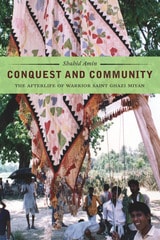
Conquest and Community
The Afterlife of Warrior Saint Ghazi MiyanShahid Amin
University of Chicago Press, 2016
Conquest and Community is Shahid Amin's answer. Covering more than eight hundred years of history, the book centers on the enduringly popular saint Ghazi Miyan, a youthful soldier of Islam whose shrines are found all over India. Amin details the warrior saint’s legendary exploits, then tracks the many ways he has been commemorated in the centuries since. The intriguing stories, ballads, and proverbs that grew up around Ghazi Miyan were, Amin shows, a way of domesticating the conquest—recognizing past conflicts and differences but nevertheless bringing diverse groups together into a community of devotees. What seems at first glance to be the story of one mythical figure becomes an allegory for the history of Hindu-Muslim relations over an astonishingly long period of time, and a timely contribution to current political and historical debates.
Covert Gestures
Crypto-Islamic Literature as Cultural Practice in Early Modern SpainVincent Barletta
University of Minnesota Press, 2005
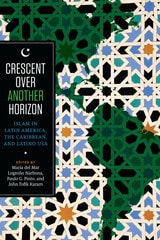
Crescent over Another Horizon
Islam in Latin America, the Caribbean, and Latino USAEdited by Maria del Mar Logroño Narbona, Paulo G. Pinto, and John Tofik Karam
University of Texas Press, 2015
Muslims have been shaping the Americas and the Caribbean for more than five hundred years, yet this interplay is frequently overlooked or misconstrued. Brimming with revelations that synthesize area and ethnic studies, Crescent over Another Horizon presents a portrait of Islam’s unity as it evolved through plural formulations of identity, power, and belonging. Offering a Latino American perspective on a wider Islamic world, the editors overturn the conventional perception of Muslim communities in the New World, arguing that their characterization as “minorities” obscures the interplay of ethnicity and religion that continues to foster transnational ties.
Bringing together studies of Iberian colonists, enslaved Africans, indentured South Asians, migrant Arabs, and Latino and Latin American converts, the volume captures the power-laden processes at work in religious conversion or resistance. Throughout each analysis—spanning times of inquisition, conquest, repressive nationalism, and anti-terror security protocols—the authors offer innovative frameworks to probe the ways in which racialized Islam has facilitated the building of new national identities while fostering a double-edged marginalization. The subjects of the essays transition from imperialism (with studies of morisco converts to Christianity, West African slave uprisings, and Muslim and Hindu South Asian indentured laborers in Dutch Suriname) to the contemporary Muslim presence in Argentina, Brazil, Mexico, and Trinidad, completed by a timely examination of the United States, including Muslim communities in “Hispanicized” South Florida and the agency of Latina conversion. The result is a fresh perspective that opens new horizons for a vibrant range of fields.
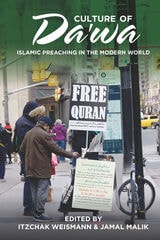
Culture of Da'wa
Preaching in the Modern WorldEdited by Itzchak Weismann and Jamil Malik
University of Utah Press, 2020
This book provides the first in-depth, wide-scope treatment of da’wa. A term difficult to translate, da’wa covers a semantic field ranging from the call or invitation to Islam, to religious preaching and proselytizing, to the mission and message of Islam. Historically da’wa has been directed outward to nonbelievers, but in modern times it has turned increasingly inward to “straying” Muslims. While the media and many scholars have focused on extremism and militant groups that have raised the banner of jihad, this volume argues that da’wa, not jihad, forms the backbone of modern Islamic politics and religiosity, and that the study of da’wa is essential for understanding contemporary Islamic politics as well as jihadist activity. Contributors represent a variety of approaches and come from a range of academic, religious, and national backgrounds. In these essays, they analyze the major discourses of da’wa, their embodiment in the major Islamic movements of the twentieth century, and their transformation into new forms of activism through the media, the state, and jihadi groups—including al-Qaeda and ISIS—in the twenty-first century.