356 books match the query 'Jewish Studies' and 17 start with c
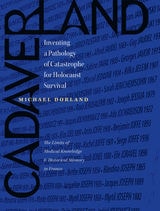
cover of Cadaverland: Inventing a Pathology of Catastrophe for Holocaust Survival [The Limits of Medical Knowledge and Historical Memory in France]

Cadaverland

Inventing a Pathology of Catastrophe for Holocaust Survival [The Limits of Medical Knowledge and Historical Memory in France]

Michael Dorland

Brandeis University Press, 2009
In this extraordinary study, Michael Dorland explores sixty years of medical attempts by French doctors (mainly in the fields of neuropsychiatry and psychoanalysis) to describe the effects of concentration camp incarceration on Holocaust survivors. Dorland begins with a discussion of the liberation of concentration camp survivors, their stay in deportation camps, and eventual return to France, analyzing the circulation of mainly medical (neuropsychiatric) knowledge, its struggles to establish a symptomology of camp effects, and its broadening out into connected medical fields such as psychoanalysis. He then turns specifically to the French medical doctors who studied Holocaust survivors, and he investigates somatic, psychological, and holistic conceptions of survivors as patients and human beings. The final third of the book offers a comparative look at the “psy-science” approach to Holocaust survival beyond France, particularly in the United States and Israel. He illuminates the peculiar journey of a medical discourse that began in France but took on new forms elsewhere, eventually expanding into nonmedical fields to create the basis of the “traumato-culture” with which we are familiar today. Embedding his analysis of different medical discourses in the sociopolitical history of France in the twentieth century, he also looks at the French Jewish Question as it affected French medicine, the effects of five years of Nazi Occupation, France’s enthusiastic collaboration, and the problems this would pose for postwar collective memory.
[more]
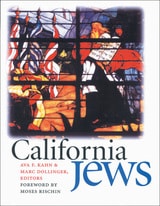
cover of California Jews

California Jews

Edited by Ava F. Kahn and Marc Dollinger

Brandeis University Press, 2011
The nation’s thirty-first state emerged early as one of its most diverse as people immigrated to the west. California’s indigenous tribes were forced off their lands first by Spanish settlers, then by the arrival of gold miners from every corner of the world. Because of its Catholic missionary history, Gold Rush California did not experience a more exclusive eastern-style Protestantism. This permitted more rapid and inclusive acculturation. California Jews, unlike their eastern counterparts whose arrival often followed that of European Protestants, were often among the first settlers to establish a west coast community. Jewish immigrants to California took advantage of its physical environment, ethnic diversity, and cultural distinctiveness to fashion a form of Judaism unique in the American experience. California Jews enjoyed unprecedented access to political power a generation earlier than their New York counterparts. They thrived in the multicultural mix, redefining the classic black-white racial binary by forging relations with a variety of religious and ethnic groups in both San Francisco and Los Angeles.
[more]
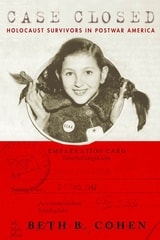
cover of Case Closed: Holocaust Survivors in Postwar America

Case Closed

Holocaust Survivors in Postwar America

Cohen, Beth B

Rutgers University Press, 2006

Following the end of World War II, it was widely reported by the media that Jewish refugees found lives filled with opportunity and happiness in America. However, for most of the 140,000 Jewish Displaced Persons (DPs) who immigrated to the United States from Europe in the years between 1946 and 1954, it was a much more complicated story.

Case Closed challenges the prevailing optimistic perception of the lives of Holocaust survivors in postwar America by scrutinizing their first years through the eyes of those who lived it. The facts brought forth in this book are supported by case files recorded by Jewish social service workers, letters and minutes from agency meetings, oral testimonies, and much more.

Cohen explores how the Truman Directive allowed the American Jewish community to handle the financial and legal responsibility for survivors, and shows what assistance the community offered the refugees and what help was not available. She investigates the particularly difficult issues that orphan children and Orthodox Jews faced, and examines the subtleties of the resettlement process in New York and other locales. Cohen uncovers the truth of survivors' early years in America and reveals the complexity of their lives as "New Americans."
[more]
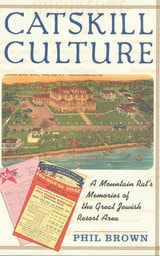
cover of Catskill Culture: A Mountain Rat'S Memories Of

Catskill Culture

A Mountain Rat'S Memories Of

Phil Brown

Temple University Press, 2003

A century ago, New Yorkers, hungry for mountain air, good food, and a Jewish environment combined with an American way of leisure, began to develop a resort area unique in the world. By the 1950s, this summer Eden of bungalow colonies, summer camps, and over 900 hotels had attracted over a million people a year. This was the Jewish Catskills of Sullivan and Ulster Counties.

Born to a small hotel-owning family who worked for decades in hotels after losing their own, Phil Brown tells a story of the many elements of this magical environment. His own waiter's tales, his mother's culinary exploits as a chef, and his father's jobs as maitre d' and coffee shop operator offer a backdrop to the vital life of Catskills summers. Catskill Culture recounts the life of guests, staff, resort owners,entertainers, and local residents through the author's memories and archival research and the memories of 120 others.

The Catskills resorts shaped American Jewish culture, enabling Jews to become more American while at the same time introducing the American public to immigrant Jewish culture. Catskills entertainment provided the nation with a rich supply of comedians, musicians, and singers. Legions of young men and women used the Catskills as a springboard to successful careers and marriages.

A decline for the resort area beginning in the 1970s has led to many changes. Today most of the hotels and bungalow colonies are gone or in ruins, while other communities, notably those of the Hasidim, have appeared. The author includes an appendix listing over 900 hotels he has been able to document and invites readers to contact him with additional entries.
[more]
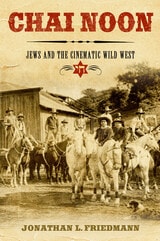
cover of Chai Noon: Jews and the Cinematic Wild West

Chai Noon

Jews and the Cinematic Wild West

Jonathan L. Friedmann

University of Wisconsin Press, 2025

Only a few Westerns contain explicitly Jewish stories or themes, and very rarely do Old West tales involve identifiably Jewish characters. Yet Jewish contributors have shaped the Western—once Hollywood’s most popular genre—ever since the silent era, both onscreen and offscreen, and some filmmakers have sought to infuse the genre with a distinctly Jewish sensibility. In Chai Noon, Jonathan L. Friedmann applies some of the central questions of Jewish film studies to the Western: What makes a movie “Jewish”? What counts as a “Jewish image” onscreen? What types of Jewish representation are appropriate? How much of a film’s “Jewishness” is owed to the filmmakers and how much to the viewer’s interpretation?

This volume joins other reconsiderations of outsider and minority representations in Westerns to offer a more nuanced view of the genre. Friedmann engages with larger themes of Jewish identity in popular film, including depictions of race, ethnicity, and foreignness. He also identifies similar concerns within the invention and creation of the imaginary West writ large in American culture. The juxtapositions prove to be both unexpected and intuitively understandable.
[more]
cover of Chaim Weizmann: The Making of a Statesman

Chaim Weizmann

The Making of a Statesman

Jehuda Reinharz

Brandeis University Press, 1985
This massively researched, deftly written narrative follows Weizmann's life from the beginning of the First World War through some of his greatest triumphs--the Balfour Declaration, the founding of the Hebrew University of Jerusalem, and the British Mandate for Palestine. Like the first volume, The Making of a Statesman combines intimate detail with incisive analysis. Reinharz untangles the internal politics of the World Zionist Organization as he charts Weizmann's rise to prominence. We see Weizmann struggling with fellow Zionists over his pro-British policies and his increasingly authoritarian leadership. We see him as a persuader and diplomat, a charming figure who could win influence in elite British circles without downplaying his Jewish identity or heritage. Reinharz offers fresh insights into Weizmann's brilliance as a chemist. No other historian has ever explained Weizmann's scientific accomplishments and their ties to his Zionist diplomacy. Reinharz follows the difficult negotiations that produced the triumphant Balfour Declaration. He carries the story through Weizmann's work in Palestine to found a vibrant Jewish community. Weizmann's largely unsuccessful efforts to open a friendly dialogue with the Arabs are also fully explored. Chaim Weizmann was a towering figure of twentieth-century Zionism and the first president of the State of Israel. In every way, this monumental biography is worthy of this great statesman.
[more]
cover of Chaim Weizmann: The Making of a Zionist Leader

Chaim Weizmann

The Making of a Zionist Leader

Jehuda Reinharz

Brandeis University Press, 1985
In the pantheon of modern Jewish leaders, Chaim Weizmann is a giant. One of the founding fathers of the State of Israel and its first president, he was also a president of the World Zionist Organization, and an eminent chemist, for whom Israel's renowned Weizmann Institute of Science was named. Yet, until now, there has never been an authoritative biography of Weizmann that removed the layers of myth obscuring our image of the man. Both a personal portrait of a fascinating man and a far-reaching history of the Jews in the modern world, this book, written by one of America's leading authorities on Jewish history, delves into the factors that shaped Weizmann's personality and worldview. Though the book focuses on the making of Weizmann as a Zionist leader, it also lays the foundations for understanding his extraordinary achievements as a scientist. This volume, the first of two that will cover his entire career, ends when, at the age of 40, Weizmann is thrust onto the center stage of world politics as a major negotiator for the Balfour Declaration.
[more]
cover of Checkbook Zionism: Philanthropy and Power in the Israel-Diaspora Relationship

Checkbook Zionism

Philanthropy and Power in the Israel-Diaspora Relationship

Eric Fleisch

Rutgers University Press, 2024

American Jews donate approximately $2.5 billion to Israel each year. Behind all that money and influence lies a power-sharing dynamic that has left an indelible mark on the relationship between Israeli and American Jews and on the direction of Israeli society to this day. Checkbook Zionism investigates how both parties have managed their interests, emotions, and attitudes about the important yet at times tense collaboration between them.

By delving into the history of American Jews’ philanthropic giving to Israelis, Fleisch assesses the core nature of power sharing between both sides of the Jewish diaspora to the United States through in-depth contemporary case studies of the relationship between sixteen non-governmental organizations and their American Jewish donors. Field observation, document analysis, and interviews with leaders, activists, and select donors alike serve a critical role here, as Fleisch assesses whether these contemporary philanthropic associations repeat classic dynamics of power-sharing or whether they represent a marked departure from the Checkbook Zionism of old. The result is a new paradigm for evaluating power sharing that can be applied to future considerations of development in the Israel-Diaspora relationship. 
 
[more]
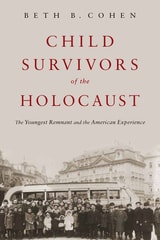
cover of Child Survivors of the Holocaust: The Youngest Remnant and the American Experience

Child Survivors of the Holocaust

The Youngest Remnant and the American Experience

Cohen, Beth B

Rutgers University Press, 2018

2017 Wiener Library Ernst Fraenkel Prize (WLEFP) Finalist

The majority of European Jewish children alive in 1939 were murdered during the Holocaust. Of 1.5 million children, only an estimated 150,000 survived. In the aftermath of the Shoah, efforts by American Jews brought several thousand of these child survivors to the United States. In Child Survivors of the Holocaust, historian Beth B. Cohen weaves together survivor testimonies and archival documents to bring their story to light. She reveals that even as child survivors were resettled and “saved,” they struggled to adapt to new lives as members of adoptive families, previously unknown American Jewish kin networks, or their own survivor relatives. Nonetheless, the youngsters moved ahead. As Cohen demonstrates, the experiences both during and after the war shadowed their lives and relationships through adulthood, yet an identity as “survivors” eluded them for decades. Now, as the last living link to the Holocaust, the voices of Child Survivors are finally being heard. 
[more]
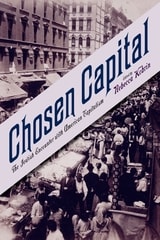
cover of Chosen Capital: The Jewish Encounter with American Capitalism

Chosen Capital

The Jewish Encounter with American Capitalism

Kobrin, Rebecca

Rutgers University Press, 2012

At which moments and in which ways did Jews play a central role in the development of American capitalism? Many popular writers address the intersection of Jews and capitalism, but few scholars, perhaps fearing this question’s anti-Semitic overtones, have pondered it openly. Chosen Capital represents the first historical collection devoted to this question in its analysis of the ways in which Jews in North America shaped and were shaped by America’s particular system of capitalism. Jews fundamentally molded aspects of the economy during the century when American capital was being redefined by industrialization, war, migration, and the emergence of the United States as a superpower.

Surveying such diverse topics as Jews’ participation in the real estate industry, the liquor industry, and the scrap metal industry, as well as Jewish political groups and unions bent on reforming American capital, such as the American Labor Party and the International Ladies’ Garment Workers’ Union, contributors to this volume provide a new prism through which to view the Jewish encounter with America. The volume also lays bare how American capitalism reshaped Judaism itself by encouraging the mass manufacturing and distribution of foods like matzah and the transformation of synagogue cantors into recording stars. These essays force us to rethink not only the role Jews played in American economic development but also how capitalism has shaped Jewish life and Judaism over the course of the twentieth century.

Contributors:
Marni Davis, Georgia State University
Phyllis Dillon, independent documentary producer, textile conservator, museum curator
Andrew Dolkart, Columbia University
Andrew Godley, Henley Business School, University of Reading
Jonathan Karp, executive director, American Jewish Historical Society
Daniel Katz, Empire State College, State University of New York
Ira Katznelson, Columbia University
David S. Koffman, New York University
Eli Lederhendler, Hebrew University, Jerusalem
Jonathan Z. S. Pollack, University of Wisconsin—Madison
Jonathan D. Sarma, Brandeis University
Jeffrey Shandler, Rutgers University
Daniel Soyer, Fordham University
[more]
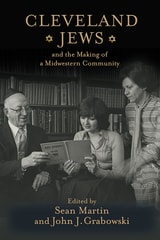
cover of Cleveland Jews and the Making of a Midwestern Community

Cleveland Jews and the Making of a Midwestern Community

Sean Martin

Rutgers University Press, 2020
This volume gathers an array of voices to tell the stories of Cleveland’s twentieth century Jewish community. Strong and stable after an often turbulent century, the Jews of Cleveland had both deep ties in the region and an evolving and dynamic commitment to Jewish life. The authors present the views and actions of community leaders and everyday Jews who embodied that commitment in their religious participation, educational efforts, philanthropic endeavors, and in their simple desire to live next to each other in the city’s eastern suburbs. The twentieth century saw the move of Cleveland’s Jews out of the center of the city, a move that only served to increase the density of Jewish life. The essays collected here draw heavily on local archival materials and present the area’s Jewish past within the context of American and American Jewish studies.
[more]
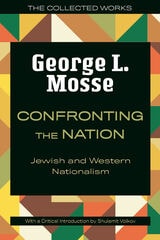
cover of Confronting the Nation: Jewish and Western Nationalism

Confronting the Nation

Jewish and Western Nationalism

George L. Mosse

University of Wisconsin Press, 2024

Confronting the Nation brings together twelve of celebrated historian George L. Mosse’s most important essays to explore competing forms of European nationalism in the nineteenth and twentieth centuries. Mosse coins the term “civic religion” to describe how nationalism, especially in Germany and France, simultaneously inspired and disciplined the populace through the use of rituals and symbols. The definition of citizenship shaped by this nationalism, however, frequently excluded Jews, who were stereotyped as outsiders who sought to undermine the national community. With keen attention to liberal forms of nationalism, Mosse examines the clash of aspirational visions of an inclusive nation against cultural registers of nativist political ideologies. 

Mosse considers a broad range of topics, from Nazi book burnings to Americans’ search for unifying national symbols during the Great Depression, exploring how the development of particular modes of art, architecture, and mass movements served nationalist agendas by dictating who was included in the image of the nation. These essays retain their significance today in their examination of the cultural and social implications of contemporary nationalism. A new critical introduction by Shulamit Volkov, professor emerita of history at Tel Aviv University, situates Mosse’s analysis within its historiographical context.
[more]
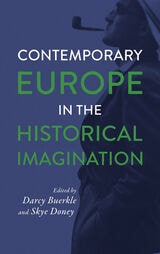
cover of Contemporary Europe in the Historical Imagination

Contemporary Europe in the Historical Imagination

Edited by Darcy Buerkle and Skye Doney

University of Wisconsin Press, 2023

George L. Mosse (1918–99) was one of the most influential cultural and intellectual historians of modern Europe. A refugee from Nazi Germany, he was an early leader in the study of fascism and the history of sexuality and masculinity, authoring more than two dozen books. In Contemporary Europe in the Historical Imagination, an international assembly of leading scholars explore Mosse’s enduring methodologies in German studies and modern European cultural history. Considering Mosse’s life and work historically and critically, the book begins with his intellectual biography and goes on to reread his writings in light of historical developments since his death, and to use, extend, and contend with Mosse’s legacy in new contexts he may not have addressed or even foreseen.

The volume wrestles with intertwined questions that continue to emerge from Mosse’s pioneering research, including: What role do sexual and racial stereotypes play in European political culture before and after 1945? How are gender and Nazi violence bound together? And what does commemoration reveal about national culture? Importantly, the contributors pose questions that are inspired by Mosse’s work but that he did not directly examine. For example, to what extent were Nazism and Italian Fascism colonial projects? How have popular radical right parties reinforced and reimagined ethnonationalism and nativism? And how did Nazi perpetrators construct a moral system that accommodated genocide? Much like Mosse’s own work, the chapters in this book inspire new interventions into the history of gender and sexuality, Jewish identity during the rise of the Third Reich, and the many reincarnations of fascist pageantry and mass politics.

Contributors: Adi Armon, Steven E. Aschheim, Aleida Assmann, Darcy Buerkle, Skye Doney, Arie M. Dubnov, Rebekka Grossmann, David Harrisville, Meike Hoffmann, Andreas Huyssen, Elissa Mailänder, Frank Mecklenburg, Mary Nolan, Stefanie Schüler-Springorum, Roger Strauch, Enzo Traverso, Marc Volovici, Elisabeth Wagner, Sarah Wobick-Segev, Robert Zwarg
[more]
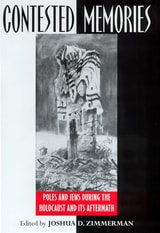
cover of Contested Memories: Poles and Jews during the Holocaust and Its Aftermath

Contested Memories

Poles and Jews during the Holocaust and Its Aftermath

Zimmerman, Joshua D.

Rutgers University Press, 2003

Few issues have divided Poles and Jews more deeply than the Nazi occupation of Poland during the Second World War and the subsequent slaughter of almost ninety percent of Polish Jewry. Many Jewish historians have argued that, during the occupation, Poles at best displayed indifference to the fate of the Jews and at worst were willing accomplices of the Nazis. Many Polish scholars, however, deny any connection between the prewar culture of antisemitism and the wartime situation. They emphasized that Poles were also victims of the Nazis and, for the most part, tried their best to protect the Jews.

This collection of essays, representing three generations of Polish and Jewish scholars, is the first attempt since the fall of Communism to reassess the existing historiography of Polish-Jewish relations just before, during, and after the Second World War. In the spirit of detached scholarly inquiry, these essays fearlessly challenge commonly held views on both sides of the debates. The authors are committed to analyzing issues fairly and to reaching a mutual understanding. Contributors cover six topics:
1. The prewar legacy
2. The deterioration of Polish-Jewish relations during the first years of the war
3. Institutional Polish responses to the Nazi Final Solution
4. Poles and the Polish nation through Jewish eyes
5. The destruction of European Jewry and Polish popular opinion
6. Polish-Jewish relations since 1945
[more]
cover of Contours of Israeli Politics: Jewish Ethnicity, Religious Nationalism, and Democracy

Contours of Israeli Politics

Jewish Ethnicity, Religious Nationalism, and Democracy

Hannah M. Ridge

Temple University Press, 2025

There is no single Jewish ethnicity, and no single Jewish ethnic group constitutes a clear majority of Jewish Israelis. These intra-Jewish differences permit a social hierarchy within the “in-group” – Jewish Israelis – that privileges the Ashkenazi Jews of European descent over Mizrahi/Sephardi Jews of Middle Eastern backgrounds.

The timely Contours of Israeli Politics focuses on the socio-political ramifications of this hierarchy within the upper stratum of Israeli society. Using public opinion studies and qualitative data, Hannah Ridge examines the effects of this social hierarchy to address attitudes on Israeli ethnicity and religious majoritarianism, support for Israeli democracy, and preference for an expanded territorial state and peace with its neighbors.

As various Jewish ethnic groups face greater pressure to assert their in-group membership (their Jewishness), they are more likely to protect the status privileges of that group. This can strengthen their ideas about identity, nationalism, democratic values, and conflict attitudes. Ridge’s findings reveal the ways in which Jewish ethnicity continues to influence the politics of Israel, a Jewish ethno-religious state.
[more]
cover of Conversion

Conversion

Miriam Bodian

Rutgers University Press, 2026
In Conversion, Miriam Bodian considers the now-universalized term "conversion" in a Jewish context as broadly as possible, as an act of socioreligious boundary crossing. It charts how, across the long arc of Jewish history from biblical times to the present, patterns of boundary crossing have developed and shifted, whether of Gentiles entering Jewish life or of Jews exiting from it. It analyzes the biblical passages that have informed Jewish thinking about what is required to become a Jew before turning to the early rabbis’ institution of a ritualized process of conversion. It then considers the protean ways in which Gentiles have become Jews and Jews have joined other religious communities from medieval to modern times. A further section is devoted to the complexities of conversion in the contemporary Jewish world, where conversions are not necessarily recognized across denominations, where substantial intermarriage has eroded the traditional boundaries between Jew and Gentile, and where the modern state of Israel plays a role that reaches beyond its borders in determining who is a Jew.
 
[more]
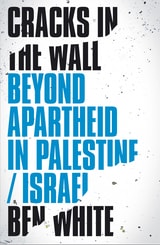
cover of Cracks in the Wall: Beyond Apartheid in Palestine/Israel

Cracks in the Wall

Beyond Apartheid in Palestine/Israel

Ben White

Pluto Press, 2018

After decades of occupation and creeping annexation, the situation on the ground in Palestine/Israel can only be described as a system of apartheid. Peace efforts have failed because of one, inconvenient truth: the Israeli maximum on offer does not meet the Palestinian minimum, or the standards of international law.

But while the situation on the ground is bleak, Ben White argues that there are widening cracks in Israel's traditional pillars of support. Opposition to Israeli policies and even critiques of Zionism are growing in Jewish communities, as well as amongst Western progressives. The election of Donald Trump has served as a catalyst for these processes, including the transformation of Israel from a partisan issue into one that divides the US establishment. Meanwhile, the Palestinian-led boycott campaign is gathering momentum, prompting a desperate backlash by Israel and its allies.

With sharp analysis, Ben White says now is the time to plot a course that avoids the mistakes of the past - a way forward beyond apartheid in Palestine. The solution is not partition and ethnic separation, but equality and self-determination - for all.
[more]