Results by title
645 books match the query 'Judaism' and 37 start with c
CCAR JOURNAL - SPRING 2020
HALACHAH AND REFORM JUDAISMElaine Rose Glickman
Central Conference of American Rabbis, 2020
CCAR Journal - Fall 2025
The Reform Jewish Quarterly: AI and the RabbinateRabbanit Sara Tillinger Wolkenfeld and Rabbi Geoffrey A. Mitelman
Central Conference of American Rabbis, 2025
This issue of the CCAR Journal explores the rapidly evolving intersection of artificial intelligence and the rabbinate. Through a range of reflective articles, contributors examine how AI is shaping Jewish life, leadership, and ethical discourse. The issue also contains general articles, new book reviews, and poetry.
CCAR Journal - Spring 2025
The Reform Jewish QuarterlyRabbi Edwin C. Goldberg
Central Conference of American Rabbis, 2025
This edition of CCAR Journal considers various topics, including loneliness and the rabbinate, Judah and Tamar's encounter, and Jewish brides' breads. The issue also contains new book reviews, poetry and a CCAR responsum on removing a pacemaker from a corpse for reuse.
CCAR Journal - Spring 2026
The Reform Jewish Quarterly: The World Union for Progressive Judaism at One HundredRabbi Edwin C. Goldberg, Rabbi Daniel H. Freelander, Rabbi Professor Deborah Kahn-Harris
Central Conference of American Rabbis, 2026
This issue, which celebrates the centenary of the founding of the World Union for Progressive Judaism in 1926, examines the impact of the WUPJ on the growth of Progressive Judaism around the globe. The articles explore the early history of the WUPJ and the creation of rabbinic seminaries, youth movements, and liturgies, as well as key regions of the movement: the United Kingdom, Europe, South Africa, South America, Australia and Aotearoa-New Zealand, and Israel. The issue also contains new book reviews and poetry.
CCAR Journal - Summer 2025
The Reform Jewish QuarterlyRabbi Edwin C. Goldberg
Central Conference of American Rabbis, 2025
This edition of CCAR Journal includes articles on women rabbis in South Africa, resurrection of the dead, chesed in Mussar, the Jewish history of bourbon, and much more. The issue also contains a book review, poetry, and a CCAR responsum on splitting cremated ashes for burial in two places.
CCAR Journal - Summer 2026
The Reform Jewish QuarterlyRabbi Edwin C. Goldberg
Central Conference of American Rabbis, 2026
The Summer issue of CCAR Journal: The Reform Jewish Quarterly contains articles on prayer, beauty the Western Association of Reform Rabbis, a review of literature with implications for pastoral care, A.B. Yehoshua, and Rumi, along with book reviews and poetry.
CCAR Journal - Winter 2026
The Reform Jewish QuarterlyRabbi Edwin C. Goldberg
Central Conference of American Rabbis, 2026
The Winter 2026 issue of CCAR Journal: The Reform Jewish Quarterly contains articles on the golem, American civic health, Hebrew Union College's new rabbinical curriculum, and Jewish history in the Islamic world. A responsum on burial of a person in a pet cemetery and a translation of the preface to Jacob Sasportas’s Tol’dot Yaakov are also included, along with book reviews and poetry.
CCAR Premarital Counseling Guide for Clergy - PDF Electronic Version
Strengthening Communication and Supporting Jewish ChoicesPaula J. Brody
Central Conference of American Rabbis, 2012
Includes ideas for pre- and post-marriage counseling sessions, with special sections for intermarrying and conversionary couples, suggestions for intake conversations, suggestions for rabbis who do not officiate and intermarriages, and sample questionnaires and handouts.
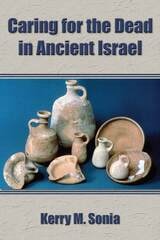
Caring for the Dead in Ancient Israel
Kerry M. Sonia
SBL Press, 2020
A new reconstruction of cultic practices surrounding death in ancient Israel
In Caring for the Dead in Ancient Israel, Kerry M. Sonia examines the commemoration and care for the dead in ancient Israel against the broader cultural backdrop of West Asia. This cult of dead kin, often referred to as ancestor cult, comprised a range of ritual practices in which the living provided food and drink offerings, constructed commemorative monuments, invoked the names of the dead, and protected their remains. This ritual care negotiated the ongoing relationships between the living and the dead and, in so doing, helped construct social, political, and religious landscapes in relationship to the past. Sonia explores the nature of this cult of dead kin in ancient Israel, focusing on its role within the family and household as well as its relationship to Israel’s national deity and the Jerusalem temple.
Features:
- A reevaluation of whether burial and necromantic rituals were part of the cult of dead kin
- A portrait of the various roles Israelite women played in the cult of dead kin
- A reassessment of biblical writers’ attitudes toward the cult of dead kin
Catholics and Jews in Twentieth-Century America
Egal Feldman
University of Illinois Press, 2006
Focusing primarily on the Catholic doctrinal view of the Jews and its ramifications, Egal Feldman traces the historicalroots of anti-Semitism, examining tenacious Catholic beliefsincluding the idea that the Jews lost their place as the chosen people with the coming of Christianity, deicide, and the conviction that their purported responsibility for the Crucifixion justified subsequent Jewish misery.
A new era of Catholic-Jewish relations opened in 1962 with Vatican II’s Declaration on the Jews, reversing the theology of contempt. Feldman explores the strides made in improving relations, such as the Vatican’s diplomatic recognition of the Jewish state, as well as a number of recent issues.

Changing Perspectives
Black-Jewish Relations in Houston during the Civil Rights EraAllison E. Schottenstein
University of North Texas Press, 2021
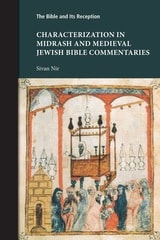
Characterization in Midrash and Medieval Jewish Bible Commentaries
Sivan Nir
SBL Press, 2024
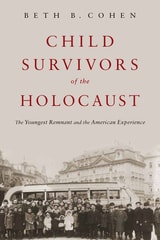
Child Survivors of the Holocaust
The Youngest Remnant and the American ExperienceCohen, Beth B
Rutgers University Press, 2018
The majority of European Jewish children alive in 1939 were murdered during the Holocaust. Of 1.5 million children, only an estimated 150,000 survived. In the aftermath of the Shoah, efforts by American Jews brought several thousand of these child survivors to the United States. In Child Survivors of the Holocaust, historian Beth B. Cohen weaves together survivor testimonies and archival documents to bring their story to light. She reveals that even as child survivors were resettled and “saved,” they struggled to adapt to new lives as members of adoptive families, previously unknown American Jewish kin networks, or their own survivor relatives. Nonetheless, the youngsters moved ahead. As Cohen demonstrates, the experiences both during and after the war shadowed their lives and relationships through adulthood, yet an identity as “survivors” eluded them for decades. Now, as the last living link to the Holocaust, the voices of Child Survivors are finally being heard.
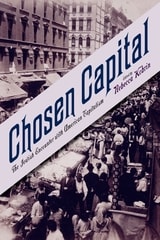
Chosen Capital
The Jewish Encounter with American CapitalismKobrin, Rebecca
Rutgers University Press, 2012
Surveying such diverse topics as Jews’ participation in the real estate industry, the liquor industry, and the scrap metal industry, as well as Jewish political groups and unions bent on reforming American capital, such as the American Labor Party and the International Ladies’ Garment Workers’ Union, contributors to this volume provide a new prism through which to view the Jewish encounter with America. The volume also lays bare how American capitalism reshaped Judaism itself by encouraging the mass manufacturing and distribution of foods like matzah and the transformation of synagogue cantors into recording stars. These essays force us to rethink not only the role Jews played in American economic development but also how capitalism has shaped Jewish life and Judaism over the course of the twentieth century.
Contributors:
Marni Davis, Georgia State University
Phyllis Dillon, independent documentary producer, textile conservator, museum curator
Andrew Dolkart, Columbia University
Andrew Godley, Henley Business School, University of Reading
Jonathan Karp, executive director, American Jewish Historical Society
Daniel Katz, Empire State College, State University of New York
Ira Katznelson, Columbia University
David S. Koffman, New York University
Eli Lederhendler, Hebrew University, Jerusalem
Jonathan Z. S. Pollack, University of Wisconsin—Madison
Jonathan D. Sarma, Brandeis University
Jeffrey Shandler, Rutgers University
Daniel Soyer, Fordham University
Citizenship, Faith, and Feminism
Jewish and Muslim Women Reclaim Their RightsJan Feldman
Brandeis University Press, 2011
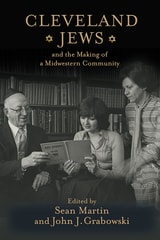
Cleveland Jews and the Making of a Midwestern Community
Sean Martin
Rutgers University Press, 2020
Come and Hear
What I Saw in My Seven-and-a-Half-Year Journey through the TalmudAdam Kirsch
Brandeis University Press, 2021
Spurred by a curiosity about Daf Yomi—a study program launched in the 1920s in which Jews around the world read one page of the Talmud every day for 2,711 days, or about seven and a half years—Adam Kirsch approached Tablet magazine to write a weekly column about his own Daf Yomi experience. An avowedly secular Jew, Kirsch did not have a religious source for his interest in the Talmud; rather, as a student of Jewish literature and history, he came to realize that he couldn’t fully explore these subjects without some knowledge of the Talmud. This book is perfect for readers who are in a similar position. Most people have little sense of what the Talmud actually is—how the text moves, its preoccupations and insights, and its moments of strangeness and profundity. As a critic and journalist Kirsch has experience in exploring difficult texts, discussing what he finds there, and why it matters. His exploration into the Talmud is best described as a kind of travel writing—a report on what he saw during his seven-and-a-half-year journey through the Talmud. For readers who want to travel that same path, there is no better guide.
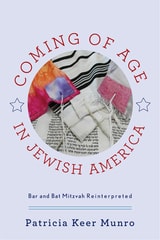
Coming of Age in Jewish America
Bar and Bat Mitzvah ReinterpretedPatricia Keer Munro
Rutgers University Press, 2016

Communicating the Infinite
The Emergence of the Habad SchoolNaftali Loewenthal
University of Chicago Press, 1990
Beginning with the different levels of communication in the teachings of the Baal Shem Tov and the Maggid and his disciples, Naftali Loewenthal traces the unfolding of the dialectic between the urge to transmit esoteric ideas and a powerful inner restraint. Gradually R. Shneur Zalman came to the fore as the prime exponent of the communication ethos. Loewenthal follows the development of his discourses up to the time of his death, when R. Dov Ber and R. Aaron Halevi Horowitz formed their respective "Lubavitch" and "Staroselye" schools. The author continues with a detailed examination of the teachings of R. Dov Ber, an inspired mystic. Central in his thought was the esoteric concept of self-abnegation, bitul, yet this combined with the quest to communicate hasidic teachings to every level of society, including women.
From the late eighteenth century onwards, the main problem for the Jewish world was posed by the fall of the walls of the social and political ghetto. Generally, the response was either to secularize, or abandon altogether, traditional Judaism or to retreat from the threatening modern world into enclave religiosity; by stressing communication, the Habad school opened the way for a middle range response that was neither a retreat into elitism nor an abandonment of tradition. Based on years of research from Hebrew and Yiddish primary source materials, Communicating the Infinite is a work of importance not only to specialists of Judaic studies but also to historians and sociologists.
Comparing Jewish Societies
Todd M. Endelman, Editor
University of Michigan Press, 1997
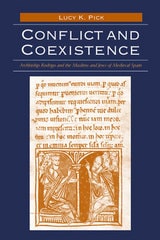
Conflict and Coexistence
Archbishop Rodrigo and the Muslims and Jews of Medieval SpainLucy K. Pick
University of Michigan Press, 2004
---J. N. Hillgarth, Professor Emeritus, University of Toronto
"By focusing on the diversified activities of the talented mid-thirteenth-century archbishop of Toledo, Lucy Pick brilliantly illuminates the complex relations between the Christian conquerors of Spain and the conquered Muslim and Jewish populations. Students of medieval Spain, of the medieval Roman Catholic Church, of medieval Muslims and Islam, and of medieval Jews and Judaism will benefit from this excellent study."
---Robert Chazan, New York University.
In Conflict and Coexistence, Lucy Pick sets out to explain how Christians, Muslims, and Jews lived alongside one another in medieval Spain. By examining the life and works of Rodrigo Jiménez de Rada, the Archbishop of Toledo (1209-47), Pick explains that the perceived threat of the non-Christian presence was managed through the subordination of Muslims and Jews.
Rodrigo stood at the center of a transformative period of history in the Iberian peninsula. During his long and varied career as archbishop, he acted as scholar, warrior, builder, and political leader. The wave of victories he helped initiate were instrumental in turning back the tide of Muslim attacks on Christian Spain and restarting the process of Christian territorial conquest. However, Toledo was still a multiethnic city in which Christians lived side by side with Jews and Muslims. As archbishop, he was faced with the considerable challenge of maintaining peace and prosperity in a city where religious passions and intolerance were a constant threat to stability.
This work seeks to examine Rodrigo's relations with the Muslims and Jews of his community both as he idealized them on paper and as he worked through them in real life. Though Rodrigo wrote an anti-Jewish polemic, and set out to conquer Muslim-held lands, he also used scholarly patronage and literary creation to combat internal and external, Christian and non-Christian threats alike. His intended and actual consequences of these varied techniques were to allow Christians, Muslims, and Jews to live together under Christian authority. Rodrigo was bound by practical necessity to find a means of accommodating these groups that was both effective and theologically satisfactory. Throughout this influential work, Pick examines the various aspects of Rodrigo's life and career that led to his policies and the consequences that his work and beliefs brought about in medieval Spain.
This book will be of interest to anyone who studies the history, religion, and literature of medieval Spain, to those interested in the transmission of learning from the Muslim to the Christian world, and to those who study intellectual life and development in medieval Europe.
Confronting Vulnerability
The Body and the Divine in Rabbinic EthicsJonathan Wyn Schofer
University of Chicago Press, 2010
While imparting their ethical lessons, rabbinic texts often employ vivid images of death, aging, hunger, defecation, persecution, and drought. In Confronting Vulnerability, Jonathan Wyn Schofer carefully examines these texts to find out why their creators thought that human vulnerability was such a crucial tool for instructing students in the development of exemplary behavior.
These rabbinic texts uphold virtues such as wisdom and compassion, propound ideal ways of responding to others in need, and describe the details of etiquette. Schofer demonstrates that these pedagogical goals were achieved through reminders that one’s time on earth is limited and that God is the ultimate master of the world. Consciousness of death and of divine accounting guide students to live better lives in the present. Schofer’s analysis teaches us much about rabbinic pedagogy in late antiquity and also provides inspiration for students of contemporary ethics. Despite their cultural distance, these rabbinic texts challenge us to develop theories and practices that properly address our frailties rather than denying them.
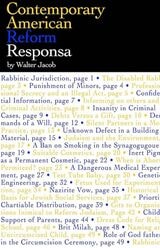
Contemporary American Reform Responsa - PDF Electronic Version
Rabbi Walter Jacob
Central Conference of American Rabbis, 1987
When is abortion permitted? Should smoking be banned in synagogue buildings? Do we recite Kaddish for a convicted criminal? May human blood be sold for medical purposes? What is the Reform position on the use of mikvah? These questions and more are the topic of this volume, edited by Rabbi Walter Jacob and originally published in 1987. The questions included in this volume reflect the concerns of Reform Jews at the time the book was published, and much of it is still relevant today.
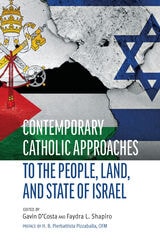
Contemporary Catholic Approaches to the People, State, and Land of Israel
Gavin D'Costa
Catholic University of America Press, 2021
Contemporary Reform Responsa - PDF Electronic Version
Rabbi Solomon B. Freehof
Central Conference of American Rabbis, 1974
Can a synagogue share a building with a Unitarian Church? Can a religious marriage be performed without a civil marriage? Is it allowed to photocopy from books? Must a convert be buried in a Jewish cemetery?
These questions and more are the topic of this volume, edited by Dr. Solomon Freehof and originally published in 1974. The questions included in this volume reflect the concerns of Reform Jews at the time the book was published, much of which is still relevant today.
Contextualizing Israel's Sacred Writings
Ancient Literacy, Orality, and Literary ProductionBrian B. Schmidt
SBL Press, 2015
An essential resource exploring orality and literacy in the pre-Hellenistic southern Levant and the Hebrew Bible
Situated historically between the invention of the alphabet, on the one hand, and the creation of ancient Israel's sacred writings, on the other, is the emergence of literary production in the ancient Levant. In this timely collection of essays by an international cadre of scholars, the dialectic between the oral and the written, the intersection of orality with literacy, and the advent of literary composition are each explored as a prelude to the emergence of biblical writing in ancient Israel. Contributors also examine a range of relevant topics including scripturalization, the compositional dimensions of orality and textuality as they engage biblical poetry, prophecy, and narrative along with their antecedents, and the ultimate autonomy of the written in early Israel. The contributors are James M. Bos, David M. Carr, André Lemaire, Robert D. Miller II, Nadav Na'aman, Raymond F. Person Jr., Frank H. Polak, Christopher A. Rollston, Seth L. Sanders, Joachim Schaper, Brian B. Schmidt, William M. Schniedewind, Elsie Stern, and Jessica Whisenant.
Features
- Addresses questions of literacy and scribal activity in the Levant and Negev
- Articles examine memory, oral tradition, and text criticism
- Discussion of the processes of scripturalization
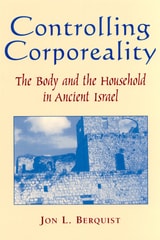
Controlling Corporeality
The Body and the Household in Ancient IsraelBerquist, Jon L.
Rutgers University Press, 2002
Human bodily existence is at the core of the Torah and the rest of the Hebrew Scriptures—from birth to death. From God’s creation of Adam out of clay, to the narratives of priests and kings whose regulations governed bodily practices, the Hebrew Bible focuses on the human body. Moreover, ancient Israel’s understanding of the human body has greatly influenced both Judaism and Christianity. Despite this pervasive influence, ancient Israel’s view of the human body has rarely been studied and, until now, has been poorly understood.
In this beautifully written book, Jon L. Berquist guides the reader through the Hebrew Bible, examining ancient Israel’s ideas of the body, the unstable roles of gender, the deployment of sexuality, and the cultural practices of the time. Conducting his analysis with reference to contemporary theories of the body, power, and social control, Berquist offers not only a description and clarification of ancient Israelite views of the body, but also an analysis of how these views belong to the complex logic of ancient social meanings. When this logic is understood, the familiar Bible becomes strange and opens itself to a wide range of new interpretations.
Conversion
Miriam Bodian
Rutgers University Press, 2026
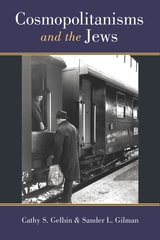
Cosmopolitanisms and the Jews
Cathy S. Gelbin and Sander L. Gilman
University of Michigan Press, 2017
Cosmopolitans and Parochials
Modern Orthodox Jews in AmericaSamuel C. Heilman and Steven M. Cohen
University of Chicago Press, 1989
Heilman and Cohen reveal that American Jewish Orthodoxy is not a monolith by distinguishing its three broad varieties: the "traditionalists," the "centrists," and the "nominally" orthodox. To illuminate this full spectrum of orthodoxy the authors focus on the "centrists," taking us through the dimensions of their ritual observances, religious beliefs, community life, and their social, political, and sexual attitudes. Both parochial and cosmopolitan, orthodox and liberal, these Jews are characterized by their dualism, by their successful involvement in both the modern Western world and in traditional Jewish culture. In painting this provocative and fascinating portrait of what Jewish Orthodoxy has become in America today, Heilman and Cohen's study also sheds light on the larger picture of the persistence of religion in the modern world.
Covenant of Blood
Circumcision and Gender in Rabbinic JudaismLawrence A. Hoffman
University of Chicago Press, 1995
In the rabbinic system, Hoffman argues, circumcision was neither a birth ritual nor the beginning of the human life cycle, but a rite of covenantal initiation into a male "life line." Although the evolution of the rite was shaped by rabbinic debates with early Christianity, the Rabbis shared with the church a view of blood as providing salvation. Hoffman examines the particular significance of circumcision blood, which, in addition to its salvific role, contrasted with menstrual blood to symbolize the gender dichotomy within the rabbinic system. His analysis of the Rabbis' views of circumcision and menstrual blood sheds light on the marginalization of women in rabbinic law. Differentiating official mores about gender from actual practice, Hoffman surveys women's spirituality within rabbinic society and examines the roles mothers played in their sons' circumcisions until the medieval period, when they were finally excluded.
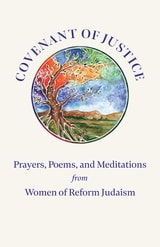
Covenant of Justice
Prayers, Poems, and Meditations from Women of Reform JudaismWomen of Reform Judaism
Central Conference of American Rabbis, 2025
Copublished with Women of Reform Judaism
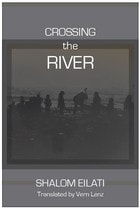
Crossing the River
Shalom Eilati
University of Alabama Press, 2009
A child’s journey through war, memory, and survival—told with haunting clarity and poetic grace.
Crossing the River is a personal memoir—and more. Against the backdrop of Lithuania’s occupation—first by the Red Army, next by the Germans, and then again by the Russians—it is a story reflected through the prism of a sharp-eyed young child, Shalom Eilati. His story starts in the occupied Kovno Ghetto and ends with his flight across the Soviet border, through Poland and Germany and finally, his arrival in Palestine.
The adult survivor, while recalling the terrorized child that he was and how he then perceived the adult world, also takes stock of his present life. Throughout the memoir, Eilati attempts to reconcile his present life as a husband, father, scientist, and writer, with the images, feelings, and thoughts from the past that have left an indelible mark on his life and that continue to haunt him.
Cultural Disjunctions
Post-Traditional Jewish IdentitiesPaul Mendes-Flohr
University of Chicago Press, 2021
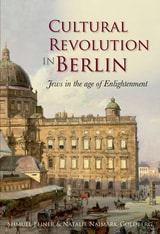
Cultural Revolution in Berlin
Jews in the Age of EnlightenmentShmuel Feiner and Natalie Naimark-Goldberg
Bodleian Library Publishing, 2011
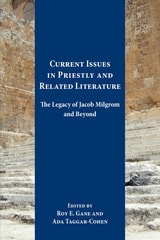
Current Issues in Priestly and Related Literature
The Legacy of Jacob Milgrom and BeyondRoy E. Gane
SBL Press, 2015
New directions and fresh insight for scholars and students
The single greatest catalyst and contributor to our developing understanding of priestly literature has been Jacob Milgrom (1923-2010), whose seminal articles, provocative hypotheses, and comprehensively probing books vastly expanded and significantly altered scholarship regarding priestly and related literature. Nineteen articles build on Milgrom's work and look to future directions of research. Essays cover a range of topics including the interpretation, composition and literary structure of priestly and holiness texts as well as their relationships to deuteronomic and extra-biblical texts. The book includes a bibliography of Milgrom's work published between 1994 and 2014.
Features:
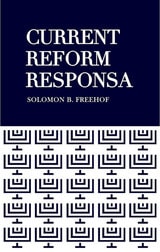
Current Reform Responsa - PDF Electronic Version
Rabbi Solomon B. Freehof
Central Conference of American Rabbis, 2021
This volume of Responsa was originally published in 1969 by Dr. Solomon Freehof, a leading scholar and Chair of the Responsa Committee of the Central Conference of American Rabbis. In these Responsa, Dr. Freehof presents his responses to questions concerning the observance and interpretation of traditional Jewish customs and law. Topics include conversion, holiday observance, medical ethics, ritual concerns, drug use, gambling, and much more.