69 books match the query 'Korea' and 6 start with c
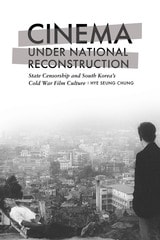
cover of Cinema under National Reconstruction: State Censorship and South Korea’s Cold War Film Culture

Cinema under National Reconstruction

State Censorship and South Korea’s Cold War Film Culture

Hye Seung Chung

Rutgers University Press, 2025

Cinema under National Reconstruction calls for a revisionist understanding of state film censorship during successive Cold War military regimes in South Korea (1961–1988). Drawing upon primary documents from the Korean Film Archive’s digitized database and framing South Korean film censorship from a transnational perspective, Hye Seung Chung makes the case that, while political oppression/repression existed inside and outside the film industry during this period, film censorship was not simply a tool for authoritarian dictatorship. Through such case studies as Yu Hyun-mok’s The Stray Bullet (1961), Ha Kil-jong’s The March of the Fools (1975), and Yi Chang-ho’s Declaration of Fools (1983), the author defines censorship as a dialogical process of cultural negotiations wherein the state, the film industry, and the public fight out a battle over the definitions and functions of national cinema. In the context of Cold War Korea, one cannot fully understand or construct film history without reassessing censorship as a productive feedback system where both state regulators and filmmakers played active roles in shaping the new narrative or sentiment of the nation on the big screen.
[more]
cover of Crisis in Korea: America, China and the Risk of War

Crisis in Korea

America, China and the Risk of War

Tim Beal

Pluto Press, 2011

The South Korean warship Cheonan was sunk in mysterious circumstances on 26 March 2010. The remarkable events that followed are analysed by Tim Beal and woven into a larger study of the increasingly volatile relations between North and South Korea and US concern about the rise of China.

South Korea's stance towards the North has hardened significantly since the new conservative government came to power. Beal argues that the South moved quickly to use the sinking of the Cheonan to put international pressure on the North, even before the cause of the sinking had been established. The US followed suit by attempting to pressurise China into condemning North Korea. The media reports at the time presented an open and shut case of unprovoked North Korean aggression, but the evidence points towards the accidental triggering of a South Korean mine as the cause and South Korean fabrication to incriminate the North.

With the South bent on forcing the fall of the North's regime with US help and China unlikely to stand idly by, this book offers an essential guide to the key factors behind the crisis and possible solutions.
[more]
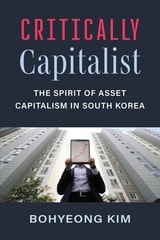
cover of Critically Capitalist: The Spirit of Asset Capitalism in South Korea

Critically Capitalist

The Spirit of Asset Capitalism in South Korea

Bohyeong Kim

University of Michigan Press, 2025

Critically Capitalist presents an ethnography of South Korea’s asset seekers, including amateur stock investors, real estate enthusiasts, and money coaches, to demonstrate how financialized asset capitalism is sustained. As they hunt for profit margins, rent, and dividends, they simultaneously critique capitalism and posit their pursuit of assets as a form of resistance. Bohyeong Kim theorizes this new spirit of capitalism in South Korea as “critical capitalism,” arguing that it reflects the popular discontent with both national development and financial neoliberalism. As a paradoxical critique and legitimation, Bohyeong Kim argues that critical capitalism valorizes the capitalist economy not through a triumphant narrative, but by highlighting the emotional wounds, destroyed communities, and oppressive tactics of modern capitalism. 

Drawing on multi-sited ethnography and in-depth interviews with a broad community of aspiring millionaires, Critically Capitalist illuminates how contemporary capitalism thrives by channeling discontent into financial and real estate markets, which in turn has cemented critical capitalism as the cultural and affective backbone of South Korea’s economy.
[more]
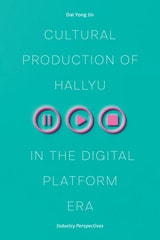
cover of Cultural Production of Hallyu in the Digital Platform Era: Industry Perspectives

Cultural Production of Hallyu in the Digital Platform Era

Industry Perspectives

Dal Yong Jin

University of Michigan Press, 2025

Cultural Production of Hallyu in the Digital Platform Era explores how histories, industry structures, and politics interact in the platformization of the Korean Wave. Dal Yong Jin argues that while much research centers on the Korean culture takeover and the dominance of Korean products on premier global media platforms, Korean cultural industries also experience reshaping and changing depending on the platforms, often on the global stage. 

Addressing the increasing significance of digital platforms, this work examines the transformative roles of over-the-top streaming services—Netflix, Viki, and V Live—video-sharing platforms such as YouTube, and social media platforms such as TikTok and Instagram, and the power relations between content producers, information technology sectors, the government, creative laborers, and audiences in the globalization of Korean culture and media. By developing critical cultural industries studies as a new theoretical framework, Cultural Production of Hallyu in the Digital Platform Era explores the ever-growing Korean Wave phenomenon with the advent of global digital platforms. 
 
[more]
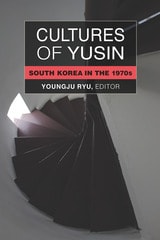
cover of Cultures of Yusin: South Korea in the 1970s

Cultures of Yusin

South Korea in the 1970s

Youngju Ryu, Editor

University of Michigan Press, 2018
Cultures of Yusin examines the turbulent and yet deeply formative years of Park Chung Hee’s rule in South Korea, focusing on the so-called Yusin era (1972–79). Beginning with the constitutional change that granted dictatorial powers to the president and ending with his assassination, Yusin was a period of extreme political repression coupled with widespread mobilization of the citizenry towards the statist gospel of modernization and development. While much has been written about the political and economic contours of this period, the rich complexity of its cultural production remains obscure. This edited volume brings together a wide range of scholars to explore literature, film, television, performance, music, and architecture, as well as practices of urban and financial planning, consumption, and homeownership. Examining the plural forms of culture’s relationship to state power, the authors illuminate the decade of the 1970s in South Korea and offer an essential framework for understanding contemporary Korean society. 
[more]
cover of Curative Violence: Rehabilitating Disability, Gender, and Sexuality in Modern Korea

Curative Violence

Rehabilitating Disability, Gender, and Sexuality in Modern Korea

Eunjung Kim

Duke University Press, 2017

In Curative Violence Eunjung Kim examines what the social and material investment in curing illnesses and disabilities tells us about the relationship between disability and Korean nationalism. Kim uses the concept of curative violence to question the representation of cure as a universal good and to understand how nonmedical and medical cures come with violent effects that are not only symbolic but also physical. Writing disability theory in a transnational context, Kim tracks the shifts from the 1930s to the present in the ways that disabled bodies and narratives of cure have been represented in Korean folktales, novels, visual culture, media accounts, policies, and activism. Whether analyzing eugenics, the management of Hansen's disease, discourses on disabled people's sexuality, violence against disabled women, or rethinking the use of disabled people as a metaphor for life under Japanese colonial rule or under the U.S. military occupation, Kim shows how the possibility of life with disability that is free from violence depends on the creation of a space and time where cure is seen as a negotiation rather than a necessity.
[more]